October sale events have a habit of turning a sensible PS5 shopping list into an electronic confetti cannon. A controller is $161.12. A racing wheel suddenly costs $229.99. A game is down to $28.69. Somewhere in the middle of it all, a $13.59 set of thumbstick toppers is making an unexpectedly persuasive case for itself.
The important question is not simply whether something is discounted. It is whether the current price is meaningfully unusual, whether the item solves a real problem in a player’s setup, and whether waiting carries a plausible payoff. The PS5 offers currently in view illustrate all three tests well. Some are reported record lows, some are respectable but familiar sale prices, and some are reductions that are difficult to call compelling when a lower price has already appeared earlier in the year.
That distinction matters even more with Black Friday still ahead. Sale labels do not guarantee scarcity, and a percentage-off badge does not explain whether a discount will last. A practical buyer should treat October as a decision point rather than a panic button.
Start with the item, not the event name
A major retail event can make every product look urgent. In practice, PS5 purchases fall into several very different groups: games, low-cost comfort upgrades, audio gear, specialist peripherals such as racing wheels and guitar controllers, premium gamepads, and the console itself. The odds of a dramatically better November price are not the same for each.
Games are the clearest example. Dragon Quest VII Reimagined is listed at $28.69 against a $59.99 MSRP, described as its lowest PS5 price and more than $30 below list. That is the kind of cut that deserves attention from someone ready to play it now. A few more dollars could theoretically disappear later, but the choice is not between buying today and buying for exactly the same amount in November. It is between playing now at a steep reduction or waiting for an uncertain incremental improvement.
By contrast, a newer game that has only shed $10 from its normal price has more room to fall. The decision then becomes personal: is a possible drop to $49.99 or $39.99 later worth postponing the game for a couple of months? Neither answer is universal. Players who have a full backlog may be well served by waiting. Players who plan to start immediately are not being irrational by paying a modest premium for their own time.
Physical-disc availability adds another variable. 007: First Light is listed at $62.10 at Walmart, compared with $69.99 at Amazon and Best Buy. It is not a huge discount, but it is an actual reduction in a field where the other cited retailers have held at full price. Meanwhile, the PS5 disc edition of Halo: Campaign Evolved was reported out of stock at both Best Buy and Amazon after a $5 price cut to $44.99. That does not prove a later sale will be worse, but it is a useful reminder that stock can matter as much as the sticker price when buying a specific physical release.
Record low is useful information, not an automatic command
“Record low” is among the most valuable phrases in price tracking, but it needs context. It tells a shopper that the current advertised price is lower than the previously observed price history. It does not establish that the product is essential, that it is right for a particular setup, or that stock will disappear the moment someone closes a browser tab.
Related coverage includes Prime Day PS5 Deals: Which Discounts Are Worth Taking Before Black Friday?.
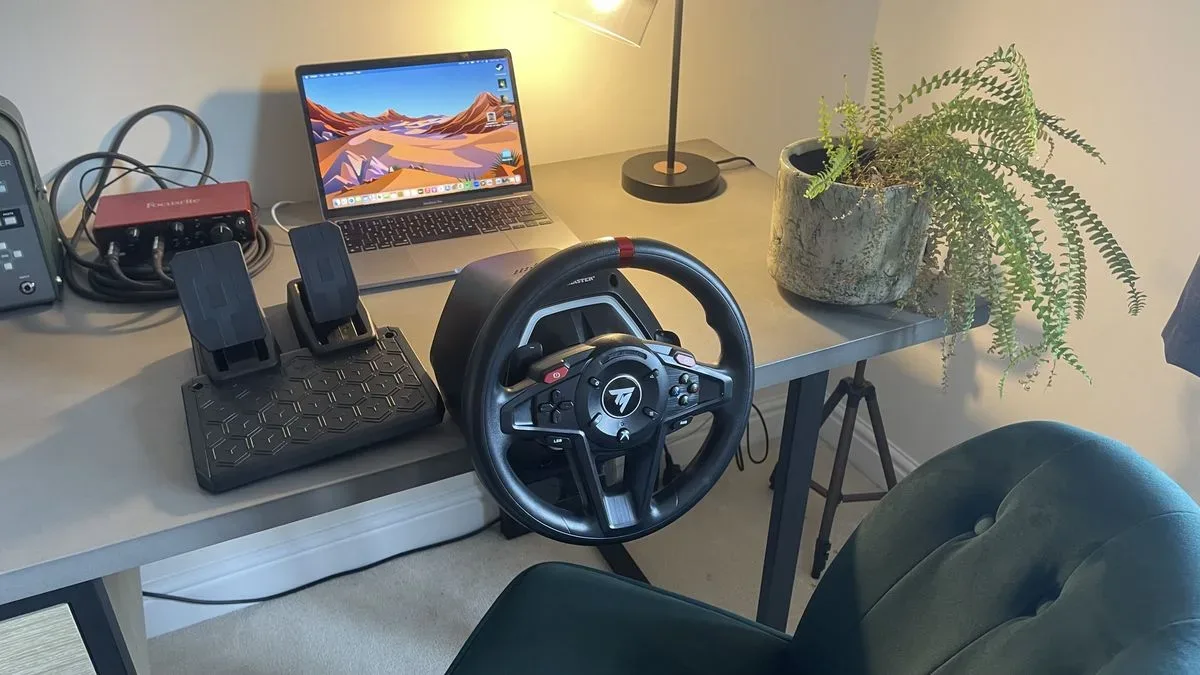
The Thrustmaster T248R is a strong example of a price that is objectively notable. It is listed at $229.99, down from $299.99, and said to be more than $40 below its previous low. Its reported usual range is roughly $280 to $349, with $299 common recently. For a player who has already decided to begin PS5 sim racing, this is a much more persuasive deal than an arbitrary percentage sale because it compares favorably with the wheel’s observed pricing rather than only its MSRP.
The less expensive Thrustmaster T128 P is listed at $149.99 from $229.99. It includes force feedback but comes with two pedals and less power than the T248. Force feedback is the resistance and physical response a compatible wheel uses to communicate changes in the virtual road or car behavior. It is a key differentiator from simpler wheels because it aims to make steering feel less detached from the simulation. The trade-off described here is straightforward: the T128 P is for players who mainly want to get driving, while the T248 is positioned as the more immersive step up.
That makes the buyer’s intended use more important than the size of the discount. Saving on the less expensive wheel is sensible if a basic entry point is the goal. Buying the more advanced wheel only makes sense if the additional immersion is something the player will actually use. A sale cannot turn unused features into value; it can only lower the cost of buying them.
There is a similar warning around the PDP Riffmaster. The PS5-compatible controller is listed at $85.49, down from $149.99, and below a usual day-to-day price of around $99.99. Yet it reportedly reached $75.49 in June. The present price may be better than ordinary pricing, but it is not the best known opportunity of the year. That is a classic “buy if you need it, wait if you do not” offer—particularly because Stage Tour is not due until December and is also planned as a separate $39.99 release alongside a $129.99 Kramer guitar bundle.
Cheap upgrades can be the least risky purchases
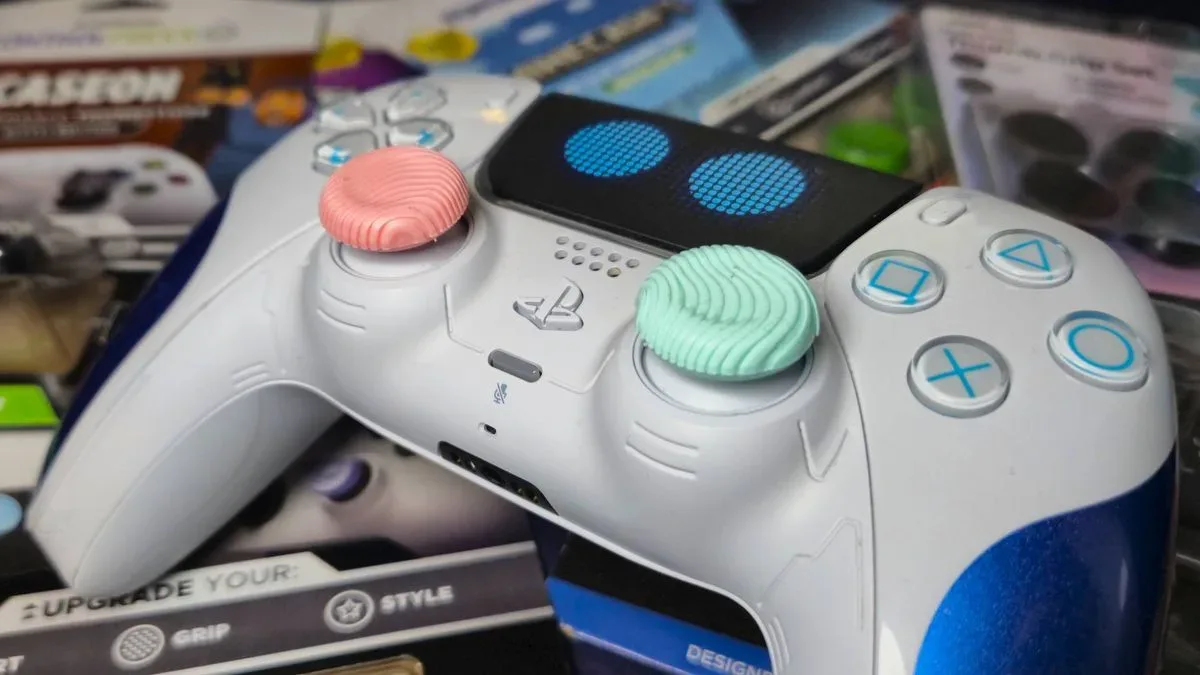
Not every useful PS5 purchase needs to enter triple-digit territory. KontrolFreek thumbstick toppers are listed at $13.59, down from $16.99. These textured caps fit over the controller’s existing analogue sticks, aiming to improve grip and precision. They are a small, low-commitment change rather than a replacement controller, with game-inspired designs also available.
The practical implication is refreshingly simple: a player who finds their thumb placement uncomfortable or wants more surface grip can address that concern without buying a premium pad. There is no suggestion that an inexpensive accessory will reproduce the feature set of a pro controller. But a modest improvement to handling may be more valuable than paying for an entire device whose additional controls, software options, or specialized components will go unused.
This principle applies beyond PS5 hardware. As noted in a look at practical retro-gaming sale upgrades, the best purchase is often the one that makes a system already owned easier or more enjoyable to use. For PS5 owners, a headset, stick topper, or wired peripheral may provide a clearer everyday benefit than an expensive replacement for perfectly functional gear.
Headsets: compare connection and comfort before the headline price
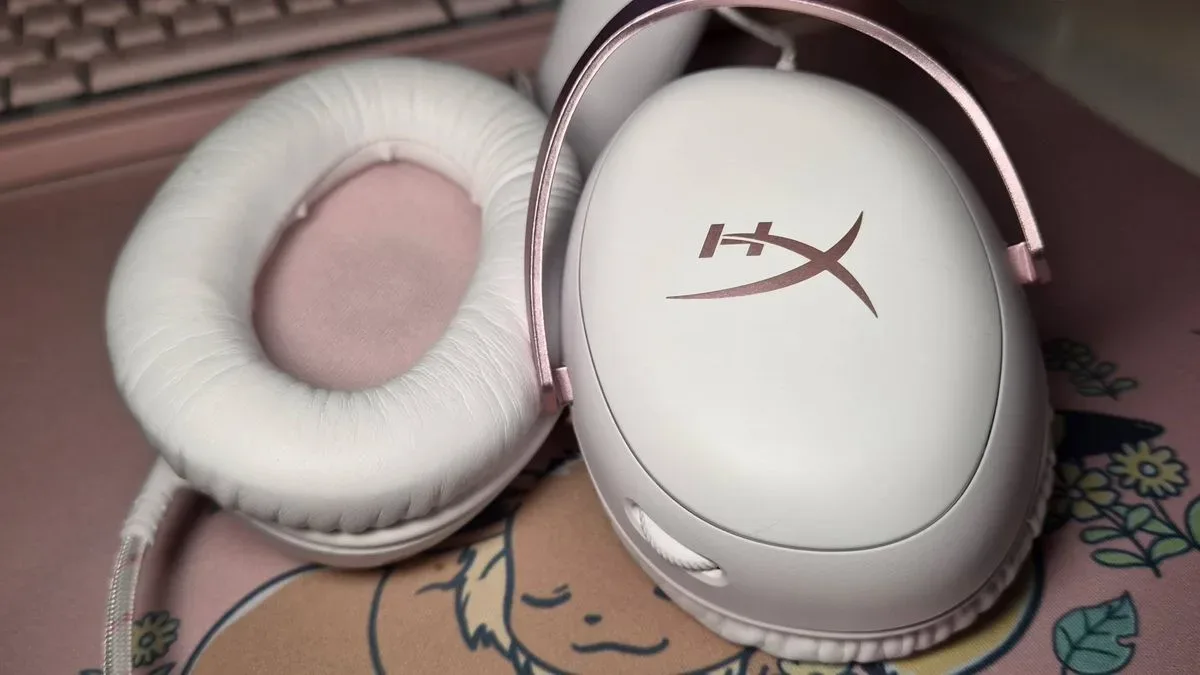
Audio is a category where specifications can help a buyer avoid a mismatch. The wired Turtle Beach Atlas 200 is listed at $34.99 from $59.99, described as a record low. It connects through the DualSense controller and is positioned as a budget alternative to TV speakers, with a mesh headband. For someone who wants straightforward private audio and voice-chat capability without managing a battery, that arrangement has an obvious appeal.
The SteelSeries Arctis Nova 3P, listed at $59.99 from $109.99 for the blue version, has a different proposition. Its stated features include 2.4GHz wireless, Bluetooth, an EQ preset app, a ski-band-style fit, and 40 hours of battery life. EQ, or equalization, means settings that adjust the balance of sound frequencies; presets offer ready-made profiles rather than requiring a player to tune individual ranges. The combination of dedicated 2.4GHz wireless and Bluetooth is relevant to anyone who needs a wireless connection to the console while also valuing broader device connectivity.
At the expensive end, the SteelSeries Arctis Nova Pro Omni is listed at $344.99 from $399.99, also described as a new lowest price. That is still a purchase above $300, so the question is no longer merely whether the reduction is real. It is whether premium audio belongs in the buyer’s budget at all. A record low on a premium product can be meaningful without making it the appropriate value choice for most people.
Why PS5 pro controllers remain pricey
PS5 controller pricing can look startling next to the cost of a standard DualSense, and the explanation offered is platform licensing. Sony’s licensing process for hardware that works with PS5 is described as restrictive relative to Xbox and Nintendo Switch, helping explain why the third-party market is dominated by premium brands such as Razer, Scuf, and Nacon rather than a wide shelf of low-cost alternatives.
That market structure should affect expectations. A $120-to-$200-plus controller is not necessarily a temporary pricing mistake waiting to be corrected on Black Friday. It may instead be the normal result of a small, high-end category with licensed hardware and specialized features.
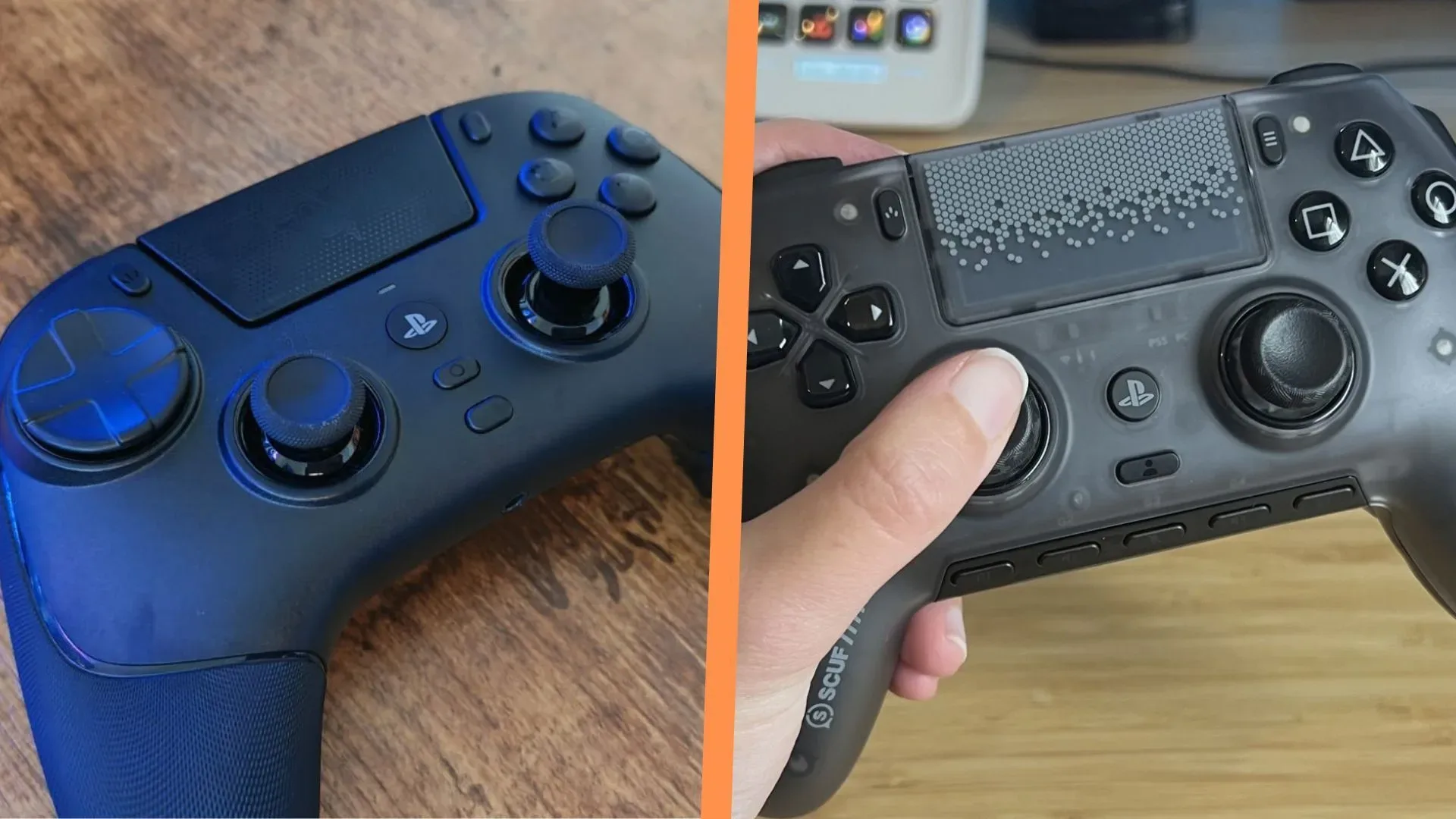
The Nacon Revolution 5 Pro is listed at $123.48 from $199.99 for a camo version, its lowest price of 2026 so far, though it was reportedly a few dollars less in 2025. Its cited features include remappable controls, Hall effect sticks, and app configuration. Remappable means a player can assign a button’s function to a different control. Hall effect sticks use magnetic sensing rather than relying on physical contact in the same way as traditional potentiometer-based stick mechanisms. That is a component detail shoppers may prioritize, but it should not be treated as a blanket guarantee about every aspect of long-term use.
At $123.48, the Nacon offers a substantially lower entry price than the Scuf Omega at $186.99 from $219.99, or the white Razer Raiju V3 Pro at $161.12 from $219.99. The Omega’s 15% discount is described as a record low because it launched only a few months ago; the Raiju’s current reduction is better than most of its year, but it has previously reached $129.99 in February. The source material also identifies a design distinction: the Omega has extra side buttons that may be easy to press accidentally, while the Raiju places additional controls beside the triggers.
The sensible reading is not that one controller wins for everyone. It is that layout matters. Extra buttons are only an advantage when they are comfortably placed and the player has a purpose for them. Anyone willing to wait on the Raiju has evidence of a much lower historical price. Anyone who needs a premium controller now should compare its current price to its own history, rather than assuming all $200-class pads will improve by the same amount in November.
The PS5 Pro is not an accessory-sale decision
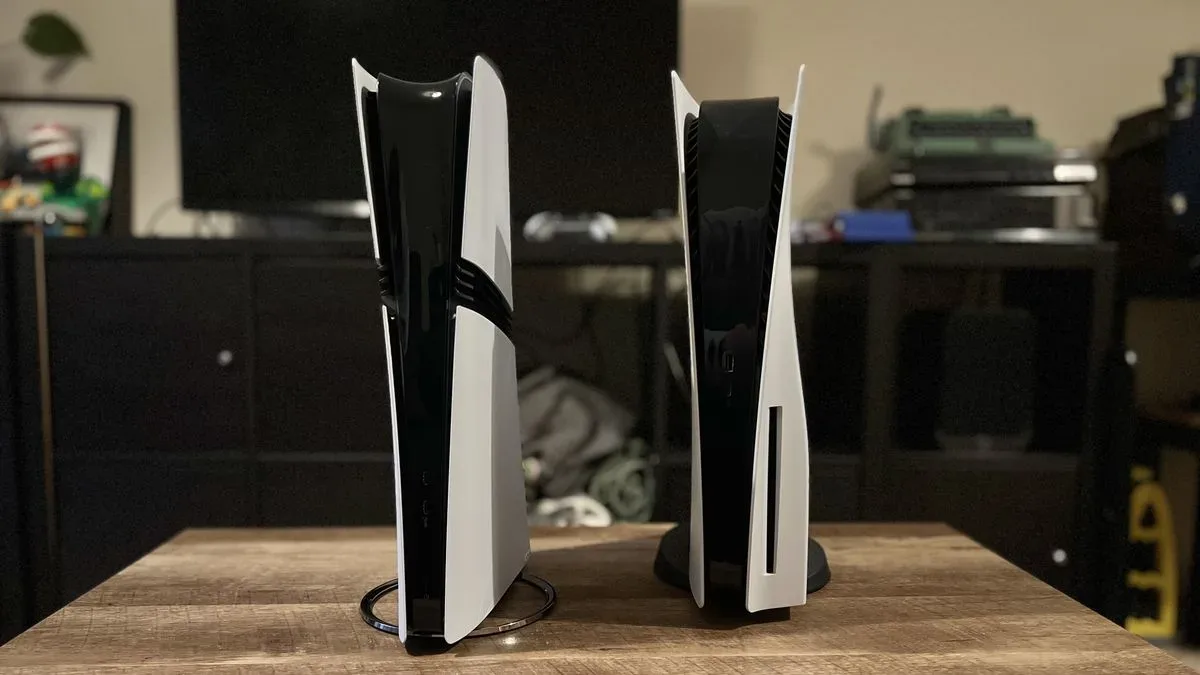
A discounted peripheral and a console upgrade should not be judged by the same logic. The PS5 Pro is described as an approximately $900 outlay, against a $599 price for the digital edition, with the extra expense difficult to justify for existing original PS5 or PS5 Slim owners unless they are especially focused on the best possible experience and play in a monitor setup. The cited visual benefit is additional detail in ray tracing.
Ray tracing is a rendering technique used to model the behavior of light for effects such as reflections, shadows, and illumination. It can improve visual detail, but its value is subjective and depends on what a player notices and prioritizes. A difference in a lighting effect is not comparable to a necessary replacement purchase.
That makes the Pro a budget and priorities decision, not a deal-hunting reflex. If an existing PS5 already supports the games someone wants to play, a sale on a headset or wheel may create a more tangible change to everyday use. The Pro only makes financial sense for buyers who have already decided that its graphical improvements are worth the large premium.
A short checklist before buying
- Check the product’s own price history. A record low is stronger evidence than a discount from MSRP alone.
- Ask what changes on day one. A wheel, headset, or controller should solve a specific need, not merely look like an impressive deal.
- Separate current availability from fear of missing out. A particular physical disc can sell out, but not every accessory discount is a one-day event.
- Use past lows as a waiting signal. The Riffmaster and Raiju examples show why a decent price may still be worth monitoring.
- Set a firm ceiling for premium gear. Discounts do not erase the opportunity cost of a $300 headset or a roughly $900 console upgrade.
For PS5 buyers, Black Friday is best viewed as an opportunity rather than a promise. Current record lows on products that fit an immediate need are reasonable buying moments. Recent games with only small cuts, accessories sitting above known lows, and aspirational hardware without a clear use case are the categories where patience has the strongest case. The sale event is loud; the decision can be quiet.
Shop the products
Check current price, model and availability at the retailer.