The HyperX Cloud III makes a persuasive case for the wired gaming headset in the places that matter most: it is built around a comfortable over-ear fit, has a detachable microphone, and ships with unusually flexible cabling for moving between devices. Its 53mm drivers and closed-back design are intended to serve both game audio and voice chat, while onboard controls keep volume adjustment and microphone muting close at hand.
There is one important condition attached to that recommendation. At its stated list price of $99.99 / £101.99, the wired Cloud III occupies an awkward part of the market. Wireless options can compete at that amount, and some can add cable-free use without asking for more money. The more compelling proposition is the price this model reportedly reaches during regular promotions: around $56 / £69, with anything below $60 / £70 looking like the sensible target.
That is less a knock on the headset’s core qualities than a reminder that a product’s value is not fixed. A good wired headset at a sale price can be a better fit than a more feature-rich alternative at full price, particularly for players who prioritize dependable connections, platform flexibility and a microphone that is ready when a multiplayer session starts.
The core specifications
The Cloud III is a wired, circumaural headset. Circumaural means its earcups are designed to surround the ears rather than rest on them. Its closed-back construction places a solid outer shell behind the drivers, a design typically used to keep sound more contained and reduce the amount of surrounding noise that reaches the listener. It does not offer active noise cancellation, or ANC, which uses electronics and microphones to counter external sound.
- Drivers: angled 53mm dynamic drivers with neodymium magnets
- Frequency response: 10Hz to 21kHz
- Microphone: detachable electret condenser microphone
- Controls: physical volume dial and microphone mute button
- Weight: 308g without the mic; 320g with it attached
- Battery: none required for wired operation
A driver is the component that turns an electrical signal into audible sound. The 53mm figure describes the driver diameter, not an automatic measure of sound quality, but it establishes the physical hardware HyperX is using. Similarly, frequency-response numbers indicate the range a headset is designed to reproduce; they do not, by themselves, reveal tuning, detail, balance or how a particular game will sound. The Cloud III’s listed 10Hz–21kHz range extends beyond the conventional 20Hz–20kHz band often cited for human hearing, but the more useful practical consideration is the reported result: clear game audio and dialogue, with room for low-end effects in games and music.
The cable is the real multi-platform feature
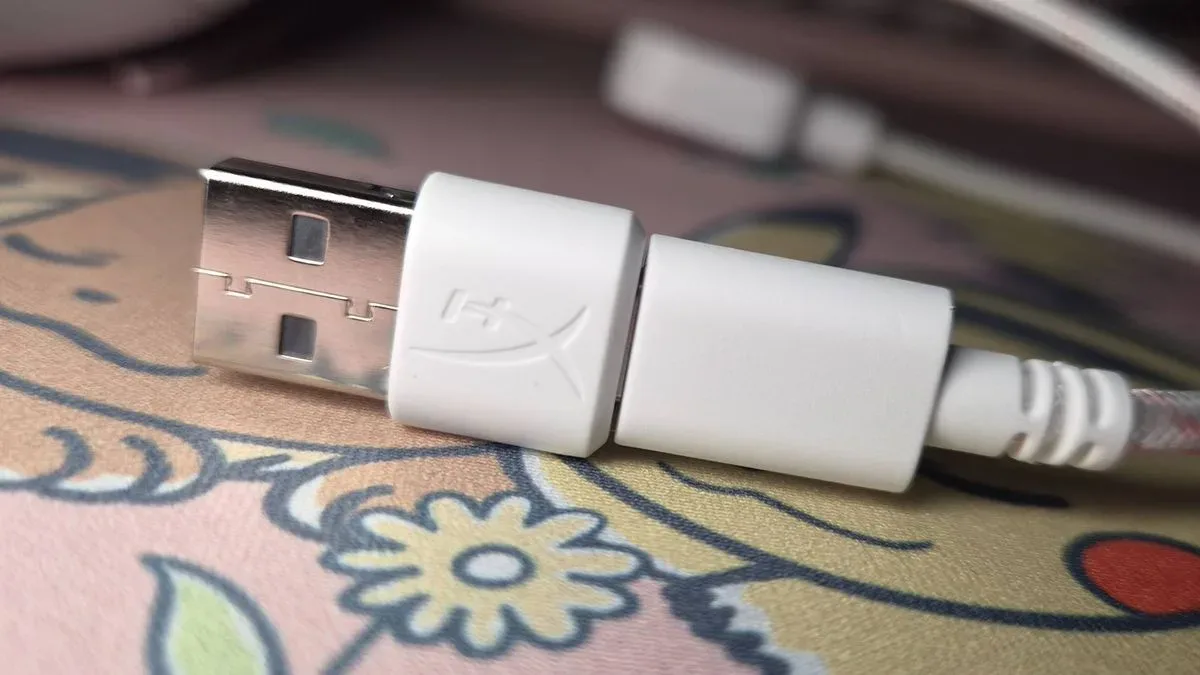
The Cloud III’s strongest differentiator is not a flashy software feature. It is the connection setup. HyperX includes a 3.5mm cable and an extension that enables USB-C use, plus a USB-A adapter attached by default. In plain terms, the headset can be adapted among 3.5mm, USB-C and USB-A connections without requiring the buyer to immediately shop for another dongle.
That matters because a gaming setup is often a tangle of incompatible ports. A USB-C-equipped handheld may be easiest to use directly through its top port. A desktop may have its limited USB-C connection already reserved for another accessory. A console may be more practical through USB-A. The supplied options make it easier to route the same headset among PC, PS5, PS4, Xbox Series X|S, Xbox One, Nintendo Switch, Mac and mobile devices.
Compatibility always has a practical side beyond a box list. Owners should still check which connector their own device exposes in the spot where they plan to play and whether their preferred cable route is comfortable. But a headset that starts with multiple relevant connections is less likely to become stranded by a missing adapter. For a player switching from desk to handheld, that can be more useful than an extra menu of audio modes.
Related coverage includes HyperX Cloud III Wired Headset Review: Strong Sound and Smart Connectivity at the Right Price.
The cable is also the product’s most obvious compromise. It is described as long enough to become bothersome at a desk, sometimes collecting in a player’s lap. That is a familiar wired-headset trade-off: extra length gives the user room to reach a console or PC from farther away, but it also creates more slack to manage. The ability to switch connection types softens the issue, but it does not eliminate it. Anyone who wants to pace around a room, avoid every cable entirely, or simply has no tolerance for cord management should treat wireless as a priority rather than an optional upgrade.
Comfort, controls and an unfussy design
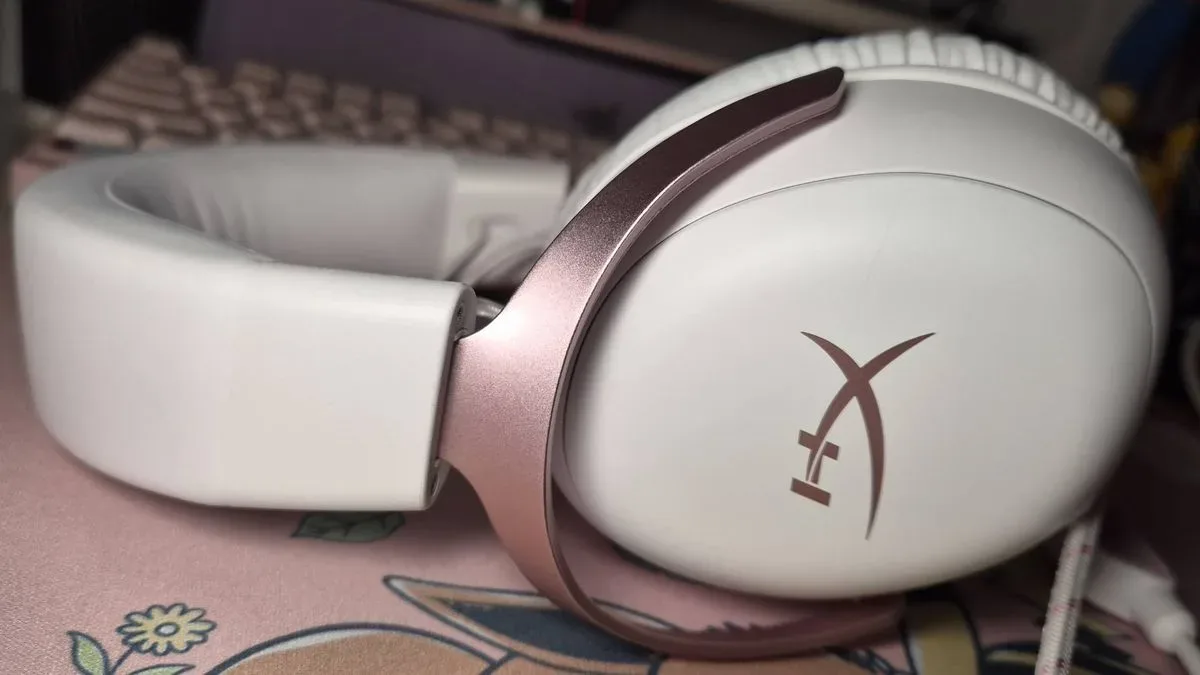
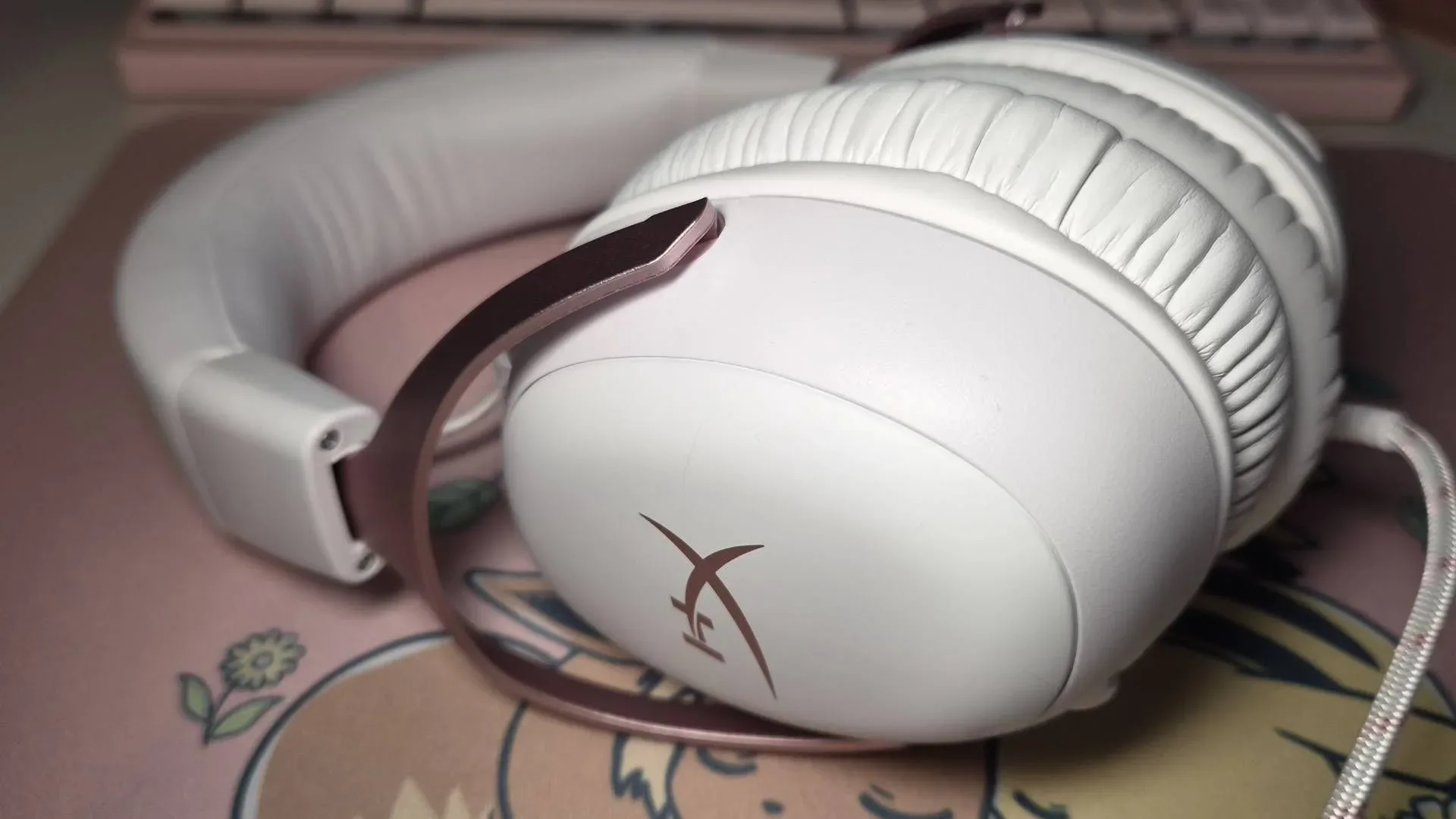
The Cloud III uses an over-ear form factor, metal yokes and a leather-covered headband with memory-foam padding. The padding beneath the headband is described as light rather than especially dense, yet it supported extended use comfortably. At 308g before attaching the boom mic, it is not a weightless headset, but the reported comfort suggests the distribution and cushioning are doing meaningful work.
Long-session comfort is not a cosmetic concern. A headset can sound excellent and still be a poor purchase if clamp pressure, a hot earcup material or a hard headband makes players take it off between matches. For games built around repeated rounds, long RPG sessions, streaming or general media use, the physical design has as much bearing on day-to-day satisfaction as a technical specification.
The simple hardware controls suit that focus. A volume dial is immediate and does not require tabbing out of a game, while a dedicated mute button provides a quick option when voice chat needs to stop. There is no battery to charge, no wireless pairing to recover and no ANC system to configure. The Cloud III is fundamentally a plug-in-and-play product, with its versatility coming from the cable rather than from a complex wireless feature set.
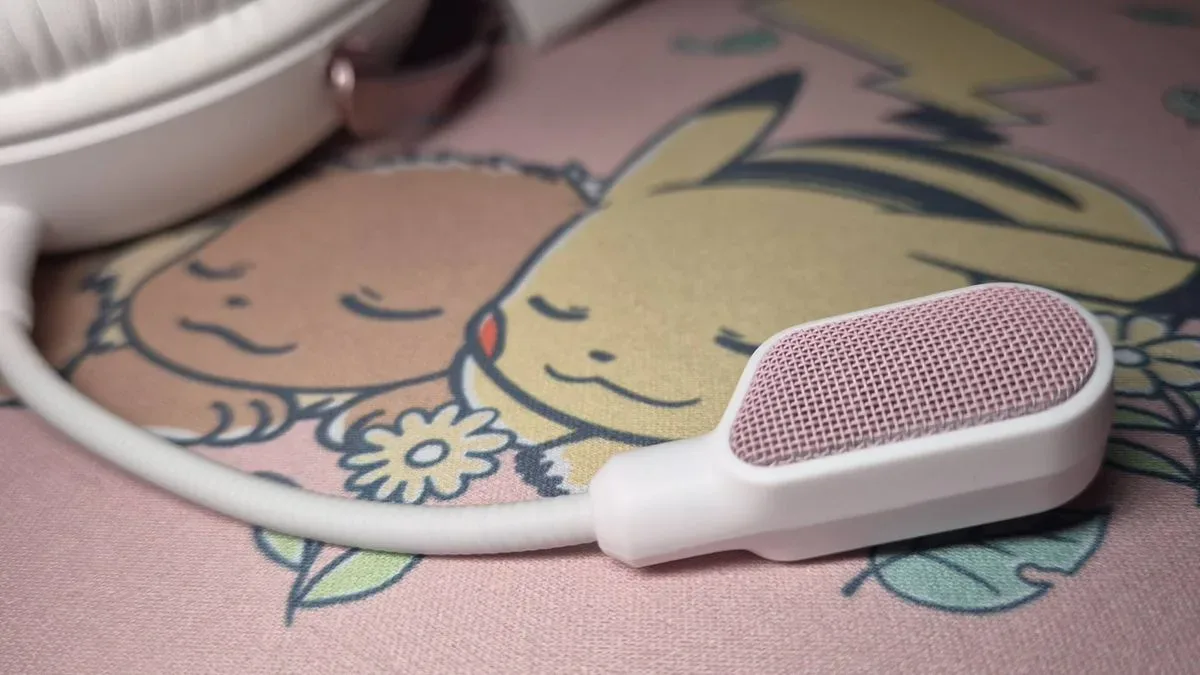
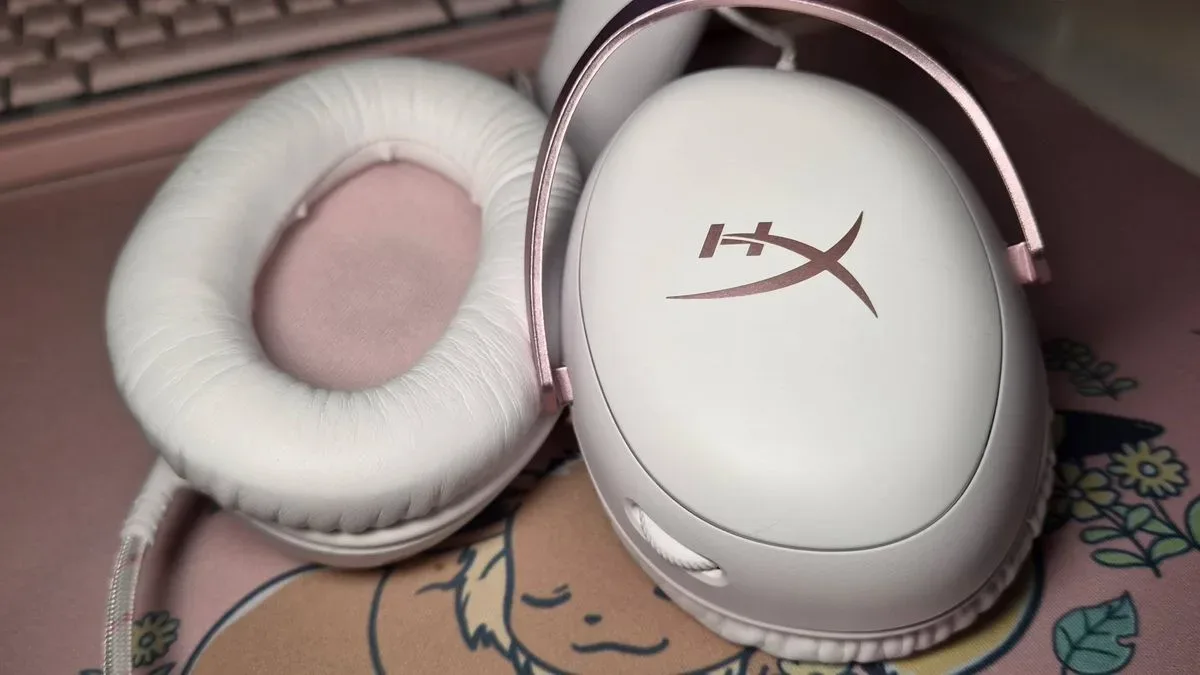
For buyers who care about their desk or handheld setup looking coordinated, the White-Pink edition adds a specific visual option. It uses a white finish across the cups, fabric-covered cable and headband, offset by cool metallic pink yokes, pink logos, pink earcup interiors and matching cable speckles. The microphone grille receives the same dusty pink treatment. It is a more deliberate aesthetic than the all-purpose dark headset look, while retaining the same broad design language as the wireless Cloud III counterpart.
Audio and microphone: the essentials land well
The supplied assessment found the Cloud III performed well across PC, PS5, Switch 2 and Steam Deck use, with game effects and dialogue coming through clearly. The broad low-end reach was also said to help both games and music. Those findings are more informative than interpreting driver size or frequency range as guarantees: the reported experience points to an all-round presentation capable of handling triumphant game scores, dialogue and bass-driven effects without the headset becoming narrowly specialized.
Closed-back headphones can be particularly practical for shared spaces because their design limits sound escaping from the earcups compared with an open-back model. The same construction can also help players focus when there is some background activity around them, though it is not a replacement for active noise cancellation. The Cloud III has no ANC, so buyers specifically seeking electronic suppression of travel noise, loud appliances or a busy room should not assume this set offers it.
The detachable electret condenser microphone is another key part of the package. An electret condenser microphone is a common microphone design that uses a permanently charged material as part of its sensing element. The important everyday outcome here is the reported voice quality: clear recordings with unwanted background noise kept under control. For squad play, that can be the difference between callouts being useful and becoming another source of friction.
Detaching the boom adds flexibility. Players who rely on a separate desktop microphone can remove it rather than leave a redundant arm in their peripheral vision. Players who want one headset for both game sessions and solo listening can do the same. Conversely, users seeking a self-contained voice-chat solution have the included mic and physical mute control ready to use.
Good audio hardware is increasingly relevant outside conventional multiplayer too. Spatial formats and higher-quality streaming options continue to give viewers reasons to care about their playback gear; for example, Apple TV’s Formula 1 stream adding Dolby Atmos illustrates how premium audio formats can become part of the wider entertainment conversation. The Cloud III is not presented here as a Dolby Atmos-specific product, but it is designed to serve games, music and video across several platforms.
Who should wait for a deal?
The straightforward answer is: almost everyone considering this particular wired model. The Cloud III’s $99.99 / £101.99 list price is high enough to invite comparison with wireless headsets, including the SteelSeries Arctis Nova 3 Wireless, which can reportedly cost less during promotions while offering both wired and wireless connectivity. Buyers who have a firm budget near the Cloud III’s MSRP should compare alternatives carefully rather than treating the HyperX name or its connector bundle as a reason to buy immediately.
At approximately $56 / £69, the equation changes. That price recognizes the headset’s limits—it is wired, lacks ANC and has a cable that can feel unwieldy—while leaving its central strengths intact. It delivers broad platform compatibility, a comfortable reported fit, solid game and music playback, a capable removable mic and useful physical controls. Those are durable qualities, not temporary sale-page features.
It makes the most sense for
- Players using more than one platform and wanting 3.5mm, USB-C and USB-A options in the box.
- PC and console users who prefer the simplicity of a wired connection and do not want to manage charging.
- Multiplayer players who need a clear detachable boom microphone and a quick mute control.
- Buyers who value an over-ear closed-back design for longer sessions.
- People building a white-and-pink setup who prefer a coordinated headset rather than a standard black model.
Consider alternatives if
- You want wireless freedom as a baseline feature rather than a future upgrade.
- You need active noise cancellation.
- A long wired cable will be a persistent nuisance in your playing space.
- You find the Cloud III near its $99.99 / £101.99 list price and can access similarly priced wireless choices.
The sensible verdict is therefore precise rather than absolute: the HyperX Cloud III is a notably capable wired headset, but it is not a no-questions-asked $100 purchase. Its design, cabling and microphone make a convincing practical package, and its stated audio performance gives that package substance. Wait for the recurring discounts, however, and it becomes much easier to recommend—especially to players who need one wired headset that can follow them from console to PC to handheld without a separate adapter hunt.