Some gadgets demand a flowchart before they become fun. There is the device itself, then the accessories that should have been in the box, then the charger that somehow has its own personality, and finally a vaguely ominous government webpage asking whether your new purchase has become an aircraft in the eyes of the law. The DJI Neo Fly More Combo is aimed squarely at making that whole process feel less like a side quest.
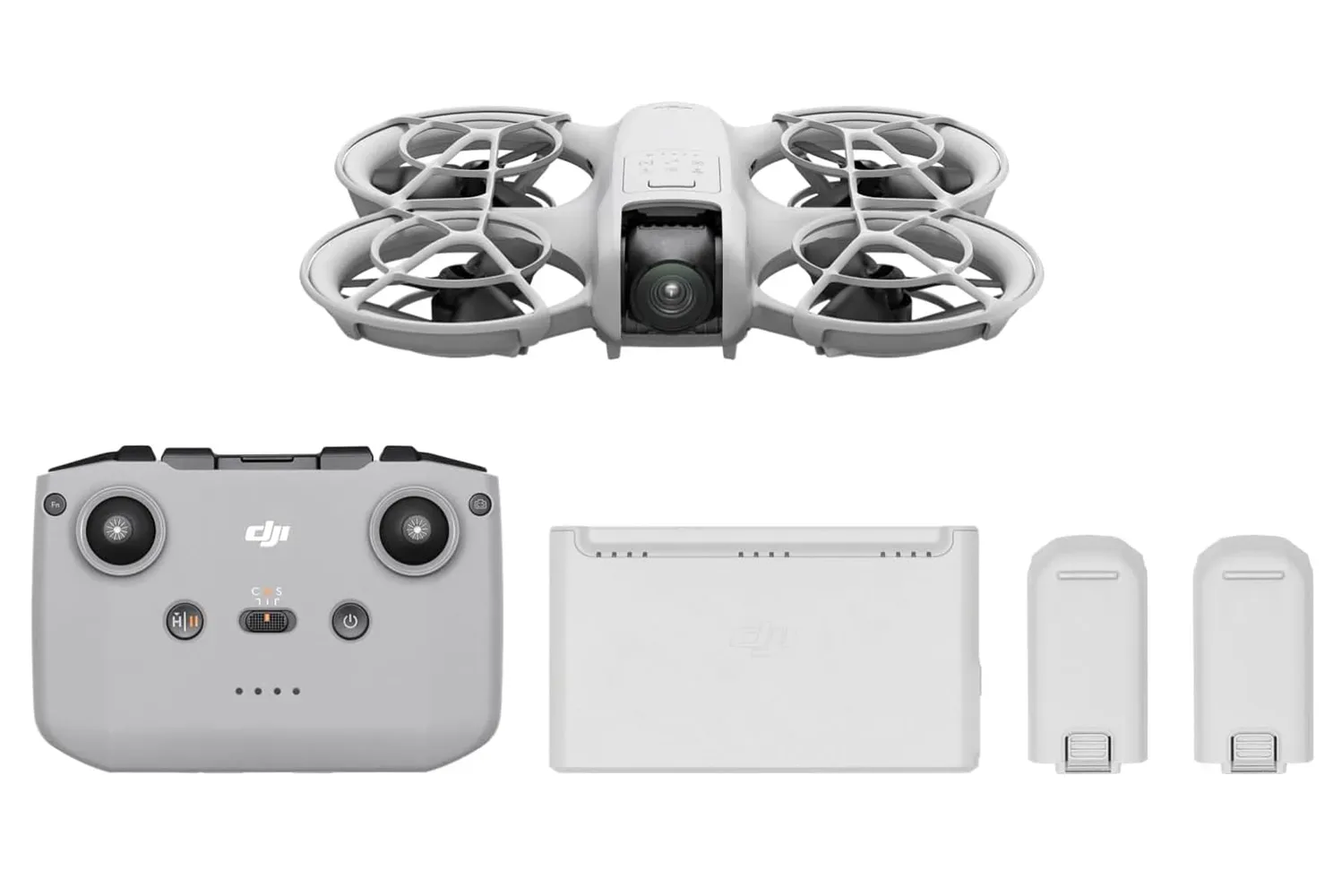
The compact camera drone package is listed at $239 on Amazon, described as a record-low price for the Fly More Combo. The significant word is not merely “more,” although three batteries are indeed more than one. It is that the bundle appears designed to provide the equipment a new pilot is likely to want from the outset: a DJI Neo drone, an RC-N3 controller, three batteries, a two-way charging hub and full-coverage propeller guards.
At 135 grams, the Neo is far below the 250-gram weight point that matters for many U.S. recreational-drone registration rules. That is a meaningful convenience for a product intended to be carried casually, launched quickly and used for short video moments rather than treated as a full expedition. But “small” is not another word for “rule-free.” Pilots still need to observe applicable FAA rules, local restrictions and location-specific airspace requirements. A light drone can avoid one regulatory hurdle while the place where a person wants to fly presents an entirely different one.
Still, the appeal here is clear: this is a small machine trying very hard not to become a large project.
A pocketable camera drone with a broad control menu
The Neo supports several ways to get airborne. Palm takeoff and landing is central to the pitch, allowing the drone to lift from a hand rather than needing a launchpad or a conveniently clean patch of ground. That is especially useful for the sort of impromptu video a tiny drone encourages: a walk at a scenic overlook, a family gathering in a yard, a cycling stop, or the universal modern activity of attempting to make an ordinary outing look like a trailer for an adventure game.
Those who prefer traditional inputs can use the included RC-N3 controller. The drone can also work through the DJI Fly mobile app, while voice commands provide another controller-free option. Each method serves a different comfort level. A physical controller is the more familiar choice for people who want direct flight control, while app- and voice-based operation lower the intimidation factor for someone who mostly wants a quick clip rather than a new technical hobby.
The Neo also includes subject tracking through onboard computer vision, intended to keep a selected person in frame automatically. That functionality matters because the most common obstacle to recording oneself is the minor issue that one is also the person who would otherwise be holding the camera. A tracking drone does not eliminate every creative decision, but it can handle the basic work of following the subject while they walk, run, pose or very deliberately pretend they did not know a camera was there.
For more stylized footage, DJI lists eight QuickShots modes. These automated flight patterns include moves such as spirals, helix paths and boomerang-style pullbacks. Their value is less about making every outing look like a blockbuster and more about making repeatable camera moves accessible without manually planning each route. The result is a set of presets for when a user wants something more animated than stationary phone footage but does not want to spend the afternoon learning aerial cinematography vocabulary.
The capture target is 4K UHD video, paired with electronic image stabilization. In a category where tiny, inexpensive drones can easily produce footage that feels more like a shaky surveillance tape of one’s own vacation, stabilization is not decorative. It is a fundamental part of whether a clip is likely to be shared, edited or revisited after the initial thrill of flight wears off.
Designed for beginners, without pretending wind does not exist
DJI rates the Neo for level-4 wind resistance. That specification is useful as an indication that the drone is intended to maintain itself in a moderate breeze, not as a dare to send a 135-gram camera into weather better suited to dramatic television. Conditions change quickly, and small aircraft have very little mass to negotiate with the atmosphere. The sensible reading is that a light breeze need not immediately end the session, while strong wind remains a compelling argument for enjoying the view from the ground.
Full-coverage propeller guards come in the package. They are an especially relevant inclusion for new flyers and indoor use, where the distance between “careful first flight” and “unexpected meeting with a bookshelf” can be measured in fractions of a second. Guards do not make any drone invincible, and they do not replace awareness around people, pets, walls, branches or furniture with unreasonable confidence in itself. They do, however, reduce the exposed-propeller anxiety that can make a first session feel more stressful than it needs to be.
The combination of palm launch, automated tracking, preset shots and guards reveals the Neo’s intended niche. This is not being positioned as a giant flying camera rig for a production crew. It is a consumer-friendly tool for capturing a point of view that phones and action cameras cannot quite reach. That makes it potentially interesting to casual creators, travelers, families and players who want a different angle on outdoor hobbies or group events.
Anyone using a camera drone around a game-day gathering should still make privacy and safety part of the plan. Keep a respectful distance, avoid flying over people, do not use the drone where aircraft restrictions apply, and get permission when filming on private property. The best aerial shot is never worth turning a relaxed hangout into an argument about whose backyard has suddenly become a low-budget aviation zone.
The Fly More part is where the bundle earns its name
A single Neo battery is rated for up to 18 minutes of flight time. Real-world conditions and flight choices can affect any battery-powered product, so that headline figure should be treated as a maximum specification rather than a promise that every outing comes with precisely 18 cinematic minutes. Either way, one battery creates a familiar rhythm: unpack, fly, start getting comfortable, then discover that the session is over just as the idea gets good.
Three batteries change that rhythm. They give users additional opportunities to redo a take, test a QuickShot mode, learn the controller’s feel or simply spend more time flying before the charging conversation begins. The included two-way charging hub is equally practical. Rather than handling batteries one at a time through a single cable, owners can rotate power more efficiently and keep the set organized.
This is why comparing the $239 deal only with the cost of a standalone drone misses the point. Extra batteries and a dedicated controller are among the items many buyers eventually seek out after deciding they enjoy the device. Having them in the box means the package is less likely to produce the familiar accessory-purchase sequel, in which a bargain becomes expensive one necessary add-on at a time.
There is a gaming-adjacent lesson in that. Hardware bundles are often best judged by whether they remove the friction between opening the box and actually doing the thing. The same principle is behind the unwritten rules of couch multiplayer: the smoothest session is the one where everyone can join in before the momentum disappears. With the Neo Fly More Combo, extra batteries and the RC-N3 controller aim to keep a flight session from being interrupted by missing gear or an unusually short first chapter.
What the $239 price changes—and what it does not
The reported $239 Amazon price puts this version of the Neo against entry-level drones that may offer fewer included batteries or omit a controller. For shoppers who already know they want both traditional controls and longer time away from the charger, the package could be more compelling than a lower-priced bare kit that needs to be expanded later.
It does not transform the Neo into the right drone for every purpose. Buyers who need long endurance, specialized professional camera features, greater distance, heavier-weather confidence or more advanced manual control should carefully compare DJI’s specifications with their actual needs. Likewise, anyone whose primary goal is indoor recording should consider the size of the space, the people nearby and the local rules before treating a living room like a flight academy.
For the audience the Neo seems built for, though, the deal has a simple appeal. It combines a very light 4K drone with several control options, automated shooting tools, protective propeller guards, three batteries, a charging hub and an RC-N3 controller in one package. At $239, the Fly More Combo’s core proposition is not just that it can fly. It is that it includes more of the pieces that let a first-time owner keep flying once the initial lift-off turns into a genuine hobby.
Shop the products
Check current price, model and availability at the retailer.