Sanctuary is preparing to trade mouse clicks and controller inputs for cards, boards, miniatures and a very real tabletop covered in demons. Diablo: Unbound, a cooperative board game from Glass Cannon Unplugged, has been revealed as a dungeon battler for one to four players. Its planned Gamefound campaign is slated for Q1 2027.
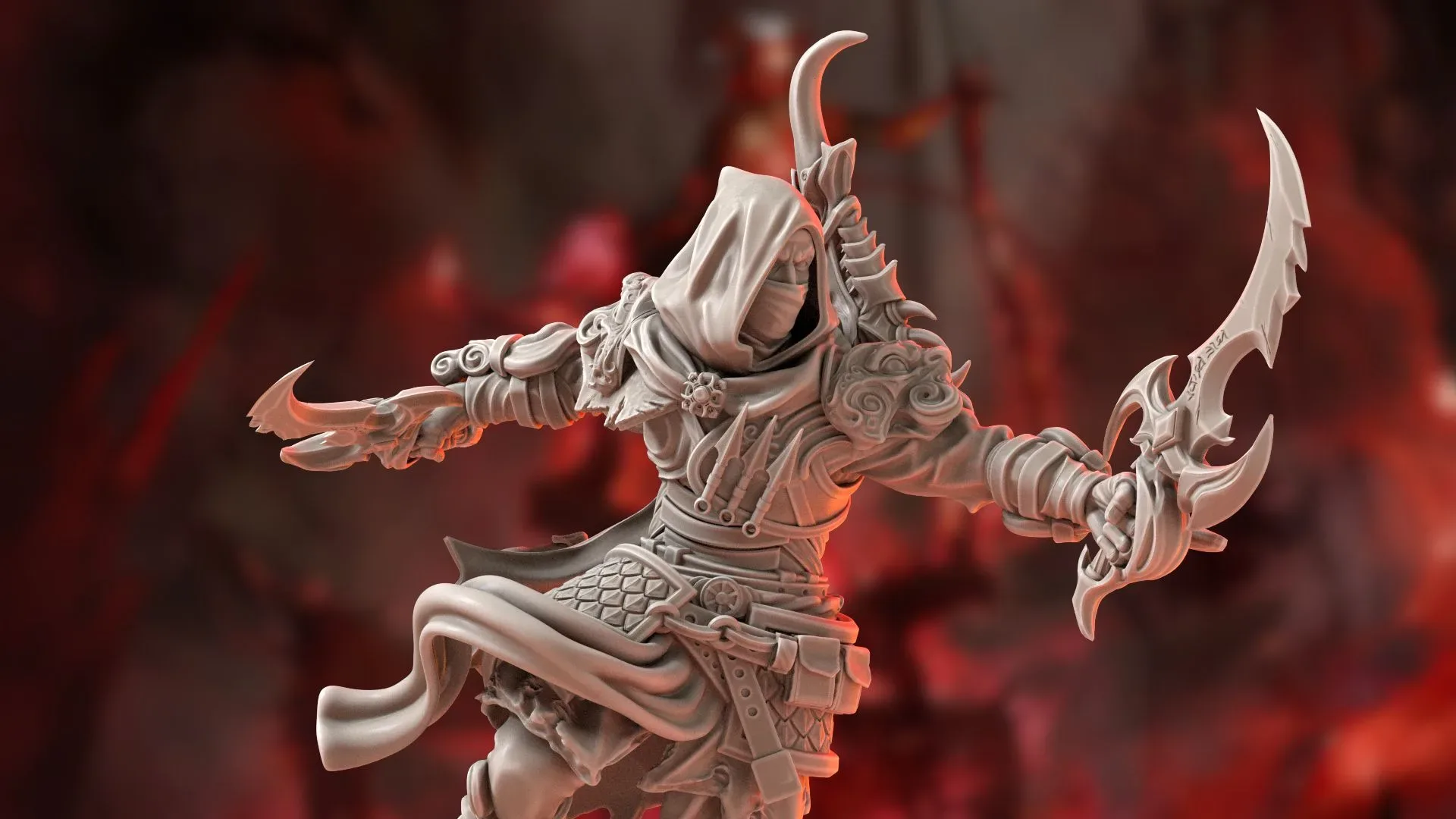
The central pitch is immediately familiar to Diablo players: choose a champion from recognisable classes, grow stronger, collect and equip gear, fight through enemies in iconic locations, and work toward a dungeon boss. The revealed material specifically points to the Rogue and Barbarian among the playable class options. It also indicates that the game can be played solo, rather than requiring a full party—an important detail for a genre often built around a group sharing tactical decisions.
There are still major unknowns. A reveal trailer and early details can show the broad shape of a game, but they cannot yet establish its full rules load, scenario variety, difficulty curve, campaign structure, setup time, or how its solo mode handles the absence of allies. Those are meaningful questions for any miniature-heavy dungeon game. What has been shown, however, suggests that Diablo: Unbound is trying to translate several of the video game series’ biggest loops—combat, build-crafting, loot and escalation—into distinct tabletop systems rather than simply borrowing the setting.
A co-op crawl with a solo seat at the table
Diablo: Unbound is described as a cooperative dungeon battler. In practical terms, that means players are expected to share a fight against the game’s enemies and boss rather than compete against each other. Cooperation can cover many things in a board game: positioning to protect a vulnerable ally, deciding which target needs to fall first, timing powerful abilities together, or dividing resources and equipment across a party.
The one-to-four-player range gives the game two very different potential use cases. At the higher end, it is a group dungeon-crawl experience. At one player, it becomes a solitary puzzle of managing a Diablo character and whatever systems the game uses to represent threats, monster behavior and progression. The announcement does not yet say whether solo players will control one champion or several, so that distinction remains unconfirmed.
That flexibility matters because Diablo’s appeal has always had two sides: the shared spectacle of mowing down hordes with allies, and the private satisfaction of reshaping a character build one upgrade at a time. A tabletop adaptation has to make both sides understandable without a screen silently handling enemy movement, damage calculations, random drops and status effects.
Glass Cannon Unplugged has previously worked on tabletop adaptations tied to Don’t Starve, Dying Light and Apex Legends. That background makes Diablo: Unbound part of a larger effort to turn digital-game identities into physical systems. The challenge is not merely putting recognizable monsters on cards or sculpting them as miniatures. It is deciding which parts of the original experience deserve to become player-facing choices.
Hexes, hordes and the physical battlefield
Early footage suggests combat will play out on a hex grid. A hex grid is a map divided into six-sided spaces rather than squares. In a dungeon battler, that layout can make distance, movement and enemy approach routes central to a turn. It also provides a clear physical language for area attacks: an ability may matter not only because of its damage, but because of which hexes it reaches and where it leaves a player after using it.
Related coverage includes Diablo: Unbound Board Game Announced, Bringing Sanctuary to Solo and Co-Op Tables.
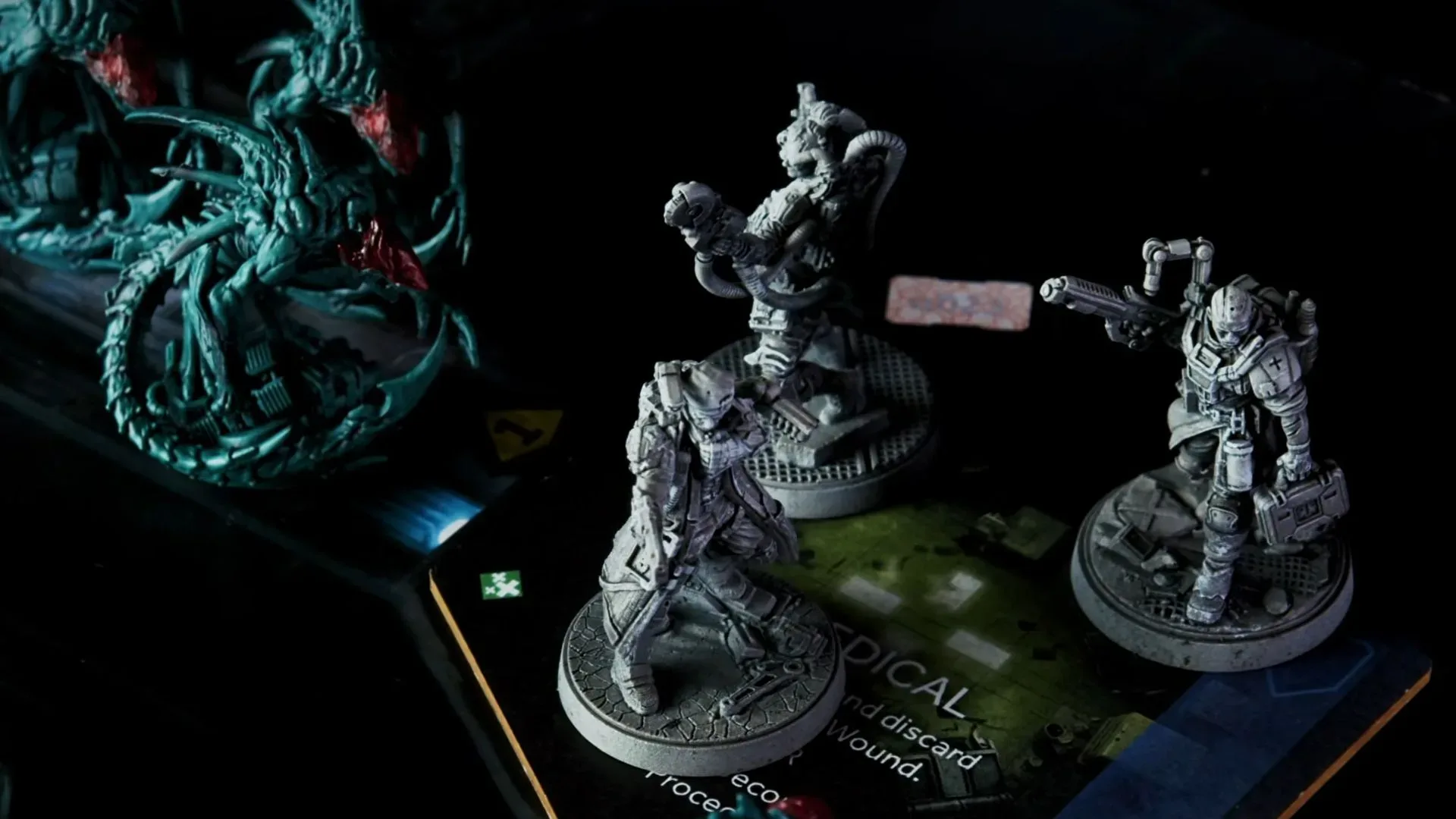
The map imagery points toward heroes facing groups of monsters, an especially important fit for Diablo’s horde-based fantasy. A tabletop game cannot effortlessly flood the screen with enemies, so it needs a readable way to make a crowded battle tense rather than slow. Miniatures, positioning rules and enemy activation systems will determine whether “a horde” feels like a tactical problem or simply a large amount of cleanup between turns. Those details have not been released.
The visual presentation shown so far includes miniatures and player boards. For fans, miniatures are more than decoration: they can make class fantasy and boss encounters immediately legible across the table. But gameplay value will depend on how clearly the board state communicates information. When several heroes, enemies, equipment effects, skill states and status conditions coexist, visual organization becomes as important as sculpt quality.
Nothing revealed so far confirms the number of miniatures, the scope of the included locations, or the exact monsters and bosses that will appear. The safer takeaway is that the game is being framed as a physical, map-based adventure with familiar Diablo imagery—not that every part of Sanctuary has already been promised.
Character building appears to be more than a single upgrade track
The most promising information in the early look may be the player-board layout. It appears to include dedicated spaces for chest armor, a helm, a ring, a necklace, left- and right-hand weapon slots, and even gems. That is a notably granular equipment framework for a board game. Rather than treating loot as a general bonus, it suggests that a champion’s setup could be assembled piece by piece.
In Diablo terms, gear is not just a reward; it is often the engine of a build. A build is the combination of character class, skills, upgrades and equipment that defines how a player approaches combat. On the table, individual slots could allow the game to distinguish a weapon decision from a defensive armor decision, or make gems another variable in the broader loadout. Whether those slots deliver substantial mechanical combinations or mostly track straightforward bonuses is not known yet.
Still, the board design is a useful signal. It implies that changing equipment may be a visible, ongoing part of the game rather than an abstract entry on a character sheet. For a Diablo adaptation, that choice makes sense: the satisfaction of finding a new item is stronger if players can immediately see where it belongs and how it changes their champion.
It may also create party-level decisions in cooperative play. If an item benefits one class more than another, the group may have to choose between giving it to the hero who found it and giving it to the hero who can best use it. That is analysis based on the visible slot structure, not a confirmed rule. The reveal has not explained how loot is acquired, distributed or upgraded.
Cards could carry the game’s tactical rhythm
Diablo: Unbound also appears to tie special actions and abilities to a deck-like card system. This is potentially a major design choice. A deck in a tabletop game can be a simple hand of options, a sequence that changes as cards are used, or a personal toolkit that evolves during play. The announcement does not yet specify which of those approaches Unbound uses, so it would be premature to label it a full deck-building game.
What is visible is a system of double-sided skill cards, with a base side and an upgraded side. This could offer a clean way to show progression: the card a player starts with is physically transformed or replaced by its stronger state as the adventure advances. It is an intuitive tabletop translation of leveling up. Instead of remembering a new value buried in a rulebook, players can see the revised ability in hand or on the table.
Double-sided cards bring practical considerations too. Players who want to protect cards may need sleeves designed for double-sided use, because an opaque-backed sleeve would hide one face. That is a small production detail, but it is relevant to a system that asks players to use both sides of a card. It also underlines how the final component decisions could affect the everyday play experience.
The card system could be where Diablo: Unbound either finds its own identity or becomes overly familiar. A great tactical card structure creates decisions beyond “use the strongest attack available.” It can make timing, positioning, resource conservation and party coordination matter. A weaker one risks reducing combat to repeatedly selecting obvious effects. The current reveal establishes the presence of cards and upgrades, not their final depth.
What potential players should watch for before the campaign
A Q1 2027 campaign window leaves time for more rules information, and the early build available at Spiel Essen in Hall I may give attendees a first indication of how the core loop feels. For everyone else, the sensible approach is to separate confirmed components from reasonable expectations.
- Confirmed direction: one-to-four-player cooperative play, familiar Diablo classes including the Rogue and Barbarian, dungeon bosses, leveling and gear, miniatures, player boards, a hex-based map presentation, and a card-linked ability system with base and upgraded skill faces.
- Still unclear: the number and format of scenarios, exact campaign progression, enemy automation, how solo play functions, component counts, final rules, final visual contents, and how much customization each class receives.
- Worth evaluating later: whether the equipment slots create meaningful build choices; whether a crowded hex map remains easy to read; and whether upgrading skills changes tactics rather than only increasing numbers.
Those unanswered questions are not a knock on an early reveal. They are simply the details that separate an attractive Diablo-themed box from a durable cooperative game. Fans of boss battlers will likely focus on encounter variety and the payoff of facing major foes. Dungeon-crawl players may care most about map flow, monster behavior and advancement between fights. Players drawn to solo tabletop games will want a close look at upkeep and decision density when there is no group to share the work.
The timing also places Diablo: Unbound in a broader moment where the game business is confronting uncertainty around major role-playing properties and their creators. That makes the continued movement of recognizable worlds into new formats notable; recent industry developments around BioWare’s closure and the cancellation of the next Mass Effect are a reminder that established RPG settings do not guarantee a straightforward future in their original medium.
For Diablo: Unbound, the immediate promise is clear enough: a party of heroes, a tactical grid, a pile of enemies, equipment to slot into a growing character board, and a boss waiting at the end of the crawl. The more important test will arrive when fuller rules explain how those pieces interact. Until then, the reveal offers a compelling outline of a tabletop Sanctuary, with the final shape of its dungeon still hidden under the fog of war.