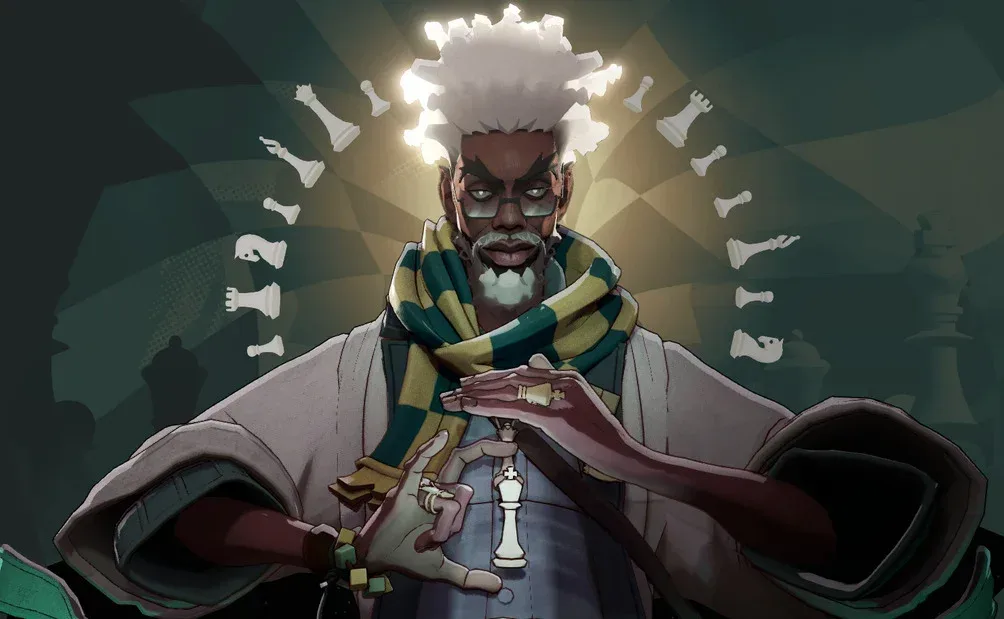
Deadlock’s newest chess-minded hero appears to be treating every reload as a tiny museum exhibit. Players examining Solomon’s board animation have found that its piece layouts can reproduce positions from celebrated chess games, including Adolf Anderssen’s 1851 contest against Lionel Kieseritzky and Deep Blue’s 1996 victory over Garry Kasparov.
It is a remarkably specific flourish for an action game: a moment most players may read simply as a weapon-reset animation is also a visual reference for people who recognize the positions. The discovery has helped Solomon stand out shortly after his arrival in Deadlock’s “City Never Sleeps” update, which added him alongside five other heroes.
A reload with more than one job
In a multiplayer game, a reload animation has a practical role. It communicates that a player is briefly refreshing their weapon or resource and may be vulnerable before returning to full pressure. Solomon’s reload also serves that basic readability function, but its chessboard gives the motion an additional layer of character.
Rather than filling the board with a fixed, generic opening setup each time, the animation can arrange pieces into recognizable historical configurations. That is the distinction that made eagle-eyed players take notice. The board is not merely decorated with chess pieces because Solomon is a grandmaster; its changing arrangement reflects games connected to chess history.
That degree of specificity is especially apt for a hero whose identity is rooted in the game of chess. Solomon does not just carry the visual language of the game. His battlefield abilities involve conjuring oversized chess pieces and commanding them to move in ways that mirror their miniature counterparts. The reload references therefore reinforce the same central idea from a quieter angle: chess is not a costume placed on top of his kit, but the grammar used to shape his presentation.
The two positions players have identified
Anderssen vs. Kieseritzky, 1851
One of the recreations points to the 1851 game between Adolf Anderssen and Lionel Kieseritzky, commonly known as the “Immortal Game.” Its inclusion makes sense as a shorthand for a famous, dramatic chapter of chess history. A reload is an extremely short piece of animation, so the reference does not ask everyone to understand a full score sheet or recognize every move. For chess fans who do recognize it, however, the arrangement turns a functional pause into a reward for close observation.
Deep Blue vs. Kasparov, 1996
Another arrangement invokes the 1996 game in which IBM’s Deep Blue computer defeated Garry Kasparov. The contrast with the 1851 reference is part of what makes the detail interesting. One points to a nineteenth-century landmark game; the other recalls a defining computer-versus-grandmaster result from much later. Together, they suggest that Solomon’s board draws from chess history broadly, rather than limiting its nods to a single era or a single style of famous game.
Neither reference needs to alter the match mechanically to matter. They work as diegetic characterization: a storytelling detail presented through something inside the game world, rather than through an external menu description or explanatory cutscene. Solomon’s board is an object associated with the hero, and its positions communicate his expertise and obsession without stopping the action to explain either.
Related coverage includes Deadlock’s Solomon Reload Animation Recreates Historic Chess Games.
Why small animation details land in hero shooters
Hero shooters depend on rapid recognition. Players need to learn silhouettes, abilities, sound cues, team roles and threats, often while several combatants are on screen. Strong character design therefore has to communicate quickly. Solomon floating in a lotus pose with a chessboard already creates a distinct outline and theme; the historical board positions give repeated close-up moments additional substance.
The key is that the reference is optional. A player who has no interest in chess can still understand the immediate message: Solomon is reloading his board and will be ready again. Someone who follows chess can spot a position, identify it and share the discovery. That makes the design detail accessible without reducing it to a requirement for playing effectively.
There is also a social benefit to this kind of work. Multiplayer communities routinely create clips, compare footage and inspect animations frame by frame. A rotating set of board states gives players something concrete to investigate. It supports conversation about the game’s world and character craft, not only tier lists and balance arguments.
That is not the same as proof that a hero is balanced or that every update will be successful. Cosmetic polish and competitive design are separate questions. But careful presentation can make an unfamiliar character more memorable, which is valuable in a genre where a roster’s personalities can otherwise blur together.
Solomon’s place in Deadlock’s strange New York
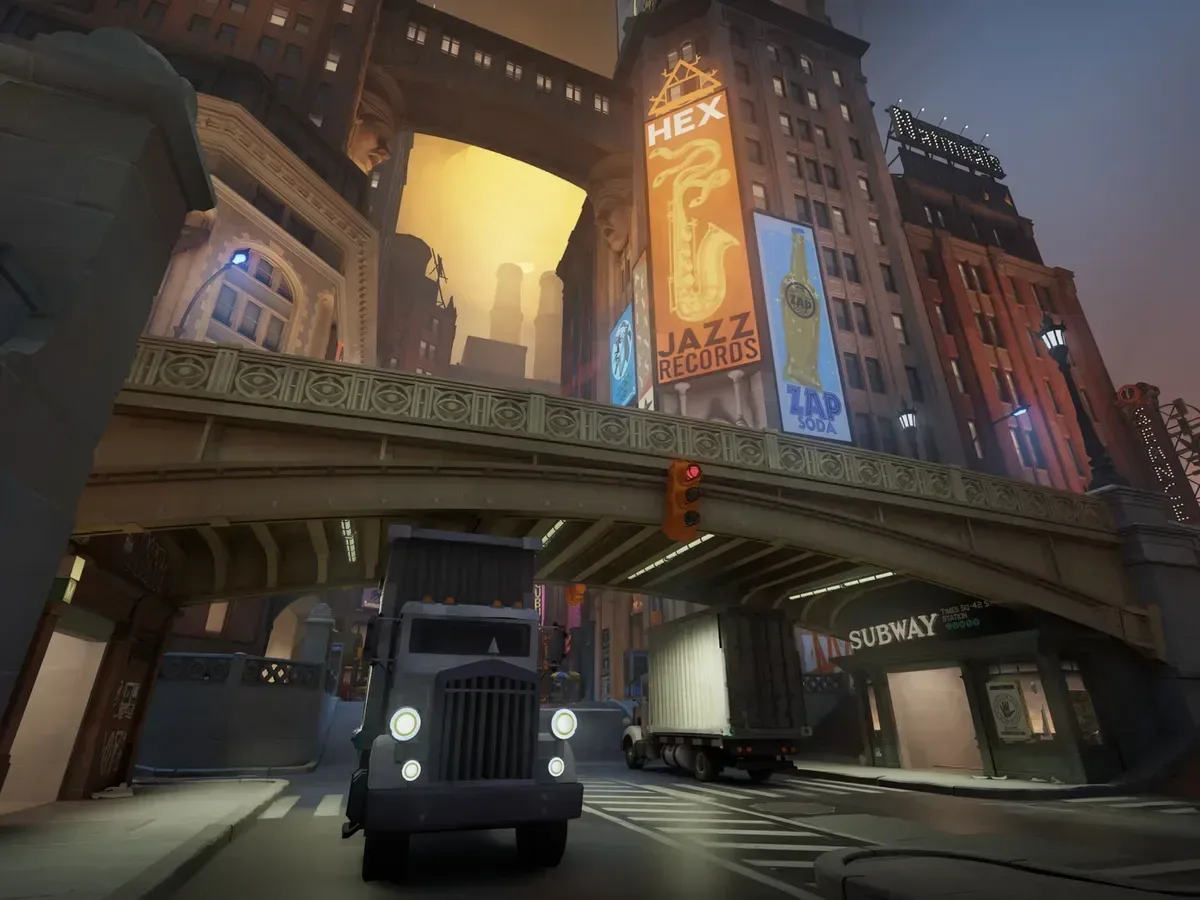
Deadlock is set in an alternate mid-century New York after a disaster called the Maelstrom brought fantastical creatures into the city. At the center of its conflict are two deities competing for control, with heroes aligning themselves with one side or the other in pursuit of granted wishes.
That premise gives the roster license to be unusually eclectic. Solomon is a floating chess grandmaster, while the same update also includes characters tied to folklore and to a sewer-dwelling antagonist from The Nutcracker. The variety matters because the chess references do not exist in an otherwise realistic sports or military setting. They belong to a world already built around magic, myth and stylized urban fantasy.
Within that backdrop, a grandmaster who manifests gigantic chess pieces is a clean example of a character fantasy carried through multiple levels of design. The theme informs the hero’s pose, prop, animation and powers. The historic reload configurations are an even more focused expression of that approach: not just chess pieces, but particular games from chess history.
What players should and should not infer
The reload discoveries are best understood as visual easter eggs. An easter egg is a deliberately hidden or easily missed reference placed for observant players to find; it need not signal a secret mechanic, a future hero, or a competitive advantage. The available evidence establishes the existence of identifiable historic positions in Solomon’s reload animation. It does not establish a complete catalog of every board arrangement, a special trigger for seeing particular games, or any gameplay effect associated with them.
That distinction is useful while Deadlock remains in closed beta. Beta development can involve change, and an appealing animation should not be treated as a promise that all character behavior, balance or content will remain untouched. The most defensible takeaway is also the most enjoyable one: Solomon currently has an unusually detailed character animation with references that reward chess knowledge.
It is also a reminder to separate confirmed in-game details from speculation when following games still in development. The same habit helps when evaluating broader reports and claims, such as the unverified size figures collected in this GTA VI download-size rumor breakdown.
A good fit for the character, not a substitute for the game
Solomon’s historic reload positions have attracted attention because they are both legible and unexpectedly deep. At a glance, they support the fantasy of a composed chess master preparing his next move. Under scrutiny, they offer references spanning Anderssen and Kieseritzky’s 1851 game and Deep Blue’s 1996 win over Kasparov.
For players, the practical implication is modest: do not expect the animation itself to change how a match is played. For the character, though, the implication is clearer. Deadlock’s latest roster addition has a design identity expressed in combat, posture, props and even one of the most routine actions a player performs. That is why a brief reload has become a talking point—and why chess fans have been so eager to study the board.