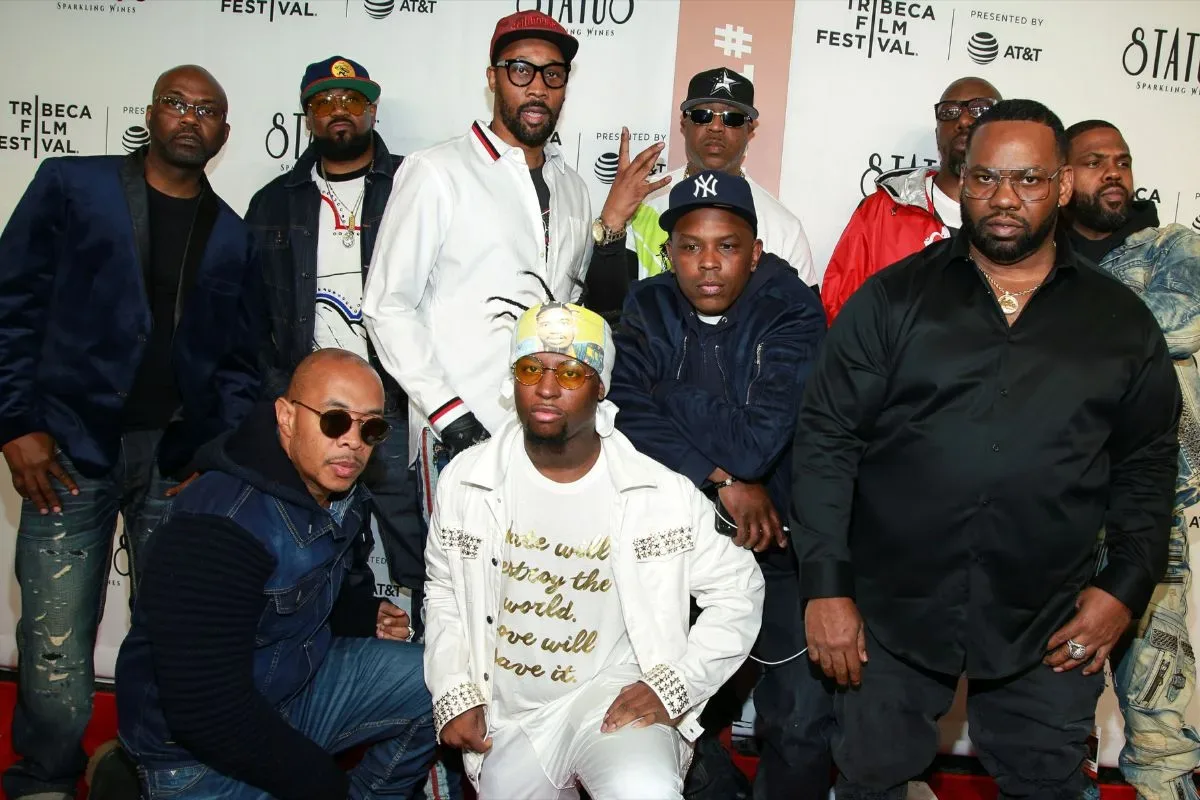
Wu-Tang Clan’s famously inaccessible one-copy album is returning to the center of the conversation through The Disciple: A Wu-Tang Fable, a documentary set to begin streaming on Netflix on October 16. A newly released trailer frames the film around a question that has followed Once Upon a Time in Shaolin from the start: can recorded music be treated as a singular art object without shutting out the listeners who give it cultural meaning?
The documentary follows Tarik Azzougarh, the Dutch-Moroccan rapper and producer known as Cilvaringz. His path moved from Wu-Tang fan to creative collaborator, a relationship that ultimately led to the 31-song project. The album was sold as a single physical copy in 2015 for a reported $2 million, making it an unusual object at the intersection of music, collecting, ownership and public access.
That sale is the headline, but it is not the whole story. The trailer appears to put the album’s high-art aspirations beside the frustration of people who simply wanted to hear it. Speakers compare the one-copy idea to the Mona Lisa while also challenging the decision to sell the record to the highest bidder. That tension is central to why the project has endured as more than a costly curiosity.
A music release designed to be scarce
Scarcity is a familiar concept in physical collecting. A unique painting, a one-of-one trading card or a single production prop can derive significance from the fact that no identical replacement exists. Once Upon a Time in Shaolin applied that logic to an album. Rather than producing a normal commercial run, the project was positioned as one physical copy.
That distinction matters. A conventional album release is generally built around duplication and distribution: many listeners can buy, stream or otherwise hear the same work. This project instead made the master object itself the point of ownership. The buyer was not merely purchasing a limited edition with a low print run; the buyer acquired the only physical copy offered under that plan.
For collectors, uniqueness can be the attraction. For fans, uniqueness can look like a locked door. Recorded music is usually experienced through repetition, sharing and discussion. When access is restricted to one owner, the work’s rarity and its cultural availability pull in opposite directions.
The original arrangement made that conflict even sharper because it barred a commercial release until 2103. In practical terms, that meant the project’s intended art-object status came with an extraordinary limitation on normal listening. A person could know the album existed, know its title and history, and still have no ordinary way to engage with the full record as music.
Cilvaringz’s place in the story
The Disciple focuses on Cilvaringz rather than treating the album solely as an auction headline. He signed with RZA’s Razor Sharp Records, toured with Wu-Tang, and produced tracks before assembling the project through recording sessions in Europe over a period of years.
Related coverage includes Netflix Trailer Revisits Wu-Tang Clan’s One-Copy Album Story.
RZA, who is an executive producer on the documentary, characterized that journey as a rare instance of a fan getting the opportunity to work alongside an artist and contribute to that artist’s legacy. It is an important framing because the documentary’s subject is not only a product but a relationship: a fan entered an established creative world, became a collaborator, and helped bring an ambitious and divisive project into existence.
The film is also director Joanna Natasegara’s feature directing debut. Natasegara encountered Cilvaringz while on vacation in Morocco. At the documentary’s Sundance premiere in January, she explained that she knew of the one-copy album but did not know his role in making it or the way the project had been assembled.
That perspective gives the documentary a potentially useful route into a story often compressed into a few dramatic facts: a legendary hip-hop group, an album no one could commercially buy, a multimillion-dollar sale, and a controversial purchaser. The person who spent years building the project can easily be lost in that shorthand. The film’s title signals that Cilvaringz’s position within the Wu-Tang orbit is its main subject.
The dispute over how the project was presented
The album’s history is not just a debate between collectors and listeners. Method Man raised a separate concern in 2024 about how the project had been presented to Wu-Tang’s members. He said the artists were paid to record songs without being told their verses would become part of this particular project, and he disputed the notion that it was supposed to be a Wu-Tang album.
“We were never told what it was. It was never supposed to be a Wu-Tang album,” Method Man said in 2024.
That allegation adds a major complication to the broader discussion. The phrase “Wu-Tang album” carries expectations about authorship, participation and group consent. If contributors understood their work differently from the way the finished project was presented, then questions of provenance extend beyond who physically owned the object.
Provenance is the documented history of an item: who made it, how it changed hands and what can be established about it. In collecting, provenance helps explain authenticity and value. In this case, however, provenance is also creatively charged. The history of sessions, contributions, contracts and the album’s eventual branding matters to how audiences understand what the one-copy release represents.
The trailer’s focus on the fallout suggests the documentary will not reduce the matter to an easy celebration of a bold experiment. The available details establish competing viewpoints: an effort to give music the rarity of physical art; an audience angered by the lack of access; and a public challenge from one group member about the project’s formation and labeling.
From auction buyer to forfeiture and new ownership
The album’s ownership path contributed substantially to its notoriety. Martin Shkreli bought it in 2015. He later forfeited the record in connection with his securities-fraud conviction. In July 2021, the Justice Department sold the album and applied the proceeds toward his roughly $7.4 million forfeiture judgment.
That sequence separated the object from its first high-profile buyer and made it part of a legal and financial process rather than simply a private music transaction. It also reinforced the public sense that the album had become an emblem of extreme ownership: a work surrounded by famous artists and fan demand, but repeatedly discussed through the actions of people outside the group itself.
PleasrDAO acquired the record in 2021. In June 2024, the group said it had secured rights to 16 of the album’s 31 tracks and announced a $1 digital sale intended to unlock portions of the music over time.
The rights detail is significant. Owning a physical item and having the legal ability to distribute its music are not necessarily the same thing. A collector may possess a one-of-one object, but copyright and other usage rights can determine whether tracks may be released, shared or commercially exploited. PleasrDAO’s reported rights to 16 tracks, rather than all 31, illustrates why access to an album can be more complicated than possession of its single copy.
Its proposed $1 digital sale also points toward a different model from the 2015 auction. The original single-copy concept concentrated control in one buyer. The later plan described by PleasrDAO was designed to open portions of the music over time. Neither approach erases the album’s unusual restrictions or the dispute around its creation, but the contrast helps explain why this story continues to evolve long after the initial sale.
Why the documentary’s timing matters
There is a reason the album still attracts attention more than a decade after it was sold. It poses a durable question about what fans believe they are supporting when they support an artist. Is a recording principally a work to be heard, a commodity to be owned, an art object to be preserved, or all of those things at once?
There is no single answer in the material surrounding Once Upon a Time in Shaolin. The project was deliberately built to challenge the low perceived value of recorded music by making an album rare. Yet music’s value to communities is often bound up with circulation, not confinement. People build memories around songs because they can return to them, debate them and share them.
That is what makes this more complicated than an ordinary collector’s item. A sealed collectible can retain value even if it is never opened. An unheard album contains an unavoidable contradiction: preserving its exclusivity also limits the act it was made for—listening.
For readers following hip-hop’s wider conversations about legacy, ownership and creative competition, the debate also lands alongside other high-profile reflections on the genre’s past, including Jay-Z’s recent description of his Nas feud as competition rather than a personal war. The Wu-Tang album story is different, but both discussions show how artists’ work and relationships are continually reinterpreted after the original moment has passed.
What to watch for in The Disciple
The available trailer details indicate that viewers should expect the documentary to examine more than the $2 million price tag. Its core threads include Cilvaringz’s progression from admirer to collaborator, the conceptual goal of making music function like rare physical art, fan anger over limited access, and the disagreements that followed.
- Cilvaringz’s creative role: The film is positioned around how he became part of Wu-Tang’s world and assembled the 31-song work.
- The art-object premise: The documentary addresses the attempt to attach rarity and singular ownership to recorded music.
- Listener access: The long restriction on commercial release is essential to understanding why the idea provoked such a strong response.
- Internal disagreement: Method Man’s 2024 comments make questions of contributor awareness and album identity impossible to ignore.
- Ownership versus rights: The later claim involving rights to 16 tracks shows that the object’s possession and its possible distribution are distinct matters.
The Disciple: A Wu-Tang Fable begins streaming Friday, October 16. Its subject remains unusual precisely because it cannot be settled by the sale price alone. The one-copy album was conceived as a challenge to assumptions about music’s value. The documentary now has an opportunity to explore the human, artistic and legal consequences of that challenge.