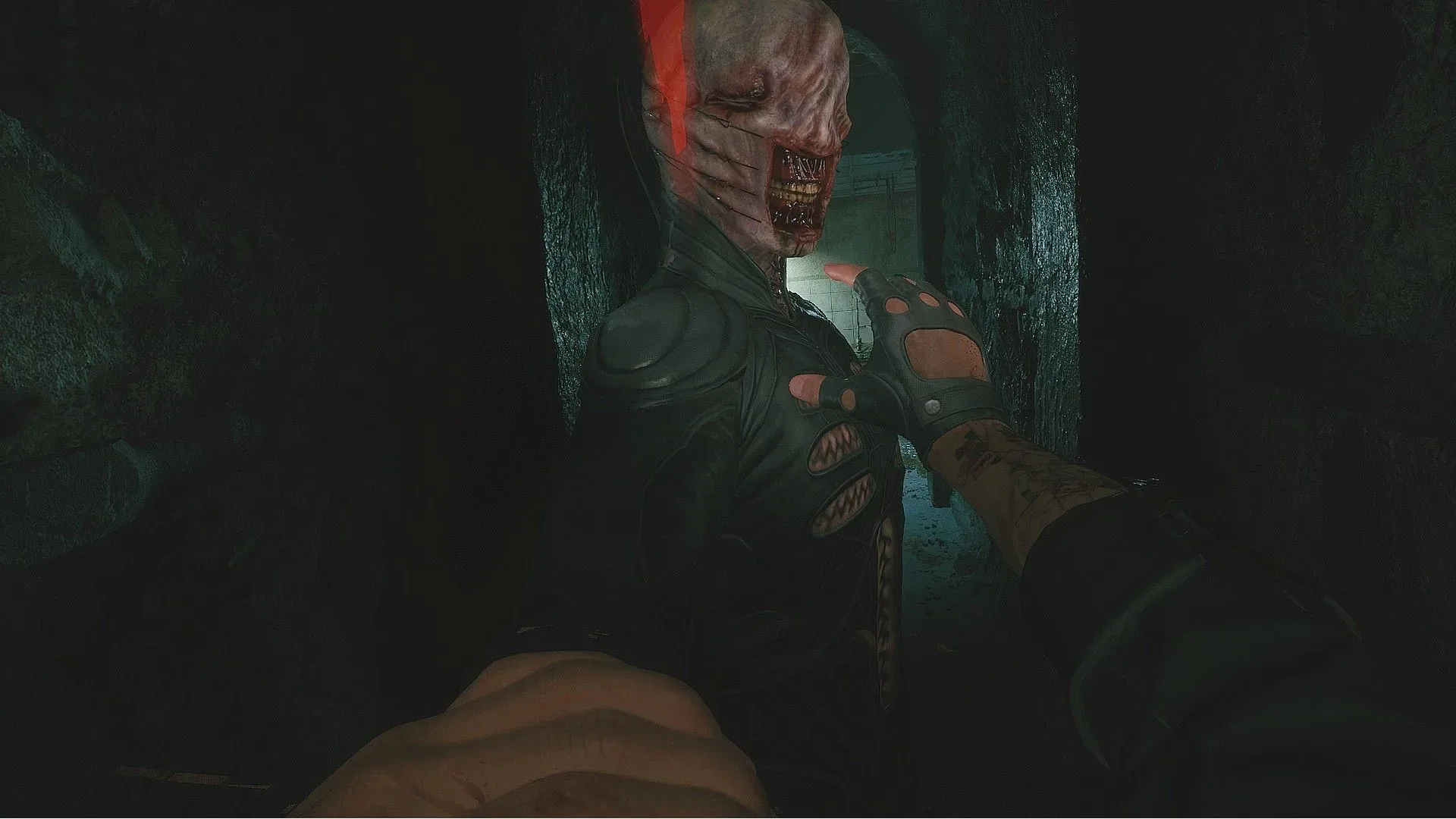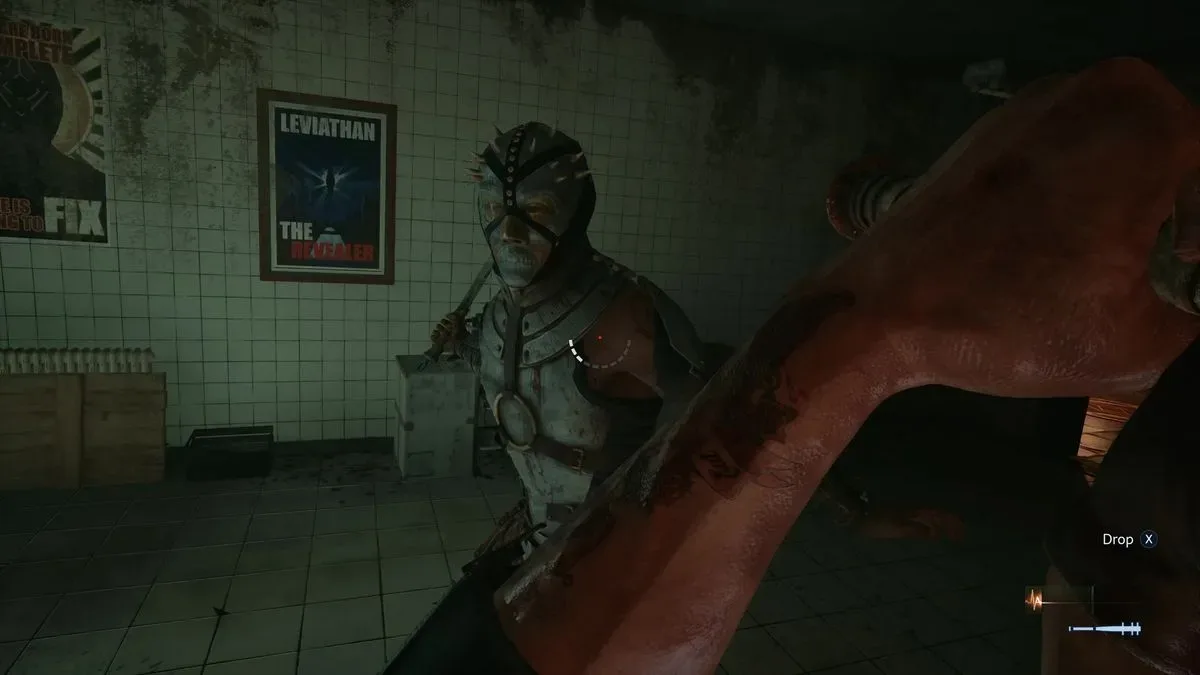
Clive Barker has offered unusually emphatic praise for Hellraiser: Revival, saying he once worried the new game would be “overly censored” but came away astonished by how far the team was able to go. The Hellraiser creator did not hedge his verdict: he said he was “proud as f**k” of the finished result.
That reaction is meaningful because Hellraiser is not a property whose identity can be cleanly separated from discomfort. Its world is built around bodily horror, extreme violence, nudity, and sexual material that is deliberately unsettling rather than decorative. A game adaptation therefore faces a difficult balancing act: soften the material too much and it risks losing the atmosphere that makes the setting recognizably Hellraiser; present it too bluntly and it can run into ratings limits and platform moderation problems.
Hellraiser: Revival, developed by Saber Interactive, appears to have embraced that tension rather than sidestepping it. The game has an M for Mature rating carrying warnings for blood and gore, intense violence, nudity, and strong sexual content. Pinhead and other Cenobites are part of the experience, placing the game firmly in the franchise’s established nightmare realm.
Barker’s concern was about dilution, not just a content label
“Censorship” can mean several different things in a game context. It may refer to cuts made ahead of release to meet ratings requirements, alterations required for particular markets, or decisions made internally because a publisher believes certain imagery is too risky. It can also describe a creative compromise in which a work keeps the name and iconography of a horror property but removes the qualities that gave it its edge.
Barker’s comments point most directly to that final concern. His approval is not simply an observation that the game received a mature rating. It is an endorsement of the extent to which the developers were permitted to explore material he evidently feared might be toned down. For a licensed adaptation, that is a notable distinction. Familiar villains and visual references are one way to establish authenticity; retaining a property’s emotional and thematic abrasiveness is a much harder task.
The praise also arrives with an important qualifier: it is Barker’s creative response, not a claim that every part of the game succeeds. Critical reaction has been mixed. One review scored Hellraiser: Revival a 6/10, arguing that Pinhead looked convincing but that much of the surrounding game did not reach the same standard. In other words, the game’s willingness to take its source material seriously can be viewed separately from questions about design, pacing, systems, or overall execution.
That split is useful for players considering the game. Barker’s comments speak to fidelity of tone and creative boldness. They do not erase criticism aimed at how well the game itself comes together.
A single-player survival horror route
Revival takes a single-player survival horror approach instead of following the asymmetrical multiplayer format used by several high-profile horror adaptations in recent years.
Related coverage includes Clive Barker Says Hellraiser: Revival Pushed Further Than He Expected.
Asymmetrical multiplayer games divide participants into unequal roles, commonly pitting a powerful killer against a group of more vulnerable survivors. The format can make sense for a recognizable horror antagonist because it lets players occupy the roles of hunter and hunted. But it can also turn a horror universe into a repeatable competitive loop, where tension is shaped by match balance, objectives, and player mastery.
Single-player survival horror aims at a different kind of pressure. The player is generally asked to endure a directed experience in which resources, vulnerability, hostile encounters, and dread are controlled more closely by the game’s design. For a setting like Hellraiser, that format potentially gives more room for sustained atmosphere and for imagery that is meant to disturb rather than function merely as a multiplayer match’s visual theme.
The supplied details do not establish exactly how Revival structures its combat, exploration, or progression, so those mechanics should not be assumed. What is clear is the larger choice: Saber did not build this as another asymmetrical multiplayer adaptation. It made a single-player survival experience set in the Hellraiser world.
That decision is especially relevant beside Barker’s praise. A survival-horror format can give a developer a more direct route to the franchise’s oppressive sensibility, while a multiplayer design must continually account for fairness, replayability, and the competing needs of multiple human players. Neither structure is automatically better, but they ask different things of the material.
The game’s intensity has created a separate problem for video creators
The same elements Barker celebrates may make Hellraiser: Revival difficult to share online. French YouTuber J0nathan reported that their channel was permanently banned after uploading gameplay footage. The report is particularly striking because the creator had reportedly obscured scenes containing nudity, yet still received the ban.
That does not by itself explain the platform’s decision or establish a universal rule for videos of the game. A single moderation outcome cannot tell creators precisely what will or will not be allowed, and the supplied information does not identify all the material reviewed in that case. It does, however, illustrate the practical divide between a game’s official age rating and a platform’s separate rules for uploaded footage.
An age rating is a consumer-facing classification meant to communicate the type of content present in a game. Platform moderation is different: video services apply their own policies to what can be uploaded, displayed, monetized, recommended, or kept on an account. Material acceptable in an age-rated game may still be restricted or removed when presented in a video format. Covering one category of material, such as nudity, may not address other elements that moderation systems or reviewers consider disallowed.
For streamers and video creators, the practical implication is straightforward: the game’s M rating should not be mistaken for a guarantee that its footage is safe to upload. Its listed content warnings include more than one sensitive category, and the reported ban suggests that creators should treat uploads with particular care. That is not a prediction about any individual platform decision; it is a caution supported by the apparent gap between the game’s intended mature audience and the rules governing public video distribution.
A franchise creator sees a reason to return
Barker’s reaction goes beyond approval of one adaptation. He said he would like another opportunity to explore the Hellraiser universe and framed the game as a potential lesson for people working with long-running franchises. In his view, established worlds can be revisited in a genuinely new way rather than simply reheated.
Hellraiser began in the 1980s and has since accumulated numerous entries with varying receptions. Its most recent screen installment was the 2022 film titled Hellraiser. Its wider future remains uncertain, but Barker indicated that he has more ideas he would like to see realized and intends to remain involved with the franchise.
That stance matters because licensed games are often judged on two overlapping standards. The first is whether they work as games in their own right. The second is whether they understand why the original property matters to its audience. Revival has not escaped criticism under the first standard, as the 6/10 review demonstrates. Yet Barker’s comments make a strong case that it has at least made an impression under the second: it did not treat the unsettling parts of Hellraiser as optional baggage.
There is also a broader creative point in Barker’s remarks. A legacy horror property does not necessarily need to be preserved by repeating the same medium or formula. A new game can be a meaningful extension when it brings the world’s defining qualities into a format suited to them. In this instance, the single-player survival-horror direction appears to have given Saber a space to pursue the franchise’s extreme identity rather than sanding it down for comfort.
That is not a universal blueprint for every adaptation. Some franchises may be better served by a lighter tone, a multiplayer format, or a different genre entirely. But Hellraiser is a particularly clear example of why tonal faithfulness is not always tidy or market-friendly. When its core appeal involves transgression and unease, a version designed to be broadly inoffensive could risk becoming something fundamentally less distinctive.
The result, then, is a complicated but revealing picture. Hellraiser: Revival carries mature-content warnings, has reportedly presented real sharing challenges for at least one creator, and has received criticism over its wider quality. At the same time, it has earned a forceful endorsement from the person who created the universe it adapts. For Barker, its achievement is not restraint. It is that the game reached a level of intensity he once doubted it would be allowed to pursue.
For another look at a game whose premise and execution draw different reactions, read our take on Stupid Never Dies.