Bruce Campbell has shared a difficult update about his health, saying he is living with a cancer prognosis of roughly five years. The actor, director, author and enduring cult-film icon has not publicly identified the type of cancer, but has described it as treatable rather than curable.
In a recent appearance on The Adam Carolla Show, Campbell said the current medical outlook for his condition is a five-year one. He had previously disclosed his diagnosis in March and explained that it would lead him to step back from the kind of acting appearances that have made him one of genre entertainment’s most recognizable personalities.
That does not mean Campbell is framing his life around withdrawal. He said he has made a conscious decision to live with the diagnosis rather than allow it to halt everything he does. In the same discussion, he acknowledged the emotional shock of receiving bad news over time, but said that he currently feels well.
Campbell said he has chosen to live with the illness, describing the mental adjustment as an essential part of facing a serious diagnosis. He also said that, at present, he feels “perfect.”
It is an intensely personal update from a performer whose career has been built on outsized confidence, comic timing and an ability to turn even a few seconds on screen into an event. For fans, Campbell’s screen persona and the person behind it have long seemed inseparable in the best sense: funny, direct, resourceful and ready to puncture pomposity at exactly the right moment. His comments carry that familiar candor, even as the subject is plainly grave.
A career larger than its budget labels
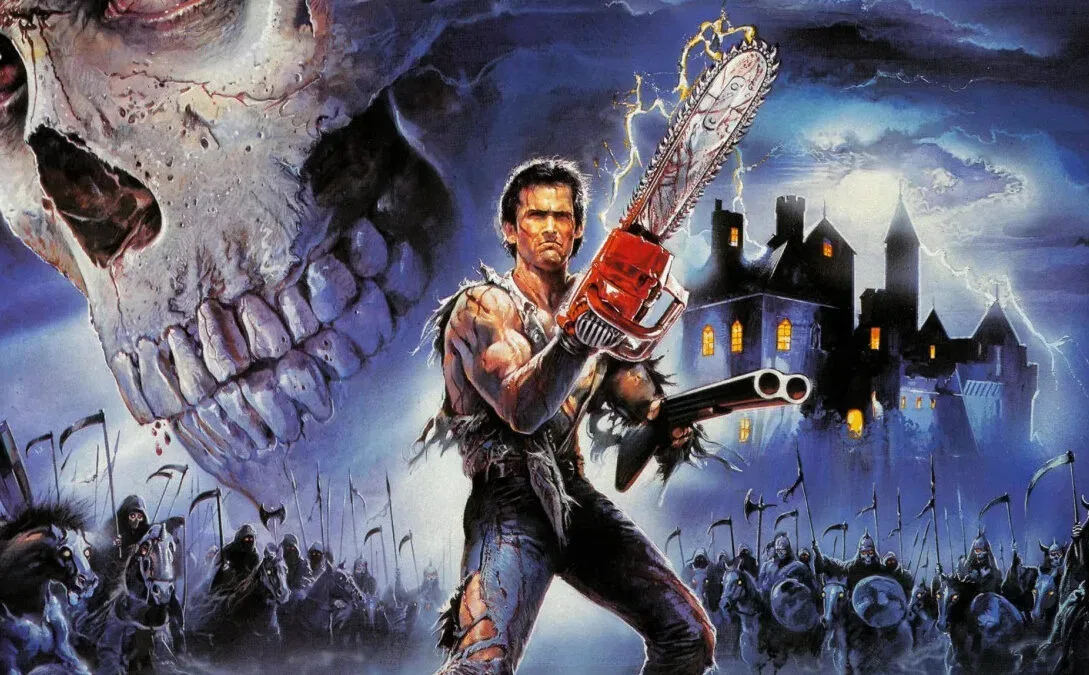
Campbell became a foundational name in modern cult horror through Ashley J. Williams, better known as Ash, the reluctant survivor at the center of Sam Raimi’s original Evil Dead trilogy. Ash began as a character caught in a nightmare of demonic possession and body horror, then grew into a swaggering, chainsaw-equipped, boomstick-carrying antihero. Campbell’s performance was crucial to that evolution. He played fear, pain and ridiculous bravado at full volume without losing the character’s human panic beneath the one-liners.
The films’ early low-budget reputation became part of their mythology, but Campbell never treated the so-called B-movie tag as an insult. Instead, his career helped demonstrate why the label can be a badge of craft and imagination. Genre projects made outside the biggest studio machinery often ask performers to do more with less: sell monsters, make physical comedy work, carry absurd premises and keep an audience emotionally invested while the walls are covered in fake blood.
That is the space Campbell mastered. His presence could make the most exaggerated material feel deliberate. He understood that a horror-comedy needs commitment, not embarrassment. The result was a character who lasted far beyond the original trilogy, returning through television and video-game spinoffs and becoming a durable shorthand for a particular kind of horror hero: battered, sarcastic, wildly overconfident and never fully prepared for what comes next.
For gaming audiences, Ash’s afterlife beyond cinema matters. The character has remained visible through video-game adaptations and related projects, giving players another way to engage with the Evil Dead world. That continuity has helped keep Campbell connected to new generations who may have first encountered Ash through a controller, streaming television or a clipped scene shared online rather than a late-night VHS rental.
The wider Evil Dead universe has long had the kind of cross-medium endurance that genre fans value: memorable props, instantly recognizable dialogue, iconography that works on posters and collectibles, and a protagonist whose silhouette is unmistakable. A chainsaw hand and a boomstick are enough to communicate the whole strange, scrappy spirit. Campbell’s performance is at the center of that cultural staying power.
From Raimi regular to beloved genre fixture
Campbell’s association with Raimi has remained one of the most visible partnerships in genre filmmaking. He has appeared in many Raimi productions, including the Spider-Man films and Xena: Warrior Princess. These appearances have often rewarded attentive viewers: Campbell has a gift for the memorable supporting turn, whether he has a major role or simply arrives to tilt the tone of a scene in a more playful direction.
His work reaches much further than Evil Dead, however. Campbell appeared in Maniac Cop, Bubba Ho-Tep and The Adventures of Brisco County, Jr., while television audiences also know him from Burn Notice. He has made appearances in films connected to the Coen brothers as well. Taken together, those credits show a performer who could move between cult horror, adventure, television drama, broad comedy and cameo work without losing his identity.
That identity also translated particularly well to fan events. Campbell has been a familiar convention-circuit figure, a role that is more substantial than a quick autograph-table appearance might suggest. Genre conventions thrive on the ongoing relationship between performers and audiences. Actors associated with beloved properties become living links to old rentals, midnight screenings, formative scares and games played long after the credits of a movie first rolled.
Campbell said in March that he would retreat from his usual public and acting obligations following his diagnosis. For admirers who have come to expect his energetic appearances, that news marked a meaningful change. His newer comments make clear that the reduction in work is connected to managing a serious condition, not to a loss of affection for the work or the audiences that have supported it.
Directing while confronting difficult material
The health disclosure came as Campbell was promoting Ernie and Emma, his latest film and a project he directed. The film centers on a husband spreading his wife’s ashes, a premise that inevitably takes on added emotional weight beside Campbell’s own public discussion of illness and mortality.
There is no need to force a neat parallel between an artist’s private health and the subject of a film. Still, the timing underscores the breadth of Campbell’s career. He has not been only the guy wielding a chainsaw in a cabin or the familiar face hidden in a blockbuster scene. He has also directed and helped shape work that approaches loss from a different angle.
His 2001 autobiography, If Chins Could Kill: Confessions of a B Movie Actor, likewise offered a record of the path that made him a cult favorite. The book’s title captures Campbell’s willingness to embrace the odd corners of film culture rather than chase respectability by disowning them. He built a lasting career precisely because he understood the appeal of the unruly, the handmade and the gloriously strange.
What Campbell’s update does—and does not—say
Campbell has shared a five-year prognosis, but a prognosis is not a precise calendar. He has not disclosed the specific cancer involved, and he has been clear about his preference not to discuss that detail. The information he has made public is limited: the illness is treatable but not curable, it has led him to reduce his acting commitments, and he is focused on continuing to live his life.
That distinction is worth preserving. Health news often encourages people to turn a prognosis into certainty or to fill gaps with speculation. Campbell’s own words point in another direction. He has acknowledged the seriousness of cancer and the complications that can accompany it, while also explaining that he currently feels well. Respecting that boundary means recognizing both realities without assigning a more definite timeline than he has given.
For the communities built around Evil Dead, horror cinema, cult television and games, Campbell’s legacy is already unusually secure. Ash Williams remains a signature genre character, and Campbell remains the performer audiences associate with the character’s bruised, loud and irrepressible personality. His work has helped make horror feel communal: something to quote, replay, collect, revisit and pass along.
Campbell’s update is sobering, but it is also rooted in agency. He is stepping back from some of the demands of acting and public appearances, yet he has said he does not intend to stop living because of the diagnosis. That resolve will be familiar to anyone who has watched Ash get knocked down, covered in gore and forced to confront another impossible mess. The circumstances are real rather than fictional, of course, but Campbell’s clarity about how he wants to meet them is unmistakable.
Fans looking back at the long, strange and influential arc of his work can also revisit how horror has evolved across screens and formats, including the medium where Ash has continued to find new audiences. For more on horror storytelling in games, read our look at Chronovisor and its occult library mystery.