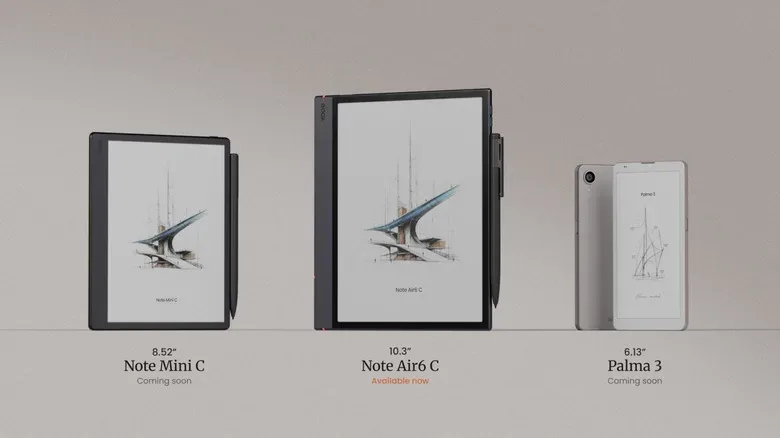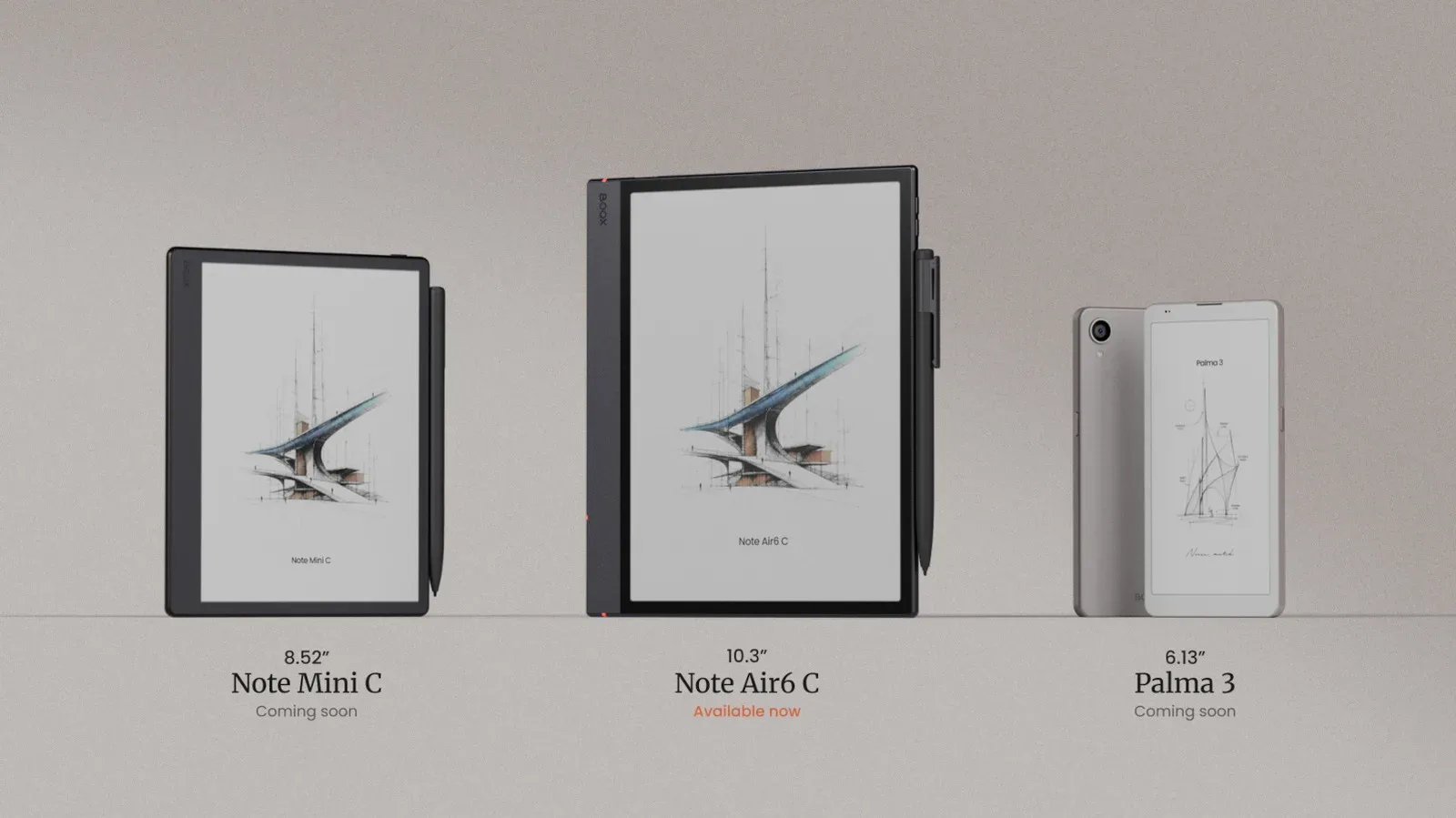
Boox has introduced three Android 16 E Ink devices, led by the Palma 3: a palm-sized reader that adds stylus support and an anodized aluminum frame to a compact format. The new model has a 6.13-inch HD E Ink screen, 128GB of built-in storage, a microSD slot supporting cards up to 2TB, and a listed price of $320 when it becomes available.
The Palma 3 is not currently for sale, despite appearing on Boox’s website. It is planned in black and white. Its InkSense Plus stylus is optional rather than included, adding $46 to the purchase price. That puts the reader-and-stylus combination at $366 before considering storage, while the reader itself is $60 less than the Palma 2 Pro.
For players, collectors and readers who prefer carrying guides, digital comics, reference PDFs, manuals or a very large book library without hauling around a full tablet, the appeal is straightforward: this is a phone-sized Android device built around an E Ink screen rather than a conventional LCD or OLED panel. The trade-offs, as always, depend on whether its reading-first display and pocketable shape matter more than fast, colorful multimedia performance.
What changes with the Palma 3
The aluminum frame is the most visible material change. Earlier Palma devices used plastic casing, while the Palma 3 switches to an anodized aluminum frame. Anodizing is a finishing process that creates a protective oxide layer on aluminum; in practical terms, it is a durability- and feel-oriented change to the device’s exterior rather than a new screen technology or a performance specification.
More consequential for notes is support for the Boox InkSense Plus stylus. The Palma 3 can use it to mark up books and create notes that save to the cloud. This broadens the role of a compact reader beyond passive reading. A user could annotate a strategy guide, flag a passage in a novel, or write down a short checklist without moving to another device. But prospective buyers should keep the accessory distinction in mind: stylus support does not mean a stylus comes in the box.
The display remains central to the device’s identity. The Palma 3 uses a 6.13-inch HD E Ink panel with a dual-tone front light. E Ink is designed to present text and static content in a paper-like way, and the front light illuminates the surface from the front rather than relying on a conventional backlit tablet display. The dual-tone element means the light can be adjusted across different color temperatures, which should help readers choose a look that suits their surroundings or preference.
That display specification also sets sensible expectations. The Palma 3 is positioned around books, notes and documents, not as a direct substitute for a rapid-refresh gaming handheld or a color-first tablet. The supplied details do not establish gaming performance, refresh behavior, controller compatibility or app-specific results, so it would be premature to treat Android 16 and Google Play access as proof that every game is a good fit for E Ink. Its clearest use case remains portable reading and light written interaction.
Android 16 and Google Play make the software story broader
All three newly unveiled Boox devices run Android 16 and arrive with the Google Play Store pre-installed. That matters because an E Ink device with standard Android app access can potentially serve several reading and productivity ecosystems instead of being tied to one storefront or document service.
For the Palma 3, Google Play access can make the hardware more flexible for people whose reading and note-taking habits span multiple apps. The important nuance is that app availability and app suitability are different things. Google Play offers a route to Android software, but E Ink remains a specialized display medium. Text-centric apps, books, documents and note-related utilities are the natural match for the stated hardware, whereas heavily animated interfaces may not play to the panel’s strengths.
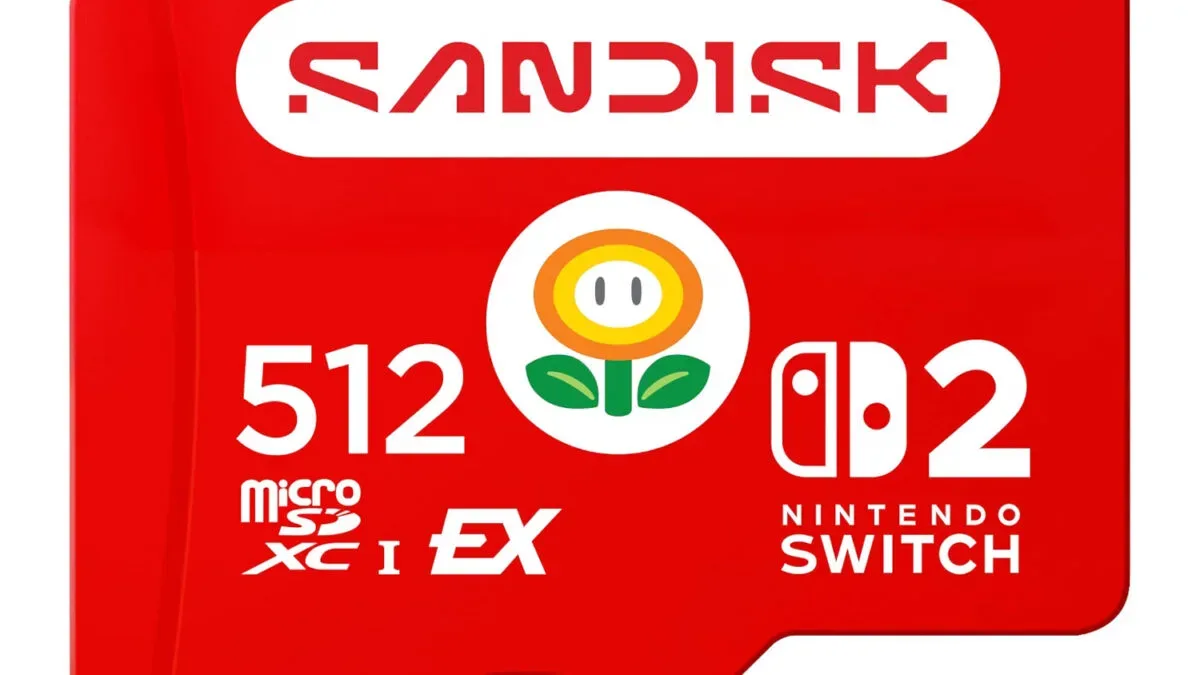
The combination of Android 16, cloud-saved notes and expandable local storage gives the Palma 3 several ways to organize material. Built-in capacity is 128GB, and the microSD slot supports cards as large as 2TB. That ceiling is substantial for a reader intended to carry books and documents, although the capacity of the card a buyer actually chooses will determine their real total. Anyone comparing portable storage options can also see how capacity remains a major consideration in handheld technology, as with this 512GB microSD Express storage option for Nintendo Switch 2; the Palma 3’s own storage support is specified separately as microSD expansion up to 2TB.
It is worth avoiding an easy technical assumption here. The source material confirms the Palma 3 accepts microSD cards up to 2TB, but it does not identify a recommended card model, speed class, file-system behavior, bundled capacity or pricing for expansion. It also does not say whether a particular application stores its files on the card. Those details will matter to buyers with unusually large libraries, but they are not yet established by the announcement.
A reader with scanning and voice tools
Boox has also included hardware that moves the Palma 3 beyond a bare-bones ereader. It has a 16MP rear camera with flash, and Boox says the camera can scan documents. That may be useful for turning a page into something digital and portable, particularly when a reader is already being used to carry reference material. Still, its battery implications should be considered: Boox says the 3,950mAh battery can power days of reading on one charge, but frequent camera use is likely to reduce that endurance.
Battery capacity is expressed in mAh, short for milliampere-hours. It describes stored electrical capacity, but it is not a direct promise of a fixed number of hours or days under every workload. Reading a static page, using a front light, scanning documents and recording audio place different demands on a device. In this case, the stated “days of reading” should be read as a reading-oriented expectation, not a guarantee that the same longevity applies to regular camera use.
Dual microphones add two more stated functions: voice memos and speech-to-text. Voice memos are straightforward recordings; speech-to-text refers to software converting spoken words into written text. Together, these features could make brief note capture more convenient when typing or handwriting is inconvenient. The announcement does not specify transcription languages, accuracy, storage behavior or whether processing happens locally or through a service, so those questions remain open.
These additions give the Palma 3 a distinct position among small reading devices. Its stylus provides a route for handwritten input, its microphones support spoken input, and its camera is intended to help digitize documents. None turns it into a replacement for a larger workstation, but each addresses the small tasks that can interrupt reading: marking a line, capturing a page or recording a thought before it disappears.
Price math: Palma 3 versus Palma 2 Pro
The Palma 3’s listed $320 price is one of the clearest practical details. It is $60 below the Boox Palma 2 Pro, based on the supplied comparison. Buyers who want InkSense Plus support should include the separate $46 stylus in their budget, bringing the total to $366. That is still below the stated Palma 2 Pro price of $380, though the announcement does not provide a full feature-by-feature comparison between the two models.
That missing comparison matters. A lower base price plus the addition of stylus compatibility and an aluminum frame makes the Palma 3 notable on paper, but value is not simply a list of features. Buyers should wait for confirmed sales availability and complete product information before assuming it displaces every reason to choose the Palma 2 Pro. The information available establishes the price difference and shared stylus compatibility, not every distinction in hardware or software.
Boox’s larger color E Ink options
The Palma 3 is joined by the 10.3-inch Note Air6 C and the 8.52-inch Note Mini C. Both use color E Ink screens, but their stated purposes and included hardware place them in different parts of the lineup.
The Note Air6 C uses a 10.3-inch color E Ink display intended for reading documents and taking notes on the same device. Its new Dual Notes feature allows annotation of two documents side by side. This is a more document-focused workflow than the Palma’s pocket-reader approach: users can keep two files visible at once instead of repeatedly switching between them.
It supports the Boox Pen3 stylus and works with a keyboard cover through pogo pins. Pogo pins are small spring-loaded electrical contacts that let a compatible accessory connect directly to a device without requiring a separate wireless pairing step. The Note Air6 C costs $580 without the keyboard cover or $657 with the cover bundled, which makes the bundle difference $77. The announcement does not say whether the Pen3 is included, so buyers should not infer that from stylus support alone.
The Note Mini C is the intermediate-sized option, with an 8.52-inch color E Ink screen, a stylus and a power button that supports fingerprint authentication. It is positioned for work while in transit and can access enterprise applications including Microsoft Teams, Outlook, Slack and OneDrive. The device is listed as available soon for $550.
The emphasis on enterprise apps is significant because it identifies a more work-oriented role for the Mini C. Teams and Slack are communication tools, Outlook is used for email and calendar-related work, and OneDrive is a cloud storage service. The supplied information confirms access to these apps, but it does not specify an organization’s setup requirements, which versions are supported or what E Ink-specific behavior users should expect within each application.
Which device fits which job?
- Palma 3: The smallest option, built around a 6.13-inch HD E Ink screen, pocket-friendly reading, optional handwriting, document scanning and voice capture. It is listed at $320 but is not yet on sale.
- Note Air6 C: The largest model here, with a 10.3-inch color E Ink display, Dual Notes for two-document annotation, Pen3 support and an optional pogo-pin keyboard cover. It is available for $580, or $657 with the keyboard bundle.
- Note Mini C: A mid-sized 8.52-inch color E Ink device with a stylus, fingerprint-enabled power button and named enterprise-app access. It is listed as available soon for $550.
The key difference is less about one model being universally better and more about the scale of the job. Palma 3 prioritizes portability; Note Air6 C prioritizes viewing and annotating more material at once; Note Mini C occupies the traveling-work space with a larger color screen than the Palma and explicitly named office and collaboration apps.
For the Palma 3 specifically, the strongest confirmed reasons to wait for sales availability are its unusual blend of compact E Ink reading, Android 16 with Google Play, optional stylus input, 128GB of onboard storage and support for very large microSD expansion. The aluminum frame, dual-tone front light, camera-based scanning and voice features round out a device that appears designed to keep books, notes and documents close at hand rather than turn a reader into an all-purpose high-speed screen.