Bee is expanding its AI note-taking hardware with two distinct ideas about where a conversational memory assistant should live: on a bracelet, clip or bag strap, or attached magnetically to the back of a phone. The newly announced Bee Frontier replaces the earlier Pioneer wearable, while the Bee Eclipse is a larger phone-mounted recorder and summarizer. They arrive alongside Bee Pro, an optional $11.99 monthly subscription that carries many of the service’s more ambitious features.
The pitch is straightforward. Start a session with a physical button, let the device capture a conversation, then receive a transcript and AI-produced summary. A press-and-hold action can instead call on Bee’s Buzz assistant or save a voice note. In practice, the value of either gadget will hinge on questions more complicated than the hardware: how reliably it handles noisy real-world speech, whether summaries are useful, how clearly it communicates recording to everyone nearby, and how comfortable buyers are with the company’s data-processing approach.
Those questions matter especially because these are not ordinary voice recorders. Bee is positioning its devices as tools that turn snippets of life into searchable recaps, tasks, memories and, with the new integrations, shopping prompts and Alexa+-accessible information. That is a broad promise for a compact device—and one that asks users to think carefully about both convenience and consent.
Bee Frontier: a refined replacement for Pioneer
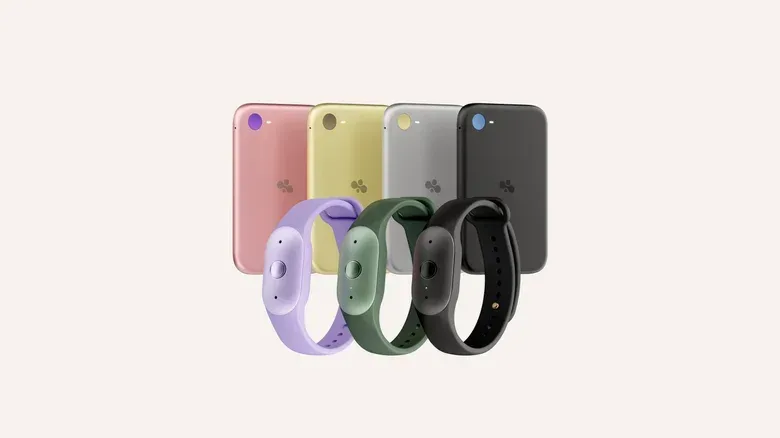
The Frontier is the direct successor to Bee’s Pioneer. It remains a small, Fitbit-like module that can be fitted into either a bracelet or a clip attachment for clothing or bags. Its core controls are familiar: one press begins a recording session, while holding the button invokes Buzz or creates a voice note. An LED is intended to indicate statuses including listening and charging.
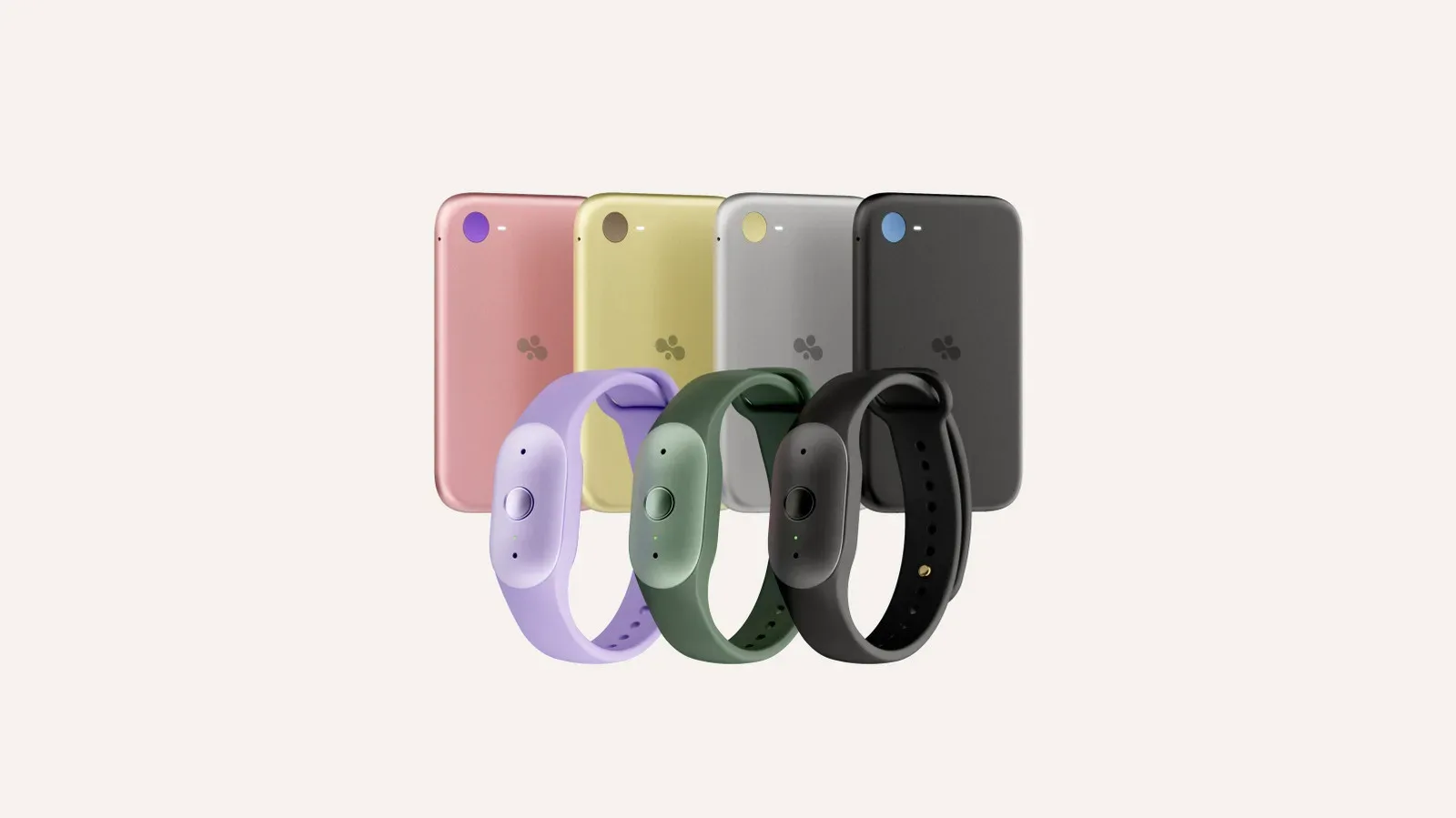
Bee’s hardware changes are mostly practical refinements rather than a reinvention. The Frontier is smaller and lighter than Pioneer, comes in three colors—Lavender, Sage and Onyx—and is rated IP67 for dust and water resistance. IP67 is a protection rating: the first digit indicates complete dust protection, while the second means the product is rated to withstand temporary immersion in water under the applicable test conditions. It is meaningful progress from Pioneer, which did not have a water-resistance rating, though it should not be mistaken for a blank check to expose the device to every wet environment.
It retains dual microphones with noise filtering, USB-C charging and an estimated seven days of battery life. Noise filtering is designed to reduce unwanted surrounding sound, such as background chatter, so that speech is easier to capture. However, the practical quality of that filtering—and of transcription and speaker identification in busy locations—cannot be established from specifications alone. A crowded café, a car, a group dinner and a quiet one-to-one chat create very different challenges.
The Frontier costs $75 and is available now. Pioneer, previously priced at $50, is no longer on sale. The $25 increase therefore has to be weighed against the smaller body, expanded colors and IP67 protection, rather than against an entirely new interaction model or longer quoted battery endurance.
Bee Eclipse makes the phone the attachment point
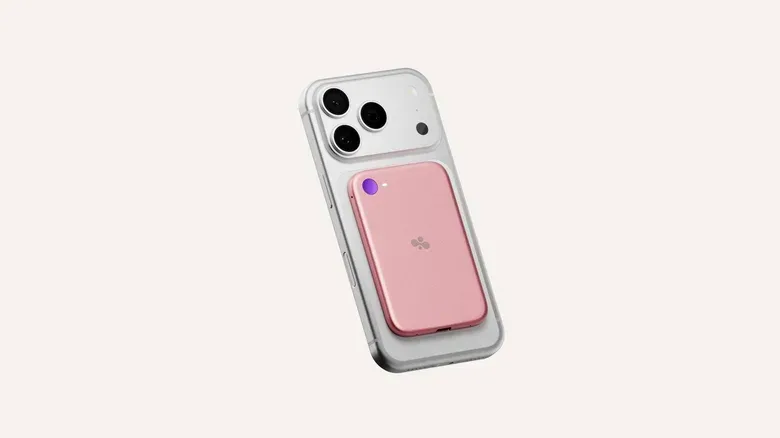
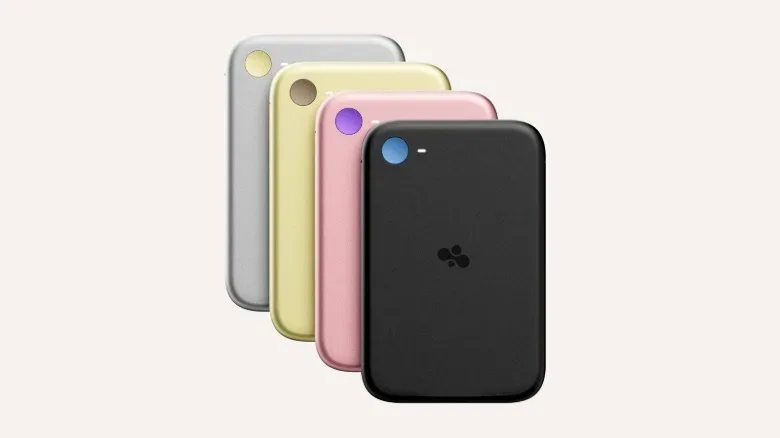
The $100 Eclipse approaches the same task from a different direction. Rather than something a person wears, it is a magnetic rectangular puck that snaps onto a phone. Bee describes it as roughly the size of a thicker credit card. It has three microphones, a button at the upper left and a nearby LED indicator.
That larger footprint accommodates the Eclipse’s standout specification: a claimed battery life of more than 21 days, or three times the Frontier estimate. For someone who wants a note-taking tool that is less likely to need a weekly charging routine, that is the Eclipse’s clearest potential advantage. Its four color options are Silver, Midnight, Honey and Blush.
Functionally, however, Eclipse and Frontier are close siblings. Pressing the button begins a session, the light turns on and Bee produces transcripts and summaries while attempting to determine who said what. The distinction is therefore less about the AI workload and more about where the hardware sits. A wrist or clipped module is designed to travel with the user even if the phone is elsewhere; a phone-mounted accessory makes the phone itself the recording surface.
That physical choice creates a notable social-design problem. A visible indicator light is a sensible safeguard in principle: people should be able to see that an AI device may be listening. But Eclipse’s broad, magnetic shape can resemble a portable battery pack, another category that commonly includes LEDs. Someone who sees it on the back of a phone may interpret a light as a charging status rather than an active recording signal.
This is not a concern unique to Bee. The market now includes a growing set of phone-attached AI note-taking products from companies including Pocket, Plaud, Comu, Innaio, Ruune and Raycon. Across the category, a small light and a hardware button may offer more transparency than a hidden app process, yet neither completely solves the problem of making the device’s purpose unmistakable to people who have not bought it.
The Eclipse is listed as coming soon, with no more precise release timing provided. That makes Frontier the only one of the two that can be bought immediately.
What Bee Pro changes
Bee’s product announcement is as much about software and services as it is about two new pieces of hardware. Bee Pro costs $11.99 per month and offers unlimited recent conversation summaries, suggested to-dos, daily memories, conversation templates, new integrations and access to a desktop app for Mac and Windows. New customers receive 30 days of Bee Pro free.
The subscription is important because it defines what “making the most” of the hardware means. A device that captures conversations is one thing; a system that converts them into recurring organizational material, connects them with a shopping account and makes them retrievable from an Alexa-enabled screen or speaker is another. For potential buyers, the relevant cost is not simply $75 or $100. It is the hardware price plus a recurring plan if the advanced workflow is the reason to buy in the first place.
There is one major exception for established customers. Bee founder Maria Zollo said people who have been with Bee since its early days will retain the feature set they already have without charge. That commitment is aimed at avoiding a situation where early users see familiar capabilities abruptly moved behind a new subscription tier.
Pro also adds a desktop experience that Bee says matches the mobile app’s feature set, including desktop transcription. This may be the most immediately understandable upgrade for people who expect to review longer recaps, manage tasks or search past conversations at a computer rather than exclusively on a handset.
Amazon and Alexa+ make the assistant more consequential
Bee previously supported Google Calendar, Gmail and Apple HealthKit integrations. The new additions tie it more closely to Amazon’s ecosystem following Amazon’s acquisition of Bee more than a year earlier.
Connecting an Amazon account allows Bee to suggest products based on items mentioned in conversations. Recommendations can appear in Bee’s apps and on Amazon’s homepage, and users can build shopping lists from things that came up in discussion. This is a direct extension of the memory-assistant premise: the system is not merely retaining that someone mentioned needing an item; it is proposing a path to purchase it.
With Alexa+ connected, a user can ask an Echo or another Alexa-enabled device for information held by Bee, including summaries, to-dos or a book recommendation from a friend. Amazon says Alexa devices will use voice identification before disclosing the information. Both Amazon and Alexa+ connections are opt-in, meaning they require the user to explicitly enable the sharing.
Opt-in is an important baseline, but it does not erase the decision users are making. Linking a conversation-memory tool to shopping recommendations or a household voice assistant broadens the number of places where derived information can be surfaced. The practical upside is less app-hopping. The practical responsibility is to decide which integrations are genuinely useful and whether the information they may expose is appropriate for the context where it could be requested.
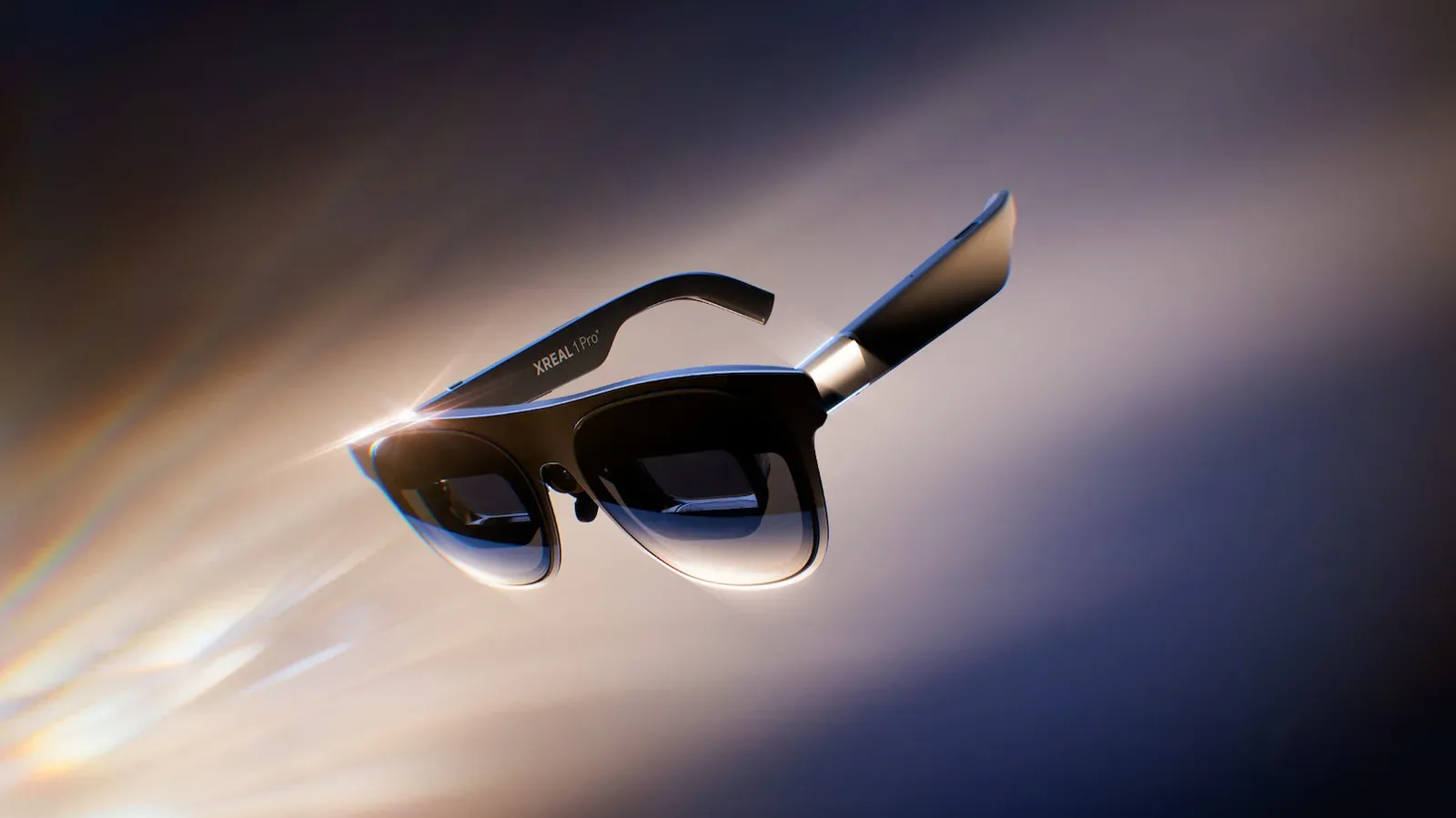
For readers following the overlap of small personal devices and AI interfaces, Bee’s approach also sits adjacent to the wider wearable and display-driven computing push seen in products such as Xreal’s comfort-focused AR glasses refresh. The shared ambition is to make digital assistance more immediate; Bee’s more specific wager is that the useful output begins with a record of real-world conversation.
Privacy claims need to be read precisely
Bee says its devices are built around privacy controls. The company states that audio is not stored, cannot be accessed or shared, and is processed into insights in real time before being deleted. It also says users are prompted to gain permission from call participants every time a recording begins. The hardware has a physical on/off control, and the LED is meant to visibly show when a conversation is being summarized.
Bee further describes its “Private Compute” system as a secure, isolated processing environment that neither Bee nor Amazon can access. The company says transcripts are encrypted with keys that can only be created and controlled by the user’s device, that data is inaccessible unless the user chooses to share it, and that transcripts and summaries can be deleted.
These are meaningful distinctions. Audio is the raw recording; a transcript is the text generated from it; a summary is an AI-created condensation or interpretation of that text. Saying raw audio is deleted does not mean there is no information retained at all, because the product’s purpose is to preserve useful transcript- and summary-level information. Users should understand what they want to keep, what they want to delete and which optional integrations can receive derived information.
Encryption refers to converting data into a form intended to be unreadable without the correct cryptographic key. Bee’s device-controlled-key claim describes a model in which the user’s device creates and controls keys for transcripts. It is a specific security assertion, but it does not turn privacy into a one-setting choice. Permission from other participants, careful use of sharing options, and attention to whether a light sufficiently communicates a recording session are all part of the everyday privacy equation.
Who should wait, and who may find a fit
The Frontier makes the clearest case for someone who specifically wants a lightweight, wearable reminder and conversation-capture tool, values IP67 protection and prefers not to keep a phone in hand. The Eclipse makes more sense for a person who accepts a phone-mounted device in exchange for the much longer claimed battery life. Neither product’s advertised capability eliminates the need to ask for consent or use discretion in sensitive spaces.
For buyers undecided between them, waiting for independent assessment of microphone performance, transcription quality, noise filtering and daily usability is the sensible path. Those answers will determine whether Frontier’s wearable form or Eclipse’s three-week-plus battery estimate produces the better real-world experience.
Bee’s two-device rollout shows the category becoming more deliberate about form factors: the assistant can be worn by a person or attached to the phone that already follows them everywhere. Its tougher test is whether a tool built to remember conversations can be trusted to do so clearly, responsibly and with enough useful output to justify both the device price and, for many features, a monthly Pro membership.