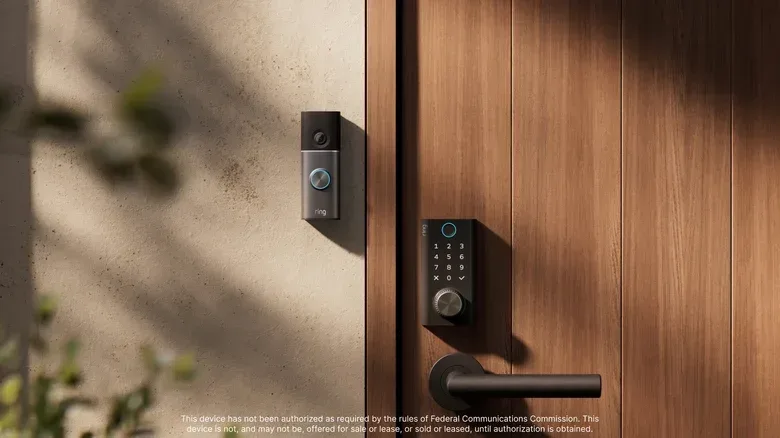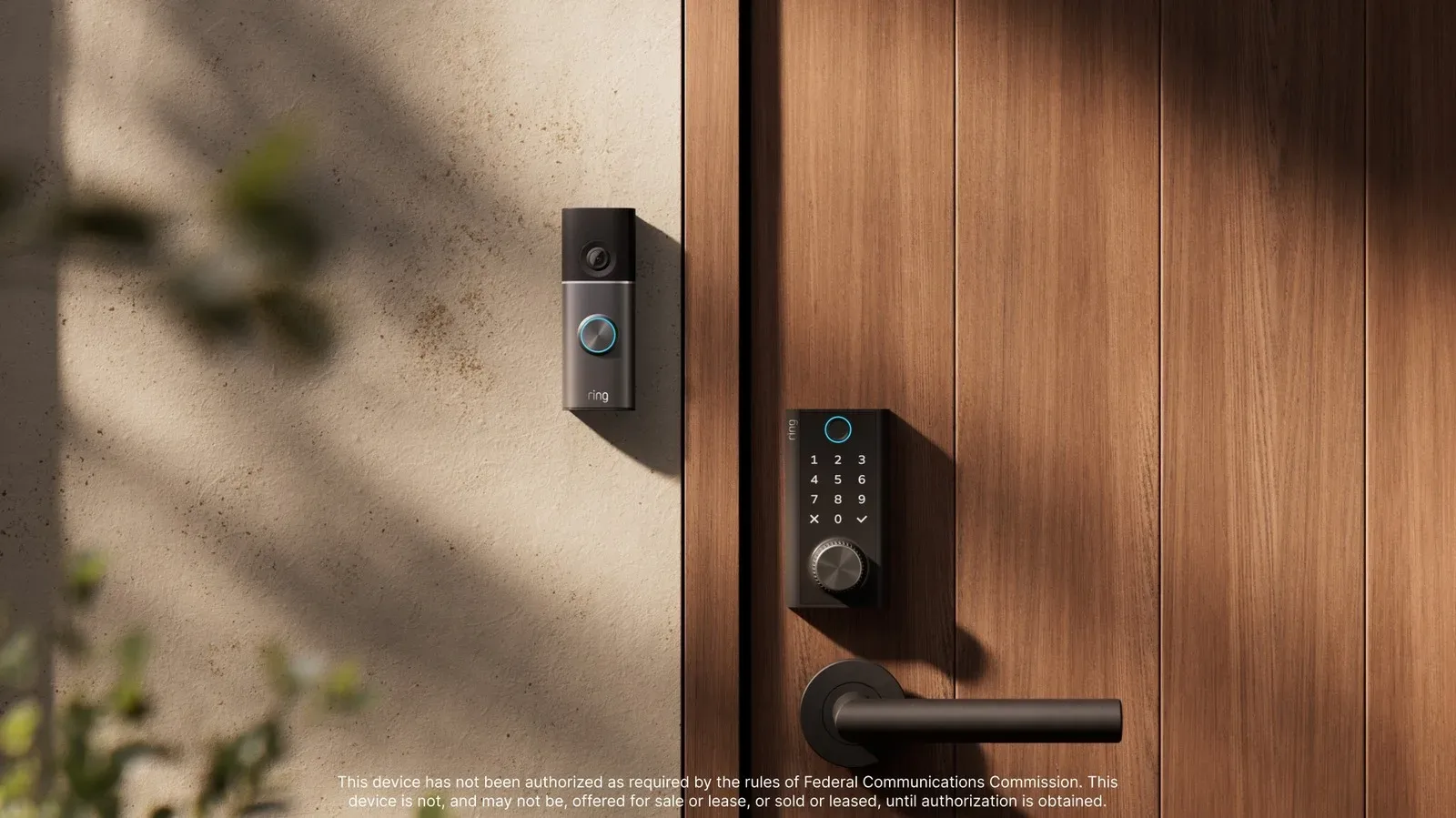
Smart locks promise the pleasingly futuristic version of arriving home: tap an app, use a code, present a fingerprint, or ask a voice assistant to let you in. Their awkward little boss fight, however, is power. A traditional key does not need charging, an internet connection or a firmware update to do its one job. Ring’s proposed answer is a Smart Lock with an unusually physical contingency plan: turn a wheel on the front of the lock back and forth three or four times, and it should generate enough electricity to operate the lock for roughly 30 seconds.
The product is called the Ring Smart Lock, and it is currently planned for release in the first few months of 2027. Ring has put its intended price at $249, says it will be sold in Black, Silver and Brass finishes, and states that it uses a single-cylinder deadbolt without requiring additional wiring. Interest registration is open, but the precise launch date has not been set; the company hopes to get it out nearer January than March.
A manual action designed for a digital failure
The front wheel is not simply a conventional mechanical override in the style of a key. It is intended to generate electricity. Inside the lock are a small motor and a supercapacitor, a component that can store and release electrical energy quickly. Repeatedly moving the latch wheel produces around three volts, charging that supercapacitor enough to run the hardware at normal capability for about half a minute.
That distinction matters. The stated goal is not a stripped-down emergency mode that only moves the bolt. Ring says the temporary power should allow owners to use the fingerprint reader, keypad, Ring app or Alexa during that window. In practical terms, the crank is being positioned as an emergency bridge between a flat battery and one of the lock’s usual access methods.
It is a notably direct response to a basic smart-home concern: a device may be more convenient than a key until the moment it is not. A dead phone can be recharged; a discharged lock is positioned at the point where a household most needs reliability. By putting a power-generating control on the exterior hardware, Ring is attempting to give the owner something they can do at the door rather than asking them to hope a battery warning was noticed in time.
What 30 seconds is—and is not
Thirty seconds is a narrow window, but it does not need to be a long one if the system behaves as described. The wheel’s purpose is to provide a quick opportunity to authenticate and operate the lock, not to replace the installed battery as a routine source of power. The lock is expected to last up to a year on a single charge under normal use, making the crank a last-resort option rather than a ritual added to every arrival home.
There are still sensible expectations to keep in perspective. The supplied details describe temporary electricity for normal lock operation; they do not establish how every connected feature behaves in every kind of outage. For instance, a power burst at the lock is different from a guarantee that a home’s network or any external smart-home service is available. The strongest, most direct use case described is therefore local access through the available lock controls, including the fingerprint reader and keypad.
That is not a criticism of the concept. It is simply the useful way to understand the feature: the crank addresses the lock’s own depleted battery. It does not turn every dependency around a connected home into something manual. Buyers who want the reassurance of a fallback should also view it as a reason to maintain the primary battery, not as a reason to ignore it.
Why a supercapacitor fits the job
A battery is generally built to deliver energy over an extended period. A supercapacitor, in the role Ring describes, is suited to accepting a rapid charge and supplying it back over a short interval. That makes it an understandable match for the design: the user supplies several vigorous turns, the mechanism captures that energy, and the lock gets a brief period to power up and respond.
There is also a design logic to keeping the action on the latch area. In a stressful moment, a backup that resembles part of the lock itself may be easier to understand than an emergency accessory stored somewhere else. The intended interaction is physical and immediate: move the wheel, generate power, then use the access method that is already familiar.
Ring founder Jamie Siminoff has framed battery anxiety as one reason smart locks have struggled to win over more people. The hand crank is clearly designed as a confidence feature as much as an engineering feature. Its existence acknowledges the question prospective owners ask before buying: “What happens if the smart part runs out of power?”
The answer here is not to make the lock less electronic. Instead, it adds a small human-powered generator to preserve the electronics long enough to do their work. It is a hybrid approach: digital credentials and connected-home integration on one side, an old-fashioned hand motion on the other.
Potentially useful beyond everyday homes
The backup design could be especially appealing for properties that are visited infrequently. Ring points to remote cabins as an example. In those situations, a lock that can generate its own short-lived operating power could reduce the worry around arriving after a long absence and discovering that the usual battery reserve is gone.
That does not mean the product has been presented as a specialist remote-property lock. It remains a Ring product intended to work with Amazon’s broader smart-home ecosystem. Still, infrequently accessed buildings illuminate the core pitch well: a user may not have the opportunity to respond quickly to low-battery prompts, but can still create a temporary access window on arrival.
The broader smart-home market continues to revolve around devices that make homes more responsive, from entry hardware to cameras and other connected equipment. Ring’s lock is a reminder that resilience can be as important as convenience. That wider technology conversation is also moving quickly, as seen in reports around AI-ready living-room gear and other connected hardware. A feature that works when routine power management has failed may be more meaningful to some buyers than another app-based shortcut.
Installation and finish details known so far
Ring says the Smart Lock will use a single-cylinder deadbolt and require no additional wiring. A single-cylinder deadbolt is the common configuration operated from the exterior with a key-type cylinder and from the interior with a thumb turn. Here, it is part of a connected lock system that also includes the stated biometric, keypad, app and Alexa routes for access.
The three planned finishes—Black, Silver and Brass—give the lock options that may better match existing door hardware. That is a modest but practical detail: front-door security hardware is conspicuous, and a device that looks out of place can be a deal-breaker regardless of its technical credentials.
What remains unknown is as important as what has been outlined. There is no final calendar date inside the early-2027 target, and the feature list provided does not settle every question a prospective buyer might have about installation compatibility, ongoing service requirements or the specific conditions behind the one-year battery estimate. Those are details worth waiting for before treating the product as a guaranteed fit for a particular door.
Ring is also expanding its camera line
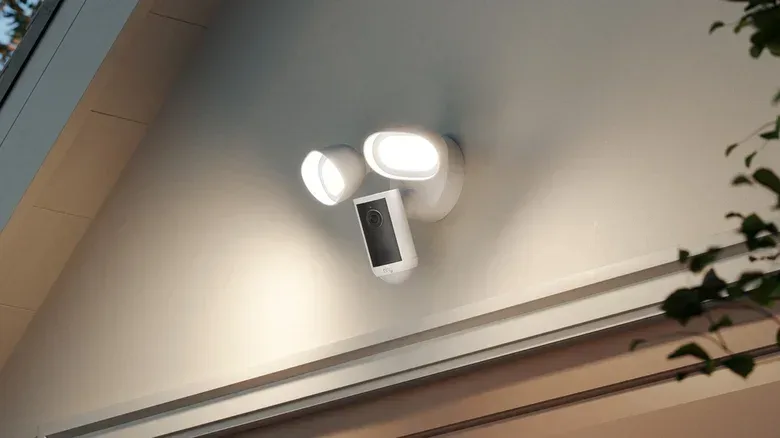
Alongside the planned lock, Ring is introducing additional cameras. Four new models carry the Retinal 4K name: Outdoor Cam 4K Plus, Spotlight Cam 4K Plus, Floodlight Cam 4K Plus and Indoor Cam 4K. The set follows Ring’s first Retinal 4K camera range, released a year earlier. Features vary depending on whether the camera is built for indoor use, outdoor use, spotlight coverage or floodlight coverage.
There is also a new Pan-Tilt Indoor Cam 2K. Its powered base can rotate through 360 degrees and tilt 175 degrees. Ring says it can follow motion intelligently after detecting it inside the home. The camera products are available to pre-order now, with prices varying by configuration and region.
Together, the camera additions and Smart Lock point to an expanding connected-security lineup, but the lock is the more unusual piece of hardware. Cameras adding resolution, motion tracking or integrated lights follow familiar product categories. A lock with a built-in hand-powered reserve makes a more unusual proposition: a smart-home device that prepares for the day it is no longer powered enough to feel smart.
For households interested in connected entry, the chief attraction is straightforward. The normal battery is expected to handle the vast majority of use, while the hand crank offers a tangible emergency path for the rare occasion it does not. Whether that reassurance justifies a $249 planned price will depend on the final product details, but the central idea is easy to grasp: when the battery bar hits zero, the lock asks for a few turns of the wheel instead of a panic search for a solution.