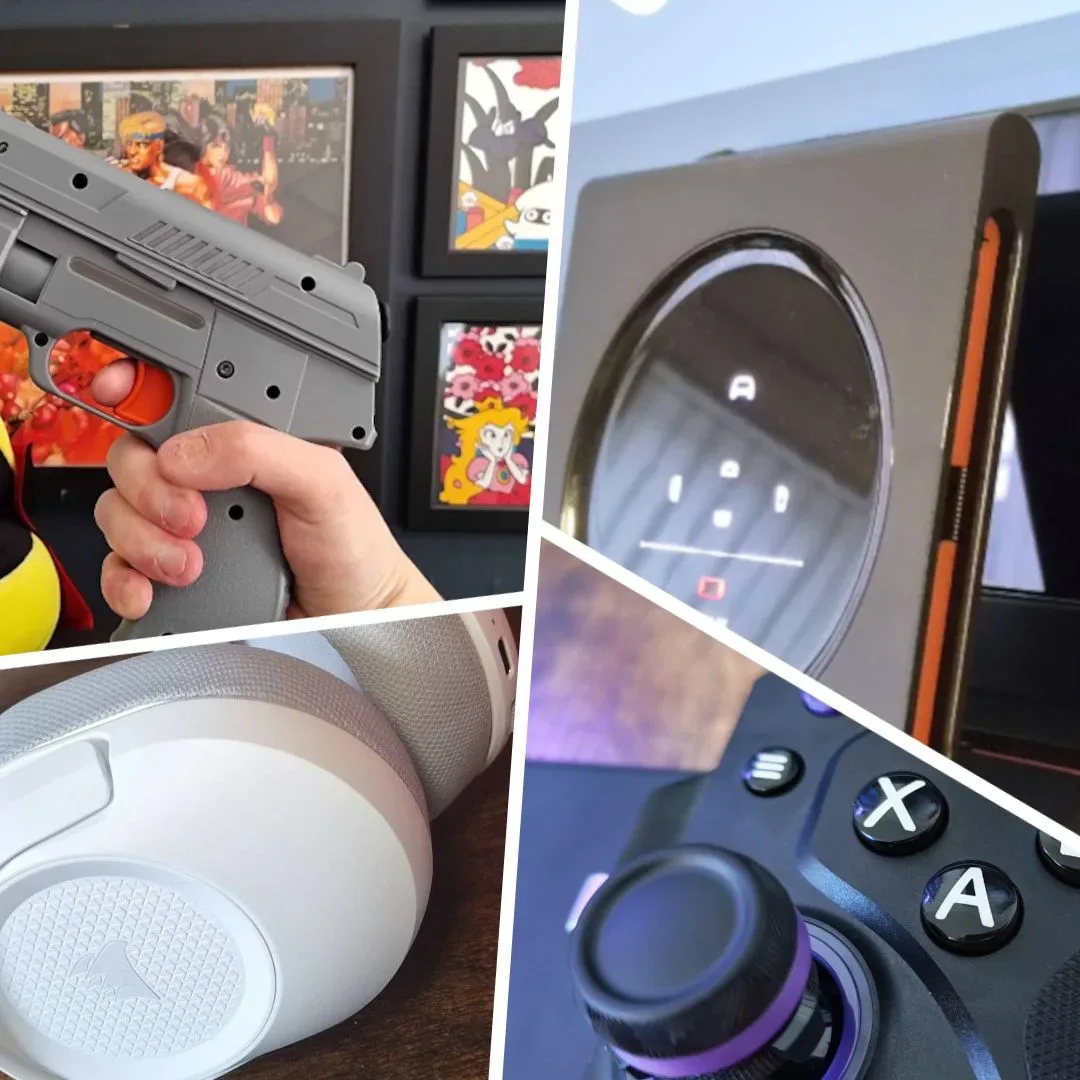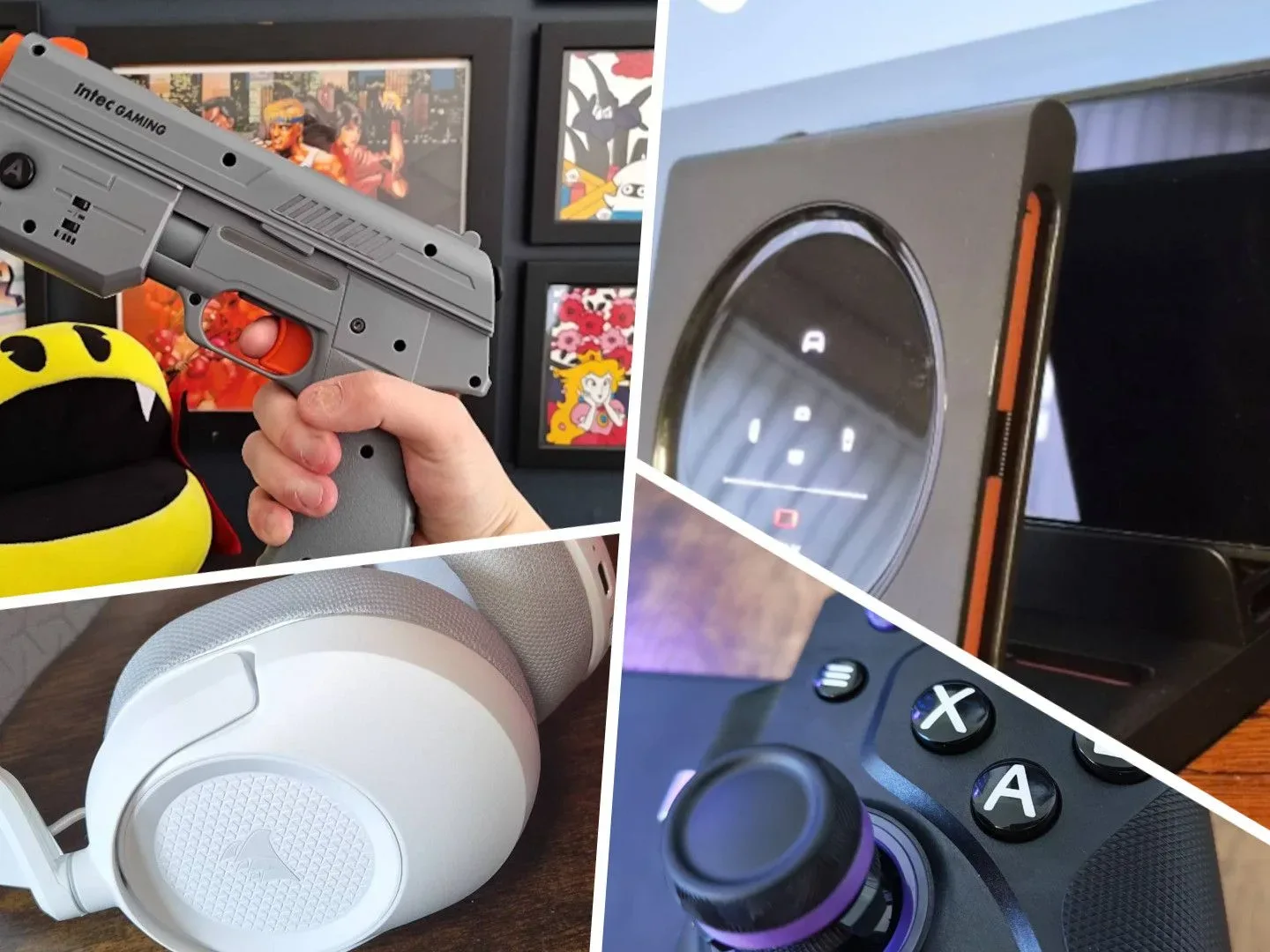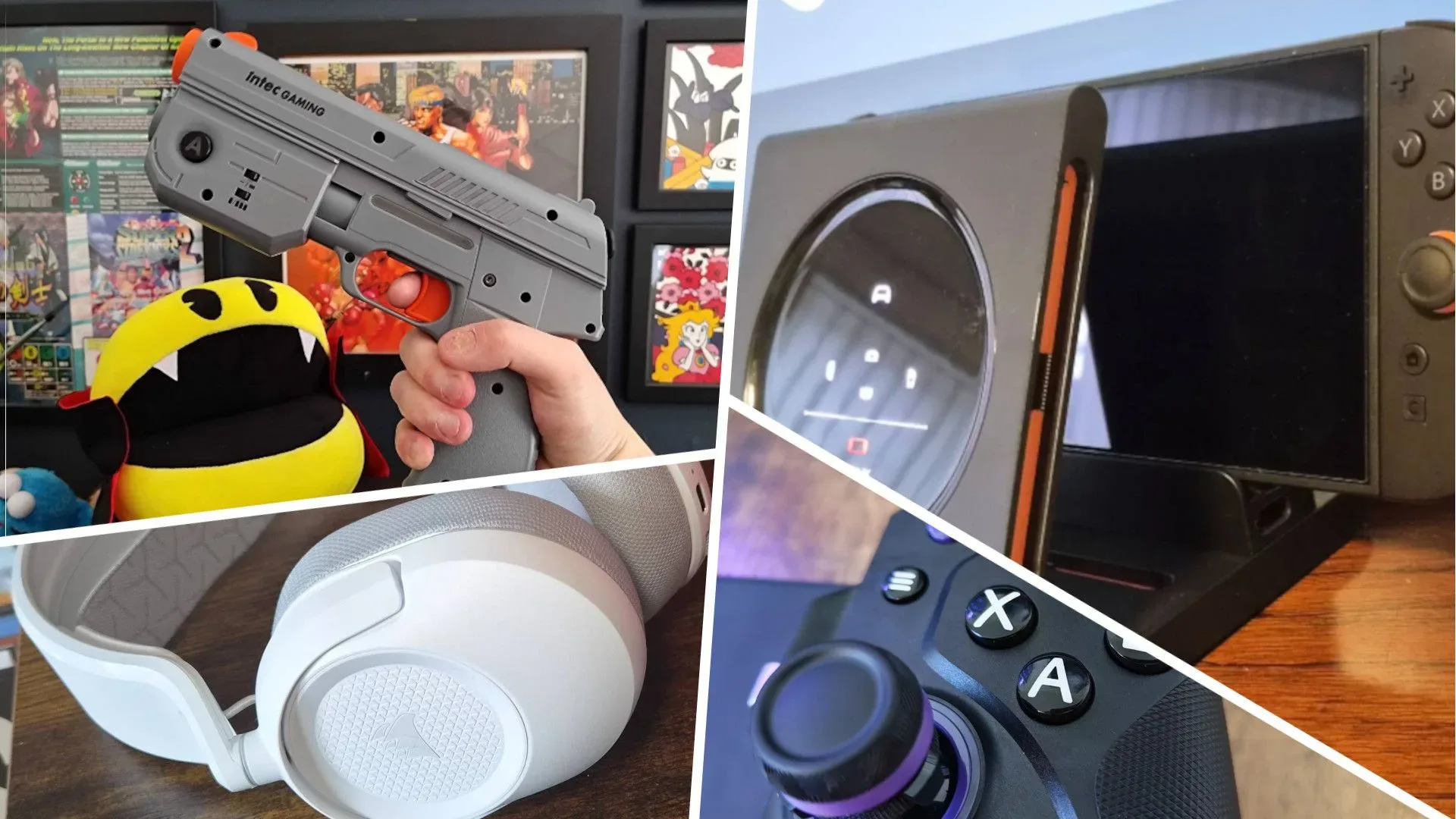
August 2026’s gaming-tech highlights make a strong case for refusing to pick a single lane. One minute, the shopping list is looking toward a retro light gun intended for PlayStation-era games on modern displays. The next, it is considering a dock for Nintendo Switch 2, a wireless headset in the lower mid-range, and a portable-looking product called the ELO Vagabond. There are also broader signs of a busy hardware month across controllers, microphones, SSDs and PC components, including mid-range CPUs said to be performing above their expected weight class.
That variety is the real story. Gaming accessories do not have to be flashy, giant upgrades to be useful. Sometimes the most welcome addition is the device that makes an awkward setup less awkward: a way to route a console cleanly to HDMI, a place to charge controllers, or headphones that do not feel like a winter hat with a radio bolted to it.
The four products most clearly singled out in the August collection span those practical roles. Their listed prices were the Time Breaker Light Gun at $129.99, down from $157.62; the Corsair HS35 V3 at $79.99; the ELO Vagabond at $97.99; and the JSAUX 6-in-1 Gaming Dock for Switch 2 at $59.99. A price tells only part of the story, of course, but it helps establish how different the intended purchases are: one retro-specialist peripheral, one audio all-rounder, one console hub, and one product whose function is not detailed here.
A light gun aimed at the modern-TV retro problem
The Time Breaker Light Gun is the most immediately intriguing entry because it addresses a problem familiar to anyone trying to revive old-school shooting games: classic light-gun setups and current televisions do not always behave like old friends. The product is described as PS1- and PS2-compatible and as a contender among retro controllers designed to work on modern TV displays.
There is a small naming wrinkle worth noting rather than smoothing over. The shopping listing identifies the product as the LEVELHIKE Time Breaker Light Gun, while the accompanying discussion calls it the Intec Time Breaker Lightgun. Anyone researching or buying should verify the branding, seller listing, compatibility details and included equipment before checking out. Retro hardware has a talent for turning a seemingly simple accessory purchase into a detective minigame.
Compatibility should be the priority, not an afterthought. A player’s specific console model, display, game library, cables and existing converters can all matter. A light gun marketed around PlayStation and PlayStation 2 use may be exactly the missing component for one collection and entirely beside the point for another. It is also sensible to confirm whether the games you want to revisit are supported and how the device is meant to connect in the particular television setup you own.
For the broader display question, our retro console HDMI adapter checklist is useful homework. The central lesson is wonderfully unglamorous: map every connection before purchasing. It may not have the immediate thrill of pointing a plastic blaster at a screen, but it can prevent the far less thrilling moment when three incompatible plugs stare at one another across the living-room floor.
JSAUX’s Switch 2 dock prioritizes connections and charging
At the contemporary-console end, the JSAUX 6-in-1 Gaming Dock for Switch 2 is positioned as a third-party hub with HDMI connectivity covered and a built-in Joy-Con charging panel. Its $59.99 listed price makes the proposition easy to understand: consolidate a few common console duties into a single desktop or entertainment-center accessory.
The charging panel is particularly notable because controller charging tends to become visible only when it fails. A dock that provides a designated place for Joy-Cons may reduce cable clutter and turn storage into a useful routine. HDMI support, meanwhile, speaks to the basic dock duty of moving a handheld-console session onto a television or monitor.
This is not presented as an unqualified five-star design. Its appearance was identified as the reason it fell short of full marks, even while the underlying feature set was treated positively. That distinction matters. Looks can be a valid deciding factor for a device designed to live beside a TV, but they are not the same thing as functionality. Buyers who care most about connections and controller charging may make a different trade-off from those building a coordinated desk or media cabinet.
As with any third-party dock, prospective owners should carefully check that the advertised Switch 2 support matches their intended use, especially if their setup involves particular display resolutions, cables or space constraints. The information available here establishes the HDMI and Joy-Con charging angle, not a full technical specification sheet. That is enough to flag it as a practical accessory, but not a substitute for confirming the finer points before purchase.
Corsair HS35 V3 brings wireless options to the lower mid-range
The most clearly rated product in the group is the Corsair HS35 V3. Priced at $79.99, the headset earned 4.5 out of 5 and is framed as a lower-mid-range option worth watching. Its defining combination is straightforward: a notably lightweight build, 2.4GHz wireless connectivity, Bluetooth support and audio quality described as impressive.
That combination makes the HS35 V3 a sensible item to put on a shortlist for players who want versatility without automatically climbing to premium pricing. The two wireless modes matter for different reasons. A 2.4GHz connection is a familiar fit for gaming setups, while Bluetooth adds another route for compatible devices. Lightweight construction also should not be dismissed as a minor luxury. Headset comfort has a way of becoming the whole review after a longer session; no amount of futuristic styling can negotiate with a sore head.
The available details do not establish every feature a buyer may care about. Those shopping for a headset should still consider platform compatibility, microphone needs, controls, fit, battery expectations and whether Bluetooth or 2.4GHz is the connection they will use most. But the August score and described strengths give the HS35 V3 a clear identity: it is not being highlighted merely because it is inexpensive, but because it combines useful wireless flexibility with sound quality and low weight.
The ELO Vagabond remains the wild card
The ELO Vagabond appears in the month’s featured shopping collection at $97.99, but the provided details do not specify its category, capabilities or rating. That makes it the wild card of the four. It would be easy to fill the gap with assumptions based on the name, but assumptions are how a roundup becomes a game of hardware telephone.
Instead, the useful takeaway is simply that it was among the items surfaced during a month covering a broad mix of gaming devices. If the Vagabond is on your radar, seek out its complete product details and confirm what role it is intended to fill before comparing it with the more clearly described light gun, dock and headset.
How to read this month’s mixed bag of hardware
There is no single “best” item among these because each solves a different kind of problem. The Time Breaker Light Gun is about pursuing a particular retro experience. The JSAUX dock is about managing a Switch 2 setup and keeping Joy-Cons charged. The HS35 V3 is about wireless listening and communication in a lighter headset. The Vagabond requires more information before it can be sensibly placed beside the others.
- For retro players: begin with console, display and game compatibility, then work backward to the accessory.
- For Switch 2 owners: decide whether HDMI convenience and a Joy-Con charging surface address a real setup problem.
- For headset shoppers: weigh connection methods, comfort and audio priorities before chasing a feature checklist.
- For everyone: do not mistake an attractive sale price for proof that a device suits your particular system.
The roundup also carries a useful reminder that a gaming space is a shared space, especially when couch multiplayer is involved. A charging solution, cable layout or accessory footprint can affect everyone using the TV, not just the person who bought the gadget. For a spirited refresher on that social terrain, see the unwritten rules of couch multiplayer.
August’s strongest signal, then, is not that every player needs new equipment. It is that the most interesting gear increasingly targets specific friction points across very different ways of playing. Whether the goal is resurrecting PlayStation light-gun sessions, making a Switch 2 station tidier, or finding a lighter wireless headset at $79.99, the best purchase is the one that solves the problem actually sitting in front of you.