Baseball’s first World Series began with an admission ticket that cost 50 cents. More than a century later, one of the two known surviving tickets from that opening game is carrying a $300,000 estimate ahead of an Oct. 23-25 sports catalog auction.
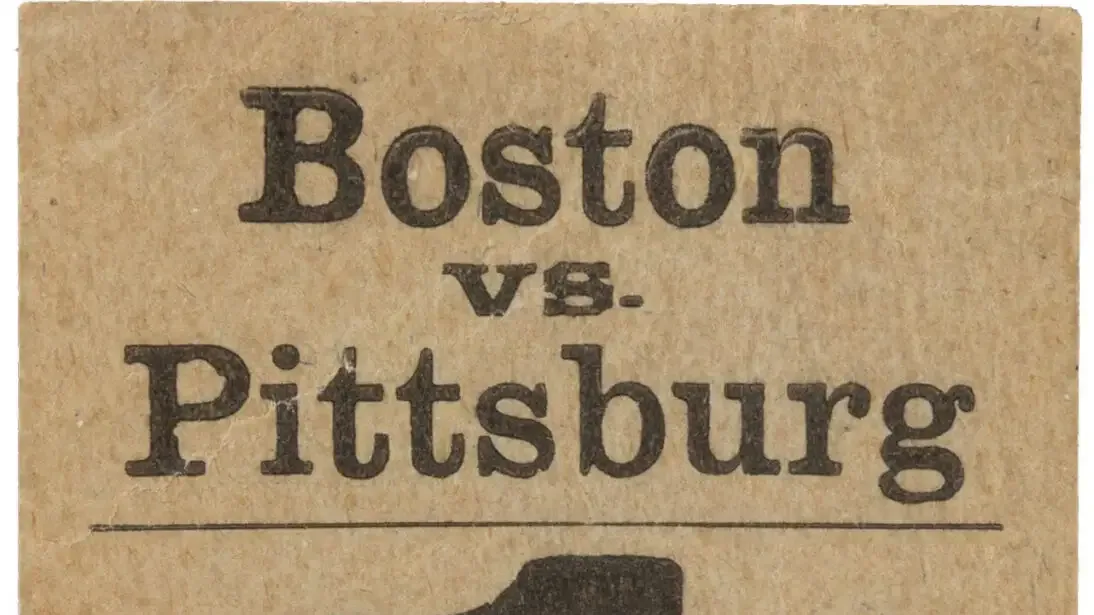
The small paper pass is for Game 1 of the 1903 championship series between the Pittsburgh Pirates and Boston Americans, a contest played at Boston’s Huntington Avenue Baseball Grounds. It is an unusually direct connection to the start of the event now known as the Fall Classic: not a commemorative item made afterward, but an object made to get one person through the gate on the day history happened.
Tickets are fragile by design. They are handled, folded, pocketed, torn at the entrance and often discarded once their immediate purpose is over. That makes survival alone meaningful for a ticket issued in 1903. In this case, scarcity is paired with a landmark event, a detailed game story and an unusual handwritten note on the reverse.
For collectors assessing historic sports material, that combination helps explain why the item’s condition is not the whole story.
For more context, explore Ruaridh Mollica’s Deleted Funko Pop Photo May Have Revealed Tommy Maximoff’s Speed Suit in VisionQuest.
A ticket from the game that started it all
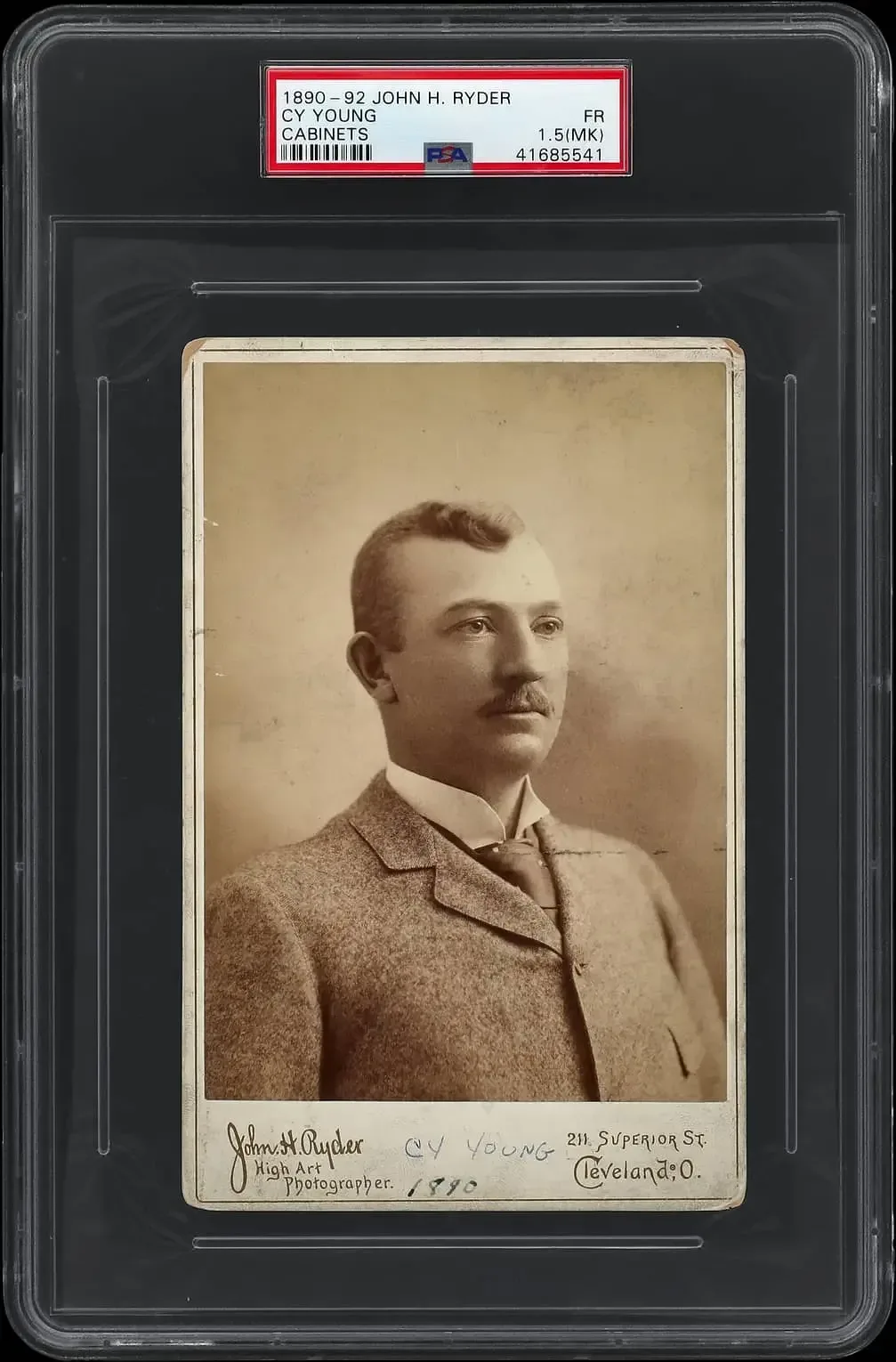
Game 1 drew an announced crowd of 16,242 and matched two leading clubs of the era. Boston sent Cy Young to the mound; he had won 28 games. Pittsburgh countered with Deacon Phillippe, a 25-game winner. The Pirates took control early, scoring four first-inning runs on their way to a 7-3 victory.
Jimmy Sebring supplied another piece of permanent baseball history, hitting the first home run in World Series history. The series itself was a best-of-nine affair, not the format familiar to modern viewers. Pittsburgh moved ahead three games to one, before Boston responded with four consecutive wins to take the championship. Young, after the Game 1 loss, won Games 5 and 7.
That context matters because the ticket represents more than an early championship game. It marks the first entry in the World Series record: the first game of what is described as 707 games across 121 World Series.
Related coverage includes 1903 World Series Game 1 Ticket Heads to Auction With $300,000 Estimate.
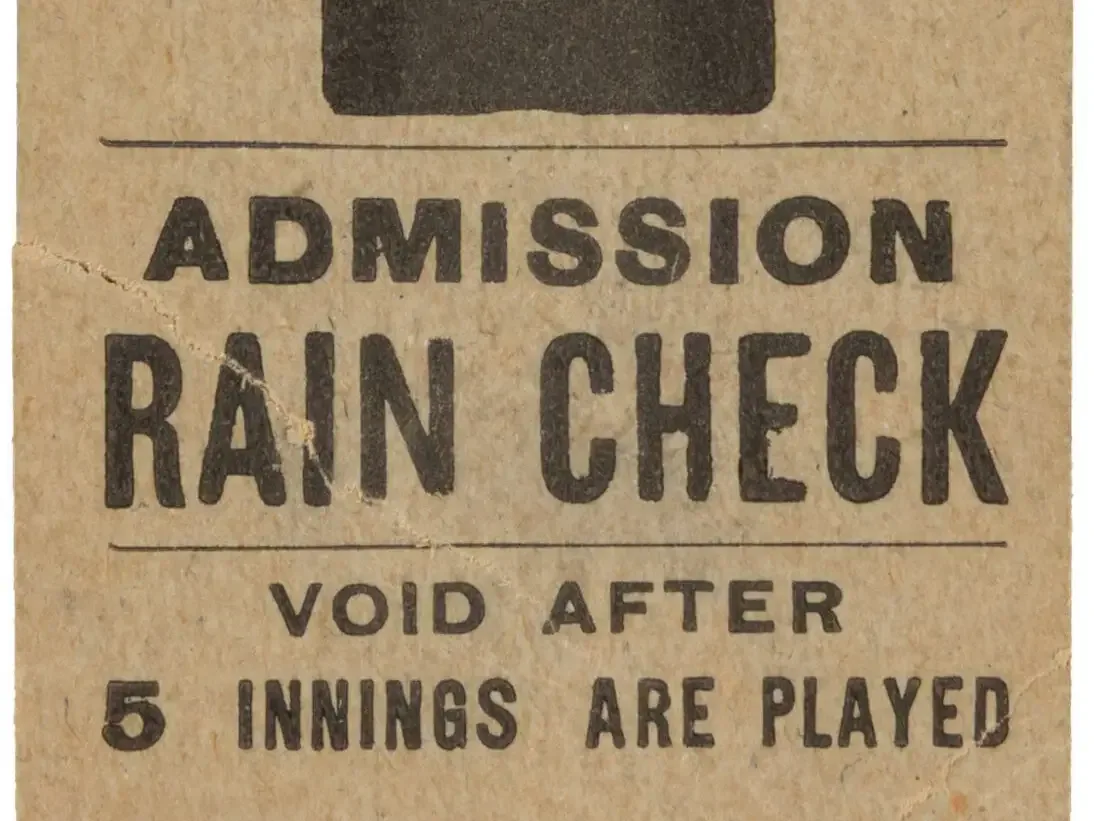
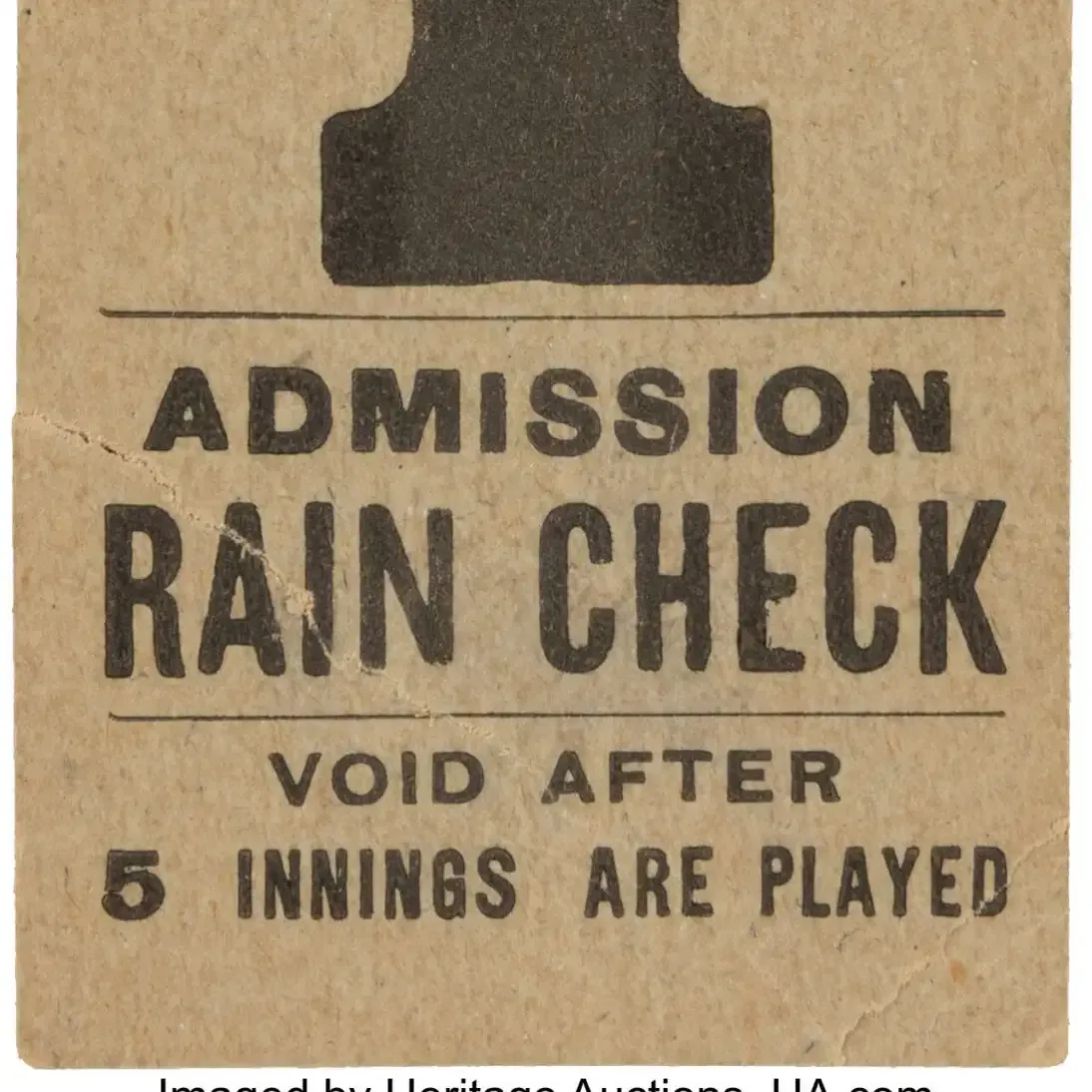
The listed ticket measures about 1.5 by 3.5 inches. “Boston vs. Pittsburg” is printed at the top, using the spelling shown on the original piece, while a prominent “1” identifies the game. It also includes a wonderfully period-specific condition of entry:
“Admission Rain Check Void After 5 Innings Are Played.”
That wording is a compact reminder that a ticket was a functional document before it became memorabilia. Rain, completed innings and the practical rules surrounding attendance were part of its original job. Today, those details give the artifact texture, preserving the language of a ballpark transaction from more than 120 years ago.
Why the writing on the back changes the object
The reverse bears a message addressed to “Charlie,” written by someone identified as having attended the game. The writer remarks on the immense crowd and describes the National and American League champions meeting for the championship of the world.
That handwritten note adds a second layer of historical value. A standard surviving ticket can establish that a particular event took place and that its holder was admitted. A ticket with a contemporary observation can also preserve a spectator’s reaction to that event. It turns the piece into both an admission pass and a tiny witness document.
It is important, though, to distinguish what the note can and cannot establish. It is a personal attendee message, not an official account of the game or a formal record. Its appeal lies in immediacy: somebody present thought the occasion and the crowd were notable enough to describe to Charlie.
For collectors, original writing can be a double-edged issue on some categories of ephemera, since markings may affect visual presentation. Here, the message is central to the ticket’s historical character. Rather than being merely a blemish, it connects the printed object to a human voice from the day of the inaugural Series game.
Fair condition, extraordinary rarity
The ticket has moderate to heavy creasing and is assessed as Fair. On a modern trading card, such visible wear would often dominate a conversation about value. Historic event tickets operate under a different set of priorities, especially when so few are known to survive.
Condition still matters: creases, stains, trimming, writing, missing sections and fading all influence desirability. But rarity, event importance and provenance can carry exceptional weight for paper artifacts. Provenance means the documented ownership history of an object. It helps establish a credible chain from earlier collections or sales to the current offering.
This Game 1 example is said to be one of only two surviving tickets issued for the first game in World Series history, and it is described as substantially better than the other known example. Its provenance includes prior ownership by renowned collector Barry Halper and an appearance in the 1999 sale of the Barry Halper Collection.
The pass is not enclosed in a PSA holder. That is not presented as a condition concern; PSA does not encapsulate tickets of this advanced age. Encapsulation, often called “slabbing,” places an authenticated and graded collectible in a sealed plastic holder. It is common for many cards and newer ticket categories, but it is not a universal standard for all vintage paper material.
That distinction is practical for would-be bidders. A slab can be useful evidence in some collecting fields, but the absence of one does not automatically reduce the historical significance of an item when the relevant grading company does not offer that service for its age category. Collectors instead need to look closely at the auction description, the stated condition, ownership history and the physical item itself.
The estimate has a relevant 1903 comparison
The $300,000 estimate puts the Game 1 ticket in elite territory, but there is a closely related public benchmark: a ticket from Game 3 of the same 1903 World Series sold for $175,000 in 2022.
That sale does not make Game 1’s eventual price predictable. Auction outcomes depend on the specific example, condition, ownership trail, bidding competition and the distinction between one game and another. Still, Game 1 has a uniquely clear historical claim as the opening contest of the first World Series, and the present ticket’s rarity and handwritten backstory add further reasons it is being positioned as a top-tier piece.
The comparison also illustrates a broader truth about ticket collecting. The object’s original face value and its later collectible value have almost no necessary relationship. A 50-cent admission pass became valuable because it survived, because of where it granted entry and because the sporting event it witnessed came to occupy a foundational place in baseball history.
Other early-baseball headliners in the sale
The auction is not built around the World Series ticket alone. Its other highlighted lots span cards, photography and autographed memorabilia tied to baseball’s foundational figures.
- A 1909-11 T206 White Border Sweet Caporal Honus Wagner card, graded PSA Authentic (Restored). Restoration means the card has been altered or repaired; it is a significant designation that collectors must factor into valuation. The example is described as only the sixth Wagner offered by the auction house.
- A 1933 Goudey Babe Ruth No. 144, graded PSA 6 with an MBA Silver designation. It is one of Ruth’s four cards in the 1933 Goudey issue.
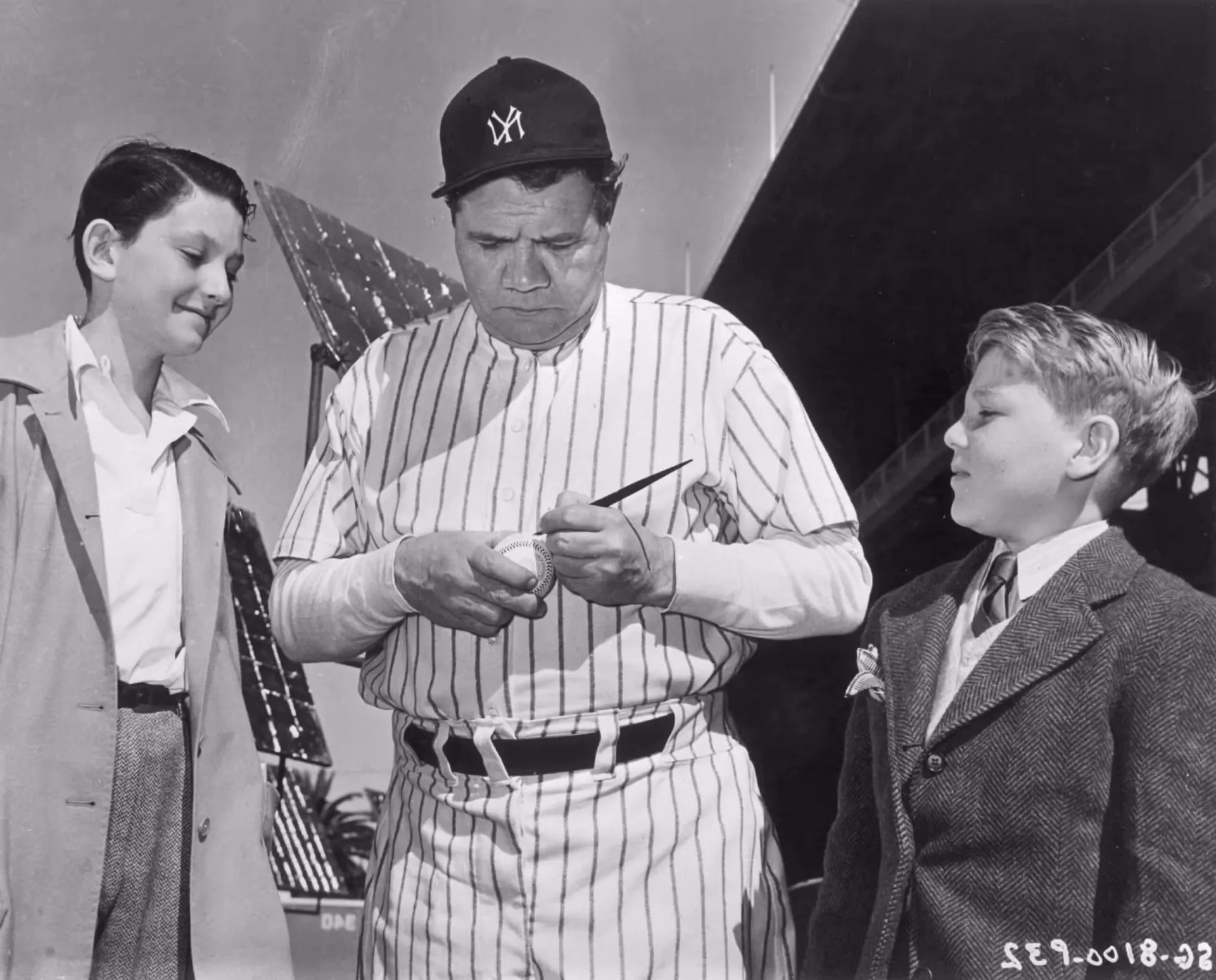
- A 1920 Type 1 original Babe Ruth photograph by Paul Thompson. The image was used for Ruth’s 1926 W512 strip card and shows him in his first Yankees season after six years with the Boston Red Sox.
- A 1946-47 Babe Ruth single-signed baseball, graded PSA/DNA 7, signed late in 1946 while Ruth was battling cancer before his death in 1948.
The Wagner is a useful example of how collector vocabulary should be read precisely. PSA Authentic (Restored) does not communicate the same thing as a numerical condition grade. It indicates the card is accepted as genuine while also disclosing restoration. That disclosure is vital because vintage-card value is shaped not only by identity and rarity, but by original state.
The 1903 ticket asks for another kind of reading. Its folds are plainly part of its age and use, while the reverse-side note and ownership record are elements of its narrative. Both the card and ticket categories reward careful attention to labels and descriptions, but their evidence and collecting priorities are not identical.
What bidders and collectors should take from the lot
The estimated figure is not a guarantee of a sale price. It is an auction estimate, a pre-sale range expectation or guide rather than a result. Anyone following the lot should separate the estimate from the hammer price, which is the winning bid before any buyer’s premium, and from the final amount paid after applicable auction charges.
More broadly, the piece is a vivid case study in why original event ephemera can sit beside famous trading cards at major auctions. Cards often center a player, a set and condition census. Tickets may center a precise moment: one game, one venue and one person’s passage through the turnstile.
This particular pass combines an inaugural World Series game, Cy Young, Deacon Phillippe, the first Series home run, a dramatic best-of-nine comeback and a surviving fan’s written reaction. That is an extraordinary amount of baseball history for a 1.5-by-3.5-inch rectangle of paper to carry.
Collectors interested in how other historic items are evaluated across adjacent categories can also explore details on the Game 1 ticket’s auction estimate.