Baseball history is at the center of Goldin’s Fall Game-Used Memorabilia Auction, where the marquee lot is the baseball Barry Bonds hit for his 715th career home run. That swing moved Bonds past Babe Ruth into second place on the all-time home run list, behind Hank Aaron at the time.
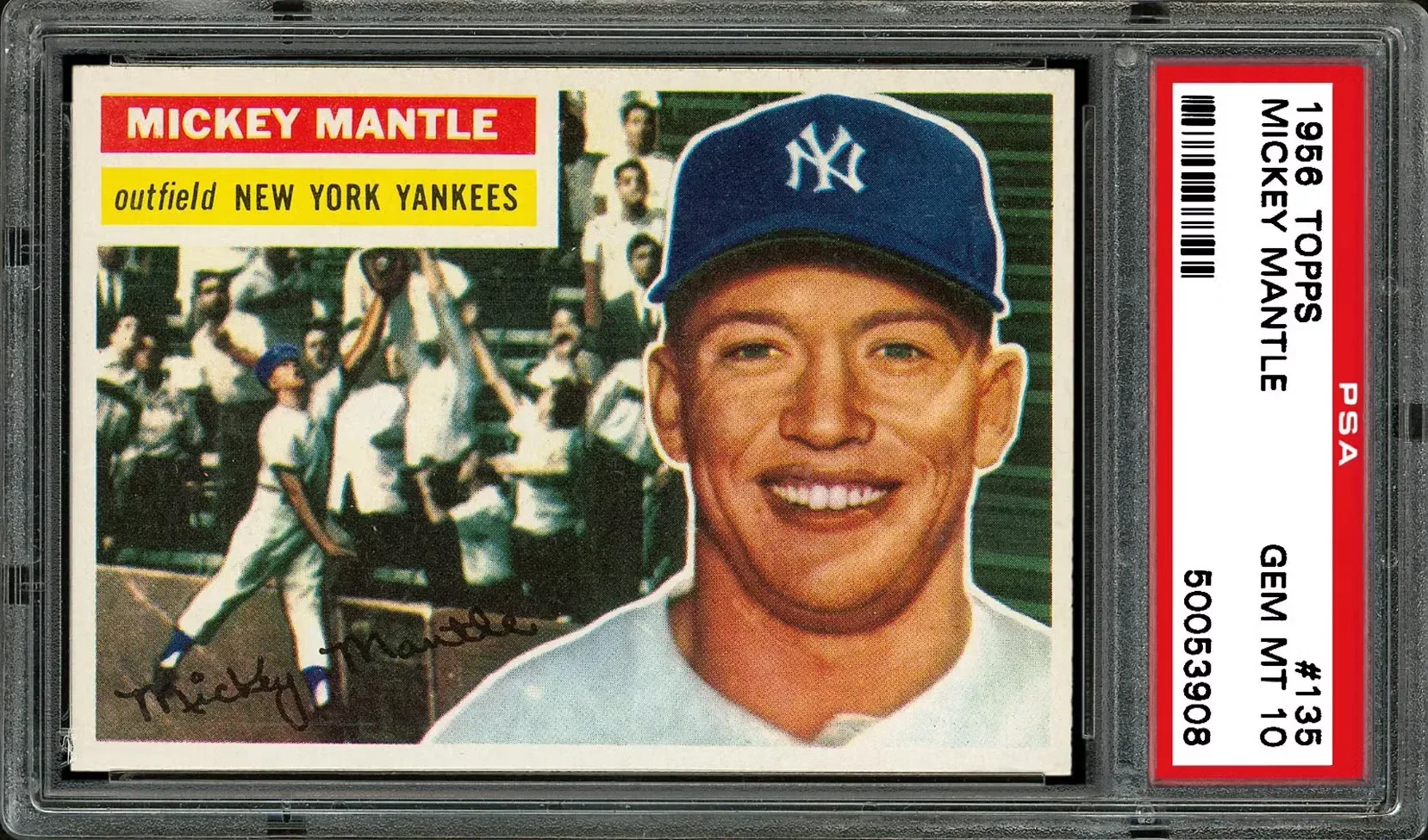
The sale, which runs through Nov. 7, is built around the sort of artifacts that connect an object to a precise on-field moment or season. Alongside the Bonds ball are a 1953 Jackie Robinson game-used bat, a signed and transcribed Mickey Mantle road jersey from 1960, and a twice-signed Willie Mays Giants jersey from 1971. The auction also reaches well beyond baseball with jerseys and equipment connected to basketball, football, hockey, soccer and racing figures.
The Bonds ball and the appeal of a defined milestone
Not every game-used collectible carries the same historical weight. A piece becomes especially legible to collectors when its link to an event can be stated plainly: this is the ball from a particular home run, a jersey from a particular game, or a bat used across a defined season.
That is what makes the Bonds ball the sale’s clearest landmark item. The 715th homer did not merely add to a career total; it marked the specific instant Bonds passed Ruth. Milestone baseballs offer a direct physical connection to the action, rather than a broader association with the athlete. In collecting terms, that event-specific relationship can be more meaningful than the object type alone.
It is also an artifact tied to the continuing conversation around baseball’s record book. The ball reflects a documented change in Bonds’ place on the all-time home run list: past Ruth and behind Aaron. Its importance is therefore rooted in what happened on the field, not just in Bonds’ name recognition.
Robinson’s 1953 bat carries a season-long connection
Another major baseball lot is a 1953 Jackie Robinson Louisville Slugger Hillerich & Bradsby O16 professional-model bat described as game-used throughout that season. Robinson’s place in the sport’s history makes game-used material from his playing career significant well beyond the usual appeal of a star player’s equipment.
The 1953 season came six years after Robinson broke baseball’s color barrier. That context changes how a collector may view the bat: it is not framed around one isolated play, but around a full season in the career of a player whose impact reshaped the major leagues.
A professional-model bat refers to equipment made to the specifications associated with a professional player rather than a standard retail bat. “Game-used,” meanwhile, is a description of use in competition. Those terms matter, but they address different things: the first concerns the model and player association, while the second concerns on-field use. For any potential buyer of historic equipment, the central practical question remains how clearly the particular object’s player, season and use are established in the auction materials.
Related coverage includes Barry Bonds 715th Home Run Ball, Jackie Robinson Bat and Mantle, Mays Jerseys Lead Goldin Fall Game-Used Auction.
Mantle and Mays jerseys frame two late-career chapters
The baseball section also includes a 1960 New York Yankees road jersey worn by Mickey Mantle. It is described as game-worn, signed and transcribed. Mantle finished second in American League MVP voting that year after hitting 40 home runs, giving the jersey a straightforward connection to a productive season for one of the era’s defining Yankees.
“Transcribed” generally indicates that text beyond a signature has been added to an item, often to identify a season, accomplishment or personal message. The supplied details do not specify the wording on Mantle’s jersey, but the term distinguishes the piece from an unsigned garment or one carrying only an autograph.
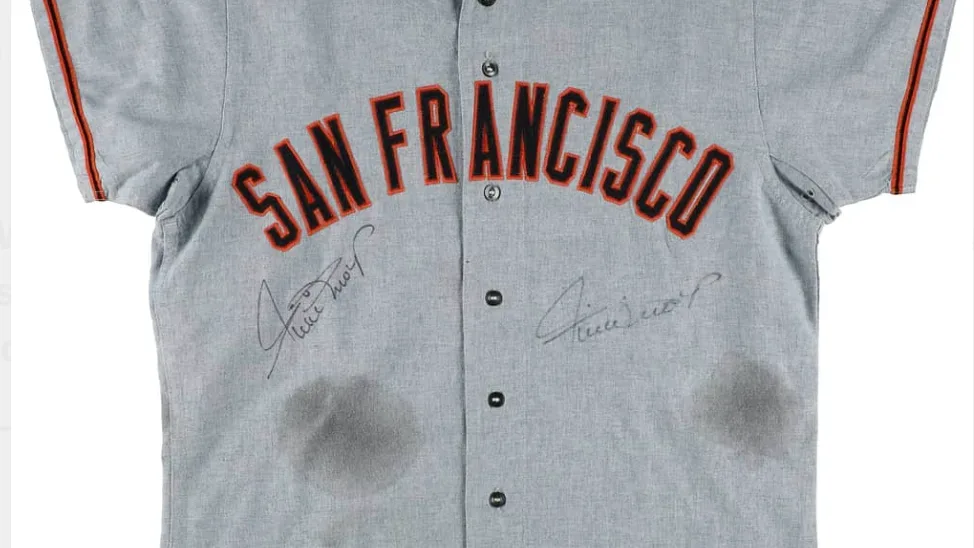
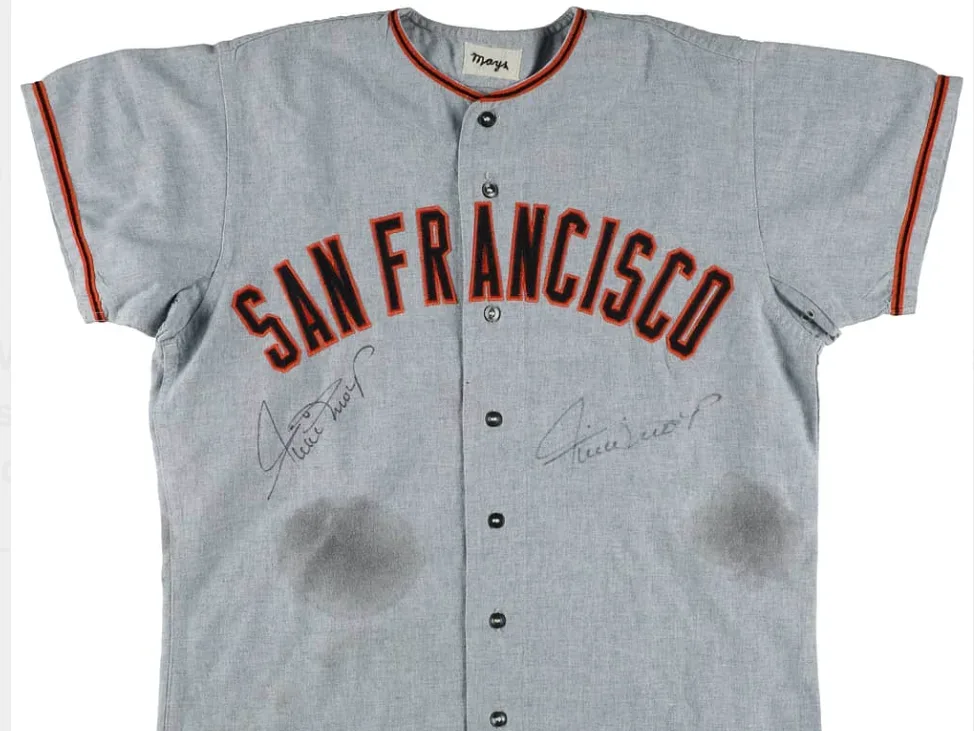
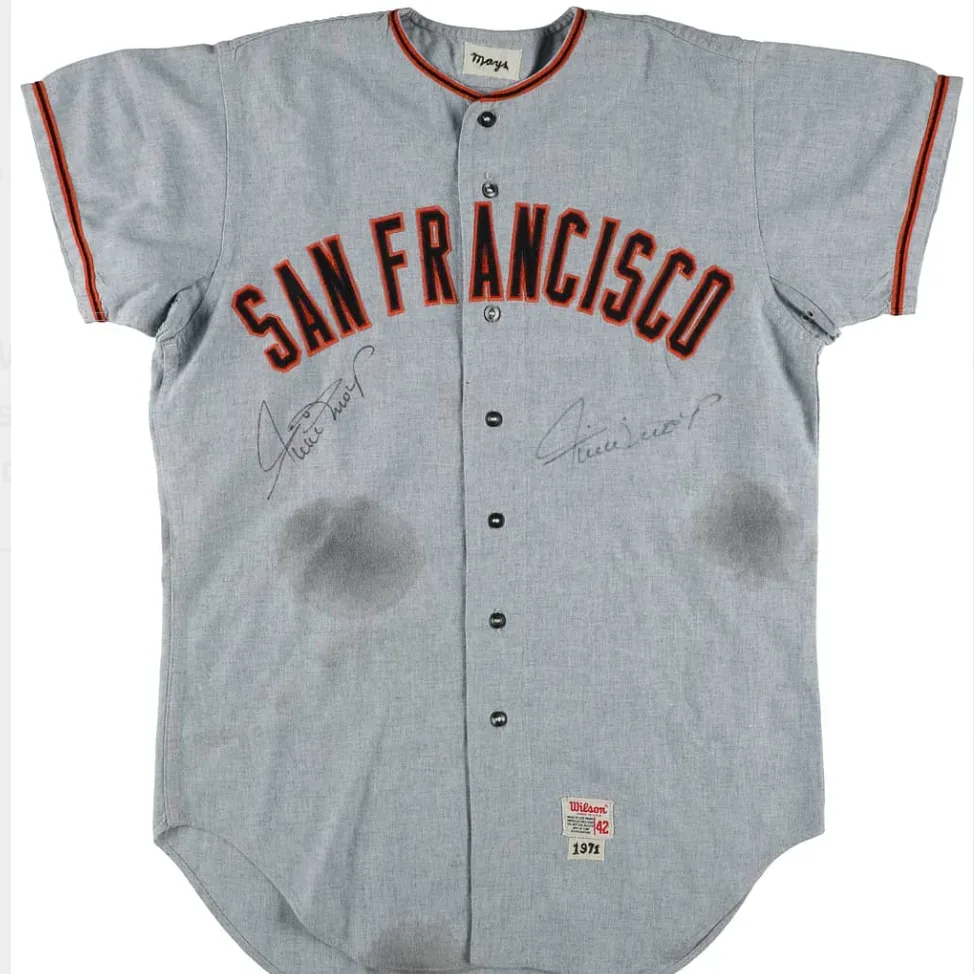
Willie Mays is represented by a 1971 San Francisco Giants jersey described as game-worn and twice signed. Mays wore it during his final full season with the Giants, before a trade to the Mets; he retired in 1973. That makes the shirt an artifact from the closing stretch of his Giants tenure rather than from the end of his playing career overall.
For collectors focused on baseball’s long-running historical narratives, the four headline pieces offer distinct kinds of association: Bonds’ ball is attached to one record-setting swing; Robinson’s bat represents a season; Mantle’s jersey is linked to a notable individual campaign; and Mays’ jersey belongs to a transition point in a franchise-defining career. The differences are important. “Game-used” is a broad collecting label, but the actual story attached to each object is usually what determines how a piece is understood.
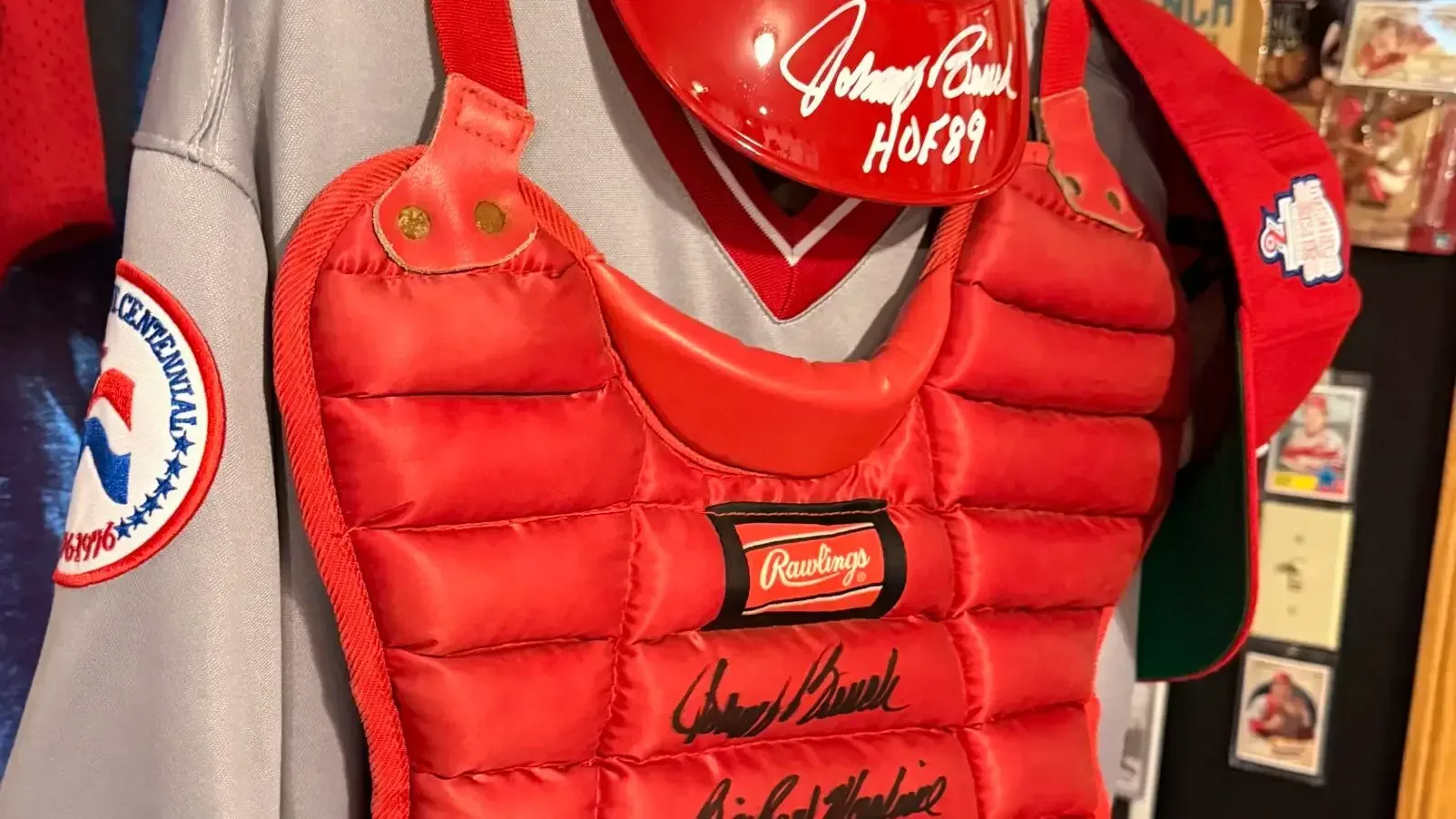
Collectors looking for another baseball-centered example of how signatures and player history shape an item’s appeal can also explore Johnny Bench collectors preserving the Big Red Machine’s story through signed pieces.
A multi-sport auction built around game wear
The auction’s basketball offerings include a 2012-13 Miami Heat Noche Latina jersey described as game-used by LeBron James. “Noche Latina” is the designation used for the themed jersey in the listing description. Also included is a Dallas Mavericks home jersey worn by Jason Kidd in Game 3 of the 2011 NBA Finals, plus a Cleveland Cavaliers home jersey worn by Kyrie Irving in Game 4 of the 2016 NBA Finals.
Those pieces demonstrate another key distinction within sports memorabilia: a jersey can be connected to a season, to an event, or to an individual game within that event. A Finals Game 3 or Game 4 association gives a garment a more narrowly defined competitive setting than a jersey identified only to a season. It does not automatically make one item preferable to every collector, but it gives prospective bidders a clearer starting point for weighing significance.
Hockey is represented by a 1993-94 Pittsburgh Penguins home jersey worn by Mario Lemieux in a game in which he recorded four goals and four assists. In this case, the attraction is both player and performance. A single-game jersey can become especially resonant when the game itself contains an unusually memorable statistical line.
Football lots include Reggie Bush’s signed 2003 USC Trojans jersey and a 2002 San Diego Chargers away jersey worn by Junior Seau in his final game with the team. The Bush jersey joins athlete association with an autograph, while Seau’s jersey is tied to a final-team appearance. Again, the descriptions illustrate why a collector should separate several overlapping attributes: who wore the item, whether it was used in play, whether it is signed, and what game or season it can be connected to.
Hamilton, Haaland and Ronaldo broaden the field
Other sports add a wider chronological and geographic range. The auction includes a 2000 race-worn firesuit worn by Lewis Hamilton in a pre-rookie Karting World Championship race in Braga, Portugal. Hamilton is identified as a seven-time Formula 1 champion, but the firesuit predates his Formula 1 career. That early-career link is the point: it offers a physical connection to a developmental stage before the accomplishments for which he is most widely known.
Soccer collectors will find a 2022 Manchester City jersey from Erling Haaland and a 2017 Real Madrid jersey from Cristiano Ronaldo. The supplied information identifies the player, club and year for each, which are useful baseline facts for understanding the items’ stated associations.
What careful bidders should focus on
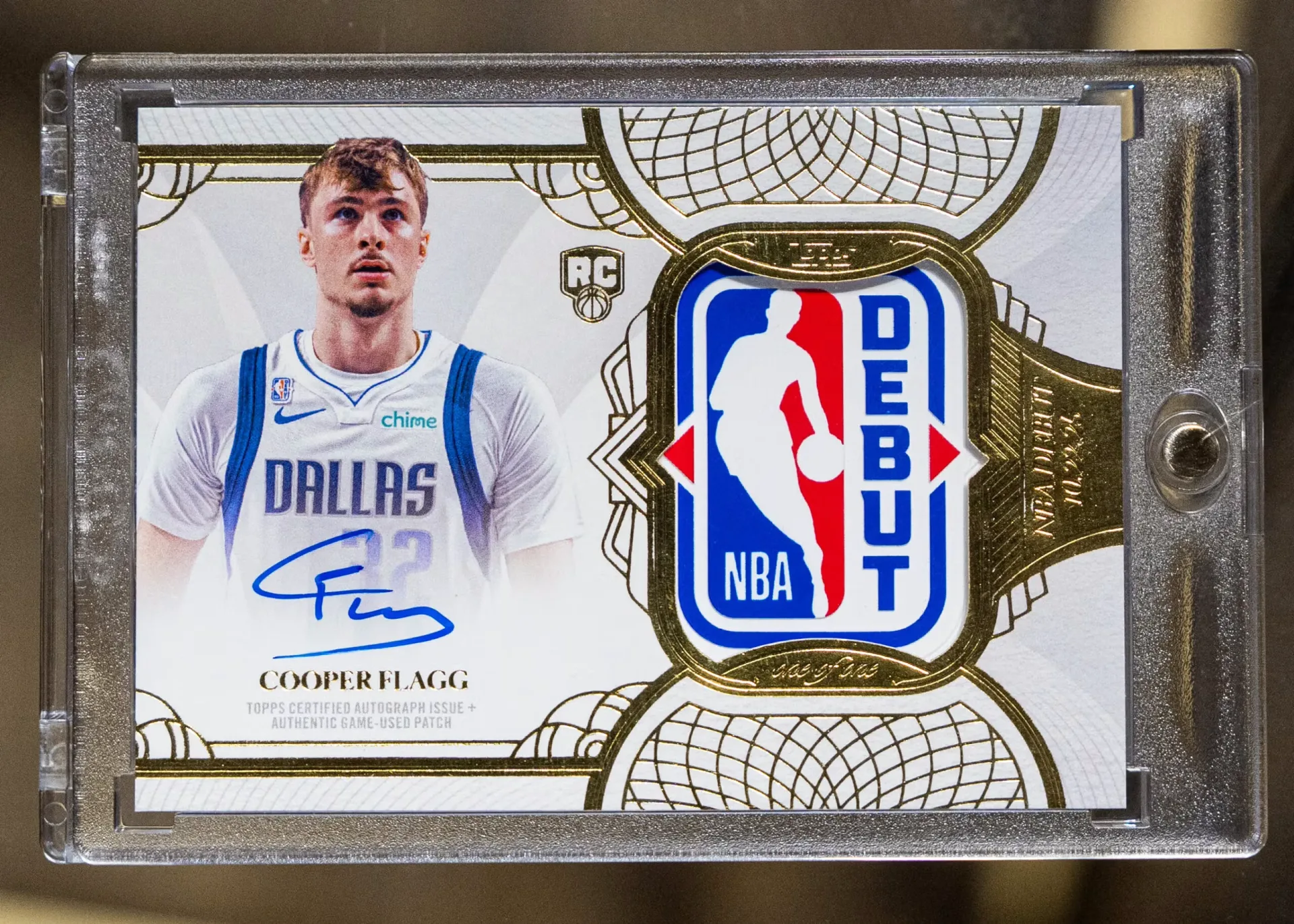
Game-used memorabilia is fundamentally different from a trading card. A card is usually one of many printed copies, with rarity often determined by production, serial numbering, set placement and condition. A game-used object is valued through its individual history: use, player association, condition, signatures and the quality of its connection to a season or moment.
That does not make every game-used object equally self-explanatory. Prospective bidders should read the lot description closely and identify exactly what is being claimed. Is the item connected to a specific game, an entire season, or only a general period? Is it described as game-used or game-worn? Is a signature part of the lot? Is the signature accompanied by an inscription? These are not interchangeable details.
For this auction, the headlines are unusually easy to summarize because their stated stories are sharply defined: Bonds’ 715th home run, Robinson’s 1953 season, Mantle’s 1960 campaign, Mays’ final full Giants season, Kidd’s 2011 Finals appearance, Irving’s 2016 Finals appearance, and Lemieux’s eight-point game.
That clarity is the common thread across a sale otherwise spanning numerous sports and decades. Whether the object is a baseball, bat, jersey or firesuit, its collecting appeal rests on a tangible link between the item and a player’s career. The strongest lots give bidders a concise answer to the simplest question in memorabilia collecting: what exactly happened while this was in use?