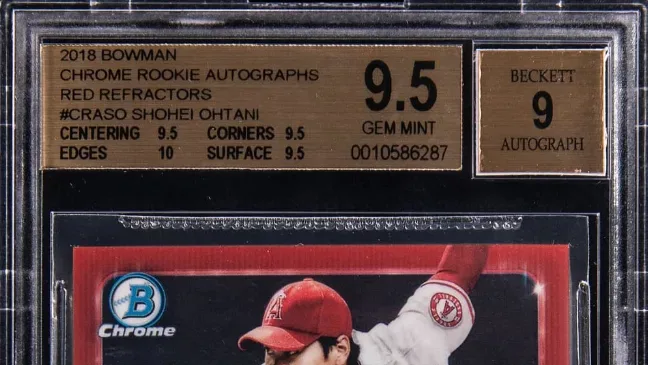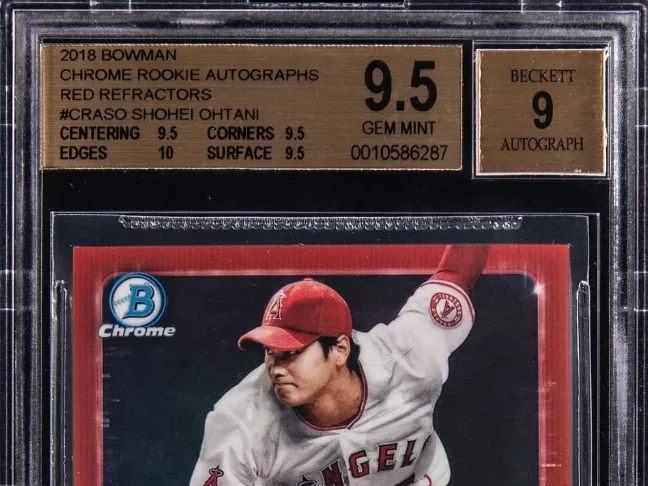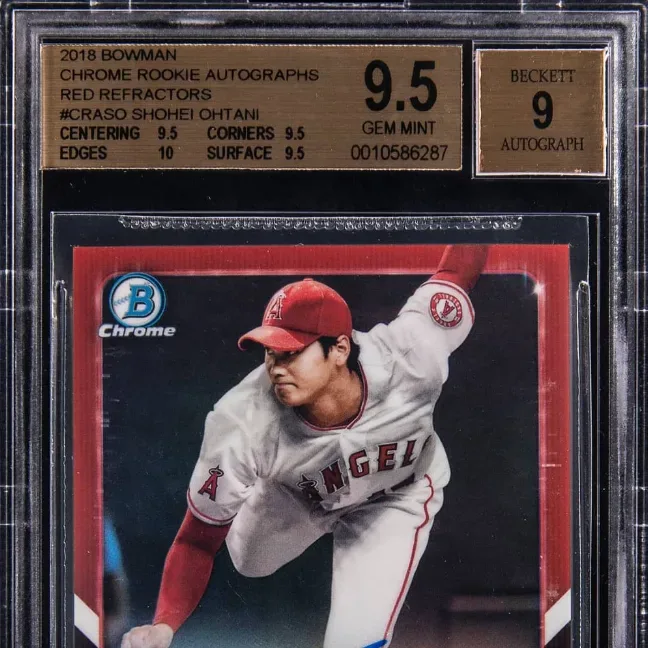
Elite sports cards did not merely show up to the Goldin Summer 100 Auction; they showed up with the kind of price tags that make a humble penny sleeve feel underdressed. A 2018 Shohei Ohtani Bowman Chrome Red Refractor Rookie Auto, numbered 2/5, sold for $2.4 million, the highest publicly reported price for an Ohtani Bowman Chrome card.
The sale placed Ohtani at the center of an auction that also delivered several major Michael Jordan results, plus record-setting prices across basketball, soccer, football, Formula 1 and wrestling memorabilia. Goldin said four lots exceeded $1 million during the event. Among the supplied highlights, Ohtani’s $2.4 million card and a Jordan patch autograph at $1.46 million are the identified seven-figure results.
The Ohtani card: scarcity, condition and a signature in one lot
The headline Ohtani is a 2018 Red Refractor Rookie Auto #2/5 graded BGS 9.5 True Gem+, with a population of two. Its $2.4 million result is significant not simply because it is an Ohtani rookie card, but because several premium collecting signals converge on the same piece.
- Rookie-year issue: The card dates to 2018, tying it to Ohtani’s rookie-card market.
- Limited serial numbering: “#2/5” means this Red Refractor version is limited to five numbered examples.
- Autograph: The “Auto” designation indicates it is an autographed card.
- High grade: BGS 9.5 True Gem+ is a top condition designation from Beckett Grading Services.
- Population report context: “Pop 2” means two examples received that stated grade in the cited population count.
Those attributes are different categories of information, and collectors should avoid treating them as interchangeable. A low serial number establishes a stated production limit; the population figure tracks how many cards have achieved a particular grade; and the grade reflects an assessment of physical condition. The three can reinforce one another, but they do not mean the same thing. In this case, all three help explain why this Ohtani example stands apart from an ordinary base rookie card.
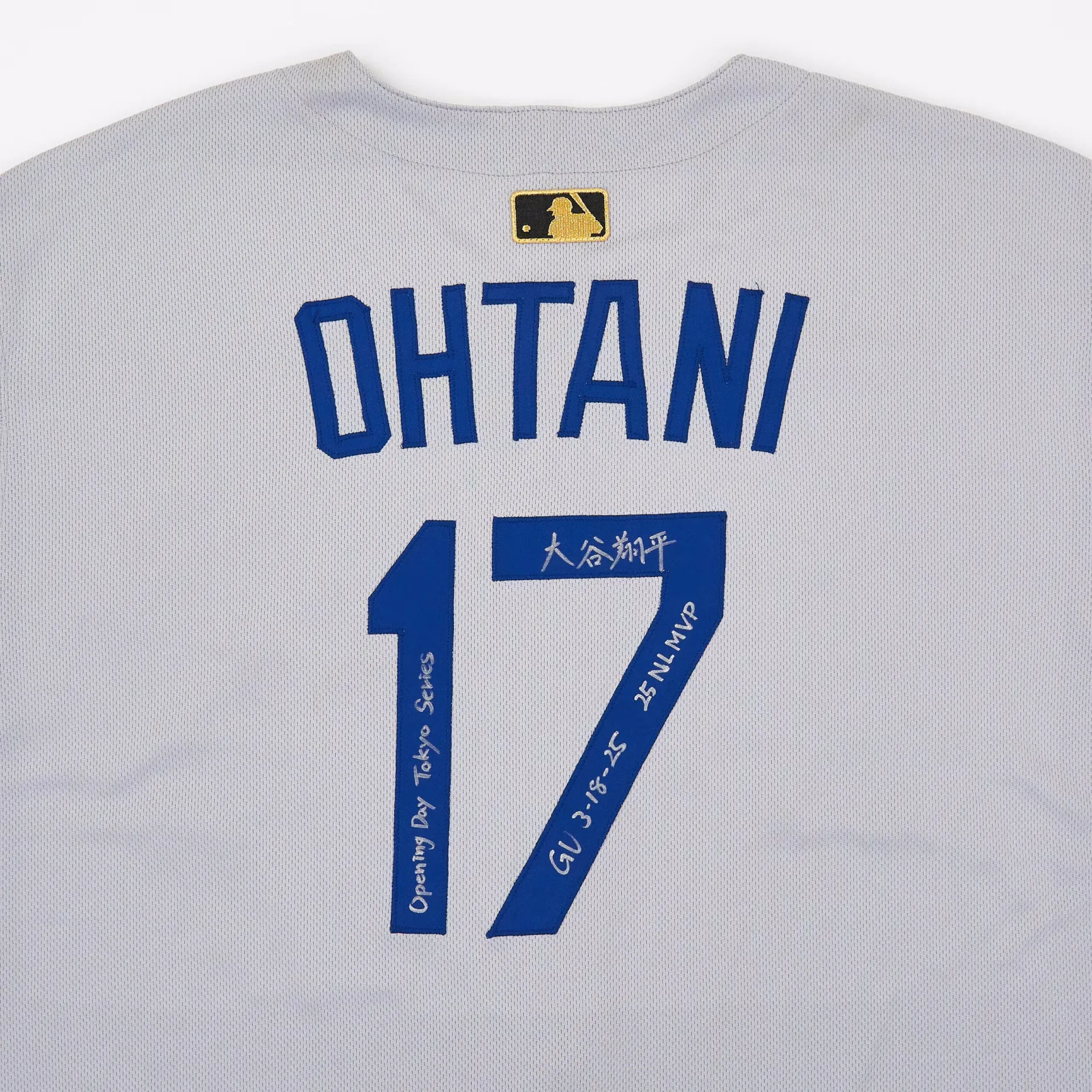
The same auction included two more high-end Ohtani sales. A 2025 Topps Chrome SuperFractor #1, numbered 1/1 and graded PSA 10, brought $701,500. A 2018 Topps Allen & Ginter World Talent #WT-24 rookie card signed in Kanji sold for $226,920; it carried a PSA 8 card grade and PSA/DNA 10 autograph grade. That price was reported as a record for a modern Allen & Ginter card.
A SuperFractor is a one-of-one parallel, meaning the card is identified as the only numbered copy of that version. PSA 10 is a top grade from Professional Sports Authenticator, while PSA/DNA 10 specifically refers to the autograph assessment. For a buyer, these labels describe important attributes, but they are not a universal shortcut to value: set, player, card year, autograph status and the exact parallel all matter.
Jordan’s results span cards, a photo and a magazine
Michael Jordan’s strongest card result was a 2003-04 Upper Deck Exquisite Collection autographed game-used patch card, which sold for $1.46 million, a record for that card. It combines an autograph with a patch described as game-used—a format prized because it brings a physical piece of equipment or apparel into the card itself.
Another Jordan relic card, a 1998-99 Upper Deck Jordan Game Jersey Autographs #MJx-GJ, numbered 12/23, reached $549,000. The card is described as a signed game-worn relic and graded PSA 9, with a population of three at that grade. As with Ohtani’s Red Refractor, the important point is the combination: a limited run, a signature, a game-worn relic component and a high-grade population that is reported as small.
Related coverage includes Shohei Ohtani and Michael Jordan Lead Goldin Summer 100 Auction With Record Sales.
Jordan’s auction presence extended beyond conventional trading cards. A signed and inscribed Type I photo from his first Nike Air Jordan advertising campaign, dated November 1984, sold for $528,937, reported as a record for any Jordan photo. His first magazine cover, the December 10, 1984 issue of Sports Illustrated carrying the “A Star is Born” cover line, realized $378,200, a reported record public price for a magazine.
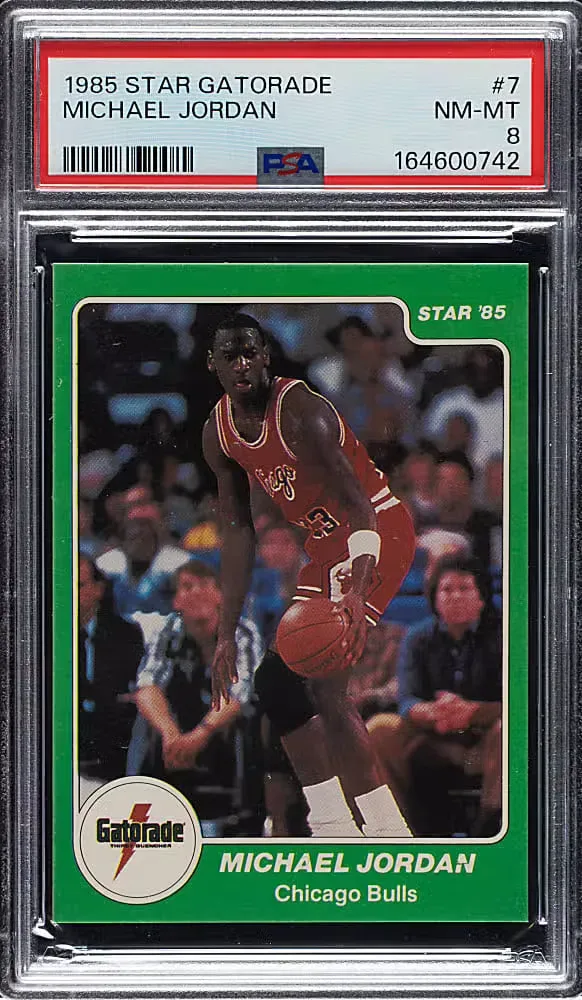
There were also two more notable Jordan card sales: a 1996-97 Flair Showcase Legacy Collection Row card graded PSA 10, with a population of five, brought $427,000; and a signed, inscribed “#23” 1985 Nike Promo rookie card, graded PSA 6 with an Auto 8, sold for $356,286.
These lots underline an easy-to-miss collecting reality: “Jordan market” is not one market. A game-used patch card, an early promotional card, a photo connected to an ad campaign and an early magazine cover are distinct objects with different condition concerns, authentication questions and collecting audiences. Their common link is Jordan, but their individual stories help define the results.
Record prices across sports and formats
The auction’s other highlighted results demonstrate how broad the upper end of sports collecting can be. A Kevin Garnett Boston Celtics home jersey, described as game-used and photo-matched from the championship-clinching Game 6 of the 2008 NBA Finals, sold for $701,500.
Photo-matched means a specific item has been compared to photographic evidence in an effort to identify it as the same item used or worn in a documented setting. It is a particularly consequential descriptor on memorabilia, where the connection between an object and an event can be central to collector interest.
A 1958 Pelé Editora Aquarela Ltda. Brasil Campeão Mundial de Futebol #10 Perforated-Black rookie card, graded PSA 8, brought $671,000. The result puts a historic soccer card alongside contemporary stars and modern releases in the auction’s leading group.
Modern rookie-card speculation also appeared in the results. A 2025 Jaxson Dart Topps Chrome Rookie PREM1ERE Rookie Patch Auto unused redemption card, numbered 1/1, sold for $500,200. A redemption card is not necessarily the final physical autographed card or patch card itself; it is a card that can be exchanged for the promised item. The lot was specifically described as an unused redemption, an important distinction for anyone comparing it with completed, redeemed cards.
On the racing side, a 2025 Topps Chrome Formula 1 Kimi Antonelli Red Refractor rookie card, numbered 2/5 and graded PSA 10 with a population of two, sold for $360,510. In wrestling, a 2025 John Cena Topps Royalty WrestleMania 41 Patch Auto graded PSA 8 realized $329,400. The Cena card is tied to his final WrestleMania, adding event-specific context to its patch-and-autograph format.
What these prices do—and do not—tell collectors
The sale results are meaningful public benchmarks for the exact lots involved. They show what bidders paid for cards and memorabilia with particular serial numbers, grades, autograph assessments, relic descriptions and provenance details. They should not be read as a blanket valuation for every card bearing the same athlete’s name.
That caveat matters most with high-profile sales. An Ohtani card can be a 2018 rookie, but that alone does not make it comparable to a Red Refractor signed copy numbered to five. A Jordan card can contain a relic, but it may not be equivalent to a game-used patch autograph in a specific Exquisite release. Likewise, PSA 10 or BGS 9.5 does not erase differences in scarcity, set demand or card configuration.
For collectors researching similar pieces, the useful checklist is straightforward:
- Match the exact set, year and card number.
- Check the parallel and serial numbering, not just the player.
- Separate the card grade from any autograph grade.
- Confirm whether a relic is described as game-used, game-worn, event-specific or another stated category.
- For non-card memorabilia, pay attention to authentication and links to a particular moment, such as a photo-match.
- Distinguish a completed physical card from an unused redemption.
The auction also offers a useful snapshot of how many collecting lanes now coexist at the premium level. Ohtani’s rookie cards, Jordan’s cards and early career artifacts, Pelé’s vintage soccer issue, a championship jersey, a Formula 1 rookie parallel, a one-of-one football redemption and a Cena WrestleMania patch autograph all command attention for different reasons. The shared lesson is not that every modern limited card is destined for a windfall. It is that scarcity works best when paired with a compelling player, a clear format and documentation collectors can understand.
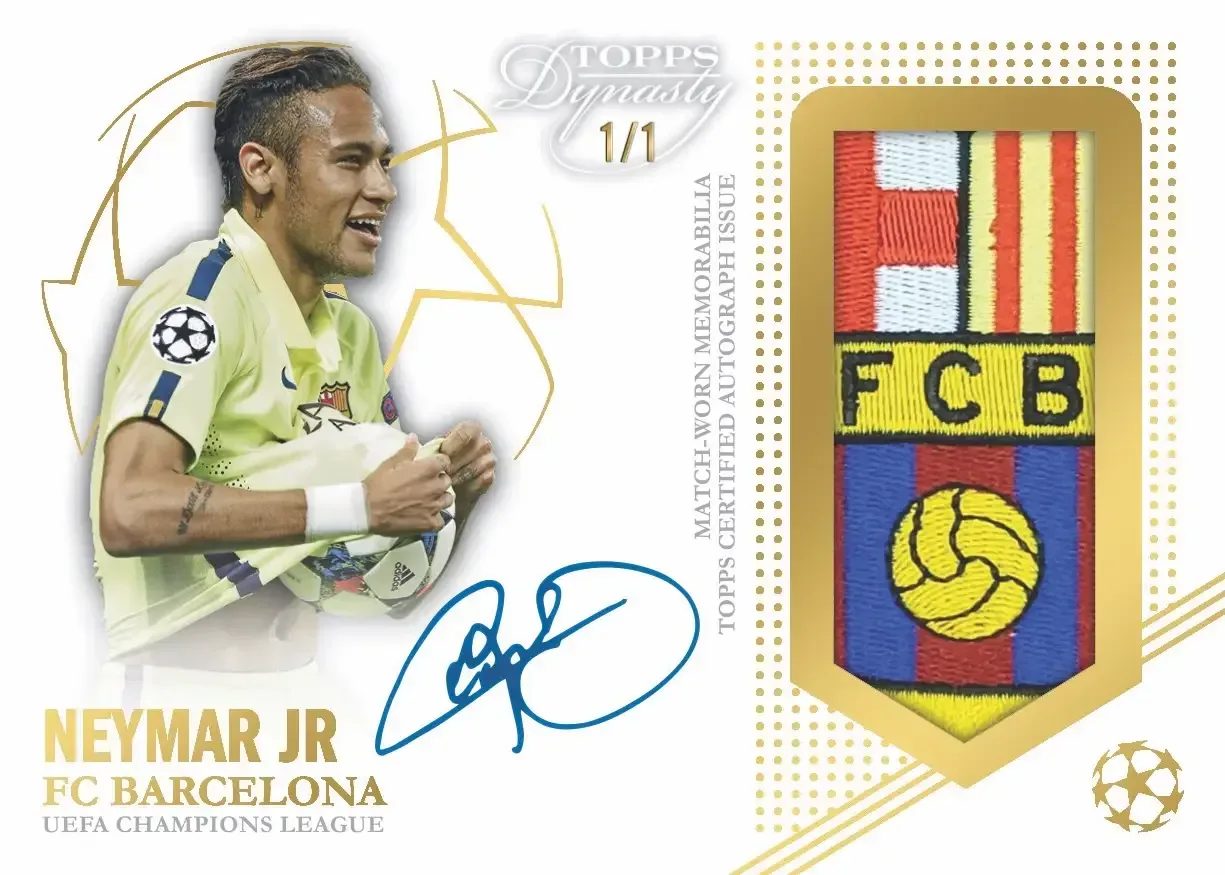
For another recent example of how player agreements can shape the sports-card landscape, see Neymar Jr.’s Topps exclusivity for cards, stickers and TCG products.