Apple’s end-of-year calendar still has several dates that could matter to people using iPhones, iPads, Apple audio gear and the App Store for games and entertainment. The company’s remaining 2026 activity spans a seasonal shopping event, a December iOS release, service features, hardware colour variants and an Apple-backed smart-home accessory range.
The practical distinction is important: not every item is a new product launch, and several timings remain estimates rather than fixed dates. The most consequential item for existing device owners is likely iOS 27.3, which Apple has said will reach the public in December. For prospective buyers, the four-day Black Friday event begins November 27. Meanwhile, Apple Music listeners, app developers and users in China have separate December milestones to watch.
Black Friday runs November 27 through November 30
Apple’s annual Black Friday shopping event is scheduled to run from Friday, November 27 through Monday, November 30. Eligible purchases can receive gift cards worth up to $300. “Up to” is doing meaningful work here: the supplied details do not identify which products qualify or the gift-card amount associated with each purchase, so shoppers should verify the terms for the exact device they are considering before treating $300 as an expected saving.
There is also an Apple TV streaming offer for new and qualified returning subscribers: $6.99 per month for six months, available until November 30. That is a service promotion rather than a hardware discount, but it may be relevant to households adding an Apple device or revisiting the platform over the holiday period.
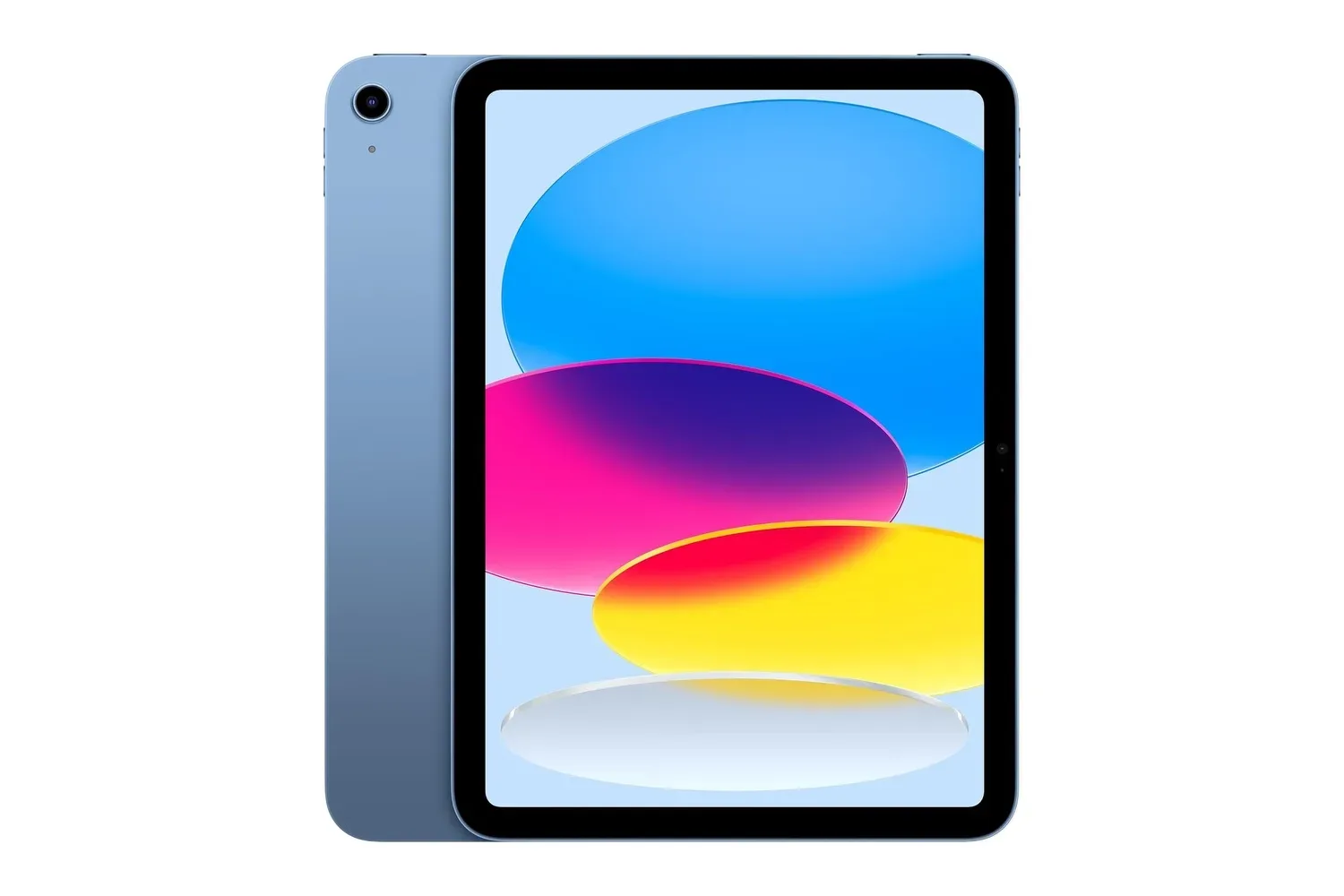
For game-focused buyers, the timing may be particularly useful if a new iPad is already on the shopping list. Apple’s A16 iPad has previously been positioned as a capable option for App Store gaming in our coverage of its App Store gaming potential. Still, the announced Apple event benefit is a gift card on eligible purchases, not a guarantee of a lower sticker price. Those are different kinds of offers and should be compared accordingly.
PRODUCT(RED) AirPods Max 2 and HomePod mini 2 are expected around December 1
Apple is expected to introduce PRODUCT(RED) versions of the existing AirPods Max 2 and HomePod mini 2 on or around Tuesday, December 1, which is World AIDS Day. The expected change is colour only. There is no indication in the available information of revised specifications, new audio features, altered compatibility or a hardware refresh.
Apple is also expected to release a red Wrist Strap for AirPods Pro and a red Sport Band for Apple Watch. This makes the rollout primarily a coordinated accessories and finish update. Anyone deciding whether to buy now or wait should therefore frame the choice around aesthetic preference rather than an expectation of improved performance.
That distinction can prevent a common holiday-shopping mistake. A new colourway can be genuinely appealing, particularly for a gift, but it does not automatically mean a new generation of product. With the supplied information pointing only to new finishes, owners of the existing models do not have a technical reason to upgrade based on this rollout alone.
iOS 27.3 is the major software date, but the release day is not set
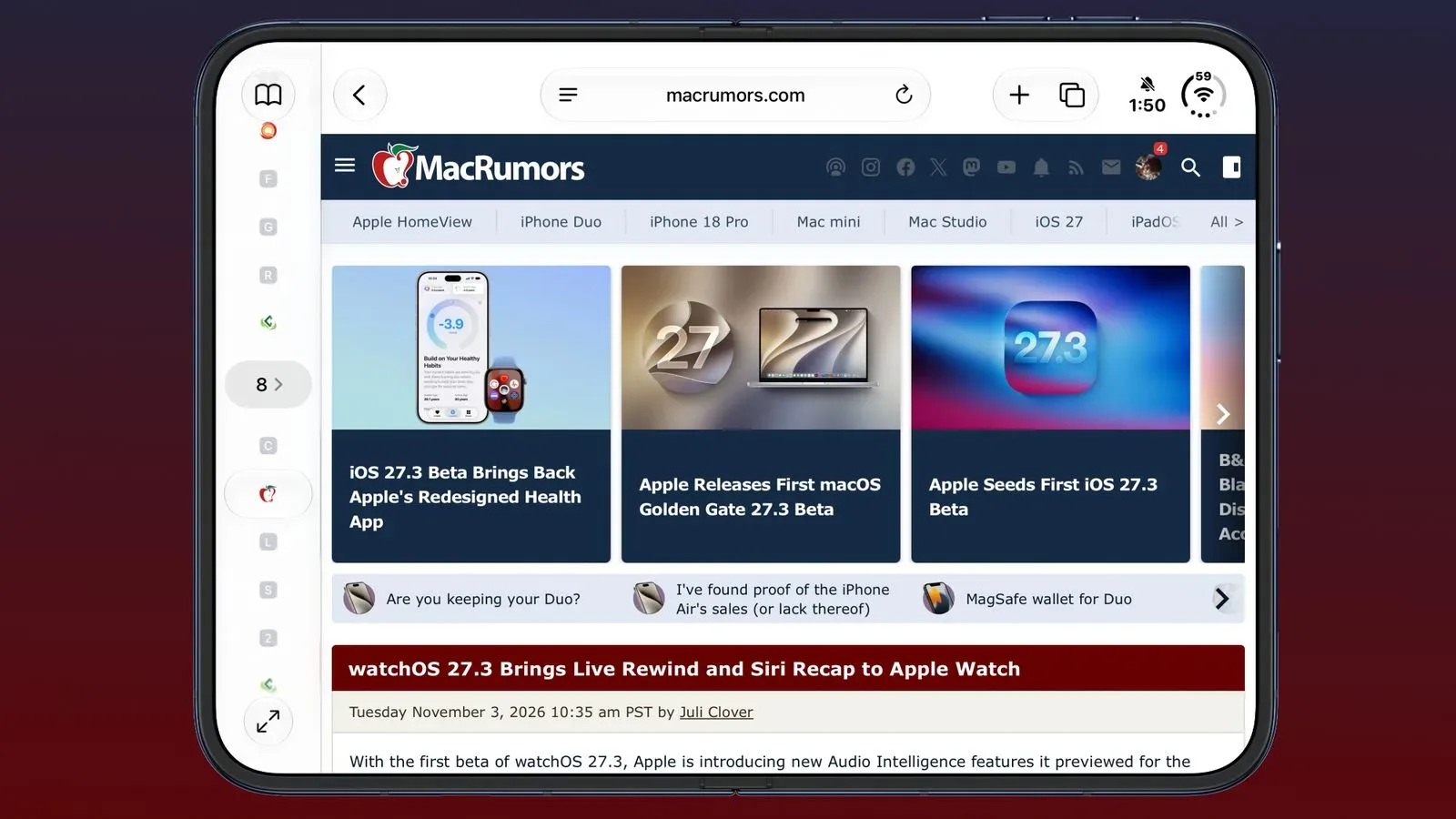
Apple has confirmed that iOS 27.3 will be publicly released in December, although it has not named a specific date. Its first beta arrived on November 3. A beta is pre-release software made available for testing before a public launch; features seen there can be revised, delayed or removed before the final build reaches ordinary users.
The beta has so far included new Siri AI actions across apps, vertical tabs and Adaptive Dark Mode in Safari, a redesigned Health app, and a new Apple Fitness+ Gym Strength workout that creates a four-week plan. These are wide-ranging changes rather than one narrowly focused update, so the final release may be of interest to users for very different reasons.
The Siri AI actions described here concern actions across apps. In simple terms, that points to Siri being able to help carry out tasks involving applications, rather than solely answering a question in isolation. Exact supported apps, commands and final behaviour have not been detailed in the supplied information, so it would be premature to promise particular game, social or productivity workflows.
Safari’s vertical tabs move the tab list from a horizontal presentation to a vertical one. Adaptive Dark Mode is another visual-interface change listed for the beta, though the available details do not explain precisely how it adapts. The redesigned Health app and the Fitness+ Gym Strength workout are likewise present in the beta reporting, with the latter specifically described as building a four-week plan.
For mobile players, the value of an iOS update often lies in day-to-day platform stability and the way it affects the apps already in use, but the current list does not identify game-specific iOS 27.3 additions. It is more accurate to regard this as a broad operating-system update with some potentially useful interface and assistant changes, rather than a dedicated gaming patch.
Apple Intelligence begins a limited China rollout
December is also expected to bring the first Apple Intelligence features to users in China. Those features are already being tested through the iOS 27.3 beta, and Apple has confirmed a public rollout alongside the update.
Apple has partnered with Alibaba to add Qwen support to Siri, Writing Tools and Visual Intelligence. In this context, Writing Tools refers to Apple Intelligence features designed around text, while Visual Intelligence refers to the named Apple Intelligence area dealing with visual information. The provided details do not specify every individual capability or device requirement, beyond stating that the initial release is for supported iPhones.
There are two key limitations to note. First, other platforms are intended to follow only after required regulatory approvals. Second, the initial release does not include Siri AI. That caveat matters because iOS 27.3’s beta list separately mentions new Siri AI actions across apps. Users should not assume that every AI-related addition discussed for iOS 27.3 will be available in every region or as part of China’s initial Apple Intelligence launch.
The regional rollout illustrates why software-update summaries need careful reading. A single version number does not necessarily mean identical feature access on every supported phone in every market. Device support, regional availability and approval status can each shape the final experience.
December also brings Apple Music Replay and App Store Awards
Apple Music Replay, the annual listening recap, is expected in December. Last year’s full recap became available on December 2, making a similar early-December timeframe plausible, though not confirmed. Replay provides users with their leading songs, artists and listening statistics for the year.
For players whose game sessions have a carefully curated soundtrack, Replay is a compact way to see which albums, artists and tracks dominated the year. It is a retrospective feature rather than a new music-service tier or an announcement of catalog changes.
Apple’s App Store Awards winners are also expected during December. Finalists were named on November 18. Last year’s winners were announced on December 4, so an early-December reveal is a reasonable expectation, but again not an official 2026 winner date.
The awards matter to the game community because the App Store is a significant software storefront and discovery channel. However, the information available here confirms finalists and an impending winner announcement only; it does not provide the winner list or establish which categories any particular game may win. Until Apple announces the results, treating a nominated app as an award winner would be inaccurate.
An Apple-backed smart-home collection starts arriving in December
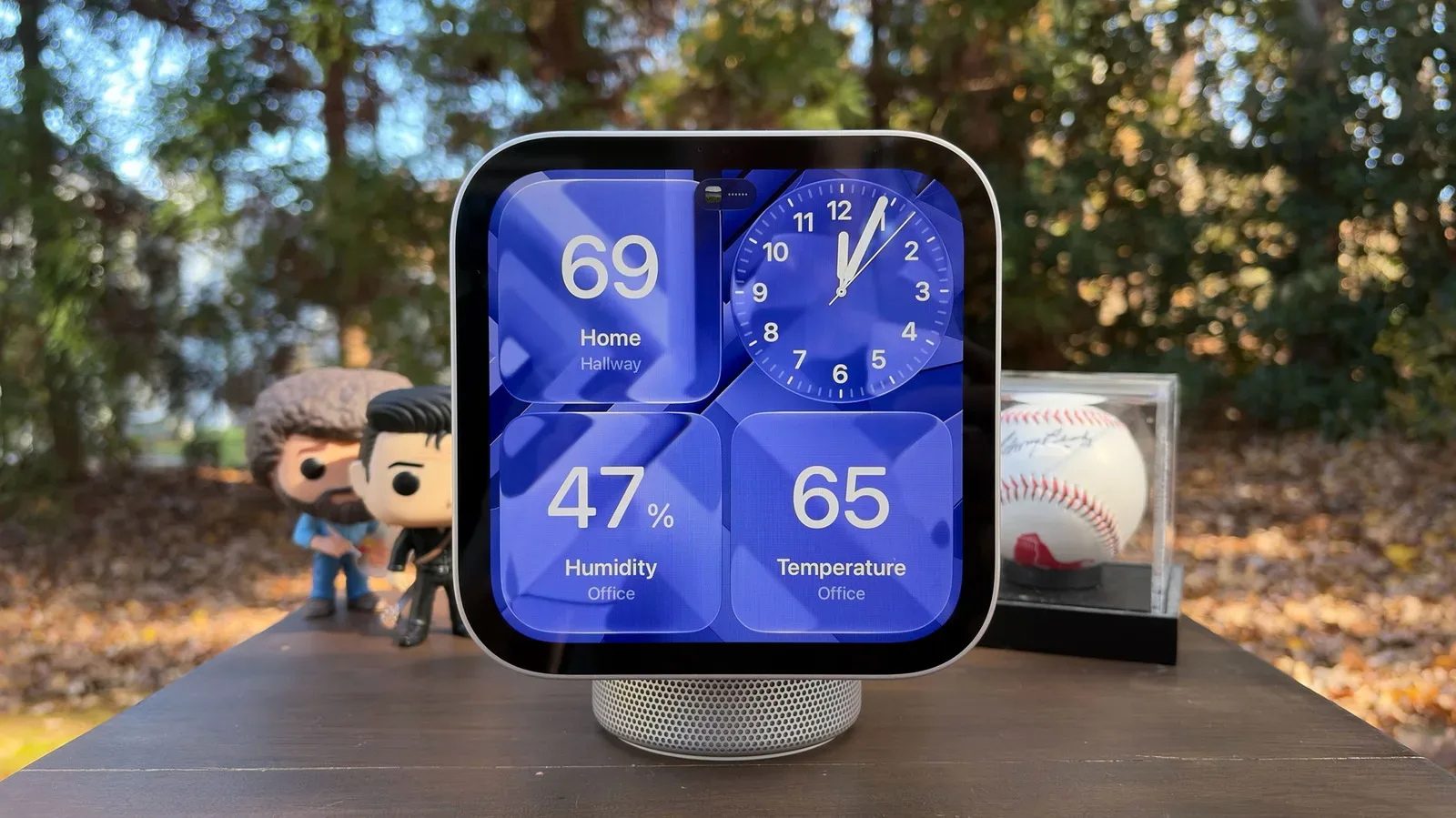
Apple says its new Apple Home Collection begins becoming available in December. The third-party lineup includes smart-home cameras, thermostats and a lock designed with LG Electronics and Schneider Electric. Some accessories will not arrive until early 2027.
That staggered timing means “from December” should not be read as every product launching simultaneously. Shoppers interested in a particular category, such as a lock or camera, will need to check that accessory’s own availability rather than assume the entire collection is ready at launch.
The description also matters because this is an Apple-backed, third-party lineup. The listed products are not presented as a blanket wave of first-party Apple-branded hardware. The named collaborators, LG Electronics and Schneider Electric, are part of the stated design arrangement for the range.
What to put on the calendar
- November 27–30: Apple’s four-day Black Friday event, including gift cards worth up to $300 on eligible purchases and the limited Apple TV subscription promotion.
- On or around December 1: Expected PRODUCT(RED) AirPods Max 2 and HomePod mini 2 finishes, plus the red AirPods Pro Wrist Strap and Apple Watch Sport Band.
- December: Public iOS 27.3 release, China’s initial Apple Intelligence rollout, Apple Music Replay, App Store Awards winners and the start of Apple Home Collection availability.
- Early 2027: Some Apple Home Collection accessories are not expected until then.
The clearest near-term advice is to separate confirmed facts from reasonable expectations. The Black Friday dates, December iOS 27.3 window, China rollout timing and phased smart-home launch are confirmed at the level stated above. PRODUCT(RED) hardware timing, Replay timing and the App Store Awards date are expected windows, not firm release appointments. That distinction will help buyers avoid waiting for a feature or product change that has not been promised.