Grand strategy has a reputation for greeting newcomers with a 40-page ledger, a border dispute, seven currencies and the creeping realization that a neighboring duchy has somehow inherited your favorite province. Afterworld, the newly revealed post-nuclear strategy game from Paradox Interactive, appears to be taking aim at that intimidation factor without shrinking the scale of the genre’s most deliciously complicated outcomes.
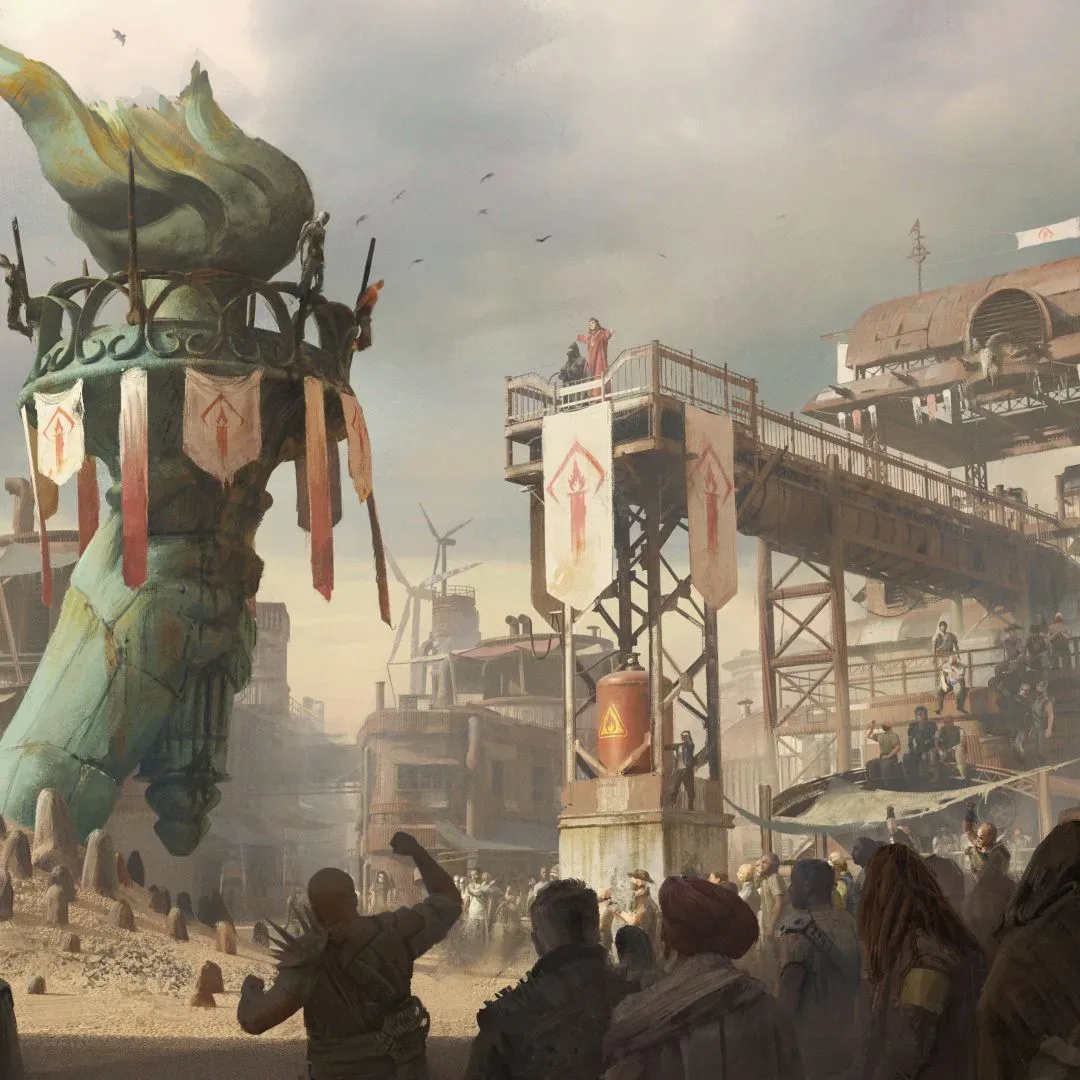
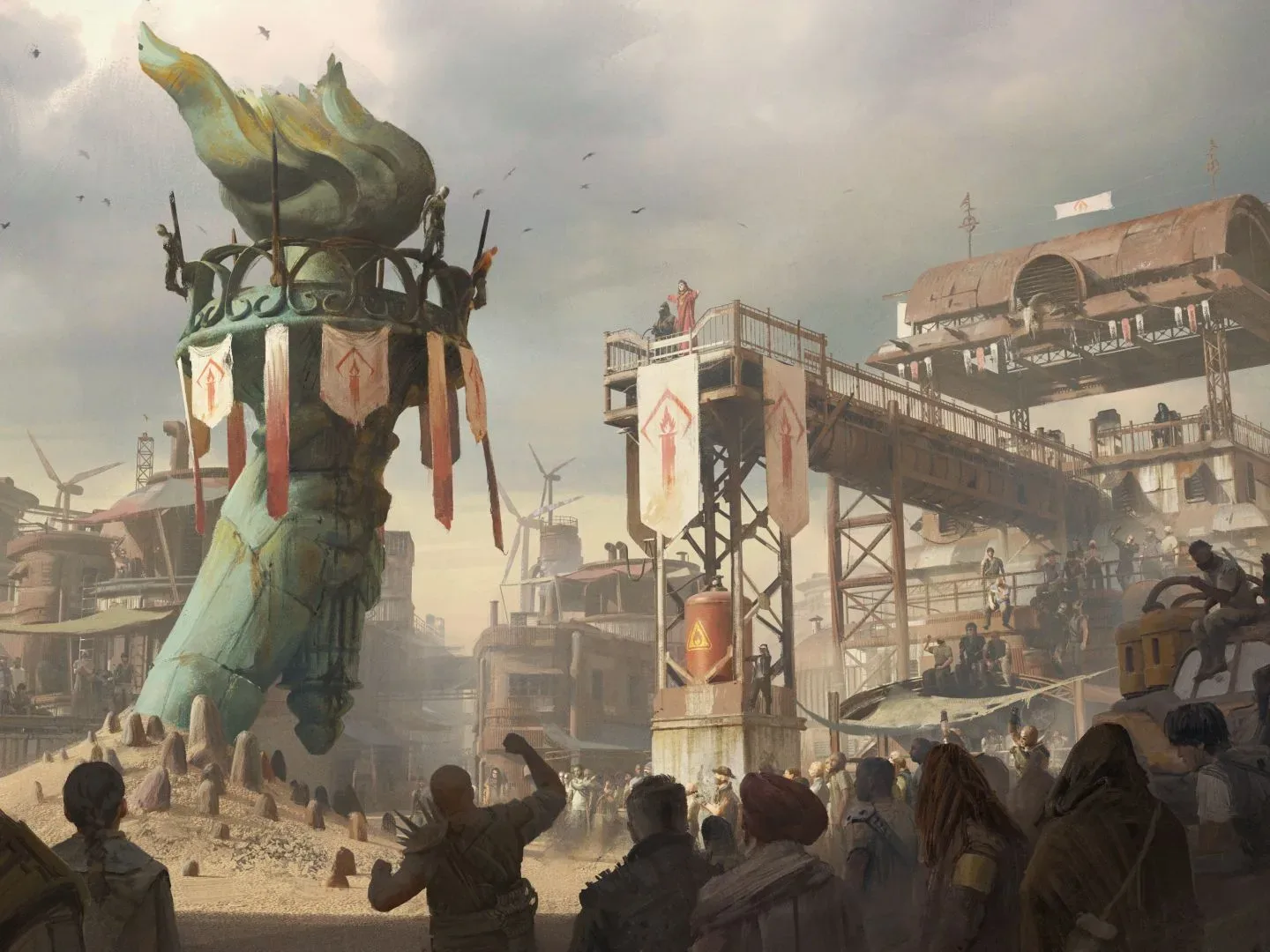
Set in an America devastated by nuclear catastrophe, Afterworld puts players in charge of a fledgling tribe trying to establish itself in the ruins. Its central hook is not merely surviving long enough to build a settlement. It is defining what kind of society survives—and then living with the consequences when that identity becomes tradition, doctrine, diplomacy, biology, or all four at once.
Game director Dan Lind has described the project as the studio’s most approachable game. That is a significant ambition from a company associated with sprawling systems-heavy series including Crusader Kings and Stellaris. The early picture suggests that accessibility is not being framed as a reduction in possibilities. Instead, the idea seems to be making cause and effect easier to follow: players can see people, settlements and choices on the ground, then gradually expand their understanding into continent-spanning politics.
A civilization begins with uncomfortable memories
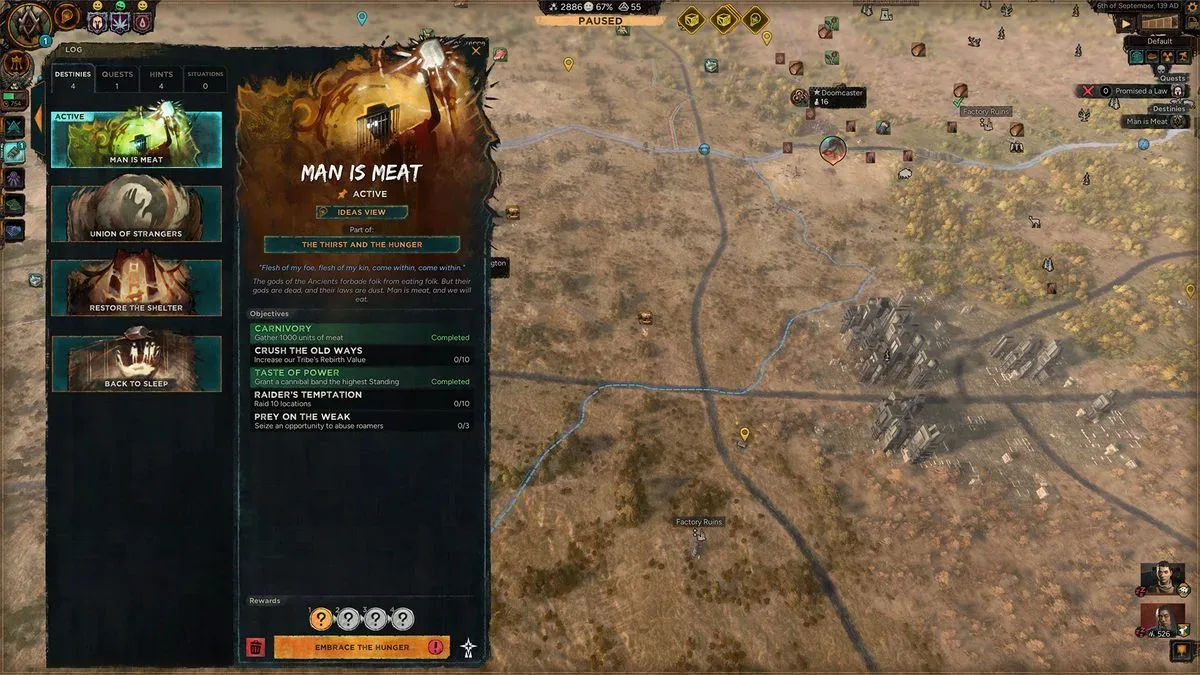
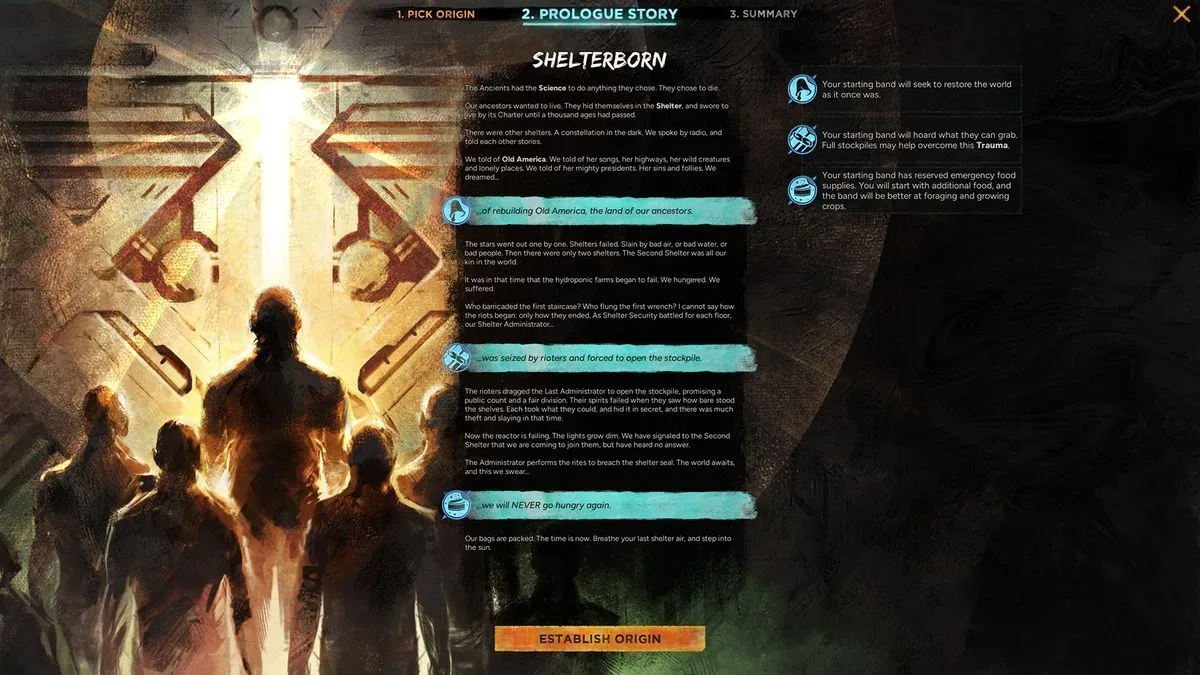
Afterworld starts before the tribe reaches the surface. Players choose an origin story and make decisions about defining crises in their community’s past. A group emerging from an underground shelter, for example, may have dealt with a historic food shortage through cannibalism or hoarding. Another moment of unrest can be resolved by accepting demands from rioters or eliminating those who led them.
These are not presented as disposable opening-screen morality prompts. The choices are intended to stay with the society. A people whose ancestors adopted cannibalism may retain that practice. In other words, the game’s factions are not just a color on the map accompanied by a production bonus. They are communities carrying stories about what they did to endure.
That setup is particularly promising because it gives the player a route into grand strategy through narrative logic. Rather than first asking someone to memorize a dense sequence of abstract modifiers, Afterworld can ask a simpler, sharper question: what did your people do when they were desperate? The later mechanical implications matter, but the initial decision has a human, if rather grisly, rationale.
It also creates room for the kind of emergent disaster that strategy players tend to cherish long after a campaign ends. In one early session, choosing an irradiated former car factory as a settlement site solved immediate needs thanks to nearby water and wood. Radiation, however, proved less cooperative in the long term, eventually contributing to births of fish-human hybrids. It is a wonderfully post-apocalyptic chain of events: practical settlement planning gives way to a community that may need a much more specialized family tree.
Exploration shapes belief as well as research
The game’s systems appear designed to let discoveries and confrontations alter the culture of a tribe as it grows. Reaching the sea can unlock fishing-related research. Resisting bandits can push a society toward autocracy. Technology and belief development therefore look intertwined with the player’s movement across the map and responses to events, rather than existing as completely separate tracks on a static menu.
This matters because the setting is doing more than supplying ruined buildings and a radioactive skybox. Afterworld is interested in the period after the end of the world, when communities have begun inventing new rules to explain it. A tribe’s faith, habits, institutions and strategic priorities can emerge from its situation. The results may include a rigidly authoritarian settlement, an expansionist zealot faction, or a population with an alarming relationship to seafood.
The design goal is to produce readable stories from a living simulation. Lind has emphasized that computer-controlled groups each have their own agendas, including possible expansion plans, while their beliefs and behavior can affect one another. The appeal lies in the combination: an enemy should not feel like an arbitrary hostile unit sent to annoy the player, but a society whose own past and convictions have put it on a collision course with yours.
That is grand strategy at its best. The memorable campaign is rarely the one where every number rises politely. It is the one where an old alliance becomes a religious war, a minor settlement grows into an existential rival, or a policy adopted to solve a food shortage returns generations later as a national custom nobody can quite explain at dinner. For a more comedic look at the rules people silently build around playing together, see The Unwritten Rules of Couch Multiplayer, Now Written Down. Afterworld seems interested in a much bigger, much bloodier version of that same process.
A continent where every campaign can tell a different story
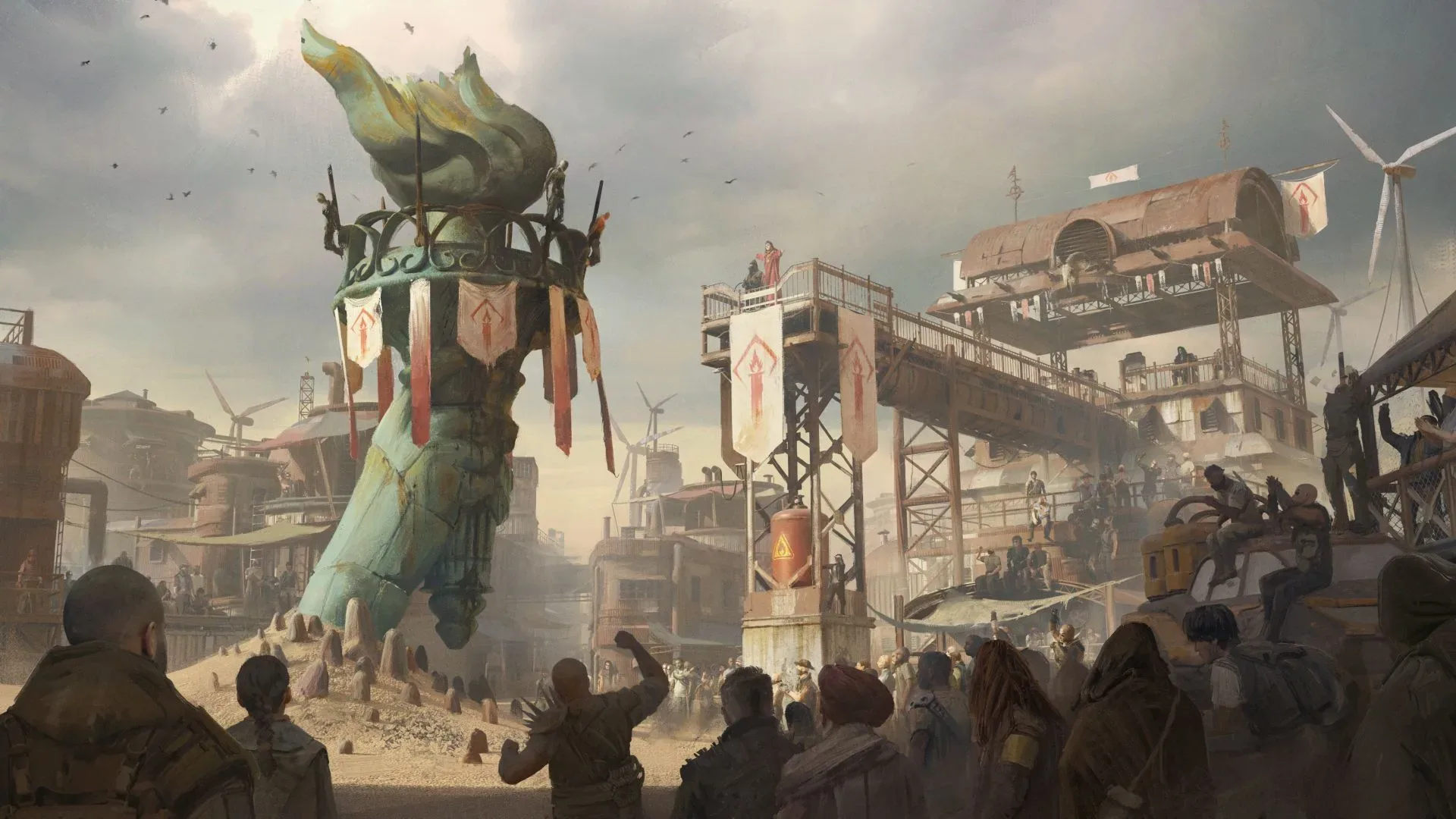
Afterworld’s societal map covers the United States and reaches into parts of Canada and Mexico. Crucially, its political landscape is randomized between playthroughs. New York City might be devastated and empty in one campaign, then become the domain of mutant rulers in another. That variation gives the setting a chance to avoid becoming a fixed post-apocalypse theme park where every famous location always delivers the same encounter.
Once a player’s community is established, it can encounter the Ancients: warlords who have survived from before the apocalypse, which took place 100 years earlier. These figures can be fought, but submission is also an option. Serving an Ancient and abiding by their demands can earn favor, presenting a potentially useful path for a weaker group—or the beginning of a future grievance powerful enough to reshape a region.
The Ancients suggest an appealing tension between history and reinvention. New societies are developing their identities in the wasteland, but they do not begin in a vacuum. People who remember—or embody—the old world still have influence. A young tribe may be forced to decide whether safety under an established tyrant is worth the cost of surrendering its own direction.
There is no confirmed release date, platform list or pricing information in the details currently available. What is clear is the intended scope: Afterworld is not abandoning the broad map, competing interests and unpredictable political consequences associated with grand strategy. It is trying to present those elements in a form that lets players begin with a local problem and understand how it grows into a continental one.
Approachability does not have to mean shallow
For players who have bounced off interface-heavy strategy games, the reported onboarding philosophy may be the most important part of the reveal. Rather than unloading every major system immediately, Afterworld introduces basics such as settling, migration and gathering, then allows further mechanics to unfold through exploration and curiosity. Having visible characters and physical models to follow also offers a more direct connection to the community being managed.
The comparison point is less a pared-down strategy game than a simulation that reveals its depth in layers. Dwarf Fortress is a useful reference for that sensation: complicated things happen, but players learn by poking at the world and seeing what reacts. Afterworld’s task will be to keep that feeling of discovery intact while still communicating why a belief shifted, why an opponent has become threatening, and how a small decision became a generational problem.
It is a difficult balance. A good tutorial can invite experimentation; a bad one can make players feel as though they are studying for an exam that has been scheduled during an invasion. Afterworld’s early approach sounds built around context, where systems arrive because a player has encountered the circumstances that make them meaningful. Finding the coast makes fishing relevant. Facing raiders makes political posture relevant. Choosing a hotbed of radiation makes, eventually, gills relevant.
The game’s literary touchstones also fit the premise. Stephen King’s The Stand and Robert R. McCammon’s Swan Song are cited as influences, with Swan Song described as one of Lind’s major inspirations. Both novels are concerned not only with catastrophe but with the new social orders that rise afterwards. That is the fertile territory Afterworld appears to be targeting: the contest between survival, belief, authority and the stories people tell to justify all three.
It is too early to know whether every one of these systems will combine as smoothly as promised. Randomized societies and interlocking beliefs are ambitious ideas, and approachable grand strategy is an especially ambitious phrase. But Afterworld has already articulated a compelling identity. It wants the player to watch a tribe become a civilization, then watch that civilization become strange enough to frighten its neighbors.
And if the path to continental influence happens to involve a radioactive factory, inherited cannibalism and a citizenry that starts looking suspiciously aquatic, that is not a failure of planning. In Afterworld, it may be the beginning of a dynasty. Anyone who enjoys games that let systems generate their own bizarre folklore may also appreciate why a messy, human story can be more engaging than a perfectly tidy one, as explored in this look at a surprisingly lively Dostoevsky biopic.