Final Fantasy 7 Revelation is shaping up to be another enormous chapter in the remake project, and director Naoki Hamaguchi has indicated that it could contain at least as much to do as Final Fantasy 7 Rebirth—and potentially more. That statement will sound exciting to players who treated Rebirth’s map as a long-term holiday destination. For others, it may trigger a familiar concern: can a major RPG offer a huge amount of optional material without making players feel as though they are missing essential progression if they leave some of it untouched?
Hamaguchi’s answer is not to make Revelation smaller. Instead, the team appears to be rethinking how the game communicates its activities and, crucially, how it distributes their rewards. The stated objective is to give players more control over which parts of the adventure deserve their time.
That distinction matters. A game can be packed with quests, challenges, collectibles, battles, exploration, and minigames, yet still feel manageable if players understand what each path offers and can opt out without weakening their preferred way of playing. Revelation’s approach, as described so far, is meant to address the sense of obligation some players felt in Rebirth while preserving the appeal of a rich, expansive JRPG.
A larger game, with the same big ambition
At Gamescom 2026, Hamaguchi acknowledged that Rebirth already carried a substantial amount of content. Nevertheless, he said Revelation is likely to meet that scale and may exceed it. He also expressed confidence that the volume itself is part of the game’s appeal, provided that the individual activities are worthwhile.
That is an important framing. The concern is not necessarily that optional content exists, nor even that there is a lot of it. For many players, a Final Fantasy world feels more inviting when it offers diversions beyond the central plot: combat tests, hidden locations, character-building systems, side stories, and lighter distractions can all help a large setting feel lived in.
But scale changes the equation. A player with dozens of gaming hours available each month will approach a sprawling RPG differently from someone squeezing a few sessions into an already crowded schedule. The latter player may be happy to see a broad menu of activities, but not if that menu feels like required homework before the next major story beat—or before their party is strong enough for the battles they actually want to tackle.
Hamaguchi recognized that some Rebirth players found its abundance overwhelming. Revelation is still being positioned as a major content-heavy RPG, rather than a stripped-back response to that feedback. The adjustment appears to be about clarity, relevance, and player choice, not reducing the overall menu of things to do.
Why reward design can change the feeling of optional content
The clearest practical detail concerns rewards. In Rebirth, side content was connected to Materia development. That structure could make activities feel compulsory for players pursuing that system, even when the activity itself was not something they found enjoyable.
Related coverage includes Final Fantasy 7 Revelation Promises More Content, With Less Pressure to Do It All.
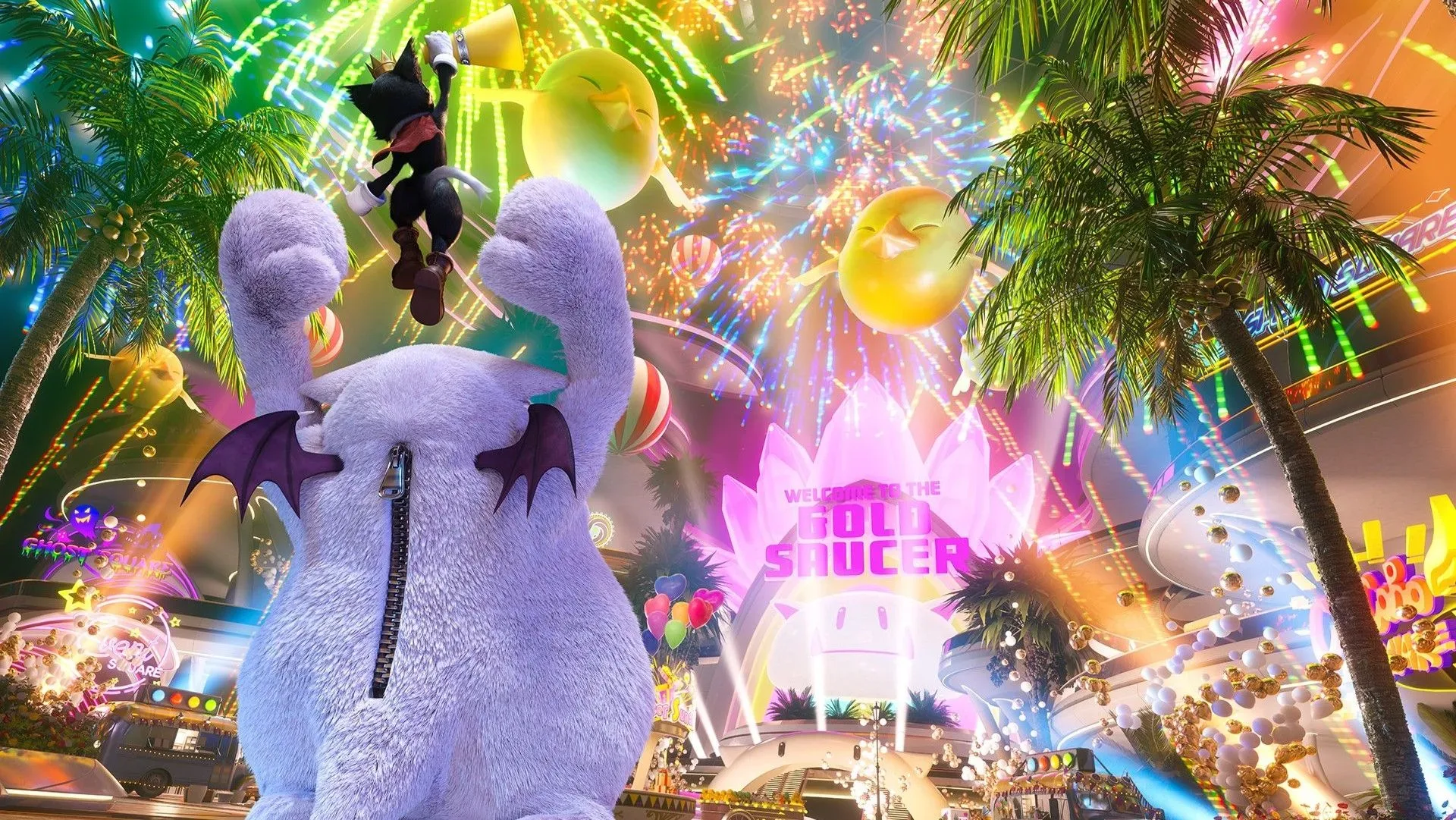
Revelation is intended to separate those incentives more deliberately. Hamaguchi described a model in which battle-oriented content provides character upgrades, while minigame-related rewards are customization options for the relevant minigame. In short, the reward should more closely match the activity that earned it.
This sounds like a relatively simple organizational change, but it could have a notable effect on how people pace the game. Consider the difference between these two ideas:
- A player must complete a wide variety of unrelated activities because a desired combat upgrade sits behind all of them.
- A player who cares most about battles can concentrate on battle content for character growth, while someone invested in a particular minigame can pursue its specialized cosmetic or customization rewards.
The second model does not remove incentives. It makes them more legible and more targeted. A player can decide whether an activity’s reward is personally valuable before committing the time, rather than feeling pressured to clear everything just in case it influences a broader progression system.
That sort of signposting is also part of the team’s stated plan. Hamaguchi said Revelation will aim to better communicate both the type of experience an activity provides and the rewards players can expect from it. For a game of this scale, that information is not merely a convenience. It becomes a way to respect different play styles.
Choice does not mean an empty checklist
There is a delicate balancing act here. If side activities give nothing meaningful, they can feel disposable. If every activity grants a powerful universal reward, then players who enjoy completion will thrive but everyone else may feel perpetually behind. Revelation’s proposed split appears designed to avoid both extremes.
Battle-focused players should have reasons to seek out combat challenges. Fans of minigames should have rewards that deepen or personalize those systems. Explorers and completionists can still engage with the full range of content because they enjoy discovering everything the game contains. Yet someone whose priority is finishing the story, assembling a capable party, or focusing on a preferred activity may no longer need to interpret every icon as a mandatory stop.
That is a potentially healthier definition of optional content: it is not content that has no value, but content whose value is easier to judge before playing it. A customization item tied to a minigame may matter enormously to the player who loves that minigame and not at all to the player who does not. Both reactions are valid, and neither player needs to be punished for their preference.
It also offers a more honest answer to a common RPG problem. No studio can make every diversion equally attractive to every person. Combat enthusiasts, narrative-focused players, treasure hunters, and arcade-score chasers are looking for different things. Giving them a clearer route toward the material they value may be more useful than trying to turn every activity into an all-purpose progression requirement.
Open-world fatigue remains part of the conversation
The reported direction fits with Hamaguchi’s broader acknowledgment that open-world fatigue is real. Revelation’s world is said to be even larger than Rebirth’s, making guidance and readability especially important. Bigger spaces can inspire a sense of adventure, but they can also exhaust players when the route forward is unclear or when a map becomes a dense collection of demands.
Revelation’s scale is already being discussed in terms of an expanded, more vertical world, including the Highwind and Wutai. Those elements were covered in more detail in our look at Revelation’s Highwind flight, Yuffie’s Wutai, and vertical world design. With a bigger world comes an even greater need to help players identify what is essential, what is useful for their chosen build, and what is simply there for the joy of wandering off course.
Nothing in the current details suggests that Revelation will abandon the density and spectacle expected of this project. On the contrary, Hamaguchi’s comments suggest the team believes a large amount of material is a strength. The lesson drawn from Rebirth feedback is that abundance works best when it is organized around agency rather than anxiety.
What this could mean for different players
For completionists, Revelation may still be a massive undertaking when it arrives in April. More content than Rebirth, if that estimate holds true, means a long road for anyone intent on exhausting every system and reward category.
For everyone else, the encouraging part is not the claim of sheer size. It is the effort to let players set their own priorities. The ideal outcome would be a game where skipping a minigame does not feel like sabotaging a battle build, and where spending an evening on a battle challenge feels like a meaningful choice rather than only one square in an intimidating grid.
There is still much that has not been detailed, including exactly how broad these reward categories will be and whether any major progression requirements remain tied to varied side activities. Until more is shown, players should treat the current plan as a design direction rather than a complete explanation of every system.
Still, the underlying promise is straightforward: Revelation wants to be huge, but it wants players to engage with that hugeness on their own terms. If the reward structure and activity guidance deliver on that goal, its abundance may feel less like a demand for another hundred hours and more like a well-stocked world where players can choose the adventures that suit them.