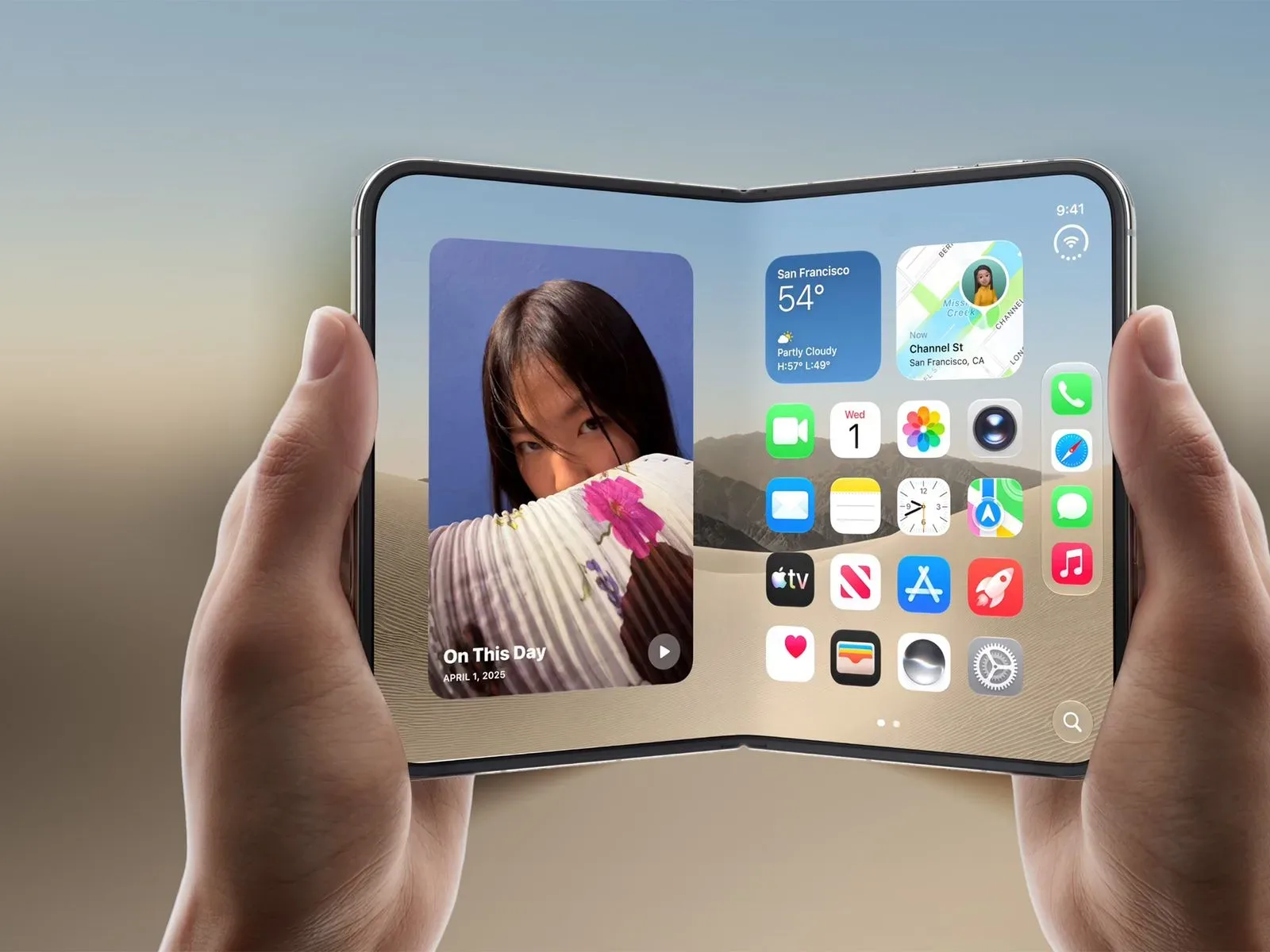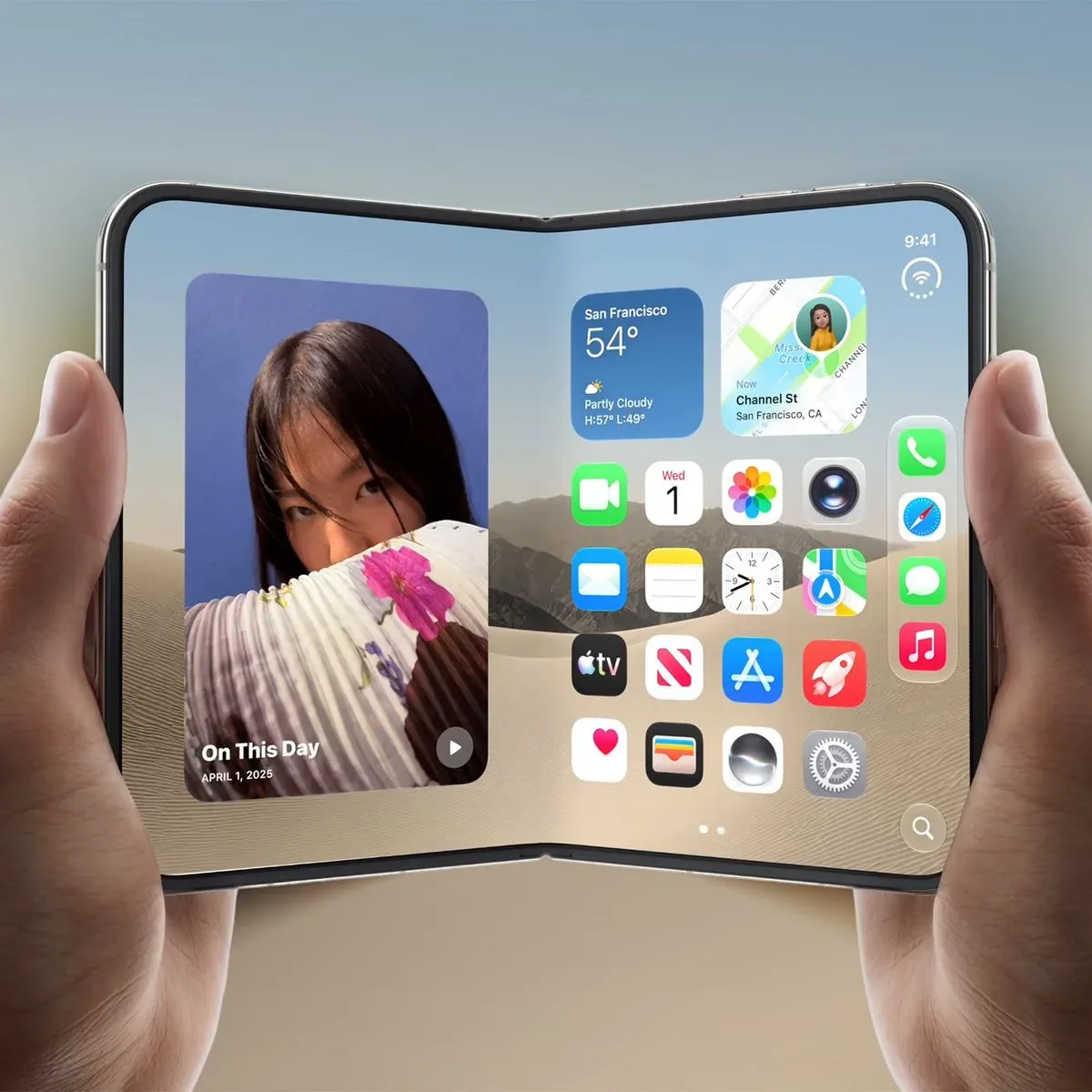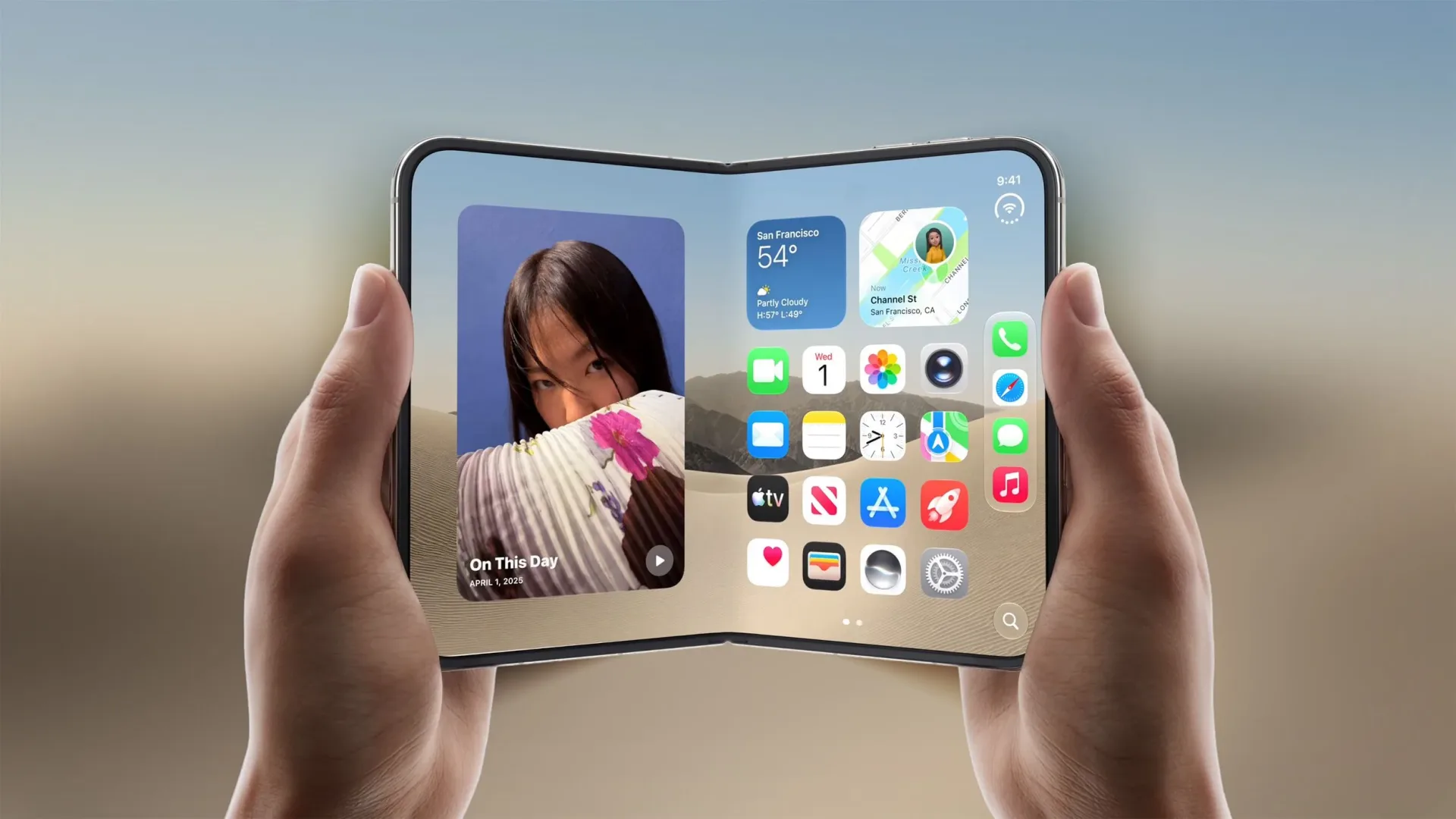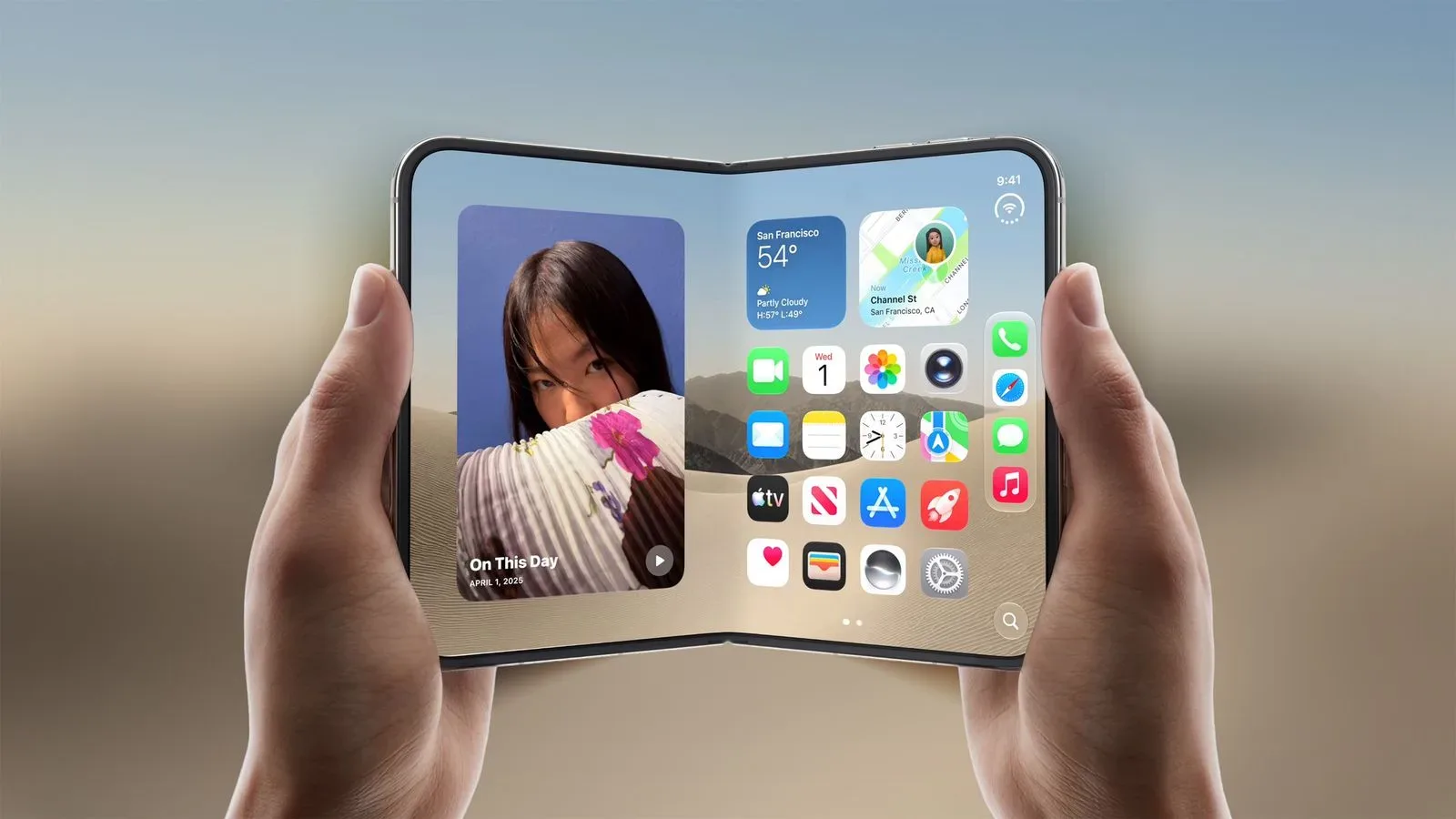
Apple is reportedly exploring the possibility of making a future iPhone Duo’s internal display roughly half an inch larger than the existing device’s screen. The current iPhone Duo is described as having a 7.6-inch inner display and a 5.4-inch outer display; the potential revision could place the unfolded panel somewhere between 7.9 and 8.1 inches.
That is a small-sounding change with potentially meaningful consequences. On a conventional phone, fractions of an inch are often discussed as a matter of hand feel and pocketability. On a foldable device, the inner panel is its central proposition: it is the surface that changes a phone into a more expansive workspace, video screen, reading canvas, or game display.
There is an important caveat before the measurements inspire a wave of imaginary spec sheets: this is not a confirmed product plan. The report describes Apple as merely looking at the idea, and even the eventual display size is unknown. The 7.9- to 8.1-inch range is an estimate, not a finalized specification. There is also no indication of when such a version might arrive, what its physical dimensions would be, or whether the outer display would change alongside it.
Just as significantly, the larger-screen concept is not said to represent a second, upsized model. In other words, it should not be read as evidence for an “iPhone Duo Max.” The idea is apparently a possible evolution of the iPhone Duo itself rather than an additional rung in its lineup.
What the proposed change actually means
Display size is measured diagonally, from one corner of the visible screen to the opposite corner. It is useful shorthand, but it does not reveal everything that matters. A 7.9-inch or 8.1-inch screen could feel very different depending on its aspect ratio, its bezels, the shape of the folded device, and how much of the increase comes from added width rather than added height.
Those details are not available here, so the safe reading is narrow: Apple may be weighing an inner display that is noticeably larger than 7.6 inches, by around half an inch on the diagonal. It would not be accurate to assume a particular resolution, refresh rate, panel technology, hinge design, battery capacity, or thickness from that fact alone.
Still, a move from 7.6 inches toward the 8-inch mark would matter because the interior screen is used in a different way from the 5.4-inch external display. The outer display is the phone-like surface, intended for use while the Duo is closed. The inner display is the larger surface available after opening it. The distinction is fundamental to foldable design: buyers are not simply receiving two screens, but two modes of using the same device.
A larger interior could give interfaces more breathing room. Text in a reading app can occupy a more comfortable width. A video may appear larger without relying as heavily on letterboxing, though the exact result depends on the video’s shape. Multitasking layouts could allow two apps to coexist with less crowding. These are logical implications of additional display area, rather than promised capabilities.
Why the difference could matter for games
For gaming, an inner display approaching 8 inches raises several practical questions that are more interesting than a raw diagonal number. Games can benefit from extra room, but only when developers and operating-system layouts use it well. A larger canvas can make on-screen controls less intrusive, create more space for maps or inventories, and make strategy, card, role-playing, and emulation interfaces easier to read. At the same time, a wider or squarer display can introduce unused space around games designed for other screen shapes.
That makes software support at least as important as screen size. Apps must understand when the device opens, how their interface should reflow, and whether a larger layout genuinely improves usability instead of merely scaling up icons and menus. The existing iPhone Duo has already prompted questions about apps, controls and compromises, as covered in our look at the iPhone Duo’s early app, camera and Touch ID questions. A somewhat larger internal screen would intensify the importance of thoughtful interface design rather than solve it by itself.
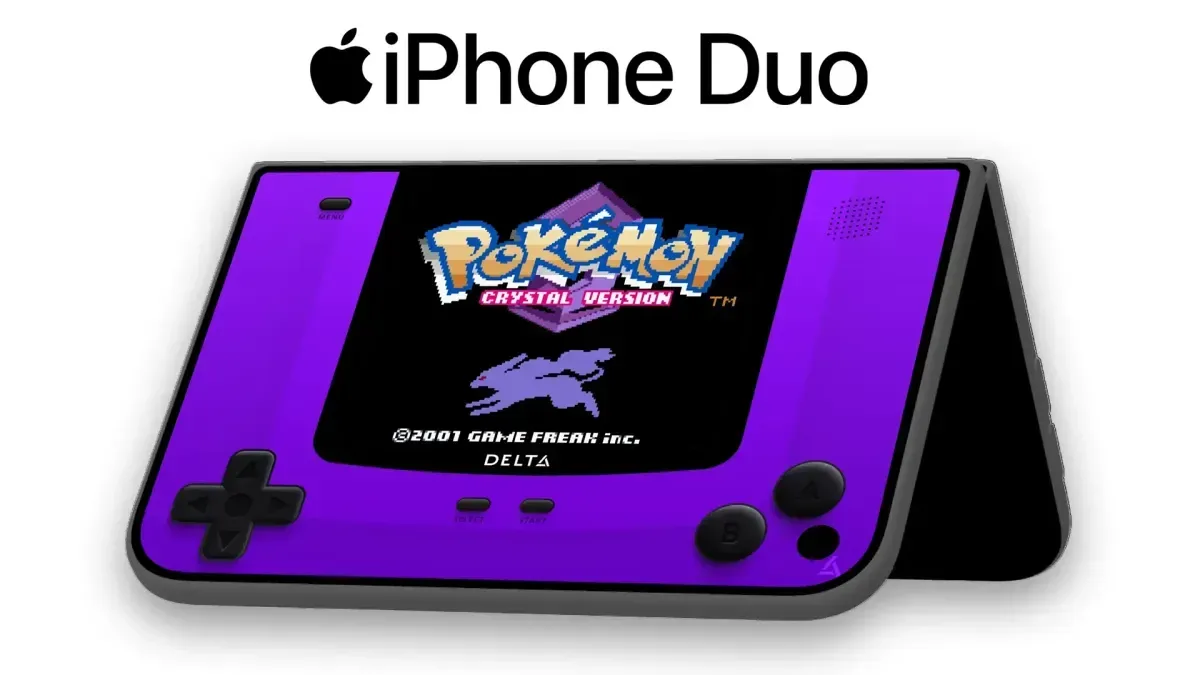
Emulation is one clear example of why flexibility matters. Older games were made for a variety of display proportions, and their original interfaces were not designed around a foldable phone. A larger inner panel could allow virtual controls, gameplay, and optional overlays to fit with fewer compromises. But the usefulness would vary from game to game and app to app. More screen area does not automatically preserve correct proportions or remove the need for carefully designed controls.
The same principle applies to modern mobile games. Some games emphasize landscape play, some portrait play, and some are built around touch input that deliberately occupies substantial screen space. A foldable’s advantage is not just that its display is bigger; it is that the device can potentially change between a compact outer-screen session and a more spacious inner-screen session. The quality of that transition remains a software and design question.
There is already an indication that developers are considering the form factor. Delta 2.0’s iPhone Duo-related features alongside Sega Genesis support and RetroAchievements show how app updates can address the specific opportunities of a new screen configuration. That does not tell us what a future larger Duo would support, but it illustrates why an inner-display change can be relevant beyond the hardware’s dimensions.
More area comes with design trade-offs
The report does not say how Apple might create the larger display. That absence matters. There are multiple theoretical ways to enlarge an inner screen, and each could affect the device differently. The chassis could become larger; the screen could extend closer to the edges; the proportions could change; or a combination of those choices could be used. None of those approaches has been established here.
For users, the practical trade-off would likely be between expanded viewing space and the attributes that make a foldable viable as a phone. A bigger unfolded display can be attractive for reading, video, productivity and games. But a phone also needs to be carried, held, opened, closed and used quickly on its external screen. A change that improves the open-device experience might alter the closed-device experience as well. Without physical measurements, weight, battery information, or design details, there is no basis to say whether the trade-off would be favorable.
The reference to a roughly half-inch increase should also not be mistaken for a linear increase in usable area. Because screens have two dimensions, the amount of added area depends on the panel’s proportions. If the ratio stays broadly similar, a shift from 7.6 inches to around 8 inches can provide more than the diagonal figure alone may suggest. But exact area cannot be calculated responsibly without knowing the screen’s aspect ratio and usable boundaries.
Why “not a Duo Max” is the key detail
The expectation that this would not be a separate model substantially changes how to interpret the report. A separate larger version would imply a choice between different iPhone Duo sizes. A revision to the main model instead suggests that Apple may see the near-8-inch class as a better target for the product’s standard identity.
That distinction also prevents a common rumor-cycle error: turning a possible component adjustment into an assumed expansion of an entire product family. There is no supplied evidence for a Duo Max, no suggested second set of dimensions, and no indication that Apple is preparing multiple iPhone Duo sizes. The reported consideration concerns one future version and one main change: a somewhat bigger inner display.
For prospective buyers, the most practical response is restraint. The existing iPhone Duo is listed with its 7.6-inch inner and 5.4-inch outer displays. Anyone evaluating that device should assess it on those known specifications and their own habits, not on an unconfirmed future panel size. People primarily interested in handheld gaming, video, reading, or split-screen work may reasonably find the reported direction encouraging, but it is not a reason to treat an 8-inch Duo as scheduled or guaranteed.
What remains unknown
Nearly every question beyond the possible diagonal size is unanswered. There is no confirmed product name for a future revision, no launch timing, no pricing information, no image, and no indication that the 5.4-inch outer screen would be altered. There are no details on screen resolution, brightness, crease appearance, durability, cameras, processing hardware, storage options, connectivity or accessories.
There is likewise no confirmation that the consideration will become a shipping product. Companies examine alternate dimensions and designs during product development, and not every possibility turns into a retail device. The appropriately measured takeaway is therefore simple: Apple may be evaluating a future iPhone Duo whose unfolded screen grows from 7.6 inches to approximately 7.9–8.1 inches, while keeping it as the core Duo rather than creating a separate Max variant.
If that change materializes, the appeal will not rest on the extra half-inch alone. It will rest on whether the larger inner screen produces a clearly better balance of portability, app layouts, reading, video and gaming. For now, the dimensions provide an intriguing direction, not a finished device.