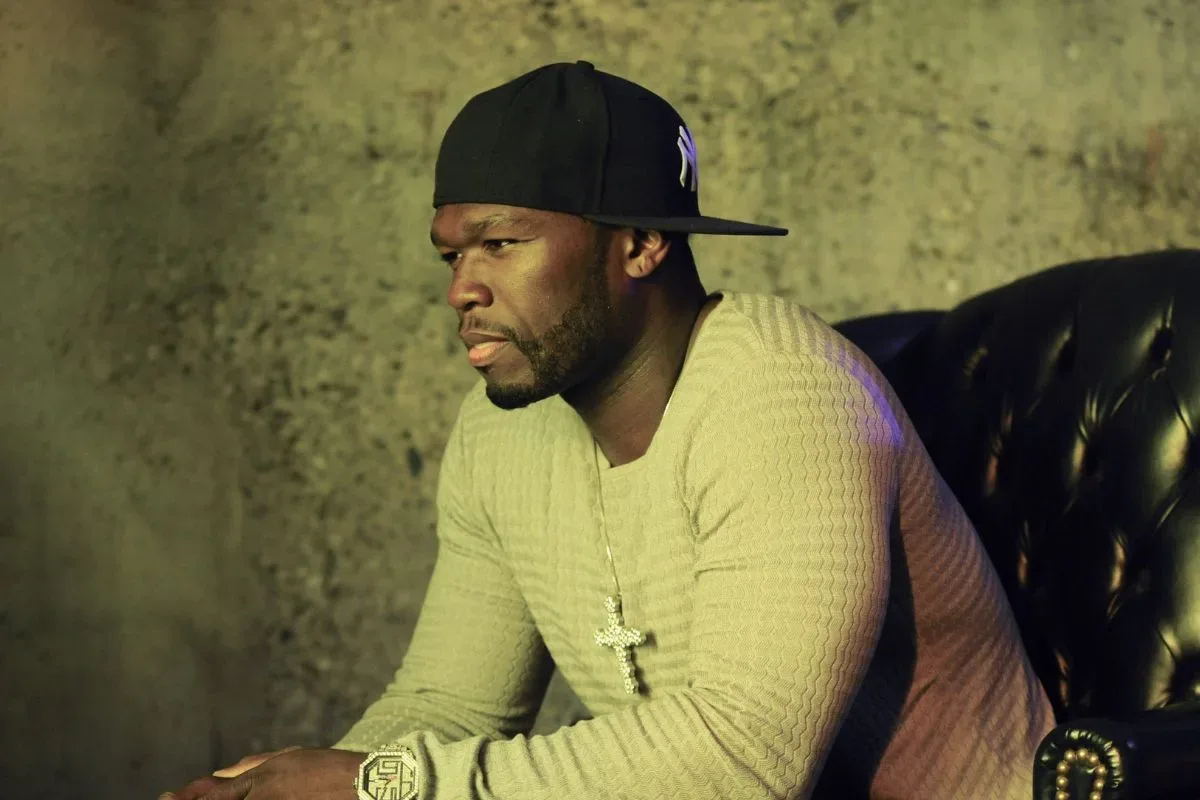
50 Cent is taking the three-dice game Cee-lo from its long-standing street-game setting to the casino floor with 50 Cent Headcrack, a table-game adaptation developed with gaming company TCSJOHNHUXLEY.
The game is scheduled to debut at G2E Las Vegas 2026, beginning September 29, at The Venetian Expo. The central pitch is clear: retain the recognizable dice-game identity while putting it inside the operating structure people expect from a casino game—dealers, official wagering rules, side bets and published payouts.
That distinction matters. A casual dice game can rely on shared local rules and social trust among the people playing. A casino table game needs a consistent format that can be taught, dealt and settled the same way for every participant. Headcrack is being positioned as that formalized version, available in traditional dice and automated configurations.
What “Headcrack” means in the game
The name comes from the 4-5-6 roll, identified as the game’s automatic winning outcome. In this presentation, that roll is called a “Headcrack.” The term gives the casino adaptation a direct connection to the language and excitement surrounding Cee-lo rather than treating the game as an abstract dice product with its cultural origins removed.
Cee-lo is described as a three-dice game with a history of more than a century on New York street corners. It has also held a place in East Coast rap culture, with references from artists including Wu-Tang, Brand Nubian and Goodie Mob. The new format therefore arrives with more baggage—and more meaning—than a conventional branded casino launch.
“For a hundred years this game lived on the corner. Now it’s got a dealer, a pay table and a seat at the table in a real casino. Same dice, new floor.” — 50 Cent
The quoted framing is useful because it acknowledges the change rather than pretending nothing has changed. The dice may be familiar, but a pay table, dealer and set wager types create a fundamentally different environment. A pay table is the posted schedule that tells players what particular outcomes pay. It is a core piece of casino transparency: participants can see the defined return for a winning wager rather than negotiate a result after the roll.
Bank, Shooter and Tie: the table-game structure
Headcrack will use a Bank-Shooter-Tie structure intended to make the game approachable to newcomers. While specific odds, bet rules and payout figures were not detailed, those labels signal three possible positions within the game’s central contest: backing the bank, backing the shooter, or choosing a tie outcome.
In practical terms, a structure like this gives spectators an immediate route into the action. They do not necessarily need to begin by mastering every nuance of a social dice game; they can first understand the sides available to bet on and then follow the roll. Side bets add optional wagers beyond that main structure, typically tied to particular outcomes or events. The important caveat is that the actual rules and payouts will determine how Headcrack plays at the table, so prospective players should read the displayed pay table and game instructions rather than assume street-game conventions carry over unchanged.
The automated option is also notable. Automation can refer to a system that supports the game’s operation electronically rather than relying exclusively on a traditional live-dice presentation. The supplied details do not specify precisely how that configuration will work, but its inclusion suggests an effort to make the concept usable in more than one casino setup.
A cultural translation, not merely a celebrity label
Celebrity association is common in entertainment and gaming, but Headcrack’s premise is more specific than putting a familiar name on an existing game. Its identity depends on adapting a game tied to urban Black American history and hip-hop culture for an institutional gambling context.
That can make the transition compelling, but it also puts pressure on the execution. Players who know Cee-lo from its community setting may pay attention to whether the casino version preserves the game’s character. Players encountering it for the first time may view Headcrack simply as a new dice table with a memorable top-roll name. The Bank-Shooter-Tie approach appears designed to bridge those audiences: recognizable terminology and three dice on one side; a clearly defined casino framework on the other.
For 50 Cent, whose ventures span television, film, spirits and touring, the project continues a broader business pattern of connecting cultural recognition with commercial infrastructure. His reported $100 million Planet Hollywood partnership in New York City was another high-profile example of that intersection. Headcrack applies the same general idea to table games, where the infrastructure is especially important because standardized rules and payouts are not optional details—they are the product.
What is confirmed—and what remains to be seen
Confirmed details are limited but meaningful: 50 Cent Headcrack is being launched with TCSJOHNHUXLEY; it is set for G2E Las Vegas 2026 from September 29; it will be shown at The Venetian Expo; and it is planned with dealers, official betting structures, side bets, published payouts, traditional dice and automated formats.
There are still several unanswered practical questions. No exact payout chart, full rulebook, list of participating casinos, or timetable for public casino-floor deployment was provided. A G2E appearance is a presentation point for the game, not by itself a guarantee that every casino visitor will immediately find it available to play. Where it goes after the event will depend on the implementation and adoption details that have not yet been outlined.
For now, Headcrack’s most interesting feature is the proposition at its center: a dice game associated with corners, conversation, risk and cultural memory being rebuilt for a dealer-managed environment. Its success will likely hinge on whether that translation feels legible to new casino players without sanding away the identity that made Cee-lo matter in the first place.
Hip-hop’s ongoing connections to business, public culture and entertainment remain a frequent subject beyond gaming as well, as seen in coverage of Drake’s appeal related to “Not Like Us”. Headcrack occupies a different lane, but it similarly sits where music-world recognition and a much larger commercial system meet.