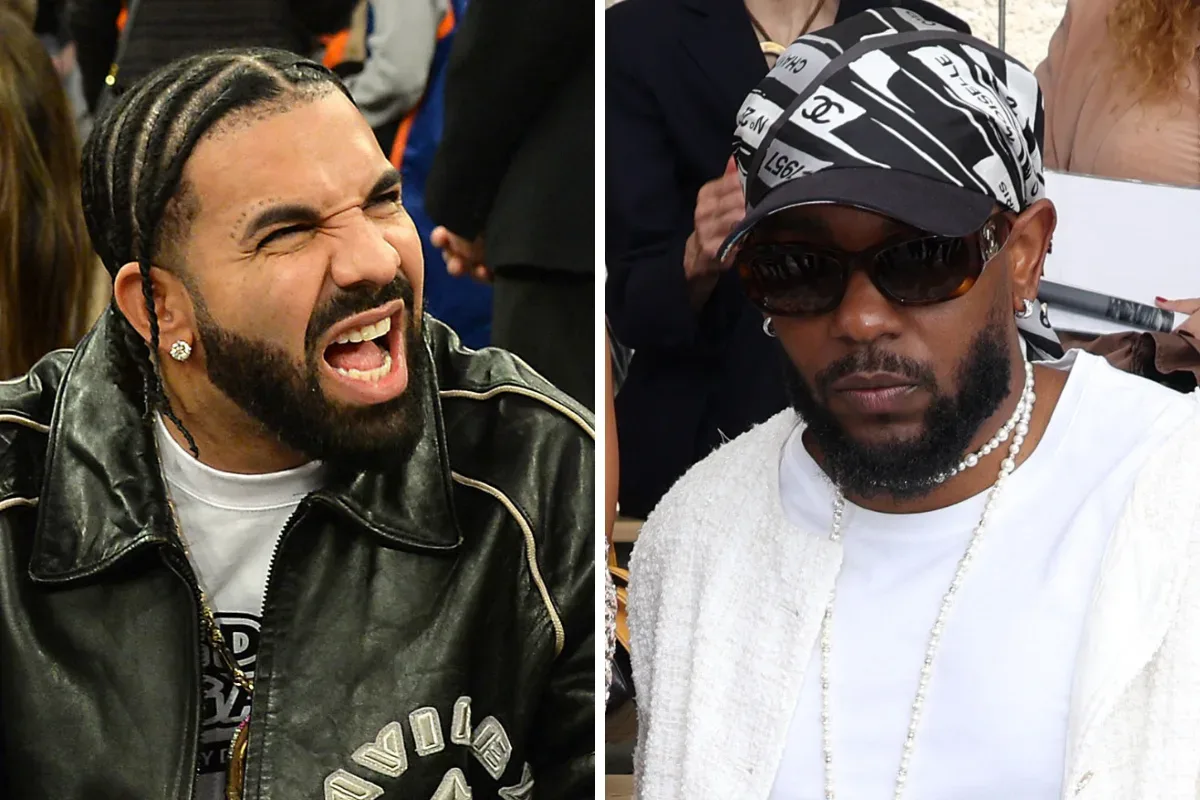
Drake’s attempt to revive his defamation lawsuit against Universal Music Group will return to federal appellate court on December 4. The U.S. Court of Appeals for the Second Circuit has scheduled oral arguments over the dismissal of Drake’s case concerning the release and promotion of Kendrick Lamar’s diss track, “Not Like Us.”
The hearing is a major procedural milestone, but it is not a verdict day. A panel of appellate judges will hear from lawyers for Drake and UMG, ask questions about the parties’ written arguments, and later decide whether the earlier dismissal should remain in place or whether the case should move forward.
At issue is a difficult boundary: when does an artistic insult, particularly one made amid an escalating rap battle, register with a reasonable listener as a statement of verifiable fact that may support a defamation claim? Drake argues the lower court adopted an overly broad approach to that question. UMG argues the dismissal should stand.
What Drake’s lawsuit alleges
Drake filed suit in January 2025. His claim targeted UMG rather than Lamar himself. He alleged that UMG defamed him by publishing and vigorously promoting “Not Like Us” despite his position that its allegations concerning sexual relations with minors were false.
That distinction matters. This appeal is not a criminal proceeding and it is not a court ruling on the truth of the diss track’s allegations. It is a civil dispute over whether Drake’s complaint can proceed under defamation law against the company he sued, based on the song’s publication and promotion.
Defamation generally concerns a false statement of fact that harms someone’s reputation. The “statement of fact” portion is central here. Opinions, rhetorical exaggeration, insults and figurative language are often treated differently from a claim that listeners would understand as a provable factual assertion. Context can be decisive: the same words may carry a different legal implication depending on where, how and why they were said.
Why the first court dismissed the case
U.S. District Judge Jeannette A. Vargas dismissed Drake’s lawsuit in October 2025. Her decision viewed the disputed lyrics in the full setting of the highly public musical conflict between Drake and Lamar rather than isolating a line from that setting.
Judge Vargas concluded that the lyrics were “nonactionable opinion.” In legal shorthand, that means the court found the challenged language was not the kind of factual assertion on which this defamation claim could be based.
“Although the accusation that Plaintiff is a pedophile is certainly a serious one, the broader context of a heated rap battle, with incendiary language and offensive accusations hurled by both participants, would not incline the reasonable listener to believe that ‘Not Like Us’ imparts verifiable facts about Plaintiff,” Vargas wrote.
The reasoning does not suggest that every severe accusation is legally insignificant. Rather, the ruling focused on how a reasonable listener would understand these particular lyrics within this particular confrontation. The court considered the adversarial nature of the exchange, its incendiary language and the accusations traded by both artists.
That contextual approach is why the litigation has broader cultural interest beyond the two performers and their record company. Diss tracks often trade in boasts, mockery, exaggeration and attacks intended to win an audience. The appeal asks how far that familiar creative setting should shape the legal reading of words that, outside it, could appear far more literal.
Drake says the ruling went too far
Drake appealed rather than accepting the dismissal. His lawyers contend that the district court effectively made rap diss tracks a category in which statements can never be treated as factual. Their appeal characterizes that as an unprecedented and excessively broad rule.
“The court effectively created an unprecedented and overbroad categorical rule that statements in rap diss tracks can never constitute statements of fact,” Drake’s appeal states.
That is the core disagreement heading into oral argument. Drake’s position, as described in the appeal, is not simply that a diss track should be treated like a conventional news report or sworn statement. It is that the genre and the battle context should not automatically end the inquiry. In other words, an artist’s chosen format should not, by itself, decide that no listener could take a statement as verifiable.
UMG, meanwhile, is defending the lower court’s outcome. The company’s position aligns with the view that the broader circumstances of this musical feud make the lyrics nonactionable opinion.
The eventual decision could be narrow. An appellate panel may concentrate on the allegations in this complaint, the language challenged, and the district court’s reasoning rather than issue a sweeping statement about all rap music. That is an important practical distinction for anyone waiting for a universal rule about diss records: this appeal may clarify a standard without creating a blanket answer for every future lyric dispute.
What an appellate argument actually does
Oral argument comes after months of written briefing, not before it. Both sides have already presented their legal positions in documents submitted to the court. The December 4 session gives the judges an opportunity to test those positions directly through questions.
The judges may ask Drake’s lawyers what, precisely, they believe the district court got wrong. They may ask UMG’s counsel how the court should distinguish protected rhetorical combat from a potentially actionable factual accusation. They can also press both parties on whether the complaint meets the relevant legal standard at this stage.
Oral argument is therefore not a re-creation of the rap battle and not a hearing where the panel is expected to decide the case from the bench. No ruling is guaranteed on December 4. The panel will deliberate and issue its decision later.
There are several broad paths available. The Second Circuit could affirm, leaving the dismissal in place. It could reverse, allowing the case to proceed further. Or it could take a more limited approach, agreeing or disagreeing with part of the lower court’s reasoning while directing additional proceedings. The supplied case information does not establish which route the judges will choose.
Outside free-expression voices back UMG
The appeal has also drawn an amicus brief supporting UMG from the Floyd Abrams Institute for Freedom of Expression at Yale Law School and University of Florida law professor Lyrissa Lidsky.
An amicus—often described as a “friend of the court”—is not one of the litigants. An amicus can submit a brief to offer legal analysis or explain why a case may matter beyond the immediate dispute. The court is not required to adopt that argument, but such briefs can put additional legal theories before the judges.
Here, the supporting brief offered another possible basis for dismissing Drake’s claim: consent. Its argument is that consent can bar a defamation action and that Drake invited Lamar’s attacks by participating in the musical confrontation.
Consent is a particularly notable theory in an exchange built around reciprocal artistic attacks. The argument does not mean every artist who answers a rival has consented to every possible statement that may follow. Instead, it places the court’s attention on the nature of the confrontation and whether participation in it has legal consequences for a later defamation claim. Whether the appellate judges rely on that reasoning remains unresolved.
Why this matters beyond one record
There is a temptation to reduce the dispute to a simple question of whether rap battles are “real” or “just entertainment.” The court’s earlier decision was more specific than that. It turned on the reasonable listener’s understanding of disputed lyrics in their broader setting. Drake’s appeal challenges whether the setting was given too much weight, or applied too categorically.
For artists, labels and audiences, the case illustrates how commercial music and legal accountability can collide when a lyrical feud reaches a mass audience. Promotion is part of the dispute because Drake sued UMG over publishing and promoting the record, not Lamar. The case consequently raises questions not only about a performer’s words but about the responsibilities and defenses available to a company that distributes them.
It is also another example of how culture-industry disputes can extend well past the initial work’s release. Hip-hop’s public rivalries are often judged first through performance, response records and fan reaction. Litigation moves at a very different speed and applies a different framework. The December hearing will be about pleadings, legal standards and constitutional-adjacent questions around expression—not which artist delivered the sharper track.
Music and celebrity culture frequently overlap with collectible and product culture as well; for a separate example of an artist-led release, see J. Cole’s independently made Indie 5000 sneaker launch.
The key question awaiting the Second Circuit
The appellate panel is being asked to examine the line between heightened, hostile artistic expression and assertions that can be checked as true or false. Judge Vargas concluded that this battle’s context would not lead a reasonable listener to take “Not Like Us” as conveying verifiable facts about Drake. Drake’s appeal says that conclusion improperly creates a genre-wide shield.
December 4 will not settle that conflict in real time. It will, however, give both sides their chance to explain how they believe the law should interpret the record and the circumstances around it. The answer, whenever it arrives, will determine whether Drake’s case against UMG remains dismissed or receives another stage in federal court.