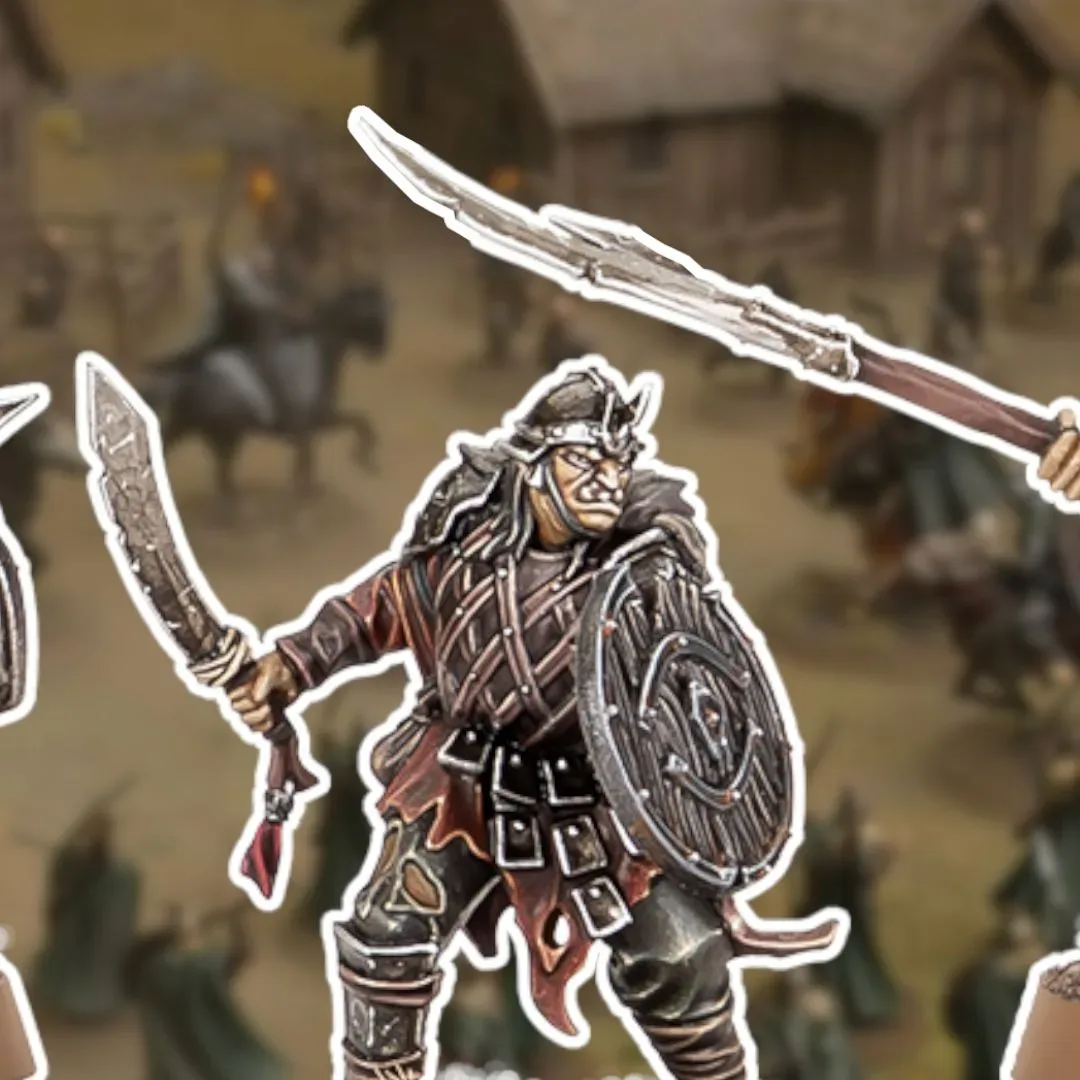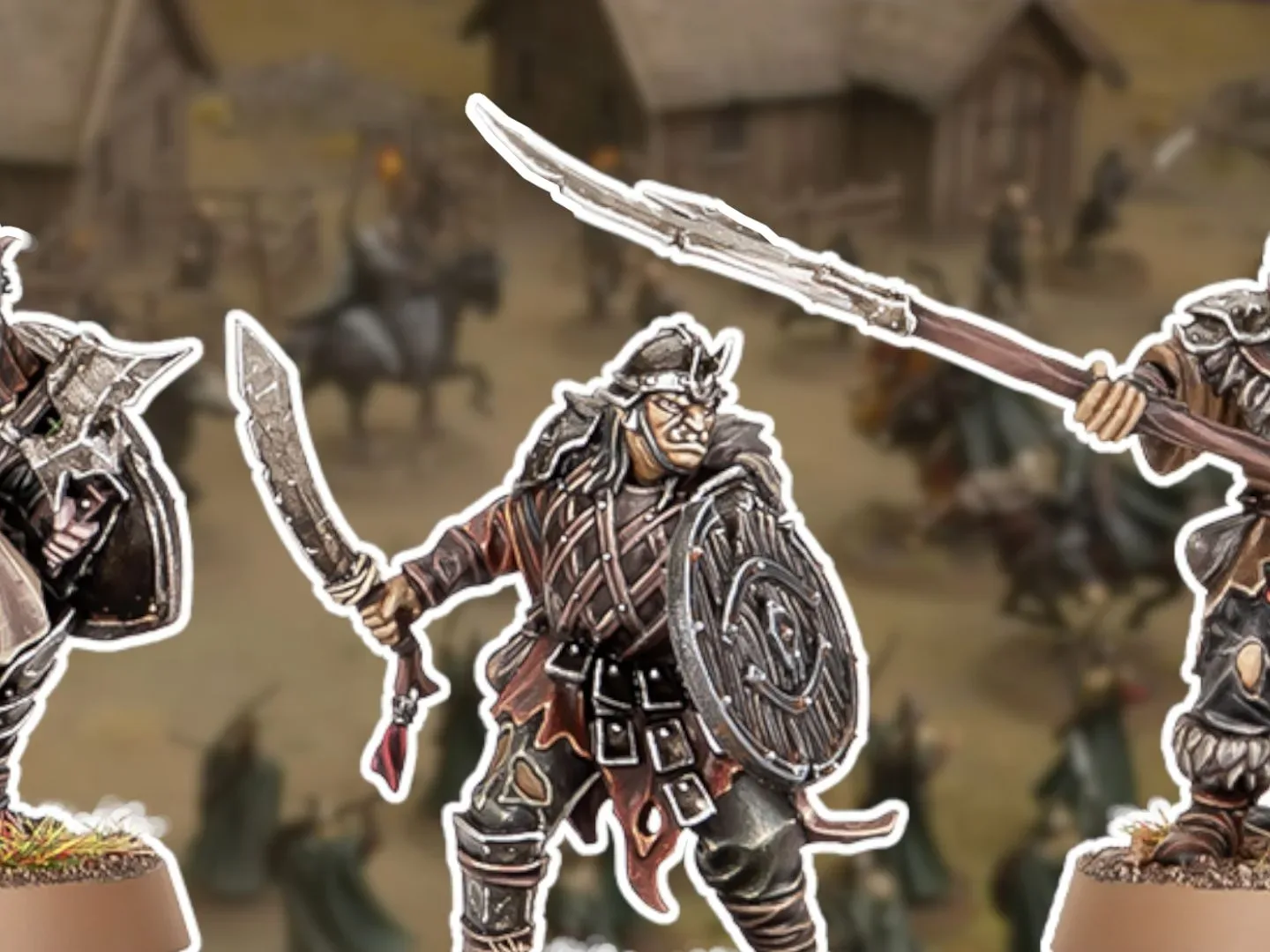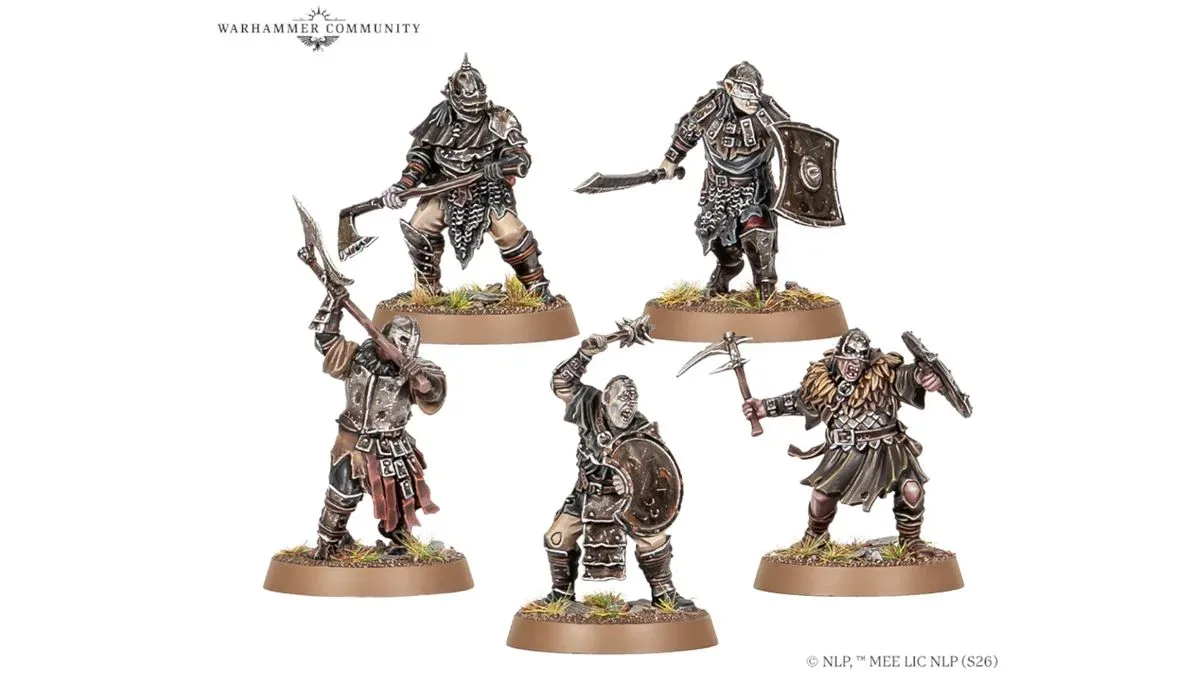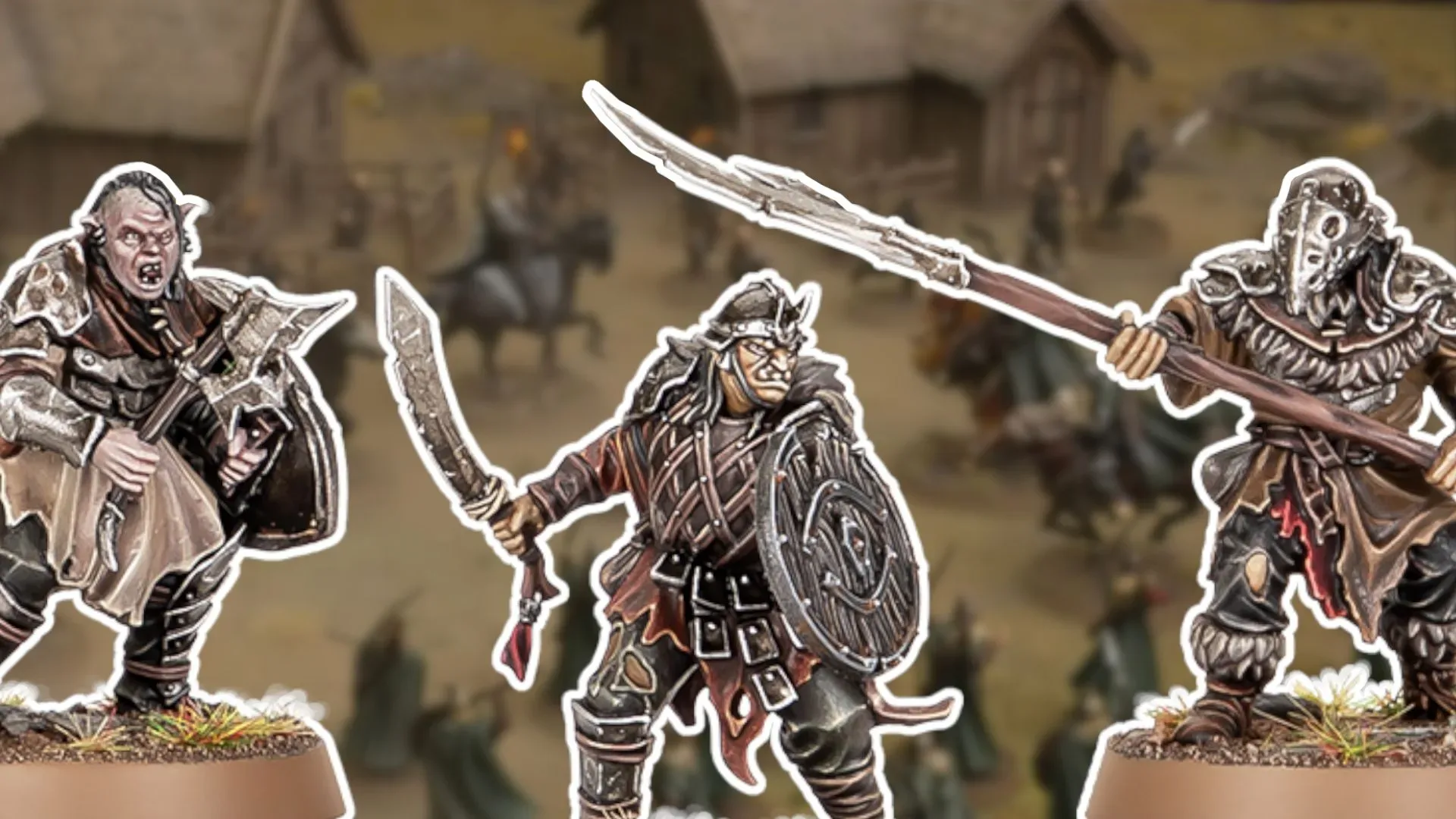
Mordor’s rank and file are getting a fresh march into the Middle-earth Strategy Battle Game. Newly revealed Mordor Orc miniatures revisit a familiar visual language while updating it with more movement, surface detail and options for varied armaments and heads.
The appeal is not simply that the new figures are more elaborate than their predecessors. The refresh appears to preserve the recognizable identity of the older Orc range: its poses and silhouettes remain close enough to feel like a continuation rather than a wholesale replacement. For players with existing Mordor forces, that is an important distinction. A redesign can make an old army feel newly supported without asking collectors to regard previous purchases as obsolete.
Release timing has not been confirmed. However, the refreshed Orcs are planned for a standalone box and for a Mordor Battlehost army set. The Battlehost is expected to contain 24 of the new Orcs, plus Warg Riders and the Witch-king of Angmar supplied both on foot and mounted. The Warg Riders and Witch-king are established miniatures rather than part of the new infantry refresh.
What is changing with the Mordor Orcs?
The updated Orcs aim for a more dynamic presentation than the earlier miniatures, while retaining many equivalent poses. In miniature terms, dynamic posing generally means figures look as though they are advancing, bracing for a strike, drawing a bow or reacting to the chaos around them, rather than standing in a neutral, symmetrical stance. It is a sculpting choice that matters especially in mass infantry units: a regiment can still read as an organized formation without looking like it was assembled by an exceptionally punctual photocopier.
For more context, explore Hayden Christensen Says Darth Vader Movie Talk Is Still Just Rumor.
There is also a clear screen-inspired component to the range. The armor and costume design draws on the look created for Peter Jackson’s Middle-earth films, including details associated with Weta Workshop’s designs. At least some individual Orcs appear to reference background performers visible in the trilogy. One noted example resembles the roaring Orc in the prologue of The Fellowship of the Ring, recognizable for staples across his nose.
That degree of specificity gives the range two jobs at once. On the table, the models represent flexible core troops for a Mordor force. On the hobby side, they offer film fans recognizable costume textures and faces to paint. The best movie-tie-in miniatures need to balance those aims; too much uniformity can make a force feel lifeless, while too much individual character can make it harder for the group to read as a disciplined—or at least collectively menacing—battle line.
Weapons, heads and the value of unit variation
The new Orcs can be equipped with a selection of melee weapons or bows, and alternate heads will be included for further personalization. Those options are meaningful beyond display value. A player can use different weapons to make it easier to identify distinct roles among their infantry at a glance, while alternate heads reduce the repeated-clone effect that can be particularly noticeable in a large unit.
Related coverage includes New Mordor Orc Miniatures Bring a Modern Edge to Middle-earth Strategy Battle Game.
For painters, interchangeable visual elements create small but useful opportunities to build a coherent force. A squad can share a limited palette of dark fabrics, battered metal and faction markings while using different headgear, skin tones, weapons and weathering to give each warrior an individual presence. That can be a more manageable approach than attempting radically different schemes across every single miniature.
For returning hobbyists, the practical attraction is compatibility of feeling rather than a stated rules change. The models evoke the earlier Lord of the Rings tabletop range, which began in 2001, but employ newer sculpting approaches. The result is positioned as an update that keeps the old designs’ character intact. A force combining old and new figures should therefore have a stronger chance of looking intentional, not like two armies from neighboring dimensions accidentally booked the same battlefield.
The Mordor Battlehost, explained
The forthcoming Mordor Battlehost packages the new infantry with several familiar Mordor elements: 24 refreshed Orcs, a handful of Warg Riders, and the Witch-king of Angmar in foot and mounted versions. A Battlehost is a faction-oriented army box, intended to provide a broader starting point than a single unit kit. In this case, it combines infantry numbers with mounted support and a prominent character.
The combination makes thematic sense even without further details on its exact game value. Orc infantry form the visual bulk of a Mordor host, Warg Riders add a mounted contingent, and the Witch-king is one of the setting’s most recognizable servants of the Dark Lord. Including him in two forms offers modelling flexibility: the foot version and mounted version let a player choose the presentation that best suits their force or scenario.
It is worth separating what has been confirmed from what has not. The contents described for the Battlehost are known, as is the plan for a separate Orc box. No launch date has been specified, and there is no stated pricing or detailed rules information here. Anyone planning a new army is better off treating the reveal as an early look at the range rather than a reason to assume an immediate preorder window.
Battle Companies points toward a different scale of campaign
Alongside the miniature news, a new Battle Companies book has been announced. It will allow players to upgrade and personalize their forces across a longer campaign. That is a notably different proposition from simply playing disconnected battles with a fixed army list.
A campaign links games together so that developments in one battle can inform later ones. The announced emphasis on upgrades and personalization suggests players will have reasons to follow the progress of particular warriors over time, rather than viewing every Orc as interchangeable cannon fodder—an unusual but welcome career-development opportunity for the inhabitants of Mordor.
That format can be especially useful for players who do not want to begin with a vast army immediately. A smaller force provides fewer models to assemble and paint before the first game, while the campaign structure can create a sense of continuity as the roster evolves. It also gives hobby decisions added character: an unusual head swap, a distinctive banner treatment or a named veteran can become a recognizable part of an ongoing group rather than merely another entry in a display case.
Why this refresh matters for Middle-earth players
Miniature updates often create understandable tension. Long-time players may worry a beloved older range will be discarded, while newcomers may be reluctant to invest in models that look dated beside newer releases. These Mordor Orcs appear designed to address both concerns by revisiting old poses and core visual cues while improving the sculpted movement and detail.
The parallel with the refreshed Warriors of Rohan is also telling. That previous approach likewise updated a classic Middle-earth infantry concept without abandoning its recognizable roots. For a game so closely associated with a particular on-screen interpretation of the setting, continuity is more than nostalgia. It helps models from different eras sit together as one version of Middle-earth.
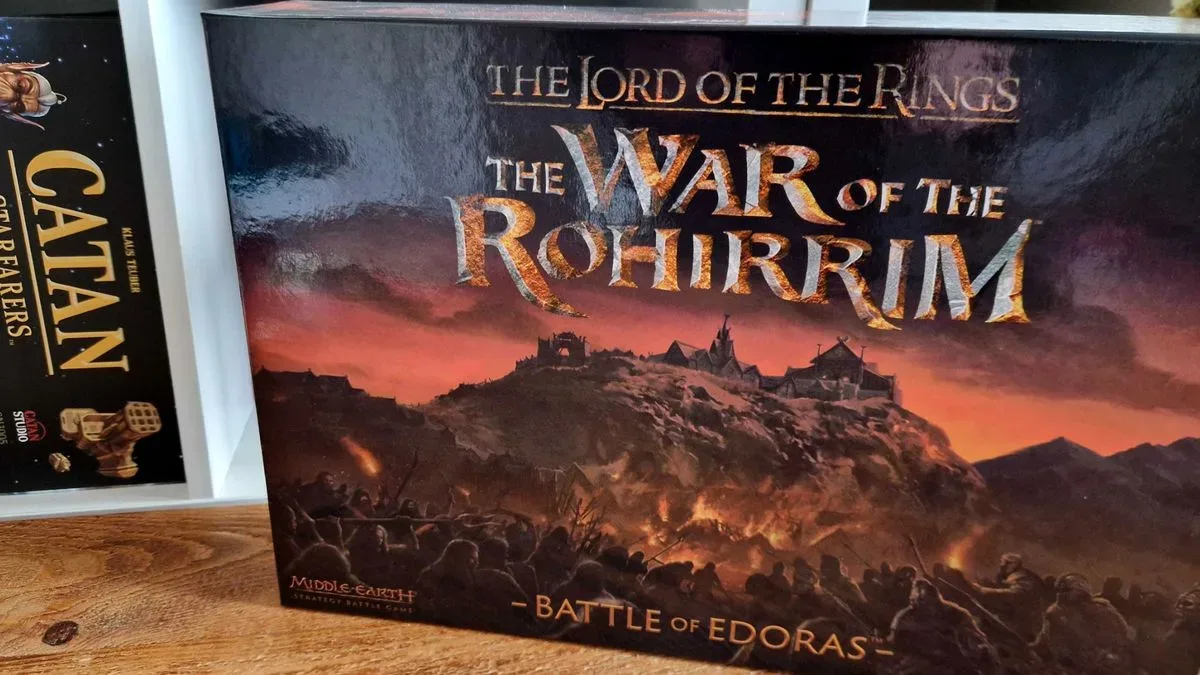
Those who want to enter the game have more than one stated route: a War of the Rohirrim core box or a faction-specific Battlehost. The latter is likely to be the more natural route for someone whose ambitions involve serving Mordor, a growing pile of shields, and an increasingly ambitious plan to paint “just one more unit.” Existing players, meanwhile, can look at the new Orcs as a way to expand or refresh a collection without changing its identity.
The confirmed ingredients are straightforward but encouraging: updated Mordor Orcs with weapon and head choices, a larger Battlehost containing 24 of them alongside Warg Riders and the Witch-king, and a forthcoming campaign book built around progression and personalization. Until a date is supplied, the appropriate stance is patience. Mordor, after all, has waited through worse queue systems than an unannounced miniature release.
Shop the products
Check current price, model and availability at the retailer.