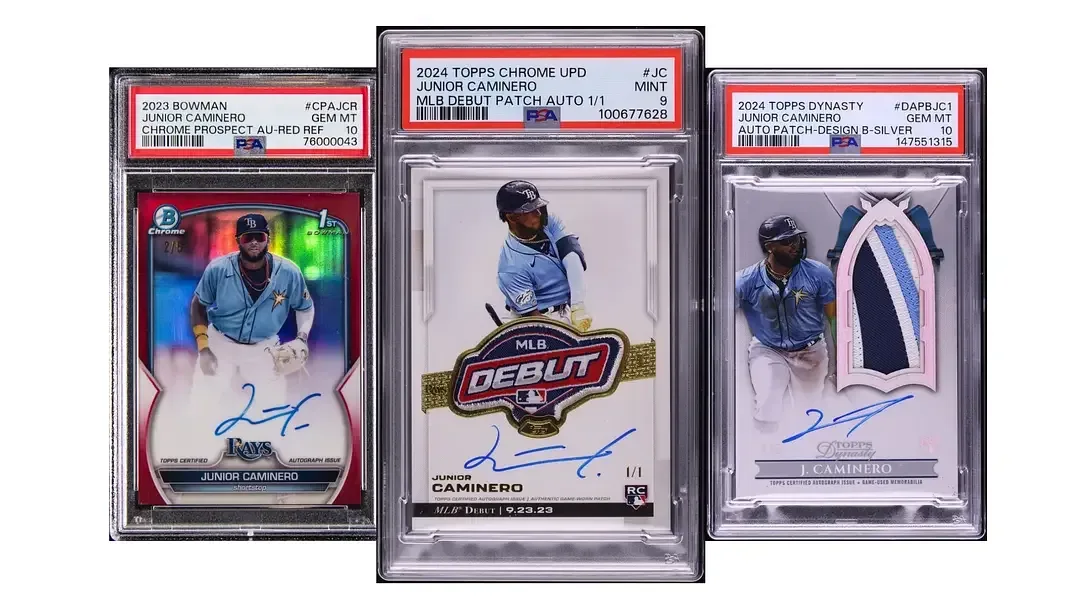
The 2026 World Series is listed as a Tampa Bay Rays-Milwaukee Brewers matchup, bringing together the clubs identified as the American League and National League’s best regular-season teams. Tampa Bay is listed at 98-64, while Milwaukee is listed at 103-59. Game 1 is scheduled for Friday, Oct. 23 at 8 p.m. ET / 5 p.m. PT, from American Family Field in Milwaukee, with FOX carrying the series.
For people planning a watch party, a couch-based scorekeeping operation, or an evening of loudly claiming that every managerial move was obvious in hindsight, the fundamental viewing answer is simple: the games are listed for FOX. The harder part is choosing a live-TV subscription without assuming that a national network listing automatically means the channel will be available everywhere in exactly the same way.
There is another important wrinkle: parts of the supplied schedule conflict with the stated Rays-Brewers matchup. Those discrepancies are significant enough that viewers should check official team, league and broadcaster listings close to each game before treating the entire calendar as final.
The matchup: Rays and Brewers reach the final
The two clubs enter the championship series with the strongest records cited for their respective leagues. Milwaukee’s 103 wins put it ahead of Tampa Bay’s 98 in the supplied standings, and the first two games are listed in Milwaukee before the series moves to Tampa Bay for Games 3 and 4.
For more context, explore Jay-Z Defamation Case Heads to December Hearing Over Jane Doe Declaration.
That opening arrangement is consistent with the supplied game list, but the accompanying field-advantage wording is not. The material says Milwaukee has the better record, then says the Brewers have no field advantage. Those statements do not cleanly align. Rather than infer a postseason rule or declare a home-field outcome from contradictory wording, the practical takeaway is to verify the venue for each game on the current official schedule.
The series is framed as a meeting of two smaller-market clubs. That framing also shapes expectations around the television audience: last year’s World Series reportedly averaged more than 15 million viewers, while the supplied material suggests this matchup may not reach that level. That is analysis rather than a result already known, and it should be treated as a prediction—not a measure of either team’s quality or the stakes of the games.
Milwaukee and Tampa Bay may not bring the same market scale as a series involving Los Angeles and Shohei Ohtani, but a championship matchup does not need a prepackaged superstar narrative to be meaningful. The listed records give this series a straightforward sporting hook: both teams were excellent across the regular season, and both survived their league postseason routes to reach the final.
Reported 2026 World Series schedule
All listed start times are 8 p.m. ET / 5 p.m. PT. Games 5 through 7 are conditional, meaning they would only be played if neither club has already won the series.
- Game 1: Rays at Brewers — Friday, Oct. 23
- Game 2: Rays at Brewers — Saturday, Oct. 24
- Game 3: Brewers at Rays — Monday, Oct. 26
- Game 4: Brewers at Rays — Tuesday, Oct. 27
- Game 5, if necessary: Brewers at Rays — Wednesday, Oct. 28
Games 6 and 7 need confirmation
The supplied listing identifies Games 6 and 7 as Tampa Bay Rays games at the Toronto Blue Jays. That conflicts with the stated Rays-Brewers World Series pairing and with the earlier venue pattern. It is almost certainly not a dependable basis for travel, ticket, viewing, or subscription plans. The dates and times supplied for those entries are Friday, Oct. 30 and Saturday, Oct. 31 at 8 p.m. ET / 5 p.m. PT, but the opponent and location should be independently confirmed before publication or use.
In other words: the first five entries provide the reported Rays-Brewers framework, while the last two contain an obvious matchup inconsistency. A seven-game series creates enough calendar uncertainty on its own; no fan needs a phantom Blue Jays detour added to the bracket.
How to watch on FOX without traditional cable
Several live-TV services are listed as carrying FOX, alongside FOX’s own streaming product, FOX One. The key term here is local affiliate: FOX broadcasts many events through local stations, and whether a streaming service delivers that local station can depend on a viewer’s market. This is especially important for Sling TV, whose availability is explicitly described as location-dependent.
Another useful term is cloud DVR. It is recording storage provided through a streaming service rather than a physical DVR box. The amount of storage and the number of simultaneous streams matter most for households where one person wants to record the game while someone else streams a different program—or where several viewers have separate screens in play.
DirecTV Entertainment
DirecTV’s Entertainment package is listed at $59.99 for the first month and $88.99 per month afterward. The plan is described as including FOX, more than 90 channels, unlimited cloud DVR, unlimited streaming on a home network, and up to three streams away from home. It is also described as including an additional 90 free channels and a five-day free trial.
For a household that values multiple at-home streams and broad channel access beyond baseball, these are the listed advantages. Still, a promotional first-month price is not the same as the ongoing monthly cost, so the post-promotion rate deserves as much attention as the introductory offer.
Sling TV Blue
Sling TV Blue is listed at $54.99 per month and described as offering more than 40 cable channels, on-demand programming, 50 hours of DVR storage, and up to three simultaneous streams. FOX access is described as subject to local market availability.
That local-market caveat is the decisive detail. A lower monthly price does not solve the World Series problem if the needed FOX station is unavailable at a viewer’s address. Confirming the channel lineup before subscribing is more useful than comparing headline prices alone.
Fubo
Fubo’s starter offering is listed at $63.99 for the first month and $88.99 per month afterward. The plan is described as providing 230 channels, unlimited cloud DVR space, and a family-share feature that supports multiple screens at home and three screens away from home. FOX is included in the reported channel offering.
Its stated appeal is breadth: viewers who want a large live-TV lineup and expansive DVR capacity may find that structure more relevant than a service designed around a leaner channel package. As with every promotional offer, viewers should check the current rate, local FOX availability and account terms before committing.
Hulu + Live TV
Hulu + Live TV is listed at $49.99 for its first month and $99.99 per month afterward. The package is described as including FOX, more than 100 live channels, unlimited cloud DVR storage, Hulu, Disney+ and ESPN Select. It is also listed as allowing streaming on three devices at home or on the go, with up to two simultaneous streams.
The bundle is most relevant for viewers who would use the included entertainment services as well as live television. For a single-series purchase decision, however, the long-term price after the first month and the number of permitted streams remain practical considerations.
FOX One
FOX One is listed at $19.99 per month or $199.99 annually. It is described as a FOX streaming service that includes the FOX Network, local FOX stations and other FOX-branded networks such as FOX Sports, FS2, Big Ten Network, FOX Deportes, FOX News, FOX Business, FOX Weather and FOX Nation. The service is also described as available as a Prime Video channel add-on, with a three-day trial mentioned for that route.
On paper, this is the most direct option among the listed services for someone whose primary goal is a FOX-carried series rather than a full replacement for a conventional television bundle. Even so, viewers should confirm local-station access and current terms, particularly when a specific local affiliate is essential.
What to verify before game night
- Confirm the opponent and venue for Games 6 and 7. The provided entries naming Toronto conflict with the Rays-Brewers series setup.
- Check local FOX availability by ZIP code or address. A service can advertise FOX while local carriage varies.
- Read beyond the first-month price. DirecTV, Fubo and Hulu + Live TV all list substantially higher recurring monthly rates after their initial promotion.
- Match the DVR and stream limits to the household. Unlimited cloud DVR and multiple streams are useful only if those features solve a real viewing need.
- Confirm the start time in the local time zone. The listed games begin at 8 p.m. Eastern and 5 p.m. Pacific.
The cleanest plan is to treat FOX as the broadcast destination, select a service only after confirming its local channel availability, and keep an eye on the final game-by-game listing. The Rays and Brewers may be ready for a World Series; the published schedule, at least in its conditional final two games, needs a little more bullpen work.