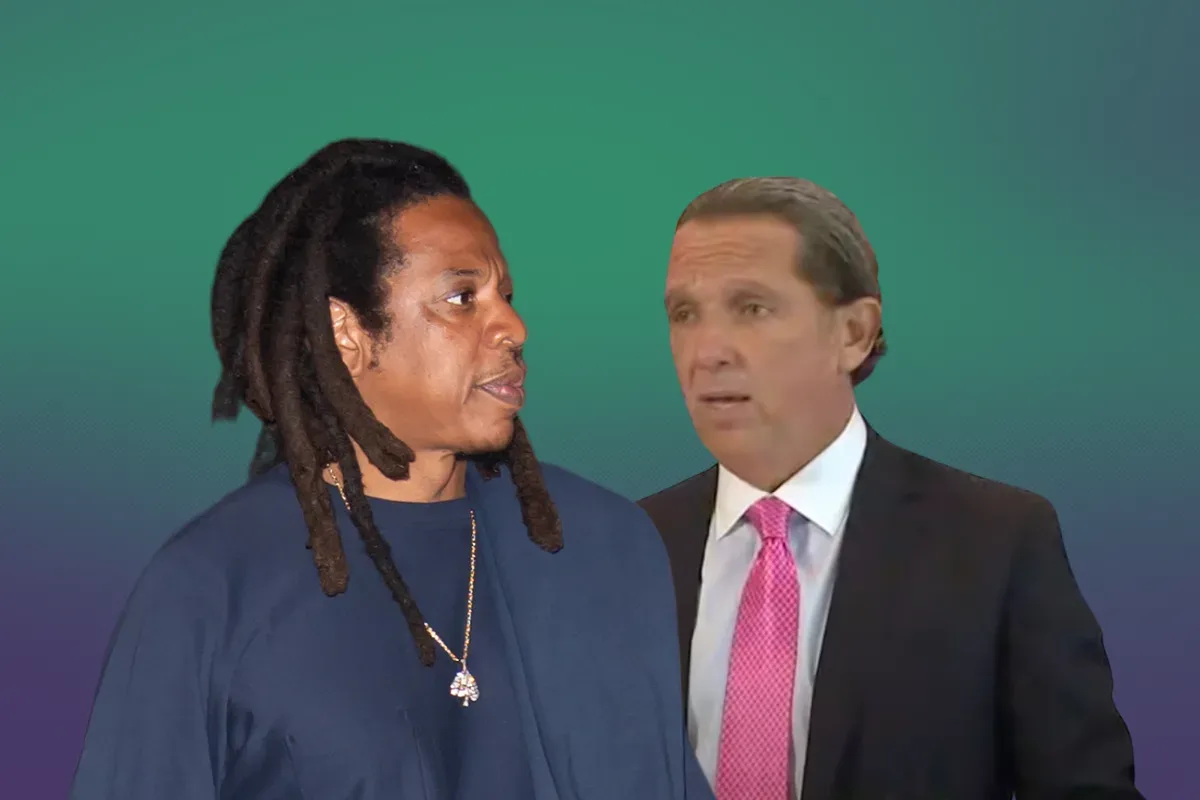
Jay-Z’s defamation case against attorney Tony Buzbee is moving toward a December 11 hearing in Manhattan, where a federal judge is set to consider a cluster of procedural disputes tied to a former accuser’s later declaration that her allegation against Jay-Z was false.
U.S. District Judge Dale Ho scheduled the hearing for 10 a.m. in Courtroom 905 at the Thurgood Marshall Courthouse, 40 Foley Square. The matters listed for argument include efforts to dismiss Jay-Z’s lawsuit, requests to strike portions of his complaint, and a bid to remove Jane Doe’s sworn statement from the case record.
The litigation stems from an earlier sexual-assault accusation involving Jay-Z and Sean “Diddy” Combs. Both men denied the allegation. The prior case was withdrawn with prejudice on February 14, 2025, meaning that claim cannot simply be filed again in the same form.
What the current case is about
The present dispute is a defamation case, rather than a revival of the withdrawn action. Jay-Z has alleged that the lawyers involved pursued claims they knew were false. Buzbee has contested Jay-Z’s account and alleged that Jay-Z’s side pressured Jane Doe.
Jane Doe was initially a defendant in Jay-Z’s case, but Jay-Z later filed notice dropping her from it. That filing was accompanied by her September 24 declaration. In that sworn statement, she said the accusation against Jay-Z was false and said she had never met or spoken with him.
Her removal as a defendant does not end the fight over the declaration itself. Buzbee’s lawyer has challenged the circumstances surrounding it, arguing that Jay-Z obtained the statement in exchange for dismissing Doe from his own lawsuit. The scheduled hearing is therefore expected to address not only whether the broader case can proceed, but whether the court should consider that declaration at all.
Why the sworn statement is being contested
A sworn declaration is a written statement made under penalty of perjury. It can be significant in civil litigation because it places a person’s account into the court record in a formal way. Here, Doe’s declaration is consequential because it directly addresses the core accusation that underlies the defamation dispute.
But significance does not mean a document is automatically accepted without challenge. Parties can ask a court to remove, limit or disregard material for a number of legal reasons. The supplied filings identify the request as one to remove Doe’s sworn statement; the hearing will give the sides an opportunity to argue their competing positions before Judge Ho.
It is important to separate the positions being litigated from established findings. Jay-Z says the underlying claims were knowingly false. Buzbee disputes that characterization. Buzbee’s lawyer, meanwhile, has questioned whether Doe’s reversal was tied to her dismissal from Jay-Z’s action. Those are opposing contentions in an active civil dispute, not a judicial resolution of the arguments.
What “with prejudice” means in the earlier withdrawal
The February 2025 withdrawal of Doe’s earlier case was made with prejudice. In straightforward terms, that usually means the claim was closed in a way that prevents the same plaintiff from bringing the same claim again. It differs from a dismissal without prejudice, which generally leaves open the possibility of refiling.
That procedural status matters because it marks the earlier action as concluded, while the later defamation litigation remains live. The December hearing is not described as a trial on the original allegation. Instead, it concerns the legal viability and scope of Jay-Z’s lawsuit against Buzbee, along with whether certain material—including the September declaration—should remain part of that case.
Three issues likely to frame the hearing
- Dismissal requests: Judge Ho will hear bids seeking dismissal of Jay-Z’s lawsuit. A dismissal motion challenges whether a claim should continue at this stage; it does not, by itself, resolve every factual disagreement raised by the parties.
- Challenges to the complaint: The court will also consider requests to cut portions of Jay-Z’s complaint. A complaint is the document that sets out a plaintiff’s allegations and legal claims. Disputes over particular sections can affect what allegations remain in the case even if the entire suit is not dismissed.
- The status of Doe’s declaration: The parties are separately contesting whether the sworn September statement should be removed. That question is especially notable because Doe is no longer a defendant, yet her declaration remains central to the public dispute over the allegations and reversal.
The procedural picture remains distinct from a merits ruling
High-profile legal disputes can produce a fast-moving mix of accusations, withdrawals, declarations and procedural filings. The key distinction is that court scheduling and motions are not equivalent to a final decision on who is right. A hearing on dismissal, pleading language and a sworn statement is about what claims and materials may stay before the court at this point.
For Jay-Z, the case is an attempt to press his allegation that false claims were pursued against him. For Buzbee, the stated response is a challenge to Jay-Z’s narrative and an allegation of pressure surrounding Doe’s reversal. Doe’s declaration adds another layer: it is a direct repudiation of her earlier accusation, but it is itself being challenged by Buzbee’s side.
That makes Judge Ho’s handling of the December motions meaningful even if it does not decide the entire lawsuit. A ruling that keeps the case alive, narrows it, or changes the material available for consideration could shape the path of the litigation going forward.
What is known ahead of December 11
The known timeline is relatively clear. Doe made the earlier allegation involving Jay-Z and Combs; both denied it. Her case was withdrawn with prejudice on February 14, 2025. Jay-Z subsequently brought his defamation case against Buzbee and initially included Doe as a defendant. In September, Doe declared that the allegation against Jay-Z was false and that she had never met or spoken to him. Jay-Z then dropped her from his lawsuit.
What remains unresolved is how the court will treat Jay-Z’s claims, the challenged portions of the complaint and Doe’s declaration. Those questions are set for argument on December 11 in federal court in Manhattan.
The dispute arrives amid continued attention around major figures in rap and entertainment, where legal filings can become part of the wider public conversation before the courts have made final determinations. Readers tracking music-industry developments can also see recent reporting on Drake’s certified-unit milestones.