

 Dakota JohnsonLowen Ashleigh
 Anne HathawayVerity Crawford
 Josh HartnettJeremy Crawford
 Brady WagnerCrew Crawford
 Ismael Cruz CordovaCorey
 Irina DvorovenkoAnna
 K.K. MoggieAmanda Thomas
 Tom GalantichBarron Stephens
 Lou Martini Jr.Limo Driver
 Michael Abbott Jr.Sheriff Wilson
 Clark CarmichaelDeputy Ross
Verity begins with a potent question: what does it do to a person to spend a life imagining terrible things? Adapted from Colleen Hoover’s bestseller, the thriller puts that unease at the centre of a story about authorship, grief, intimacy and suspicion. Yet the film has trouble converting those provocative ingredients into sustained dread. It establishes an appropriately uneasy situation and gives its three leads material they can play with, but the mystery repeatedly circles its own possibilities rather than tightening them.
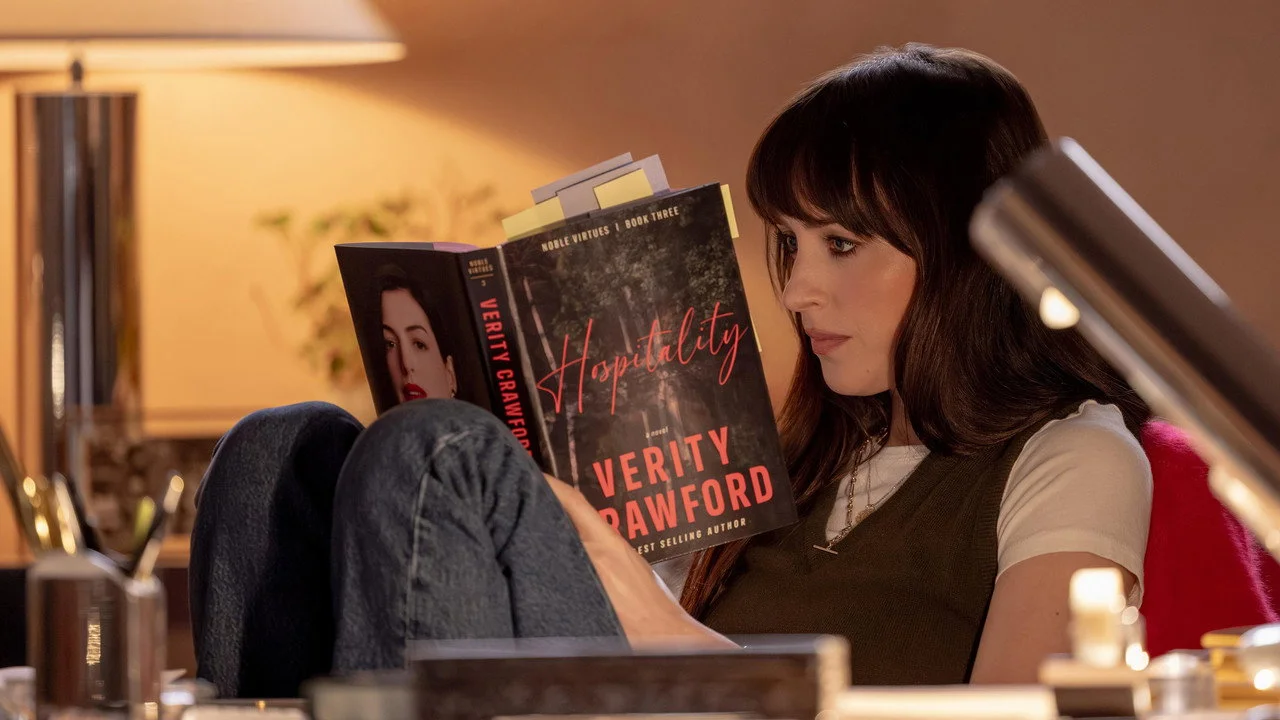
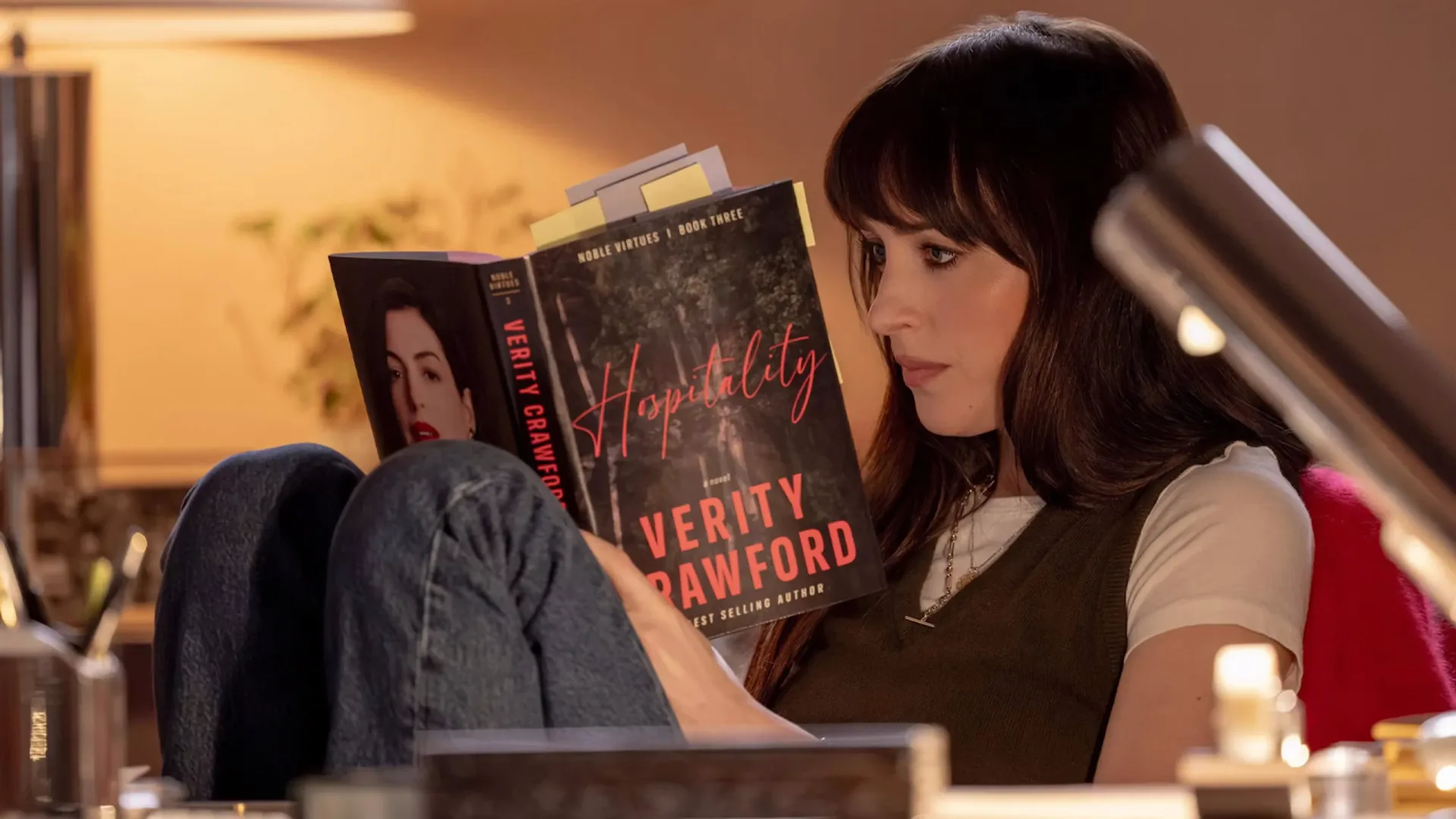
Dakota Johnson plays Lowen, a struggling crime writer reeling from bereavement and further shaken after witnessing an accident. She is invited to assist celebrated author Verity Crawford with an unfinished series, an arrangement that initially seems professionally valuable but emotionally fraught. Verity has suffered a devastating car crash and a death in the family; Lowen is brought into the Crawford home by Verity’s husband, Jeremy, to work from notes and fragments of ideas. That setup creates several useful tensions at once. Lowen is entering another writer’s creative life, another family’s mourning, and a house where the crucial facts have not all been made clear.
The film’s best early move is its withholding of Verity’s condition. Lowen arrives before learning that Verity is catatonic, leaving her effectively alone with incomplete material and a family dynamic she cannot confidently read. That premise should make every discovery feel unstable: a document may be evidence, a gesture may be staged, and a helpful explanation may conceal a different motive. Lowen’s growing concern that Verity may secretly be mobile, together with the discovery of a dark diary, gives the narrative a credible engine for paranoia.
Johnson is well suited to that uncertainty. Her controlled, reserved approach makes Lowen feel like someone trying to stay composed rather than a protagonist loudly advertising every fear. The performance gives the character a practical caution that fits the circumstances: she hesitates before accepting the job and does not arrive at the house primed for melodrama. Once suspicion takes hold, Johnson keeps Lowen unsettled without losing the sense that she is attempting to think her way through a deeply uncomfortable situation. It is a valuable anchor in a film that needs viewers to entertain multiple interpretations of what Lowen sees.
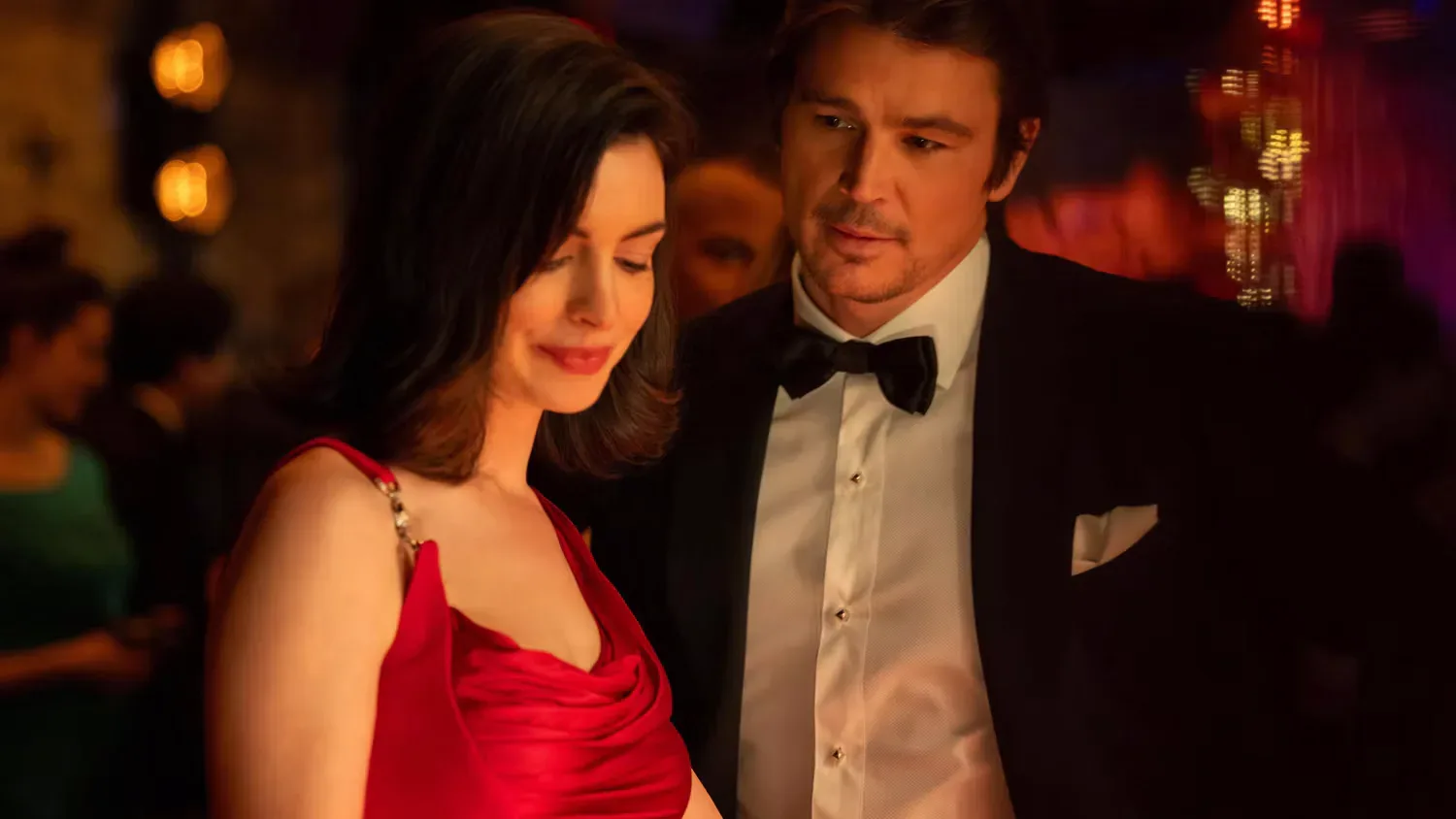
Josh Hartnett brings an agreeable surface to Jeremy, with enough suggestion of darkness underneath to sustain doubt. The character’s initial withholding of information naturally makes him difficult to place, and Hartnett appears to understand that the role works best when warmth and opacity coexist. The film wants Lowen, and the audience, to wonder whether reassurance can be trusted; his performance keeps that question alive even when the larger storytelling loses momentum.
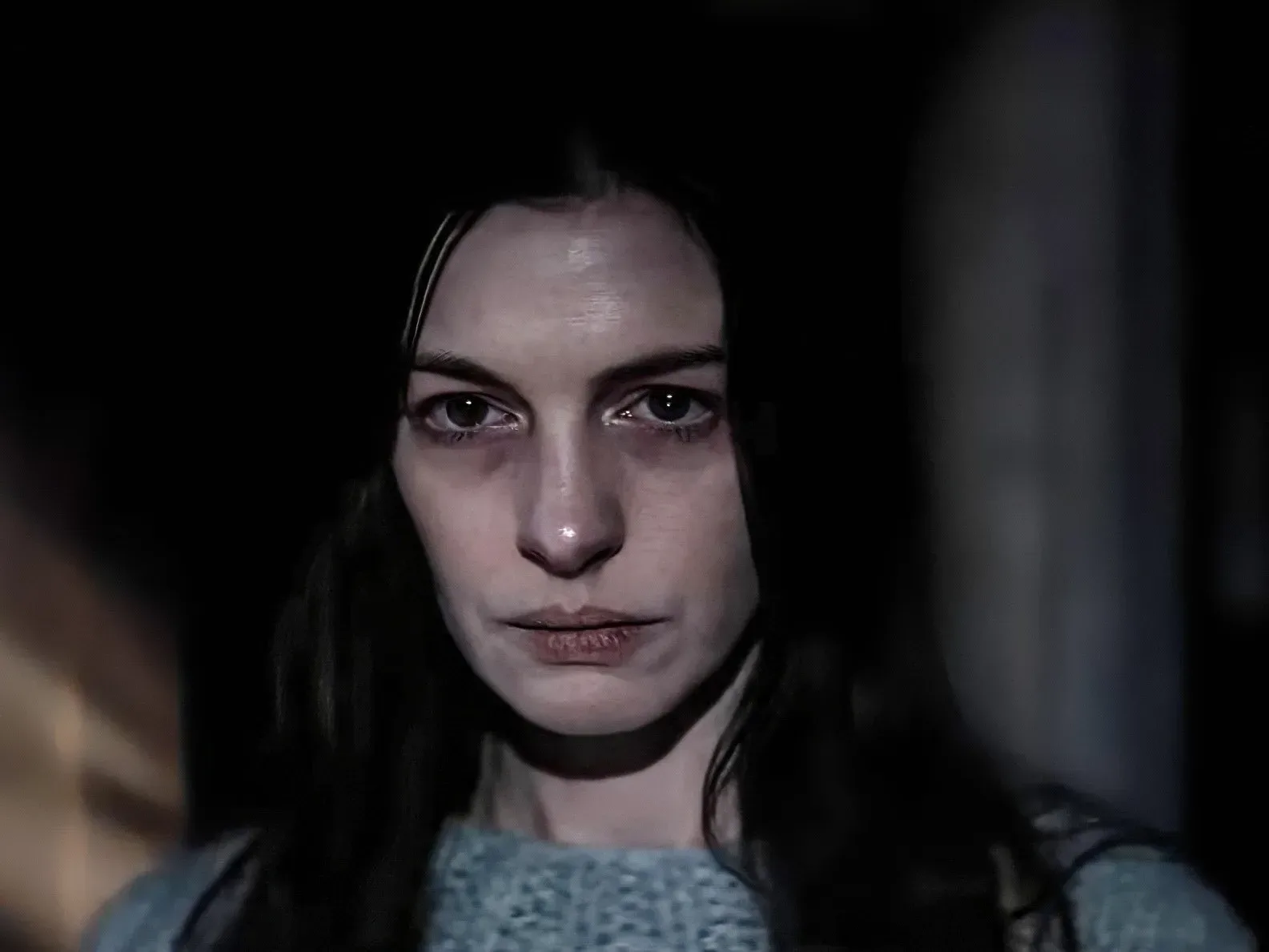
Anne Hathaway has a more fragmented presence, largely appearing through online clips and flashbacks. Within those constraints, she is eerily unreadable. That quality is dramatically appropriate for a film built around whether a person’s apparent helplessness, past writing and private record can be interpreted at face value. Hathaway’s guarded effect helps maintain Verity as a figure onto whom other characters project fears and theories. It also underscores one of the film’s more interesting ideas: knowing someone through their work, their archive and other people’s accounts is not necessarily the same as knowing them.
Those performances keep Verity watchable, but they cannot solve its central structural issue. The film has a lot of movement without enough revelation. There is repeated wandering through the Crawford home, a beautiful modernist space that provides a fittingly austere setting for secrets, but the scenes do not consistently build pressure or produce meaningful new information. A thriller can take its time when delay changes the texture of suspicion. Here, the delay too often feels like narrative drift. The house becomes less a carefully worked arena of danger than a place where the story waits to become more decisive.
Director Michael Showalter uses occasionally creepy music cues and sudden cuts to prod the atmosphere toward unease. These flourishes signal the intended mood, but they do not compensate for the thinness of the film’s escalation. Startle-oriented editing and ominous sound can make an isolated moment feel charged; they are less effective when the plot has not supplied a steady accumulation of discoveries, reversals or consequences. The result is a thriller that frequently gestures toward the possibility of a major turn without giving its suspense a consistently stronger shape.
That uncertainty is especially frustrating because the material has several inherently unsettling dimensions. Lowen is not only investigating a stranger; she is working in the shadow of that stranger’s literary voice. The ghostwriting assignment blurs professional responsibility with personal intrusion. The diary introduces the troubling prospect that writing can be confessional, performative, manipulative or all three. And the tension around Jeremy makes trust feel less like a comforting answer than a risk. These are rich components for a psychological thriller, particularly one interested in how people decide what counts as truth when every available account carries an agenda.
The film seems to reach toward a theme about staring too long into darkness, and it also touches on the importance of trust in relationships. But neither thread lands with much force. The problem is not that the film leaves room for ambiguity; ambiguity can be a thriller’s most durable asset. The problem is that the eventual revelations are neither frightening enough nor satisfying enough to make the preceding uncertainty feel purposeful. Instead of reframing what came before or delivering a payoff commensurate with the long buildup, the last act weakens the sense that the story has been steering toward a meaningful destination.
That weak finish changes how the whole runtime feels. Earlier scenes are asked to carry suspense on credit, with the expectation that later developments will clarify why the film lingered where it did. When the climax does not deliver sufficient emotional or narrative force, the accumulated pauses register as meandering. The movie does not so much intensify toward a finale as limp toward a stop. For viewers who enjoy a mystery merely for its atmosphere and its actors, there is still something to hold onto. For those looking for a rigorously plotted psychological thriller, the lack of sharp escalation will likely be decisive.
Verity is therefore a case of persuasive casting and an effective premise meeting a screenplay that does not fully exploit either. Johnson, Hartnett and Hathaway each contribute an element essential to the intended tension: wary self-possession, uneasy charm and inscrutability. The home, the unfinished manuscripts and the diary offer a promising environment for a story about perception and manipulation. But the film repeatedly leaves its strongest implications underdeveloped, relying on ominous presentation where more precise storytelling is needed.
The recommendation is cautious. Fans of the performers or of slow-moving domestic psychological thrillers may find enough in the setup to justify the journey, particularly in the dynamics among Lowen, Jeremy and the absent-yet-looming Verity. Everyone else should temper expectations. This is not a failure of mood or commitment from the cast; it is a thriller whose revelation-to-runtime ratio never becomes compelling enough to make its darkness truly haunting.