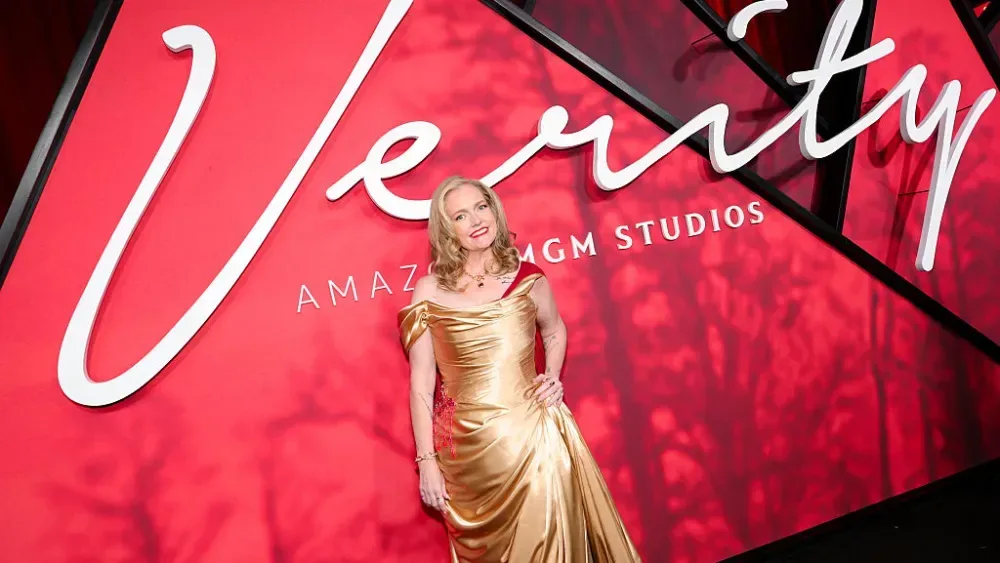
Colleen Hoover’s Verity is having another major moment in print and audio as its feature-film adaptation approaches theaters. The 2018 romantic thriller has risen to No. 2 on Amazon’s bestselling-books chart and No. 2 on Audible’s audiobook chart, evidence that a screen adaptation can put a long-running reader favorite back into immediate circulation.
The film stars Anne Hathaway, Dakota Johnson and Josh Hartnett and is scheduled to reach theaters on October 2. Its arrival follows another high-profile Hoover adaptation, It Ends With Us, and turns renewed attention toward a novel whose appeal rests heavily on unease, competing interpretations and the unsettling act of reading someone else’s private writing.
What Verity is about
The 368-page novel centers on Lowen Ashleigh, a writer struggling professionally who accepts a job connected to bestselling author Verity Crawford. Verity is presumed to be comatose following a car accident, and her husband, Jeremy Crawford, asks Lowen to help bring Verity’s incomplete book series to a finish.
That premise gives the story its writerly engine: Lowen must sift through Verity’s materials to understand and continue an established series. But the job takes a far darker turn when she discovers an unfinished autobiography in Verity’s office. The document contains disturbing admissions and revisits an event that permanently altered Verity’s family.
That structure places Verity in romantic-thriller territory rather than presenting a straightforward romance. A romantic thriller combines intimate relationships with suspense, where attraction, trust and personal danger are bound together. Here, the professional arrangement between Lowen and Jeremy, the absence of Verity as an active conversational participant, and the manuscript’s revelations create a framework where private testimony becomes the central source of tension.
The story also uses a familiar but potent suspense device: a document within the narrative. Lowen is not simply told what happened; she reads material Verity allegedly wrote but never meant to share. That makes interpretation essential. Readers are asked to weigh the meaning and credibility of a private manuscript while Lowen’s circumstances grow increasingly complicated.
A bestseller resurgence with roots in a longer run
The current chart placement is not Verity’s first wave of attention. The novel was self-published by Hoover in 2018 before Grand Central Publishing acquired it in 2021. It became a No. 1 New York Times bestseller and found a substantial audience through BookTok, the reader community on TikTok that has helped keep discussion of books active well after publication.
Its audiobook performance underscores that the revival is not limited to one format. The title has spent more than 100 weeks on Audible’s chart and is now back at No. 2. For prospective readers, that split matters: the same story is drawing interest from people choosing a physical or digital text and from those who prefer to listen.
Related coverage includes ‘Verity’ Returns to Bestseller Charts Ahead of Film Release.
Chart positions are snapshots, not permanent measures of a book’s popularity. Still, a No. 2 placement for both the hardcover and audiobook is a clear sign of concentrated interest around the adaptation’s release window. On Amazon’s books list, Verity sits behind Threshing Day, Rebecca Yarros’ fourth entry in the Empyrean series.
Film adaptations can change the conversation around a book
An adaptation does more than introduce a novel to viewers who have never read it. It can also bring former readers back, encourage first-time readers to seek the original before seeing the movie and reignite spoiler-heavy discussion of character motivations and ambiguous material. That effect is especially relevant to Verity, whose premise hinges on a manuscript that is not merely background information but a major narrative force.
There is an important distinction, however, between the novel’s plot and what the movie will ultimately place on screen. The supplied details establish the cast and theatrical date, but do not specify how the adaptation handles particular scenes, plot developments or the novel’s ending. Readers looking to preserve surprises should be cautious around detailed online conversations as release day gets closer.
The cast itself places three recognizable performers at the center of a story designed around fraught proximity. Hathaway, Johnson and Hartnett are confirmed to star, though the available information does not assign roles or describe the movie’s exact presentation. What is clear is that the film is adapting a property already familiar to a sizable reading audience rather than launching a wholly unknown thriller.
Which edition makes sense for readers?
The standard book and audiobook are the most direct ways into the story, but there is also a collector’s edition carrying an exclusive new chapter by Hoover and a new author’s letter. A collector’s edition is a version distinguished by bonus content or presentation rather than a separate core work. In this case, the new chapter and letter are the stated points of difference.
That makes the decision relatively straightforward:
- Choose a standard reading edition if the priority is experiencing the original novel’s main story.
- Consider the collector’s edition if Hoover’s added chapter and author letter are meaningful extras for you.
- Choose the audiobook if listening fits your routine; it is available to stream or download through Audible.
Bonus-content editions can be appealing during an adaptation cycle, particularly when readers want something beyond the version they may have already read. But the information available does not establish that the collector’s edition is limited in quantity, rare or likely to carry any future resale value. It is best understood as a reading-and-fandom purchase rather than as an investment claim.
A notable adaptation moment for Hoover
Verity arrives on screen after It Ends With Us, the Hoover adaptation starring Blake Lively and Justin Baldoni. Together, the films demonstrate how Hoover’s books are continuing to move from a reader-driven phenomenon into high-profile screen projects.
For Verity, the renewed bestseller status suggests the original novel remains a central part of that moment, not merely a source text being left behind by the film. Its return near the top of print and audio rankings gives newcomers time to encounter Lowen Ashleigh’s discovery before the theatrical adaptation opens—and gives returning readers another reason to revisit the book’s unnerving central question: what should anyone believe when the most revealing evidence was never supposed to be found?
For more entertainment coverage involving adaptations and the people behind them, see our look at David Fincher’s Netflix pact and what may come next.