Spoilers for Verity follow.
Verity is built around an uncomfortable question: when two people offer radically different versions of a horrifying story, which one deserves belief? The film’s final cut refuses to solve that question. But director Michael Showalter has revealed that the adaptation very nearly picked a side—and then pulled an even bigger switch.
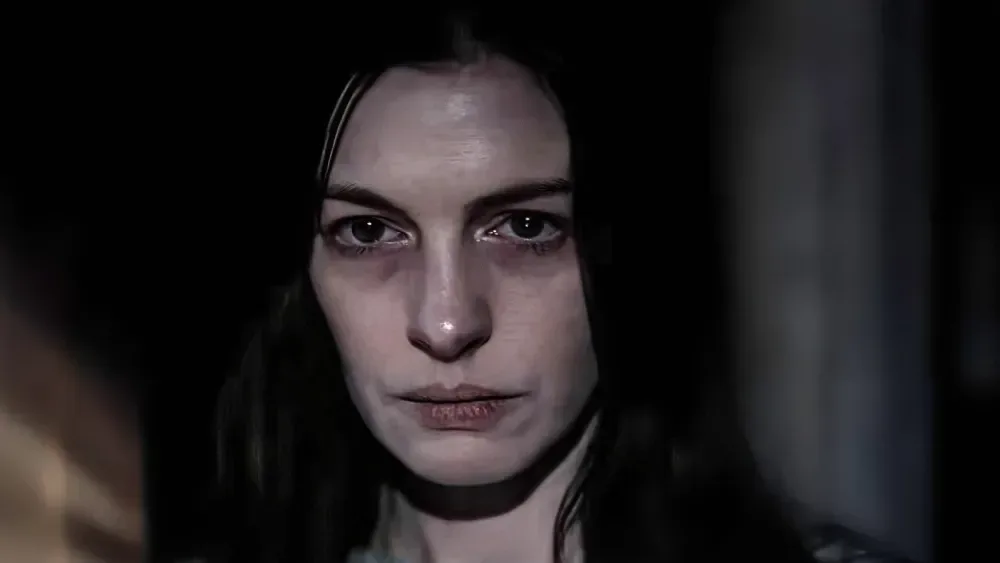
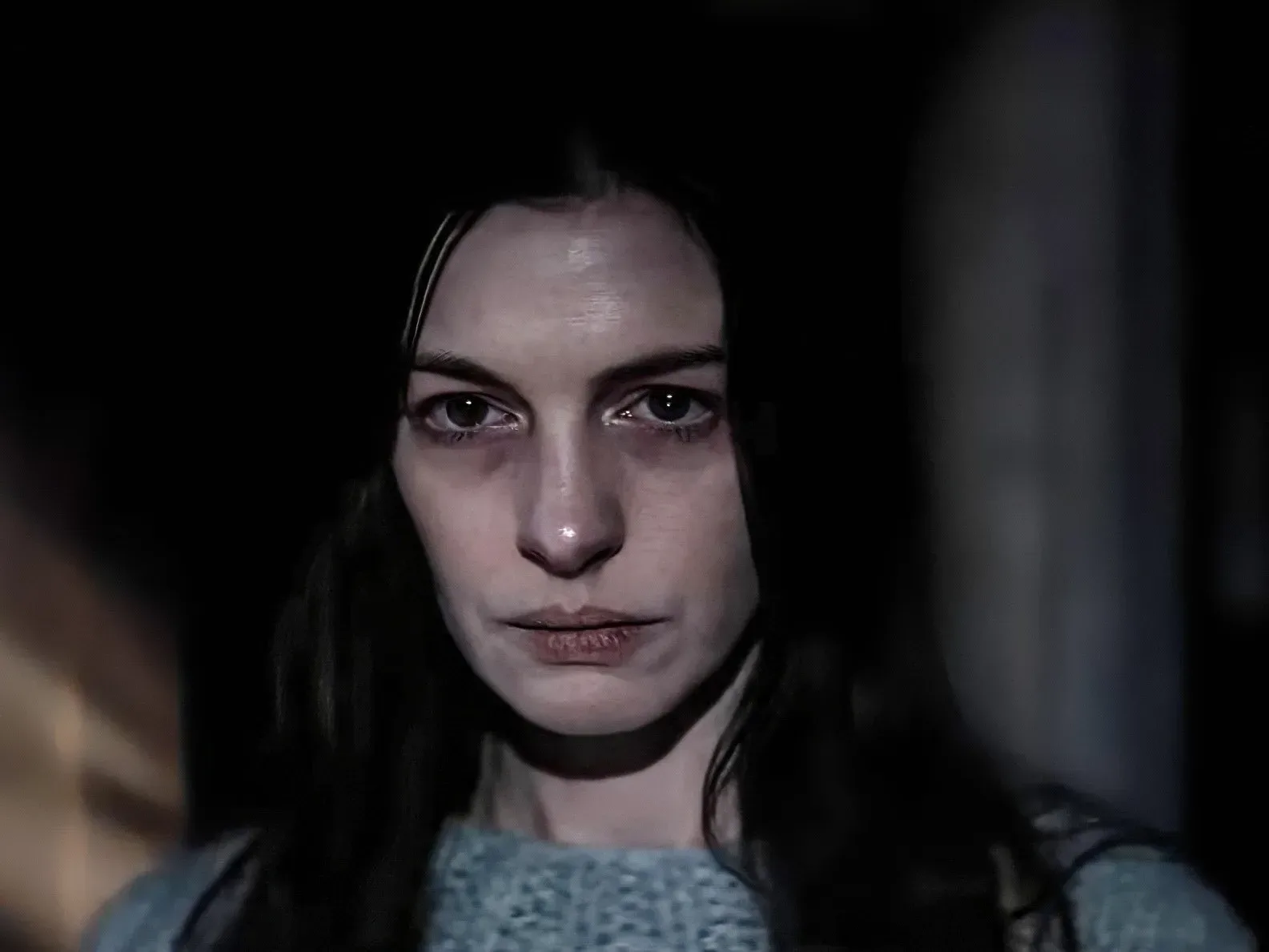
An earlier planned ending would have had Lowen Ashleigh, played by Dakota Johnson, embrace a much darker role. As she and Jeremy Crawford, played by Josh Hartnett, drive away from the Crawford home, Lowen would have put on sunglasses with a knowing, villainous expression. The film would then return to the lake, where Anne Hathaway’s Verity Crawford—presumed dead—would open her eyes beneath the water.
That version would have transformed the ending from a lingering moral mystery into a double reveal: Verity survives, and Lowen may have been the true mastermind. After focus-group screenings, however, the filmmakers concluded that audiences did not want Lowen to arrive at such certainty. The released ending instead leaves her looking out the car window, unsure whether Verity’s manuscript or a later letter contained the truth.
The ending audiences saw
Directed by Showalter and adapted from Colleen Hoover’s bestselling novel, Verity follows struggling author Lowen after Jeremy recruits her to finish a book series by his wife, famous novelist Verity Crawford. Verity has suffered an accident that has apparently left her unable to speak or move, and Lowen goes to the Crawford family’s secluded home to examine the unfinished work.
There, Lowen finds a manuscript that presents an appalling account of Verity’s inner life and of the death of one of the Crawfords’ children. The document paints Verity as resentful of motherhood and alleges that she intentionally caused a kayaking tragedy. Lowen’s response to the manuscript becomes central to the story: she increasingly fears Verity, sympathizes with Jeremy, and begins a relationship with him.
The apparent facts grow less stable when Verity is revealed to have been faking her paralysis and muteness. Lowen and Jeremy confront her, and Jeremy kills Verity after Lowen urges him to do so. They dispose of her body in the lake.
Six months later, a pregnant Lowen finds a letter hidden under the floorboards while she and Jeremy prepare to leave the house. In the letter, Verity claims that the manuscript was a fictional exercise: an attempt to imagine the worst possible version of herself rather than a confession. She says Jeremy tried to kill her after finding it, and that she subsequently pretended to be incapacitated out of guilt and to remain close to him and their surviving child.
Related coverage includes ‘Verity’ Ending Was Reworked After Test Audiences Rejected a Bigger Twist.
That letter is not treated as a clean exoneration. The finished film leaves Lowen—and viewers—with incompatible accounts. Lowen does not receive proof that settles whether Verity was a murderous manipulator, a terrified victim, or something more complicated. The car ride that closes the film preserves that destabilizing uncertainty.
What the discarded twist would have changed
The abandoned version carried a different kind of ambiguity, but it was much less evenly distributed. If Verity had opened her eyes in the lake, the film would establish that her death had been faked or that she had survived the attempt on her life. If Lowen then signaled through her expression and behavior that she had engineered events, the story’s balance would tilt hard toward Lowen as an active villain.
That matters because Lowen is the viewer’s entry point. The premise asks the audience to read the Crawford household through her fear, attraction, suspicion and incomplete knowledge. A late reveal that she has knowingly played the room would reclassify the film’s earlier scenes. What appeared to be a vulnerable writer stumbling into someone else’s nightmare would become the work of a person with concealed agency and possibly concealed intent.
Showalter described that alternate Lowen as a “dark phoenix” figure and said it had been the ending the team originally expected to use. The sunglasses beat was not merely a stylish punctuation mark. It was the moment where Lowen would stop being uncertain and show that she did not care about the devastation left behind.
In thriller terms, that is a reversal: an ending development that forces the audience to reinterpret what preceded it. It can be satisfying when it clarifies a story’s hidden design. It can also feel emotionally distancing when it asks viewers to detach from the character whose perspective has carried the film. The screenings suggested this particular reversal did the latter.
Why the focus groups mattered
Focus groups are preview screenings used to gather audience reactions before a release. Their feedback is often broad—viewers may say an ending does not work without being able to identify the precise structural reason. In this case, Showalter said the reactions led the team to a specific realization: viewers wanted Lowen to remain in a state of doubt.
That does not mean the audiences simply wanted a happier ending. The released version is hardly comforting. Lowen is pregnant, leaving with a man who may have murdered an innocent woman, and carrying knowledge that might implicate both of them in a terrible act. The film’s unease comes from the fact that certainty would be a form of relief, and it withholds that relief.
The audience identification at stake is especially important. Showalter’s conclusion was that the audience effectively occupies Lowen’s position. If she decisively declares Verity a manipulator and adopts a cool, triumphant posture, viewers must make the same leap. But if the information has not earned that leap for them, Lowen’s decisiveness reads not as cleverness but as alienation.
By keeping her conflicted, the final cut allows an audience to continue wrestling with the evidence on its own terms. Lowen’s uncertainty validates the viewer’s uncertainty. It also keeps the moral weight on the decision to kill Verity rather than allowing a flashy survival reveal to take over the final seconds.
An adaptation preserving the book’s feeling rather than every event
Hoover consulted on the film and was open to changes from the novel. One major alteration was the removal of one of the dead children, a change Hoover considered the best one the adaptation could make. That is a substantial adjustment to the plot’s traumatic background, yet she said she was pleased with where the movie ultimately landed because it leaves viewers with the same emotional response as the book.
That distinction is useful for thinking about adaptations. Fidelity does not always mean reproducing every event, character count or exact line of dialogue. It can mean retaining the central tension that made the original work compelling. Here, the central tension is not simply whether Verity is alive, dead, guilty or innocent. It is the inability to fully trust a confession, a denial, or the people who act on either one.
The alternate ending appears designed to reward viewers with a grander twist. The released ending instead protects the story’s ambiguity. Both approaches use surprise, but they serve different goals. One supplies a late answer about who holds power. The other leaves the power struggle unresolved and makes Lowen live with that unresolved state.
The practical takeaway for viewers
For people arriving at the movie expecting a definitive answer, the key is to treat the final letter as another piece of contested evidence, not a closing case file. The story deliberately supplies grounds to suspect Verity and grounds to wonder whether she was telling the truth. Lowen’s final reaction is therefore not indecision caused by missing storytelling; it is the ending’s intended dramatic condition.
It also explains why criticism of the conclusion can be so divided. A viewer looking for a final, decisive twist may prefer the notion of Lowen revealed as the calculating villain and Verity surviving. A viewer invested in the film as a psychological thriller may find the existing version more fitting because it refuses to let any character, including Lowen, feel safely vindicated.
The final choice gives Verity a less explosive but more unsettled exit. It does not tell the audience whom to absolve. It asks whether Lowen has helped destroy a monster, helped destroy a victim, or committed herself to a life where she can never establish the difference. For another recent look at screen performance and the need to be seen, see our coverage of Sian Clifford’s Lady.