

 Mikey MadisonFrances Haugen
 Jeremy Allen WhiteJeff Horwitz
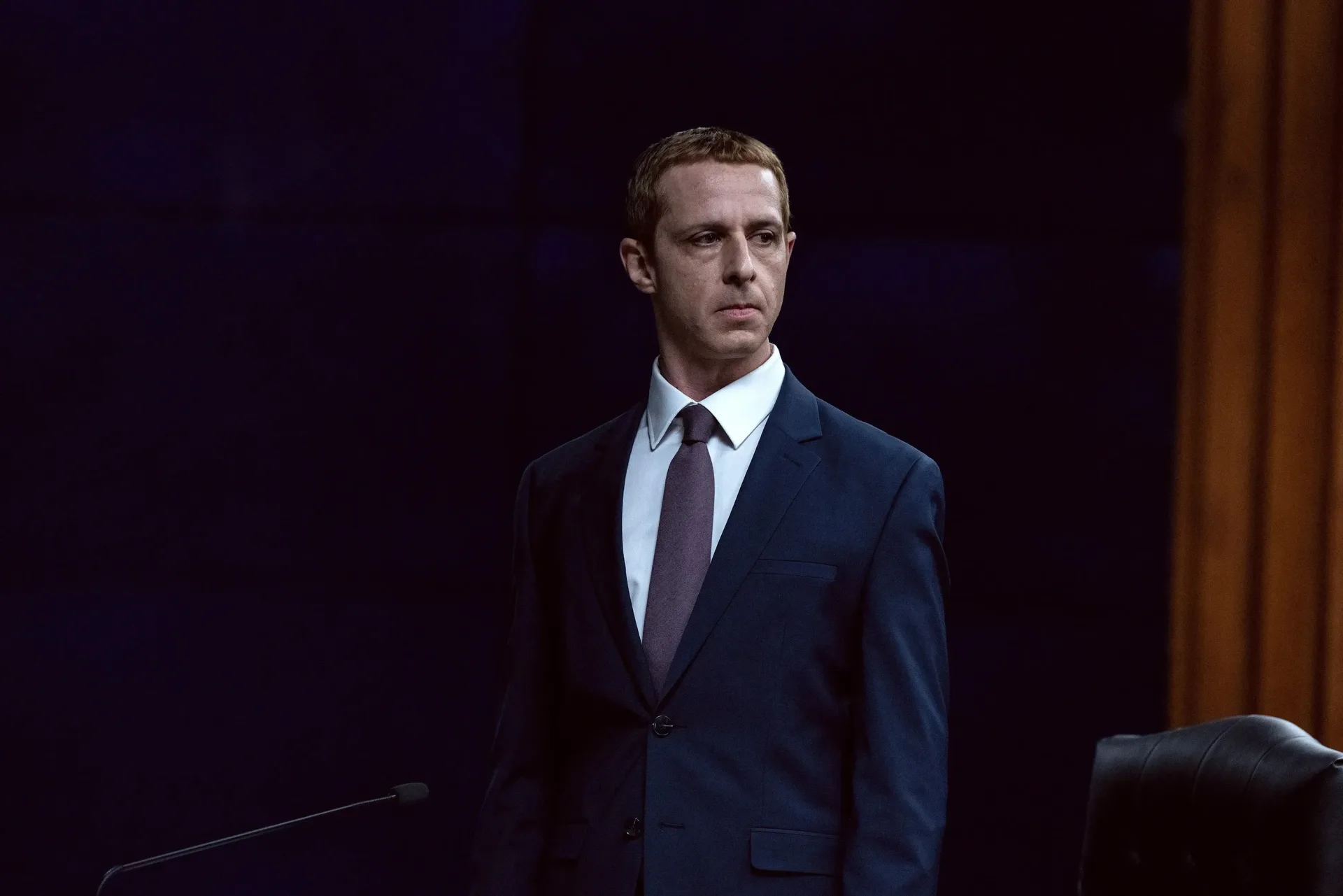
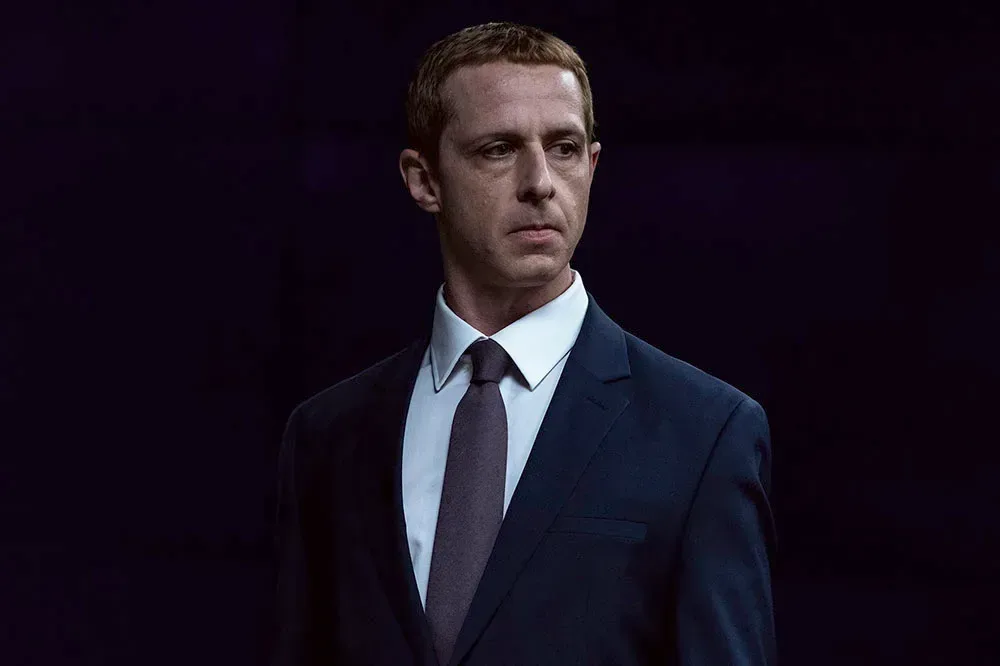
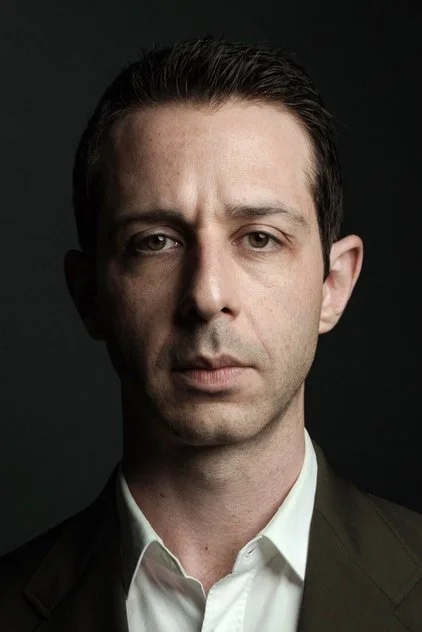 Jeremy StrongMark Zuckerberg
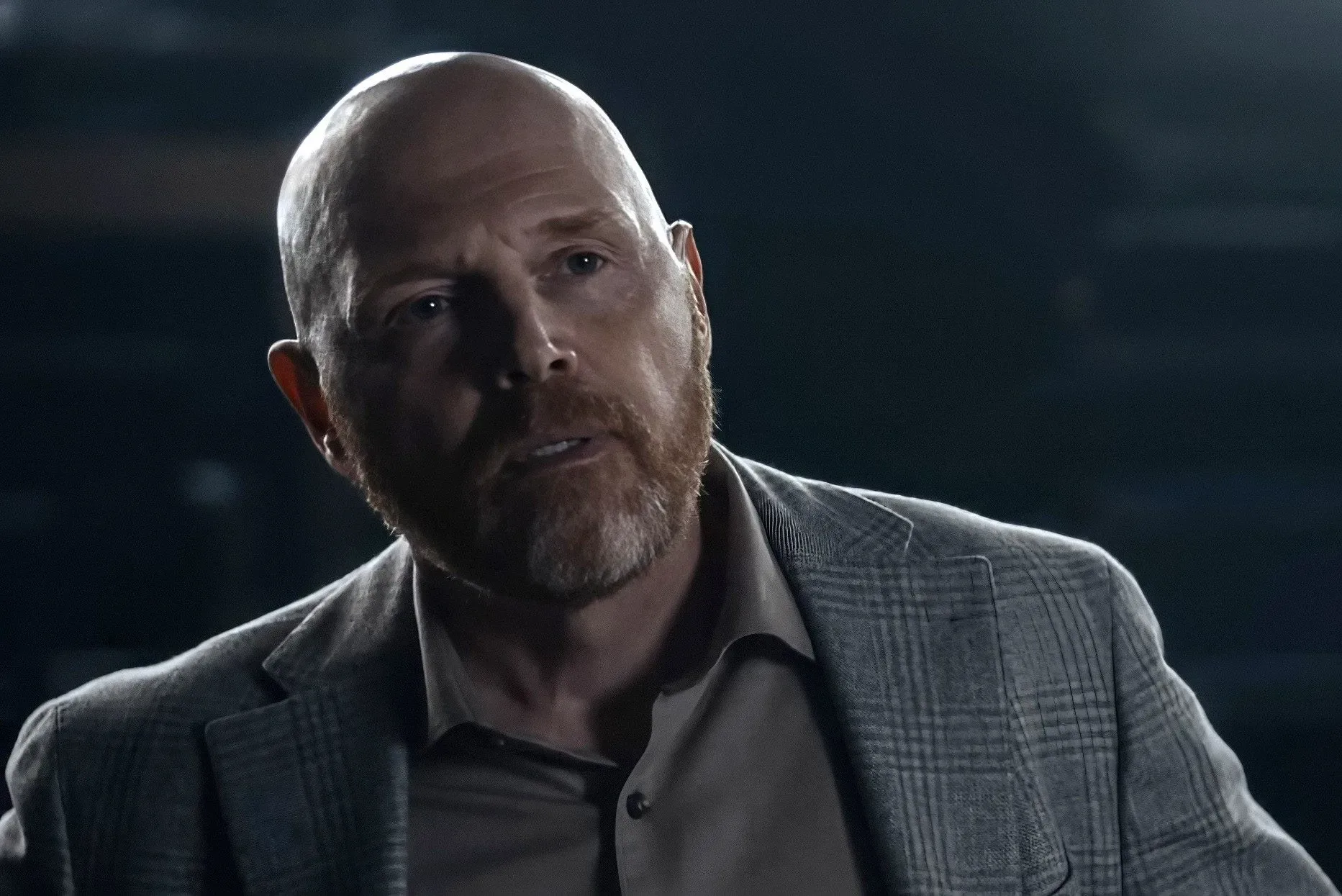
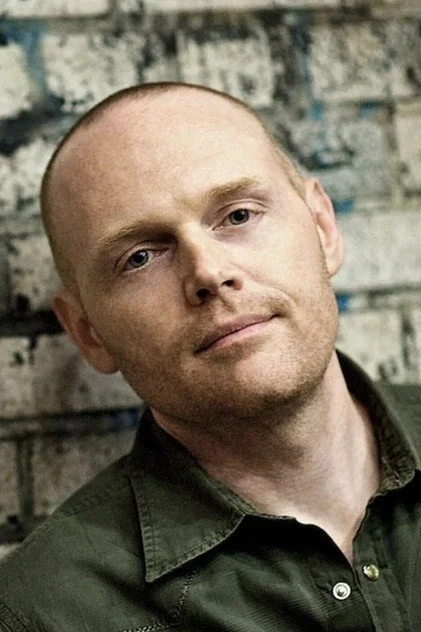 Bill BurrCharlie Garrigan
 Wunmi MosakuRaya
 Billy MagnussenTeddy Marks
 Betty GilpinKris
 Gbenga AkinnagbeAndy
 Anna LambeMorgan
 Aidan LapreteZach
 Kelley PereiraEvelyn
 Nelson FranklinTom
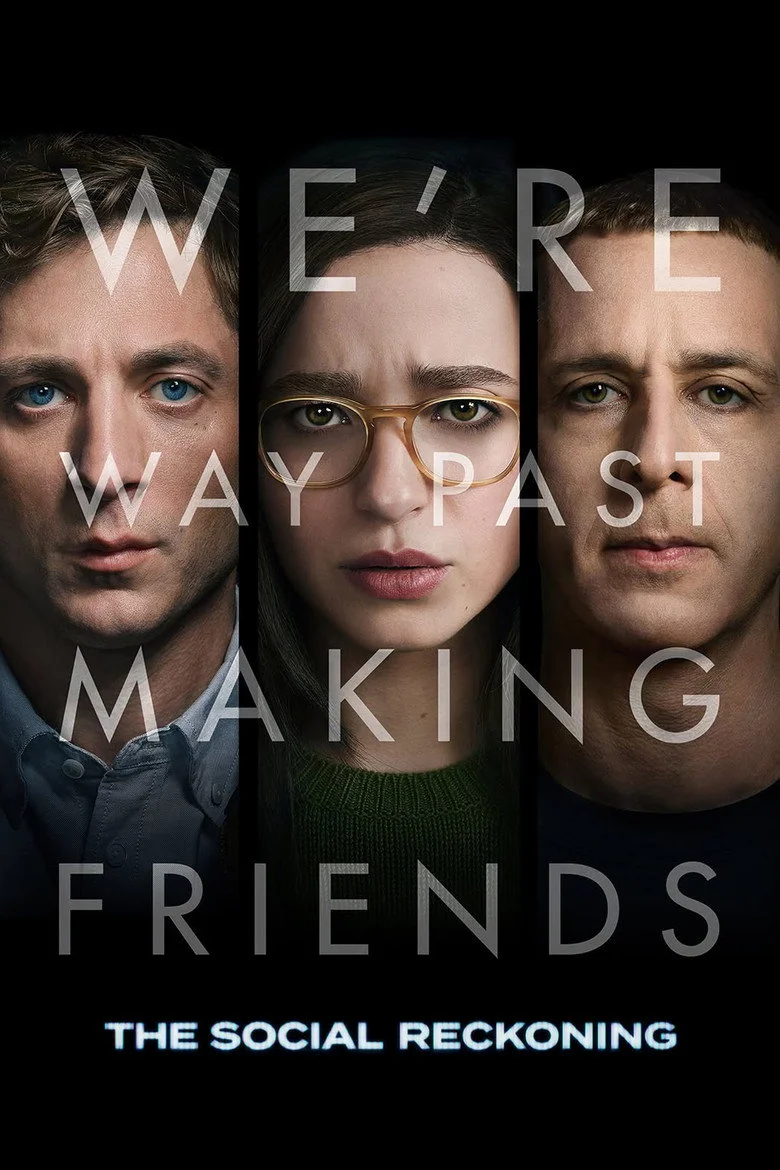
The Social Reckoning returns Aaron Sorkin to Facebook-related material, but it does not simply continue the story where The Social Network left Mark Zuckerberg. Its attention instead moves toward Frances Haugen, the employee who becomes a whistleblower, and toward the journalistic work surrounding her disclosures. That change of perspective is the film’s most important creative decision: this is a political and corporate drama about conscience, reporting and institutional power rather than a character study centered on Facebook’s founder.
Zuckerberg remains present, but in a deliberately reduced capacity. Jeremy Strong plays him as an imposing corporate adversary whose limited screen time still carries weight. The part’s function is less to chart Zuckerberg’s interior life than to establish the vast system Haugen is pushing against. The film’s stakes therefore come from the imbalance between an individual employee’s alarm and a company powerful enough to absorb, resist or redirect criticism.
Frances Haugen is the film’s moral center
Mikey Madison’s Frances is introduced as an awkward and frequently abrasive outsider inside Facebook’s Silicon Valley culture. That discomfort matters because the film does not frame her as an effortlessly polished crusader. She has a mission, but the mission makes her a difficult fit among colleagues and superiors who dismiss her as a Cassandra. Madison reportedly keeps the performance brittle and empathetic at once, allowing Frances’s social unease to coexist with the seriousness of what she has recognized.
The concerns driving Frances are explicit: Facebook’s algorithm is portrayed as directing users toward extremist groups, while Instagram’s effect on young women’s mental health is another major point of alarm. These are not treated as distant policy abstractions. The drama locates them in Frances’s increasingly troubled conscience, as she confronts the consequences of company decisions that colleagues appear willing to minimize or endure.
The January 6, 2021 Capitol insurrection becomes a decisive point in that progression. The film partially recreates the event and uses it to sharpen Frances’s sense that inaction is no longer tenable. This is where the story’s distinction from a more cynical rise-and-fall tech narrative becomes clearest. Her alienation does not curdle into revenge; it develops into an act of selfless resistance. That arc gives the film an emotional foundation beyond its boardrooms, newsrooms and policy arguments.
Talk is the engine, and the pleasure
As expected from a Sorkin-written and Sorkin-directed drama, the movie is densely verbal. Its dialogue is packed with wit, snark and heightened lines that may not resemble everyday speech but are designed to deliver the satisfaction of a perfectly sharpened retort. The style is not aiming for documentary plainness. It turns argument into momentum, and for viewers responsive to Sorkin’s rhythm, that momentum is a substantial part of the appeal.
Jeremy Allen White plays reporter Jeff Horwitz with an unflappable quality that complements Madison’s more frayed energy. Their exchanges are a particular strength. The pairing suggests a productive contrast between a whistleblower who is carrying personal and professional strain and a journalist whose steadiness gives the material a route into public view. The film’s appreciation for patient reporting and slower, traditional news work is welcome, especially because its subject concerns systems that thrive on speed, scale and attention.
That emphasis also clarifies what kind of drama this is. Although legal and corporate pressures are part of the terrain, investigative political journalism appears to be the central frame. The movie is interested in what happens after someone inside a powerful institution decides that the institution’s explanation is not enough: how information is handled, how it becomes legible to the public, and what personal resolve is demanded before it can be shared.
Timely material, more modest filmmaking
The limitation is not the urgency of the subject. If anything, the story’s stakes are larger than those of the earlier Facebook film, extending from office culture and social-media governance to extremism and mental health. The issue is presentation. Compared with David Fincher’s visually distinctive direction on The Social Network, this film is said to feel less dynamic and smaller in scale. The comparison is understandable given the shared writer, title language and character, but it also identifies a real trade-off: the new film has potent material without always giving that material the same cinematic charge.
The absence of Fincher’s visual verve is felt alongside the lack of the earlier film’s distinctive Trent Reznor and Atticus Ross score. This does not mean The Social Reckoning lacks tension or dramatic force. Rather, its force is concentrated in performances and exchanges more than in an enveloping audiovisual style. For some viewers, that will be perfectly suited to a journalism-centered drama; for others, the sense that the film is visually less exciting may make its larger public stakes feel oddly contained.
That tension shapes the recommendation. The movie has the ingredients of a compelling, timely drama: a clear moral conflict, a strong whistleblower protagonist, a measured reporter figure, an adversarial corporate presence and a cast capable of carrying Sorkin’s demanding language. It may not offer the same sleek, propulsive filmmaking associated with its predecessor, nor does it claim to be a strict continuation of that film. But it finds a meaningful new chapter by looking away from the founder and toward the person who decides to expose the consequences of the platform’s choices.
Who should watch it?
This is best suited to viewers who enjoy issue-driven dramas in which ideas are advanced through performances and argument. Those looking for a direct Zuckerberg-focused follow-up, or for a film built around visual bravura, should adjust expectations. The rewards lie in Madison’s emotionally exposed central performance, White’s calm counterweight, Strong’s pointed corporate antagonist and a screenplay that treats reporting as a vital act rather than mere connective tissue.
Ultimately, The Social Reckoning makes its case through urgency and character. Its filmmaking may be more restrained than the landmark it inevitably invites comparison with, but the shift toward Frances Haugen gives the story a different and worthwhile moral perspective.