
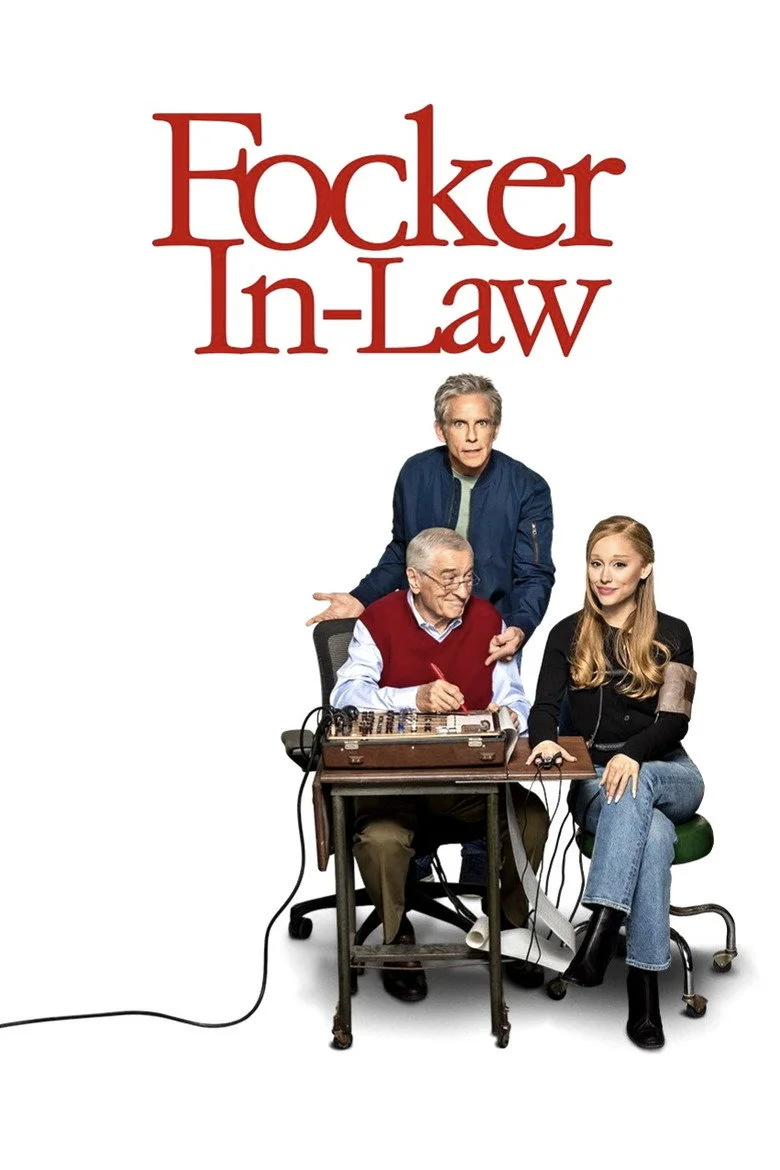
 Ben StillerGreg Focker
 Robert De NiroJack Byrnes
 Ariana GrandeOlivia Jones
 Skyler GisondoHenry Focker
 Owen WilsonKevin Rawley
 Blythe DannerDina Byrnes
 Teri PoloPam Byrnes-Focker
 Beanie FeldsteinSamantha Focker
 Eduardo FrancoEduardo Villalobos
 Liza Koshy
 Cole Escola
 Kali Rocha
Focker-In-Law returns to a family whose defining comic problem has always been the terror of joining it. This time, the tension shifts generations. Greg Focker is no longer the prospective in-law trying to survive Jack Byrnes’s suspicion; he is a father unable to accept that his adult son is building a life beyond him. It is a clean reversal, and a productive one. The film does not pretend the series has become radically different, but it finds enough emotional and comic value in that switch to make another reunion feel more welcome than necessary.
The premise places Greg and Pam Focker on a family trip for Pam’s father Jack’s 80th birthday. Their twin children, Henry and Samantha, are now in their mid-twenties, and Henry brings his girlfriend Olivia along. He intends to propose. Greg, jealous of the relationship and fearful of losing his closeness with his son, instead treats the trip as an opportunity to undermine the couple.
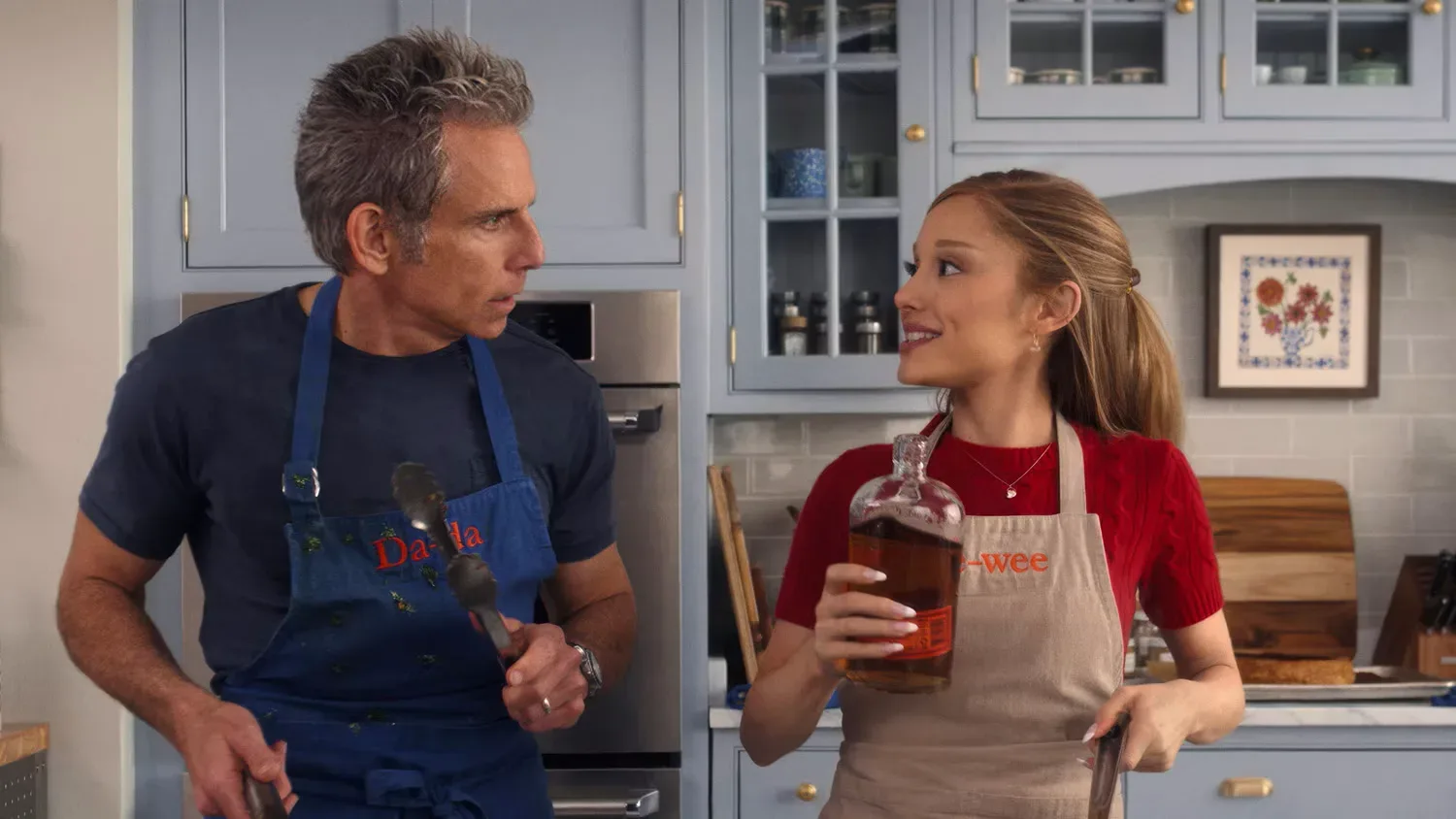
That setup makes Greg both the engine of the comedy and the film’s central difficulty. He is selfish, vain and possessive in ways that are plainly unattractive. Yet Ben Stiller gives the character the vulnerability needed to keep the performance from curdling into simple nastiness. Greg’s behavior is unreasonable, but the film’s comic tension comes from recognizing the insecurity underneath it: he is trying to preserve a family bond by controlling it, and naturally making that bond more fragile in the process.
Ben Stiller makes an unpleasant father watchable
Stiller’s performance depends on balance. Greg has to be obstructive enough to generate escalating trouble, while remaining human enough for a lesson in letting go to feel earned rather than imposed. The role gives Stiller room to play broadly, but his work retains a sense of someone scrambling to justify impulses he should know better than to indulge. That combination helps the movie sustain sympathy for a protagonist who is, by design, often the villain of his own family gathering.
The generational inversion also carries an obvious thematic payoff. Greg has become what he once feared in Jack: the parent who sees a child’s partner as a threat rather than a person. Focker-In-Law does not need a complicated thesis to make that point resonate. Its family-comedy framework lets the idea emerge through Greg’s interference and his gradual confrontation with the consequences. The result is conventional, but conventions can work when the performers understand their purpose.
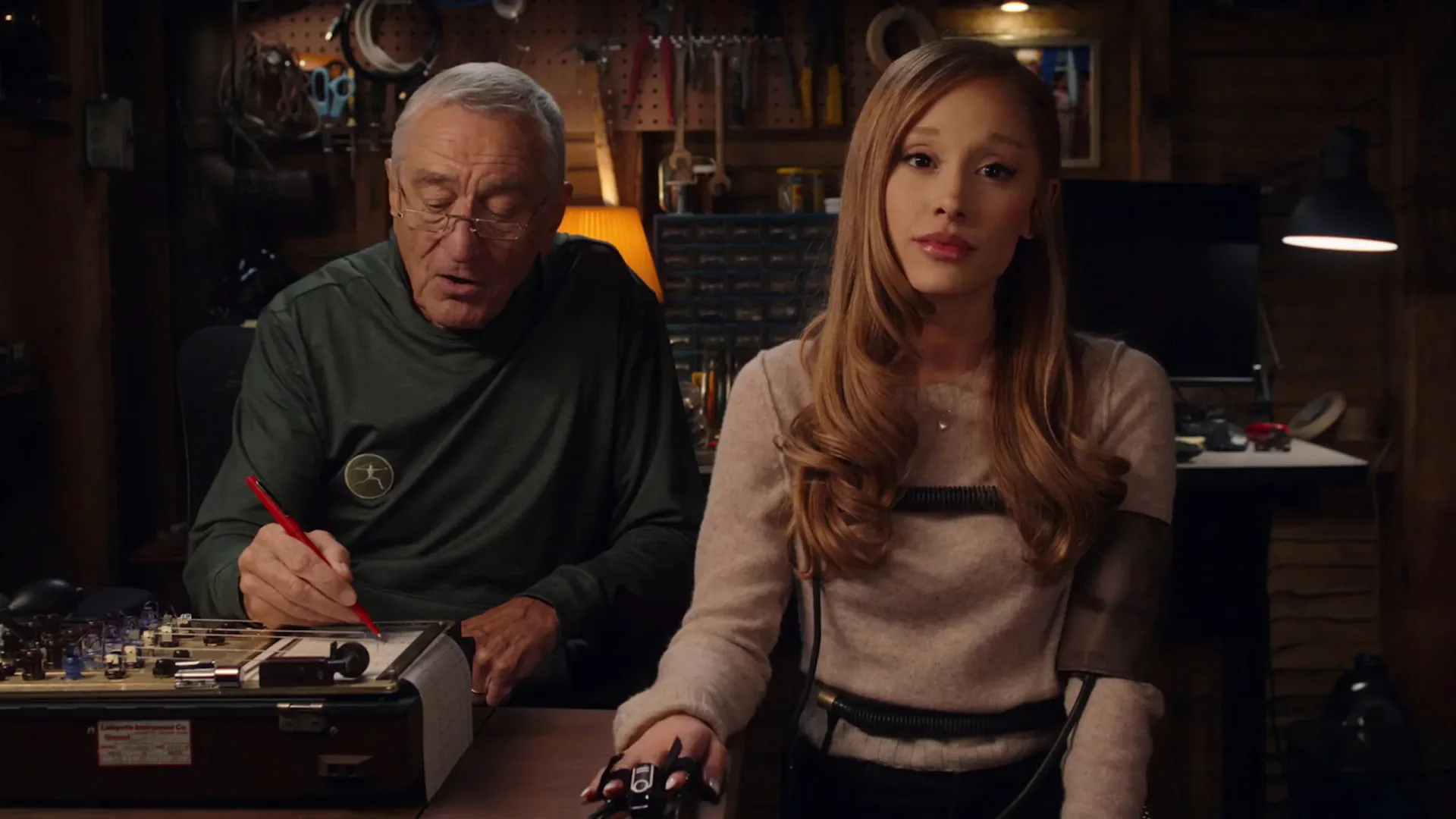
Robert De Niro’s Jack occupies a smaller role in this version of the family dynamic. That inevitably reduces the direct antagonistic spark associated with the earlier setup, but De Niro still provides dependable value. More importantly, the reduced prominence is part of what allows the sequel to avoid simply repeating its oldest joke. Jack’s shadow remains over Greg’s conduct, even when the film’s attention is elsewhere.
Ariana Grande supplies the film’s sharpest new comic contrast
The most persuasive reason for the new configuration is Ariana Grande’s Olivia. The character could easily have been written as a blandly perfect girlfriend, present only to be sabotaged or defended. Instead, Olivia comes across as the most emotionally mature person in a household of adults behaving like children. Grande’s performance gives that maturity texture rather than turning it into self-righteousness.
Her approach is notably restrained next to Stiller’s larger comic playing. Olivia attempts to connect with Greg rather than merely confronting him, handling his volatility with a patience that recalls someone negotiating with an overgrown toddler. That contrast becomes a source of comedy in itself: Greg makes a spectacle of his anxiety while Olivia registers the absurdity with a lighter touch. Their scenes give the film its most useful new relationship, because both performers are working at complementary scales.
There is also a pleasing reversal in watching the prospective in-law become the person trying to survive a Focker parent’s disapproval. Olivia is not simply a replacement for Greg’s earlier position, however. Where Greg’s insecurity turns outward and disruptive, Olivia’s steadiness creates space for the movie to observe his behavior without making every moment hostile. The dynamic is cute, but it also prevents the film from leaning entirely on recycled conflict.
John Hamburg, serving as writer-director, appears conscious of the risk of over-relying on familiar series business. The film uses the past as a point of reference, particularly in the Jack/Greg echo, without pressing every callback into service. That restraint matters. A legacy comedy cannot escape the expectations attached to its characters, but it can choose whether nostalgia is the joke or merely part of the setting. Focker-In-Law is better when it treats the old pattern as a foundation for Greg’s new predicament.
Comforting familiarity, with familiar limitations
The film’s strengths do not erase its limitations. This remains a broad family comedy with a pronounced sitcom quality: slapstick episodes are strung together, the emotional arc moves toward a tidy lesson, and some comic sequences outstay their welcome. Viewers looking for a sharper or more adventurous reinvention may find its rhythms too comfortable. The family conflict is deliberately legible, and the eventual moral destination is unlikely to surprise.
That old-fashioned construction cuts both ways. On one hand, it can make the movie feel predictable, particularly when a scenario is pushed past its most effective comic beat. On the other, there is a genuine comfort in a story that knows the kind of modest entertainment it wants to provide. The film does not require novelty to produce laughs; its pleasures come from recognizable performers, domestic embarrassment and the durable comic truth that relatives can make each other regress.
Its visual presentation occasionally reinforces the small-screen impression. Lighting can make the movie resemble television more than a feature designed to feel expansive. That is not necessarily fatal for a contained family farce, but it adds to the sense that the production is operating in an intentionally familiar, somewhat modest register. For audiences receptive to the sitcom-like texture, it may enhance the relaxed, nostalgic mood. For others, it may make the movie feel less polished or cinematic than its cast deserves.
A sequel that understands its modest assignment
Focker-In-Law works best as a performance-led continuation rather than a major overhaul. Stiller makes Greg’s backsliding sufficiently funny and sufficiently vulnerable to carry the story, while Grande gives the film a calm, appealing counterweight. Their pairing revitalizes a premise that could otherwise have felt like a routine return to old family business.
The comedy is not consistently lean, and the neatness of the emotional resolution is part of the package. But the movie’s willingness to let Greg inherit Jack’s worst instincts gives it a credible reason to exist. It recognizes that family roles change, even if the humiliations and jealousies surrounding them do not. That observation is simple, but in the hands of this cast, it is enough to make the reunion enjoyable.
Who should watch Focker-In-Law?
- Fans of the Focker family who want a sequel that shifts the perspective rather than wholly repeating the original setup.
- Viewers interested in Ariana Grande in a comedy role outside the musical format.
- Audiences in the mood for a broad, nostalgic family farce with slapstick, interpersonal awkwardness and a clear emotional landing.
Those hoping for a major stylistic reinvention, a more cinematic visual approach or comedy with less predictable sitcom structure may be less persuaded.