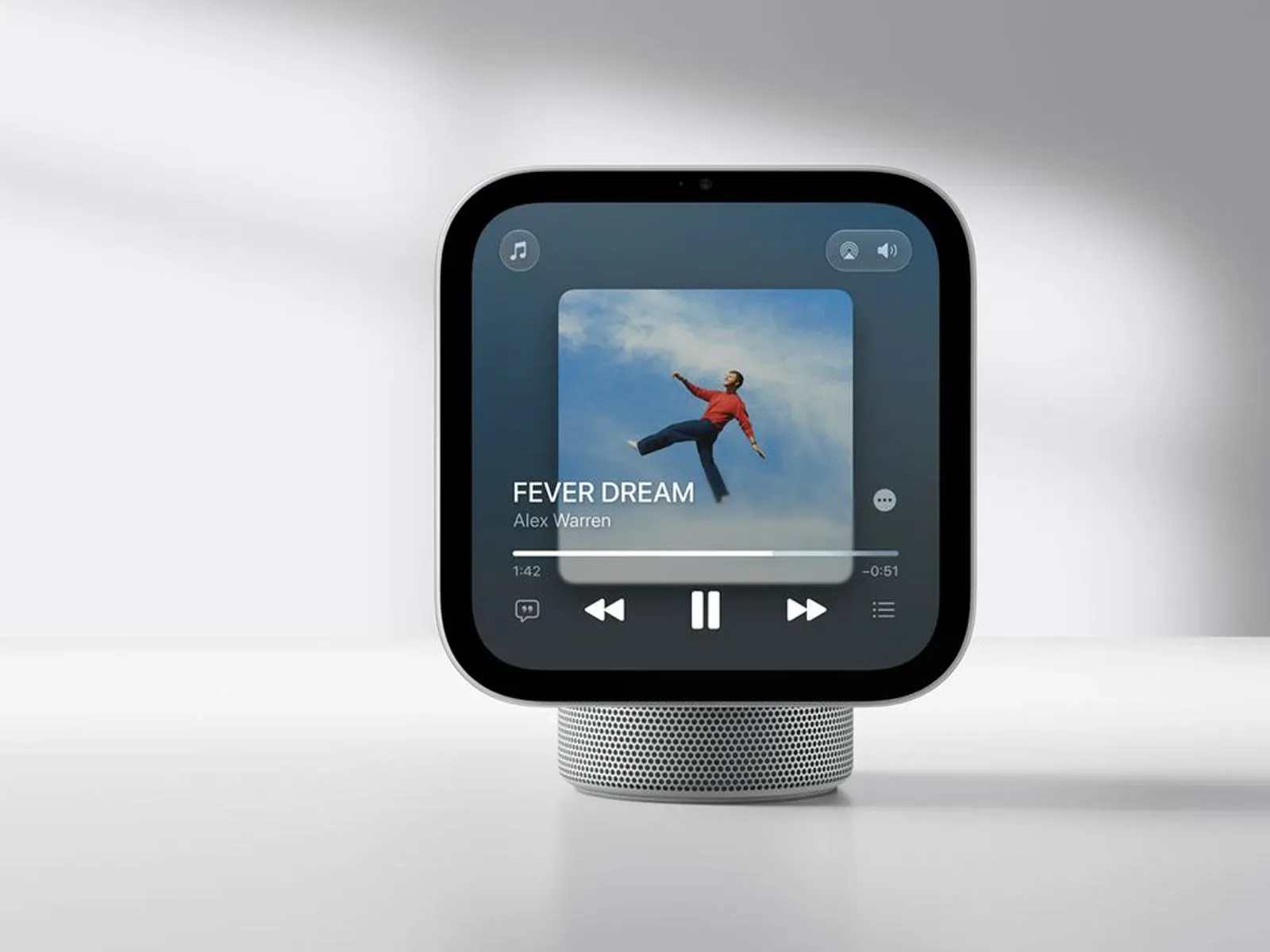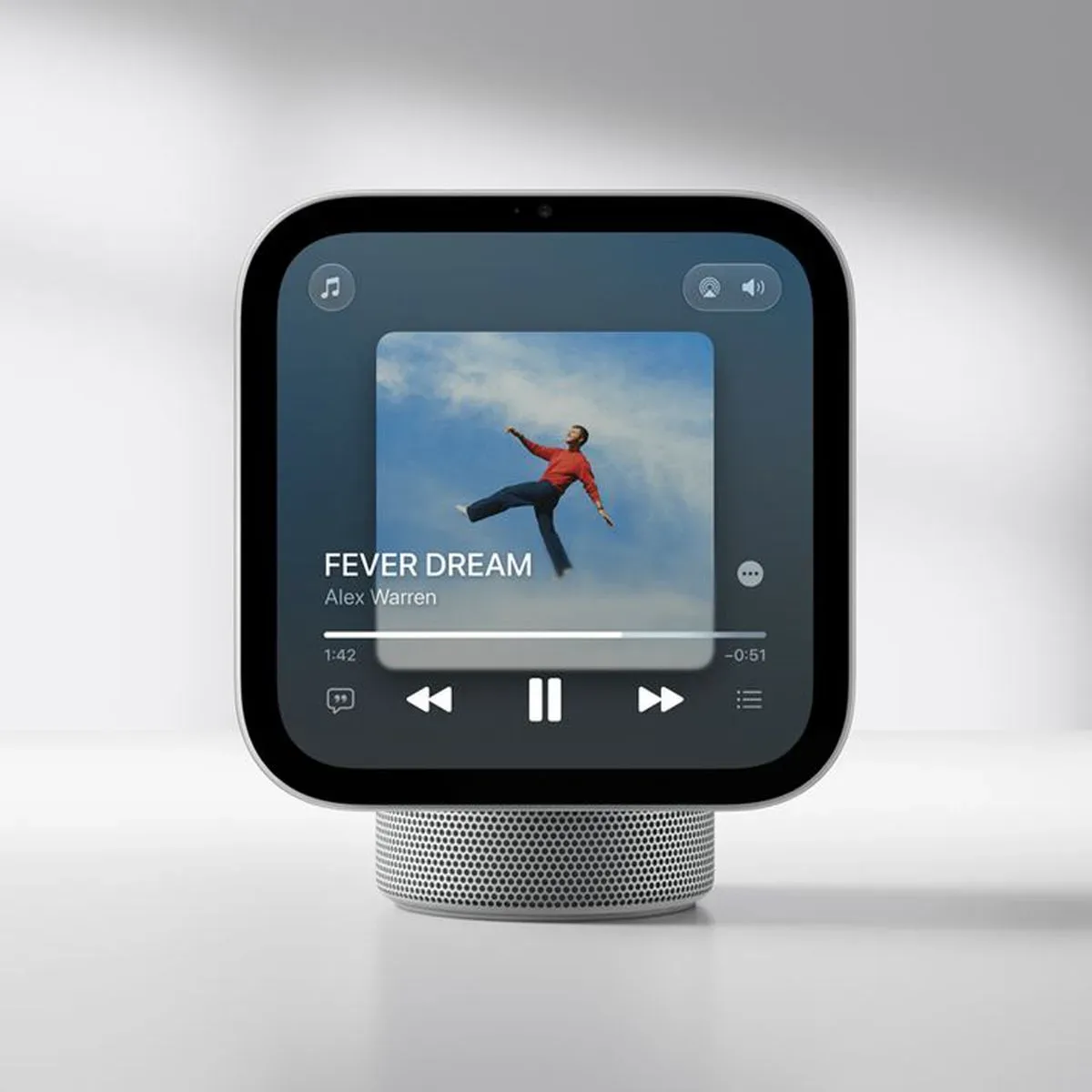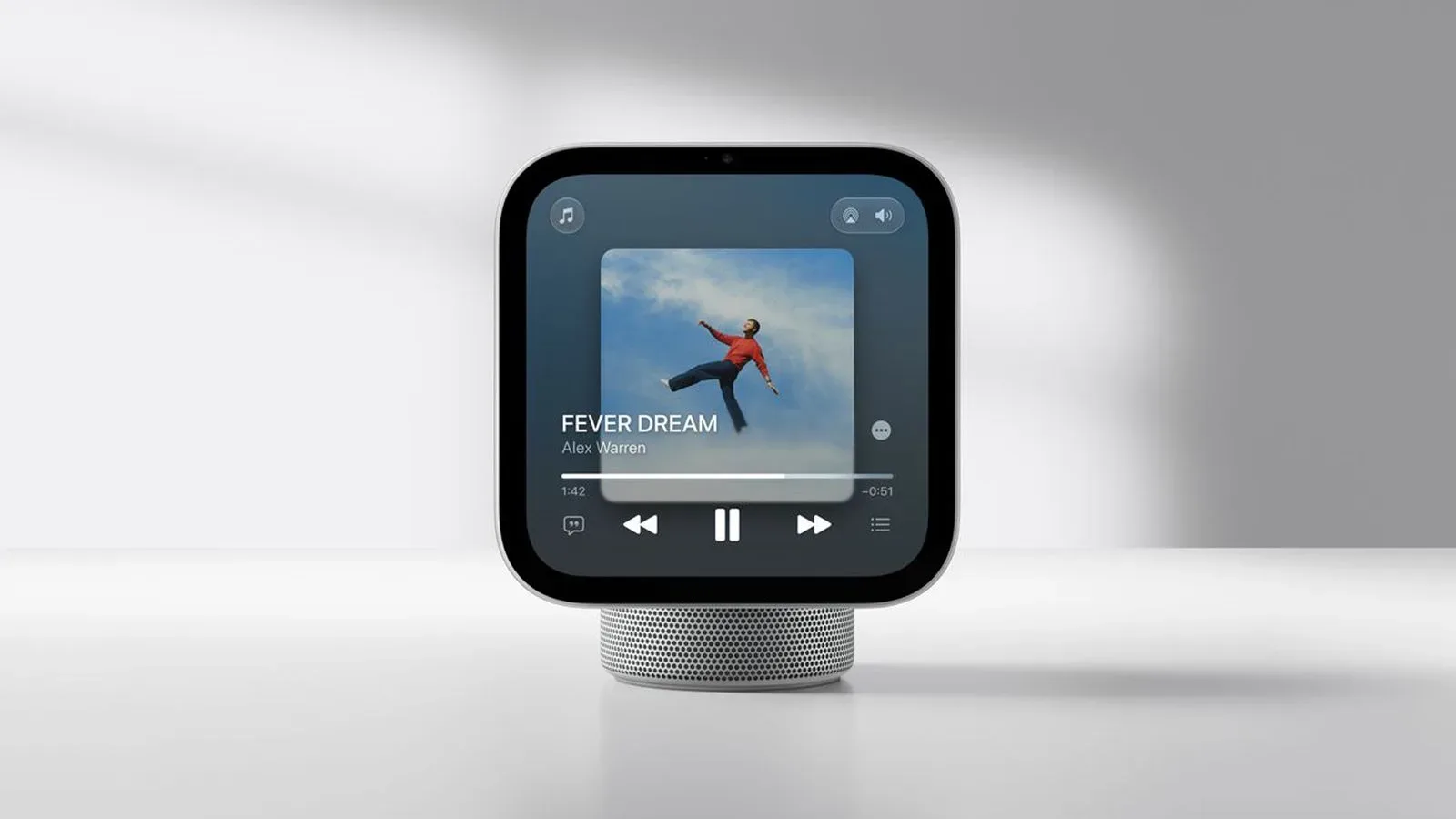
Apple has introduced HomeView, a new smart home hub intended to sit within its wider device ecosystem. But the most pointed early criticism is not about an absent feature list or a technical failure. It is about purpose.
In an impressions video, Marques Brownlee said he was “not convinced” by the device and could not identify a group for whom it is clearly ideal. His core argument is straightforward: HomeView overlaps heavily with products many Apple customers may already own, including an iPhone, iPad, Apple Watch, and HomePod. If the new hub does not create enough additional value beyond those screens and speakers, it becomes difficult to justify as a separate piece of hardware.
That is a deceptively tough challenge for any ecosystem product. A device can be competent, polished, and still struggle to answer the question that decides whether people make room for it: why this, when the things I already own can do most of it?
The overlap is the whole argument
A smart home hub is, in plain terms, a central device for interacting with connected-home functions. Depending on how a household is set up, people may expect such a device to offer a convenient point of access to controls, status information, automations, or other home-related tasks. The appeal is usually not that it performs a completely unprecedented task. It is that it makes a common task easier, more visible, faster to reach, or more communal.
Brownlee’s concern is that Apple already has several products positioned close to that role. An iPhone is generally nearby and personal. An Apple Watch is worn. An iPad provides a larger portable screen. A HomePod represents an existing home-focused Apple device. When those categories are already in a home, HomeView must do more than reproduce their basic smart-home relationship in another form.
This is what “extra value” means in the criticism. It does not necessarily demand that HomeView be radically different from every Apple product around it. It does mean that its dedicated form needs to produce a clear practical benefit. That benefit might be a use case that is uniquely better on a fixed household hub, or a degree of convenience that is obvious enough to outweigh adding one more device. The supplied information does not establish that HomeView reaches that threshold, and Brownlee’s assessment is that it does not.
A familiar Apple question, applied to the home
Apple products are often strongest when their roles feel immediately distinct. A phone is personal and mobile; a watch is worn and glanceable; a tablet offers a larger touch interface. A home hub has a more complicated assignment because it exists in a space already served by personal devices. It has to be useful to more than one person without becoming redundant for every individual who already carries an iPhone.
That does not mean a household-oriented interface is inherently unnecessary. A shared device can differ from a personal device precisely because it stays in a predictable place and is available to whoever is at home. But the distinction has to be legible. If users instinctively reach for their phone, speak to the HomePod, or use an existing Apple screen, the hub’s advantage may not be sufficiently strong.
Brownlee’s statement that HomeView should be “a skip for most people” is therefore best understood as a value proposition critique rather than a claim that nobody could possibly use it. “Most people” leaves room for individual homes whose needs differ. The problem, as he frames it, is that the device’s intended audience is not yet obvious.
What potential buyers should actually ask
With only the information currently available, prospective buyers should not assume HomeView is automatically essential simply because it is a new Apple device or because they use Apple gear elsewhere. A more useful approach is to compare it against habits already established in the home.
- Which current device handles smart-home tasks now? If the answer is consistently an iPhone, iPad, Apple Watch, or HomePod, consider whether that process has a meaningful friction point.
- Is there a shared household need? A hub’s case is stronger when several people need a common, easy-to-find place to interact with home functions rather than relying on one person’s personal device.
- Would a fixed device improve access? Convenience can be real, but it should be specific. “Another screen” is not automatically an improvement over a screen that is already nearby.
- What is the device’s unique job? Before treating HomeView as an addition to an Apple setup, identify the job no current device is satisfactorily doing.
These are not claims about features that HomeView does or does not possess. They are decision-making questions prompted by the overlap Brownlee identified. They also apply to many connected-home purchases: novelty alone is a poor substitute for a clear role in a daily routine.
Convenience has to beat device fatigue
The smart-home category is especially vulnerable to device fatigue: the feeling that a household has accumulated several objects with adjacent functions, each asking for space and attention. A dedicated hub can reduce that fatigue if it consolidates a task that previously required too many steps. It can increase it if it simply becomes another option alongside a phone, tablet, watch, and speaker.
That is why the phrase “enough extra value” matters more than it may initially appear. The standard is not merely whether HomeView can be useful in isolation. The standard is whether it is useful in a home that already contains Apple devices. Apple’s existing ecosystem is both the product’s natural foundation and the source of the skepticism. The more capable and accessible the surrounding devices are, the more sharply a new hub’s unique reason for existing must come into focus.
For people who prefer a minimal setup, duplication may be a decisive drawback. For people who want a dedicated shared control point, duplication may be acceptable if it removes daily inconvenience. Brownlee’s reaction argues that Apple has not yet made the latter case compelling enough for the broad audience.
An early take, not a universal verdict
HomeView’s reception will ultimately depend on whether consumers see it as a replacement for a recurring annoyance or simply a new branch on an already crowded Apple tree. Brownlee’s impressions make a useful distinction: overlap is not automatically bad, but overlap without a plainly felt benefit is a hard sell.
That question may also be relevant to Apple’s broader hardware direction. The company’s ecosystem is built around connected products, and a recent discussion of Apple’s hardware-led era highlights why every additional device needs a role that complements, rather than merely echoes, what came before.
For now, the available case against HomeView is clear and limited: it appears to sit close to the iPhone, iPad, Apple Watch, and HomePod in purpose, while Brownlee is unconvinced that it contributes enough beyond them. Until the value of a dedicated smart home hub feels more concrete for a particular household, his advice is cautious: most people may want to skip it.