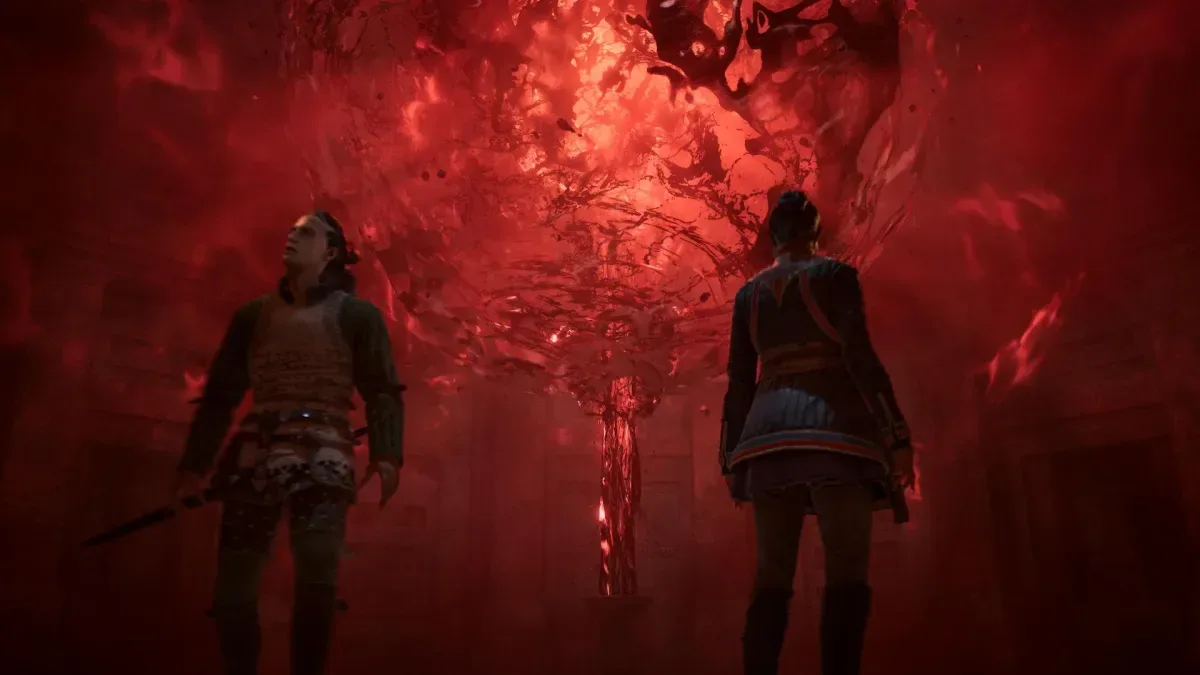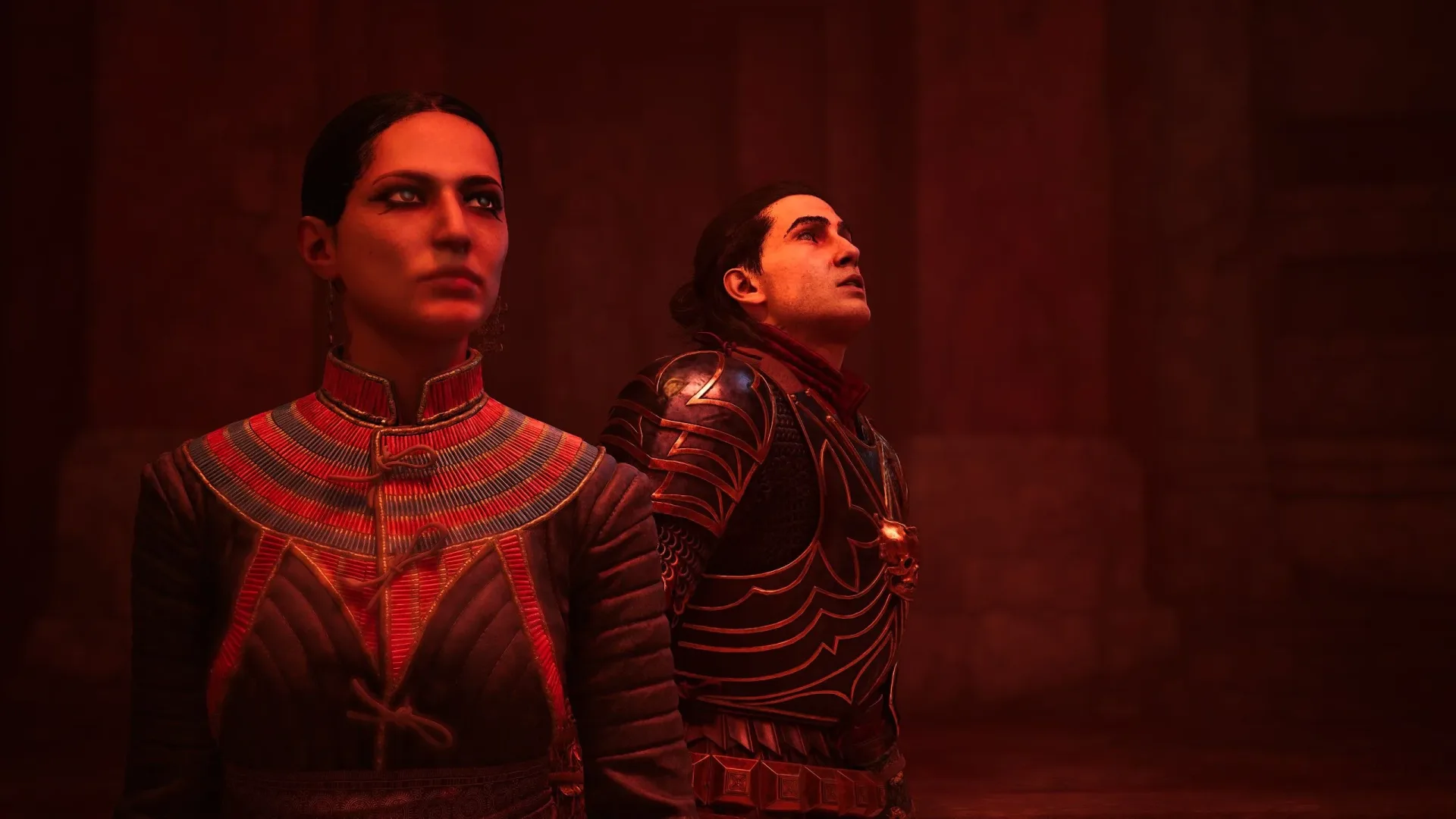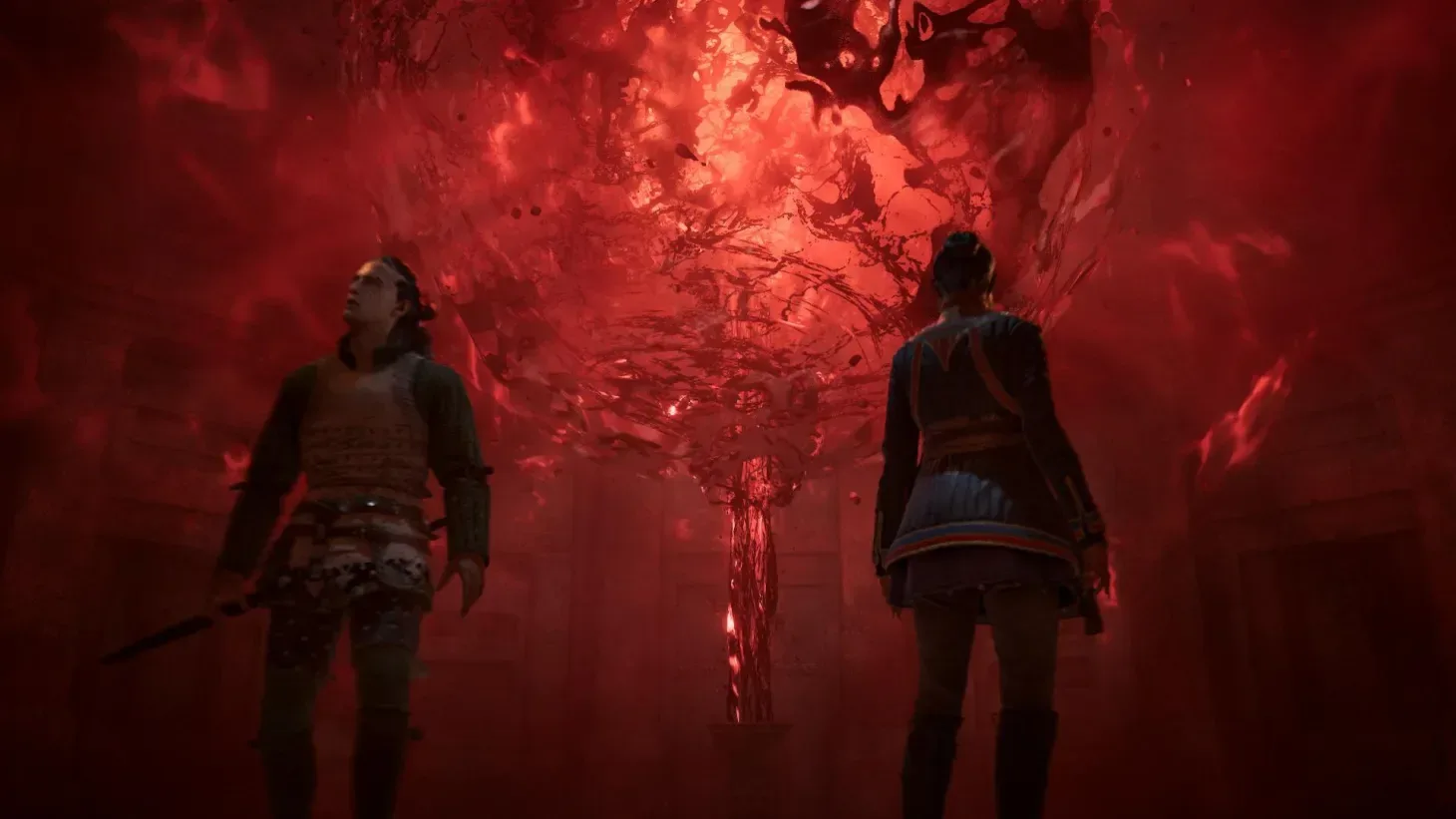
Open-world role-playing games often sell freedom as abundance: another region, another icon, another diversion that can be postponed indefinitely. The Blood of Dawnwalker takes a more uncomfortable route. Its hero, Coen of Laslea, has 30 in-game days to save his family from a vampire court. The calendar does not roll constantly while Coen wanders; instead, meaningful actions consume portions of the available time. That distinction turns what might have been a familiar grim fantasy journey into an argument for limits.
Rebel Wolves’ RPG opens with a striking prologue before setting Coen loose in its world, where the central vampire can be challenged immediately. That is technically an option, not a practical invitation. The opening confrontation is expected to be punishing, and the remaining days exist to let players build Coen’s abilities, gain support, and weaken the odds against the court. Three other court members can also be pursued to improve Coen’s position before the decisive fight.
The idea is appealing because it challenges a long-standing RPG habit: treating every side quest as a harmless item on an infinite checklist. Here, helping somebody, hunting for an object, or investing in personal power can mean declining something else. The game’s most memorable stakes may come not from a dramatic scripted fork but from the ordinary knowledge that a task can become impossible simply because the player chose another use for the day.
A calendar that makes optional quests matter
Coen is a Dawnwalker, human during daylight and vampire after sunset. Each cycle has day and night slots, and jobs spend those slots in varying amounts. Unearthing buried treasure might consume one. More involved work, such as searching for missing scouts or spending time with Coen’s siblings, can require three. Rather than a clock that relentlessly advances in the background, the system asks players to make the clock advance themselves.
That changes the emotional texture of an errand. One early optional tale involves a grave robber who takes a silver necklace from a young man’s tomb so it can be made into anti-vampire arrows. Returning the necklace to the dead man’s mourning mother is possible, but time can expire before that final act is completed. Leaving the item in Coen’s inventory transforms a seemingly routine retrieval into a small, persistent record of a choice that never quite became a resolution.
It is a powerful example of why curated RPG scope can be more expressive than sheer quantity. Not every unfinished quest needs to be a failure state. Some are simply part of the shape of an individual playthrough. The game’s 30-day structure asks players to own their priorities rather than perform completionism by reflex. That is a very different kind of tension from racing a real-time timer, and it helps explain why the premise stands out in a genre frequently built around endless availability.
For anyone who misses the social give-and-take created when a group has only one evening and one screen, the idea has a distant kinship with the unwritten rules of couch multiplayer. Resources are limited, decisions have consequences, and the most interesting stories emerge when nobody can have everything.
The pressure does not hold evenly
The same system that makes early choices compelling appears to lose some force as the story approaches its end. Skill unlocks and upgrades cost not only the required points but also time slots. That creates a credible conflict: should Coen become stronger, or should those hours go toward helping potential allies? Yet a warning about a point of no return can arrive with 13 days still remaining. Soon afterward, several paths toward the finale may become available.
Instead of steadily tightening the screw, that sequence can make the remaining days feel less consequential. Once the game clearly signals that the final push is available—and then offers multiple ways into it—the earlier caution may give way to an urge to finish. The issue is not that a story should conceal its endgame. A point-of-no-return warning is often welcome. But a design founded on rationing time needs its final stretch to make unused time feel as meaningful as time already spent.
Even so, the limit still shapes the adventure. The final confrontation reportedly reflects the decisions and routes taken along the way, asking Coen to reckon with their results. The calendar may stop feeling oppressive, but it has already authored the version of the story that reaches that confrontation. There is value in that distinction. A mechanic does not need to maintain maximum anxiety every minute to leave a mark on the player’s route through a world.
Two selves, and a hunger that rarely bites
Coen’s divided nature is the game’s second major hook. Day and night do more than alter the scenery. Magic is available in daylight, while darkness replaces that toolkit with vampiric powers. Certain activities and missions belong to one half of the cycle, and armor can be organized into two builds because gear frequently favors either Coen’s human or vampire identity.
On paper, this is fertile ground for role-playing. A player is not only choosing which destination deserves precious time; they are choosing which version of Coen is best suited to approach it. The equipment split reinforces that notion in a tangible way, letting the daytime and nighttime personas develop with different strengths. It is a smart framework for a character trapped between worlds.
But the darker half’s most alarming consequence seems easier to avoid than its premise suggests. At night, Coen must feed on animals or humans to manage blood hunger. Failing to do so can supposedly cause hunger to take over during conversations, potentially leading to the death of important characters. That is the kind of threat that should make every interaction after sundown unnerving.
In practice, the pressure appears muted. Blood is connected to health, while healing supplies can remain plentiful. Feeding is possible in combat, and targets outside combat are not scarce. As a result, the possibility of an uncontrollable killing can remain hypothetical rather than becoming a recurring source of dread. The system has all the ingredients for vampire horror—need, temptation, collateral damage, and compromised agency—but it does not consistently force Coen into difficult bargains.
That gap between an enticing feature description and its lived consequences is familiar to anyone who has accumulated something for the promise of what it could become rather than the reality of how it is used. The collector’s five stages of buying one small thing understands that particular spiral, albeit with fewer fangs and considerably less blood.
A recognizable lineage and a bleakly persuasive world
Rebel Wolves was formed by veterans of CD Projekt Red, and The Blood of Dawnwalker carries an obvious resemblance to The Witcher 3: Wild Hunt. The echoes extend across its dialogue structure, quest mood, question-mark-filled map exploration, and attempts at combat that sounds more novel in theory than it proves in repetition. Coen’s story can therefore feel very familiar to players who spent time with Geralt of Rivia’s earlier epic.
Combat is the clearest rough edge. Defensive play calls for following directional prompts to block and retaliate effectively. Initially, that suggests a more attentive swordplay loop than simple button mashing. Outside of major boss encounters, however, enemies can repeat their move sets often enough that fights become a rote exercise in recognizing prompts and answering them correctly. The comparison to a grim game of Simon Says is difficult to escape.
The setting does more to sustain interest. The vampire court’s brutality is not restricted to body counts or distant political control. Its influence corrodes the lives and institutions around it. Vampires recast themselves as religious figures within churches, and baptisms are performed with blood in place of holy water. These details give the world a suitably diseased atmosphere: the court is not only preying upon people, but remaking the symbols intended to offer them safety and meaning.
That social rot supports Coen’s personal urgency. A rescue story can be narrow by design, but the townsfolk reveal the broader cost of allowing the court to remain. It also gives the alliance-building side of the 30-day structure more weight. Helping people is not merely an efficient route to a stronger final encounter; it is participation in a community that has been bent under vampire rule.
An uneven experiment worth noticing
The Blood of Dawnwalker does not appear to fully solve the problems it raises. Its final stretch softens the calendar’s pressure. Its hunger mechanic may not make deprivation frightening enough. Its directional combat can settle into predictability. And its strongest structural and tonal influences are conspicuous. Yet its central experiment is valuable precisely because it refuses the usual assumption that an RPG must provide limitless time to validate player freedom.
Coen’s journey suggests that freedom can come from committing to a path and accepting the roads not taken. A missed act of kindness, an upgrade purchased at the expense of an alliance, or a court member left standing can make the ending feel personal in ways exhaustive quest logs rarely do. The game may be uneven, but it recognizes something many huge RPGs forget: the adventures that linger are not always the ones where players saw every icon. Sometimes they are the ones where there was no time to do so.