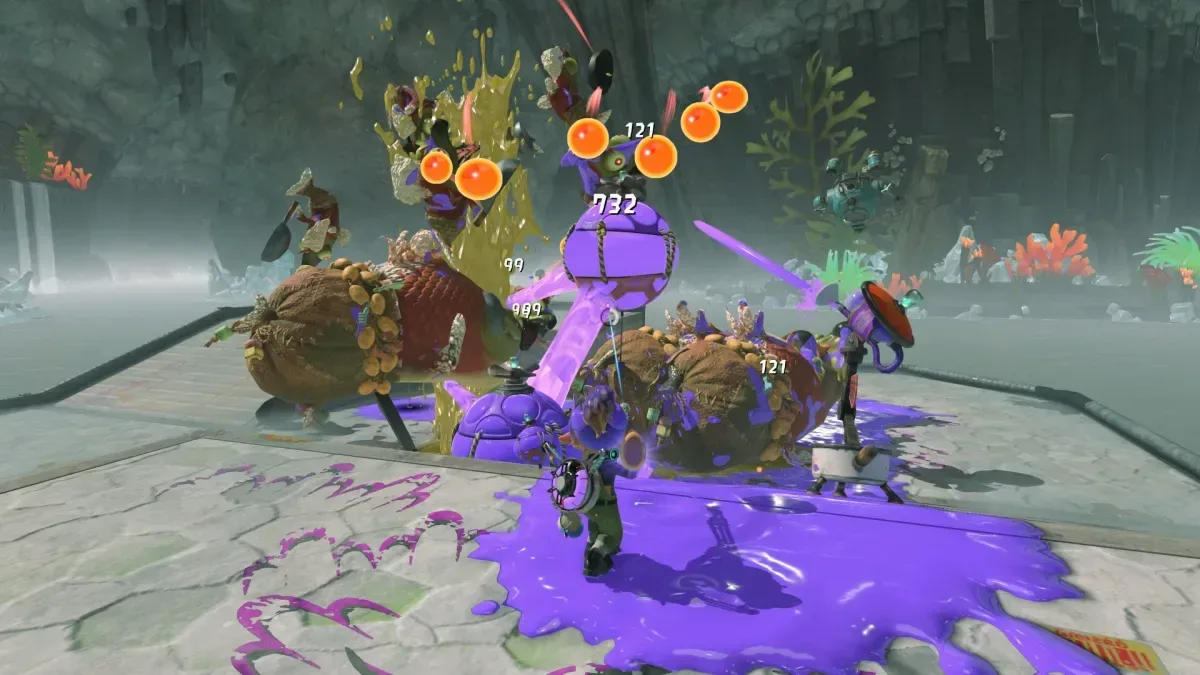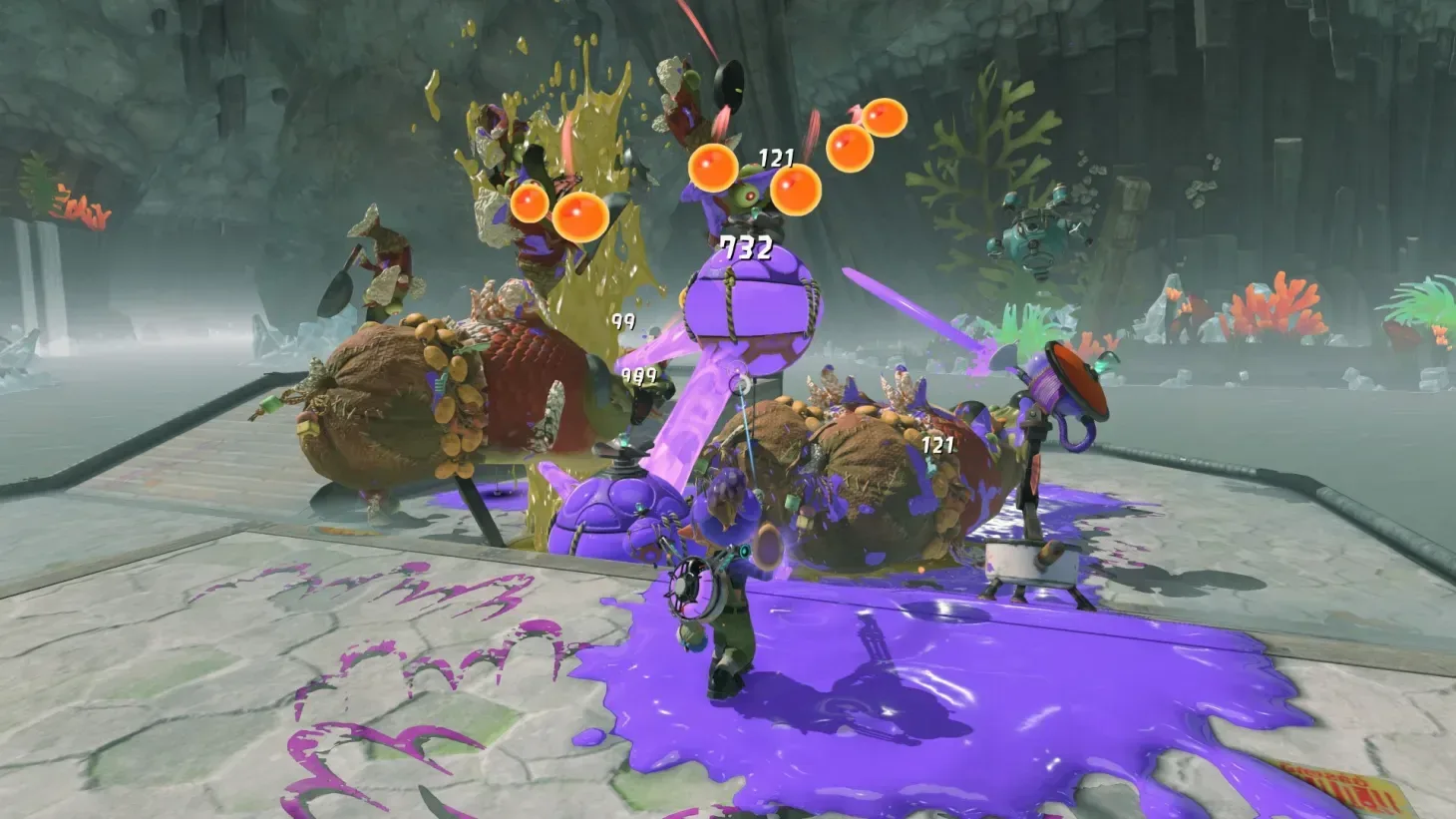
Splatoon Raiders takes one of the series’ most immediately recognizable pleasures—moving through your own ink to reload, reposition, and escape danger—and puts it at the center of a dedicated player-versus-environment loop. Competitive multiplayer is not part of this package. In its place is a structure built around short raids, increasingly customized builds, resource collection, and waves of Salmonids that insist on making every carefully arranged plan look optimistic at best.
It is a notable shift for a franchise often associated with hectic turf contests, but it is not a total reinvention. Splatoon has included inventive solo material since its 2015 debut, from obstacle challenges and target shooting to puzzles and elaborate bosses. Raiders narrows that broader tradition toward combat and loot-driven progression. The result is a more concentrated adventure: less interested in a grab bag of platforming concepts, and far more interested in whether a player can build an effective kit, survive a messy encounter, collect useful parts, then immediately decide that one more mission is surely a responsible life choice.
An ink-powered combat loop still does the heavy lifting
The fundamentals appear to remain the game’s strongest asset. Swimming across inked ground while reloading is still described as smooth and responsive, preserving the momentum that makes Splatoon combat feel different from a conventional shooter. It is not simply about aiming at enemies. Successful movement means painting usable paths, dipping into ink to recover, popping back out to fire, and reacting when the battlefield becomes crowded or unsafe.
Raiders supports that rhythm with a wide collection of weapons and abilities. The breadth gives players room to approach bite-sized encounters in different ways, rather than requiring a single prescribed solution. Weapon balance does not always seem as tidy or immediately intuitive as in the competitive entries, where every tool has a more sharply defined place in a match. But the variety creates a different sort of appeal: finding combinations that suit a preferred approach and adjusting them to meet a particular mission’s demands.
That makes the game sound less like a detached Splatoon spin-off and more like a familiar paint-splattered movement system refitted for builds, drops, and repeatable action. The crucial point is that gathering rewards does not interrupt the series’ signature shoot-reload-swim cadence. Loot games can easily turn into menu management with occasional enemies attached; Raiders seems to keep the active part of play in charge.
Tanks make loadouts more than a weapon choice
Upgradeable tanks function as the game’s class framework, giving its customization a foundation beyond the main weapon. Three options shape the broad style of a build:
- Speed tank: prioritizes mobility and ranged offense.
- Power tank: leans into aggressive abilities.
- Tactical tank: provides more battlefield-control options, including turrets, ink vortexes, and trip-mines.
Each tank’s gadgets can be upgraded and customized. Add a large weapon arsenal, numerous modifications, and three selectable Ultimate abilities, and Raiders offers a considerable number of variables to experiment with. That is the engine behind its reported long-term pull. Completing the campaign is not presented as a hard stop, because a newly acquired gadget part or a revised upgrade can send players back into raids to see how the latest setup behaves under pressure.
The Tactical tank is particularly revealing of what Raiders wants to add to the Splatoon formula. Turrets, traps, and vortexes invite players to shape a fight before it becomes overwhelming. That is a different kind of expression than simply being good with a shooter’s movement and aim. It encourages planning, area denial, and a little tactical mischief—important qualities when a map begins filling with hostile fish creatures and composure becomes another limited resource.
For players who enjoy the social chaos of team games, the underlying appeal may be recognizable even when the focus has changed. The game’s co-op structure sounds like a more mission-oriented counterpart to the negotiations, rescues, and occasional accidental sabotage familiar from the unwritten rules of couch multiplayer. Someone will bring the damage; someone will bring the gadgets; everyone will likely learn that standing in the wrong ink is a poor retirement plan.
Short raids, steady rewards, and mounting Salmonid trouble
Missions can be tackled alone or cooperatively, and their layouts vary. Some involve multiple timed battle stages. Others are straightforward routes loaded with enemies, while open spaces offer more freedom to traverse and approach objectives. Most raids take only minutes, helping the game cultivate a repeatable, quick-session format. That compactness pairs naturally with its upgrade system: finish a run, collect materials, change a component, and head straight back out.
The reward stream is constant. Players gather Power Eggs to charge an Ultimate meter, enemy parts for crafting, Spirhalite Shards as currency, plus weapons and gadget components for customizing a loadout. These layers can sound busy on paper, but their integration with combat is key. Progress arrives during the same tense firefights that demand movement and targeting, rather than being separated into a more laborious extraction process.
Enemy variety helps give raids their own personality even when their mission templates start to repeat. Smallfry and Chum fill out the lower ranks, while more than 10 distinct Salmonid types bring their own threats and weaknesses. Stronger variants further complicate encounters. In a game built around familiar objective structures, that changing enemy mix is an important pressure valve: a repeated mission category can still feel different if the creatures flooding the arena force a fresh response.
This is also where the more focused combat direction appears to pay off. Raiders reportedly produces the kind of escalating rush that makes a player lean closer to the screen when enemy numbers surge. Set-piece boss battles add further highlights, and are said to be more inventive than the boss encounters in Splatoon 3. That is welcome evidence that concentrating on action has not meant abandoning the series’ talent for memorable confrontations.
A treasure hunt with some repetition around the edges
The narrative is a lightweight treasure-hunting setup, useful mainly as a reason to move from raid to raid. That suits a game whose real story is told through gear progression and scrambling through inked arenas, though it does not give the adventure much dramatic weight. Its weaknesses are more apparent over the course of the campaign, where mission types begin to feel repetitive and the soundtrack is characterized as underwhelming.
There is also a trade-off for longtime fans of Splatoon’s stranger single-player detours. Raiders largely leaves behind the series’ richer puzzle and platforming excursions. Those ideas have not disappeared entirely, but are mostly confined to side-mission tutorials focused on specific gadgets. Players seeking a succession of clever movement puzzles and offbeat obstacle courses may miss the broader variety of earlier PvE content.
Still, that limitation is also an honest statement of intent. Raiders is not trying to be every flavor of Splatoon solo play at once. It wants to be the entry where action builds toward better gear, better builds lead to faster or safer clears, and improved clears feed the urge to make another adjustment. Anyone with a shelf, backlog, or digital library already groaning under the weight of “games I will definitely return to” may recognize the same collecting impulse discussed in the collector’s five stages of buying one small thing. Except here, the small thing is a gadget part, and the rationalization is that it might make a turret dramatically more hilarious.
Co-op is optional, not an afterthought
The raid levels are designed to work in single-player, rather than feeling like co-op arenas where a solo player has been left to do a group project alone. However, players can invite others to help. Multiplayer was evaluated on pre-release servers and was described as smooth when grouping up for missions.
There is also a beacon option for calling in a random player for a single mission. Completing that assist earns special loot, creating a practical incentive to accept help without requiring a permanent squad. It is a sensible fit for short raids: players can seek support when a mission or build is giving them trouble, finish the task, claim the extra reward, and return to solo tinkering if that is their preference.
The campaign is backed by a rewarding post-game component, extending the value of the customization systems beyond the credits. Combined with rapid mission completion, the ongoing flood of materials, and meaningful tank-and-gadget experimentation, Raiders is positioned as a PvE-focused Splatoon entry with unusually durable momentum. Its treasure story may drift away quickly, its music may not leave much residue, and its objectives may show their seams over time. But the core promise is unusually sturdy: ink, swim, improvise, upgrade, and discover that the next Salmonid wave has arrived before the last loadout decision has even stopped feeling clever.