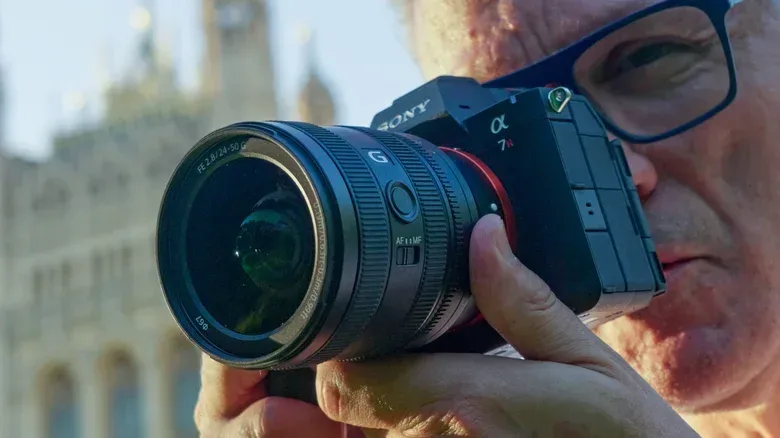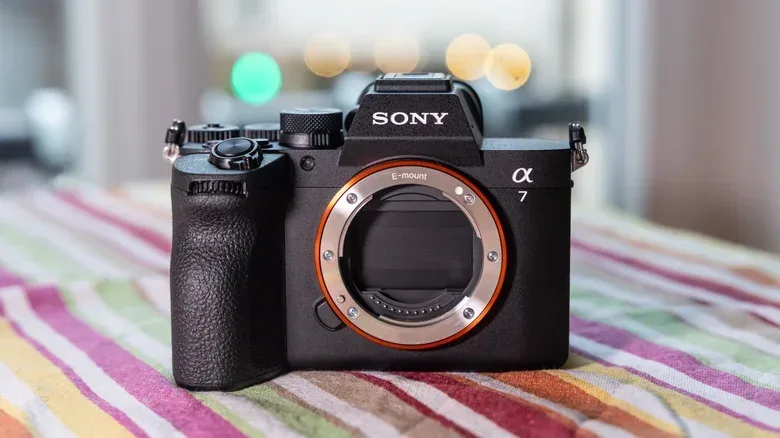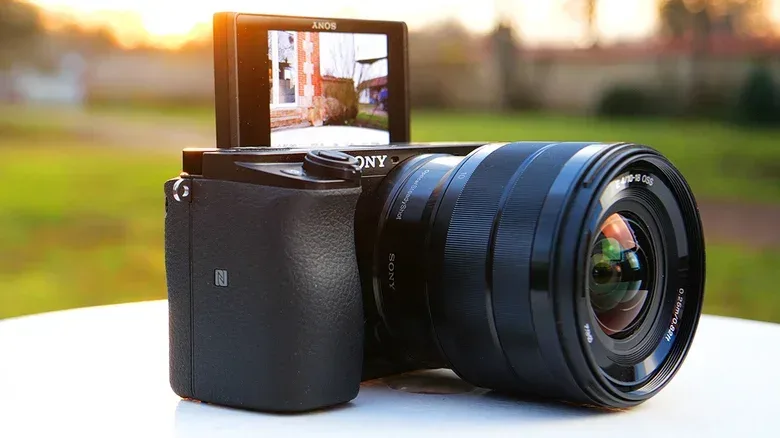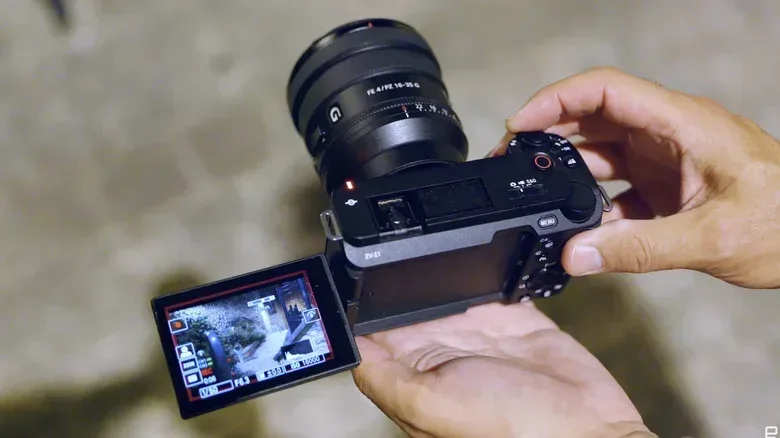
Sony camera model names can read like somebody dropped a controller onto a keyboard: α, A1, A7R VI, A6700, ZV-E10 II, RX1R III. The useful news is that the labels are not random. They are a compact, if imperfect, map of a camera’s physical format, intended job and place in a particular range.
The less useful news is that the map has multiple legends. A bigger number can mean a newer generation in one family, a more advanced tier in another, and something quite different once the letters change. The quickest way to make sense of a Sony camera is therefore not to compare every number directly. Start with the prefix, then establish whether the camera has a fixed or interchangeable lens, then read the suffixes and version numerals.
That approach matters more than chasing the most intimidating name. A compact fixed-lens model can be the right tool for someone who wants portability; an APS-C interchangeable-lens camera can offer a more approachable route into manual controls; and a full-frame model can prioritize low-light work, background blur, speed or resolution depending on its branch. It is a naming scheme with classes, subclasses and stat builds—not a single ascending scoreboard.
First checkpoint: α, or Alpha, identifies Sony’s mirrorless family
Sony uses the Greek letter α, alpha, as the prefix for its mirrorless cameras. It is frequently typed and spoken as “A,” which is why listings may say Alpha A7 V even though the mark itself is alpha rather than the ordinary Latin letter A.
Mirrorless here means a camera with interchangeable lenses that does not use the mirror mechanism associated with a traditional DSLR. The important shopping implication is simple: Alpha cameras let the owner change lenses. That flexibility is central to their appeal, but it also means a camera body is only part of the system.
Within Alpha, the major fork is sensor size:
- Full-frame models use sensors the same size as 35mm film. The larger format can make it easier to blur a background behind a subject and to produce cleaner images in low light. These models are generally more expensive.
- APS-C, also called cropped-frame, models use a smaller sensor. They retain the interchangeable-lens format, manual controls and strong video potential of mirrorless cameras while generally being cheaper and easier for beginners to approach.
Neither category is automatically “better” in every situation. The full-frame versus APS-C distinction tells a buyer more about the camera’s size, cost and image-making trade-offs than a large model number alone.
The full-frame Alpha roster: A1, A9 and A7 are different jobs
At the top sits the A1 line, Sony’s high-priced professional all-rounder. The A1 II is the cited current version, with the Roman numeral functioning as a generation number. Its 50-megapixel stacked sensor can capture at up to 30 frames per second, it offers advanced autofocus and video reaching 8K at 30 fps, and it carries Sony’s best electronic viewfinder in this lineup.
A stacked sensor is designed for rapid readout. In practical terms, fast readout supports rapid bursts and can help a camera keep up with demanding subjects. It is a technology term worth separating from megapixels: resolution concerns how much detail an image contains, while readout speed concerns how promptly the camera gathers image data.
The A9 range is also professional, but its identity is speed, particularly for sports shooters and journalists. The A9 III is described with a roughly 24-megapixel resolution and a remarkable 120 fps RAW shooting mode. RAW files preserve more image data for later editing than a processed image format, so 120 fps RAW is a very specific high-speed credential rather than a general promise that every photographer needs that pace.
The A9 III’s standout term is its global shutter. Most sensors use a rolling shutter, reading an image line by line. When a subject or camera moves rapidly during that process, straight lines or fast objects can appear distorted. A global shutter reads the whole image at once, avoiding that motion-related distortion. That is why the distinction is especially relevant to fast action, rather than simply being another larger-number bragging right.
The A7 family is Sony’s mainstream full-frame branch, and it is where suffixes do much of the real explanatory work.
- A7 without a letter is the balanced mainstream option: a camera intended for both stills and video at comparatively moderate prices within full frame. The A7 V, introduced in early 2026, has a 33MP partially stacked sensor, 30 fps burst shooting and 4K 60 fps full-frame video.
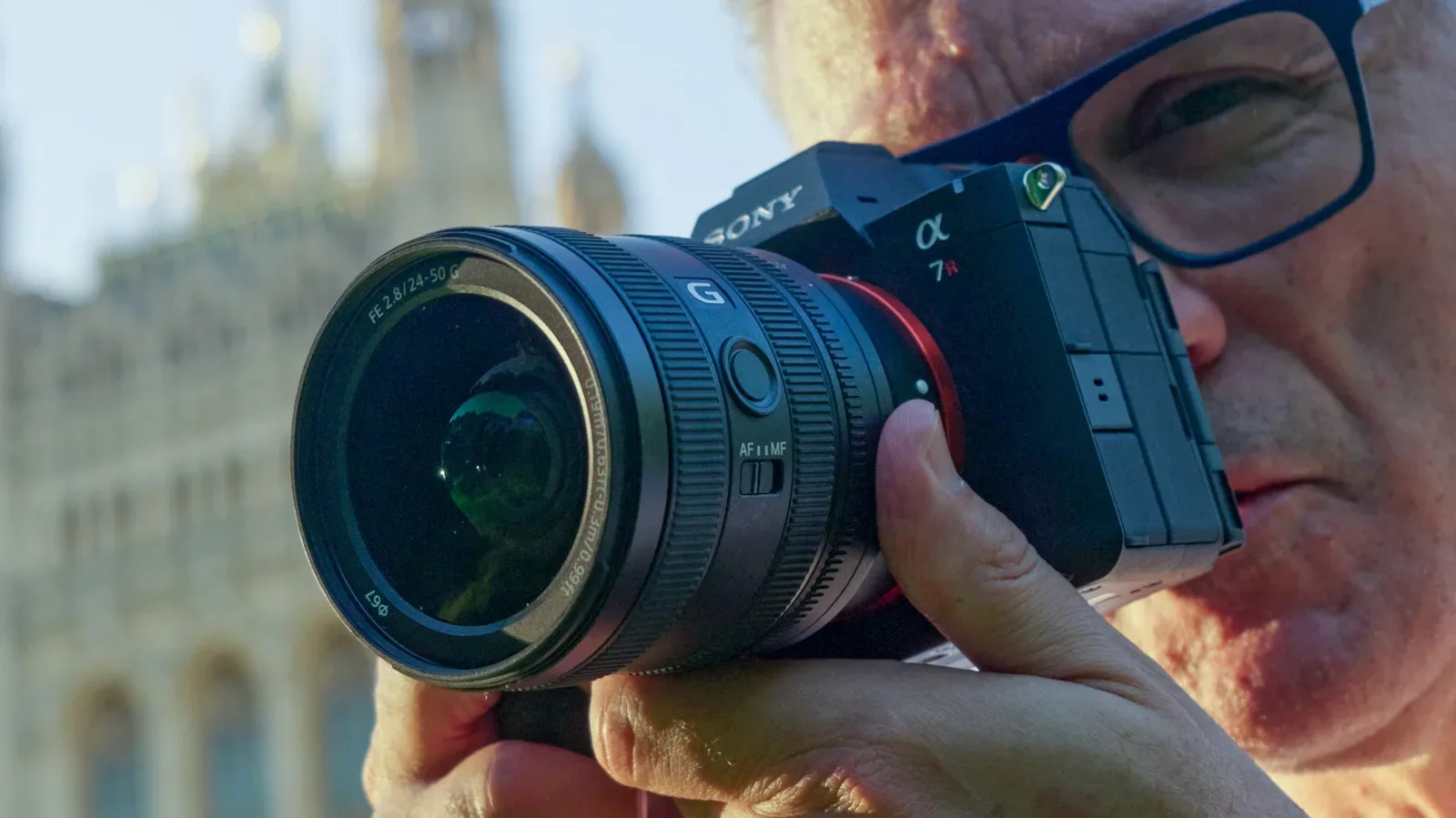
- A7R means resolution. The current A7R VI uses a 67MP stacked sensor and is positioned for detailed subjects such as portraits and landscapes. It can record up to 8K at 30 fps, but its high-resolution stills role is the key idea.
- A7S is the video- and low-light-focused branch. Its low-resolution sensors use larger pixels to limit noise in darker scenes. The supplied lineup description identifies the latest cited camera as “A7 III,” released in 2020, with a 12MP sensor and 4K 120 fps capture; the naming is potentially confusing because this description appears under A7S. Either way, the broader point is that Sony’s dedicated FX video cameras now occupy part of the space once associated with this low-light video route.
- A7C means compact. A7C and A7CR cameras package the functionality of the regular A7 and A7R lines in smaller, more style-led bodies. Their viewfinder moves to the left side, and manual controls are reduced to save space. The A7C II from 2023 corresponds in specification to the 33MP A7 IV, while A7CR corresponds to A7R V.
Roman numerals are not a cross-family power scale. They indicate the version in that particular product line. An A7C II is a second-generation compact model, not a statement that it outranks an A7 V. Letters tell the mission; the numeral tells the iteration.
A6x00: the relatively straightforward APS-C ladder
Sony’s APS-C mirrorless naming has historically been untidy, with NEX, A3000 and A5000 models in the mix. More recently, the company has used the A6x00 designation for cameras such as the A6100, A6400 and A6700.
Here, the intuitive rule mostly works: the higher number represents a more capable and more expensive current model. The cited prices are $900 for A6100, $1,100 for A6400 and $1,498 for A6700. But the meaningful differences are features, not merely the final digits.
The A6100 and A6400 have 25MP sensors, no in-body stabilization and 8-bit video. The A6700 has a 27MP sensor, five-axis in-body stabilization and 10-bit recording, plus a faster card slot, headphone output and USB-C input.
In-body stabilization moves the sensor to counter small camera movements. It can be valuable when shooting handheld. 10-bit video records more tonal information than 8-bit video, offering greater flexibility when handling color in editing. Those are practical differentiators for creators; they are more informative than a vague assumption that A6700 is simply “a bit better.” The current A6700 is also more than three years old in the supplied information, so a model’s numeric rank says nothing about how recently Sony refreshed that branch.
This is a useful reminder for any tech spec sheet. As with DDR5 RAM’s performance labels, the biggest figure is only meaningful once the underlying specification and use case are clear.
ZV means creator-focused cameras, but the E changes everything
The ZV line began in 2020 as Sony’s explicit vlogging range. It spans compact and mirrorless models, united less by sensor format than by video-oriented design. Common features include flip-out screens, high-quality built-in microphones, 4K 60p recording, film-style social-media settings and Product Showcase, a mode designed to quickly shift focus to a product.
All cited ZV cameras omit an electronic viewfinder. That helps reduce weight and price, reflecting a design aimed chiefly at people framing video with the rear display rather than composing still photographs through an EVF.
The essential ZV decoding rule is the letter E:
- ZV-1, ZV-1F and ZV-1 II do not have E in the model name. They are compact cameras with fixed lenses.
- ZV-E10 II uses E followed by 10 and is an APS-C mirrorless camera, so lenses can be changed.
- ZV-E1 uses E followed by 1 and is a full-frame mirrorless interchangeable-lens camera.
That makes ZV a particularly good example of why prefixes alone are not enough. Two ZV products may share a creator focus and a flip-out screen while sitting on opposite sides of the fixed-lens/interchangeable-lens divide.
RX: fixed-lens compacts with sharply different roles
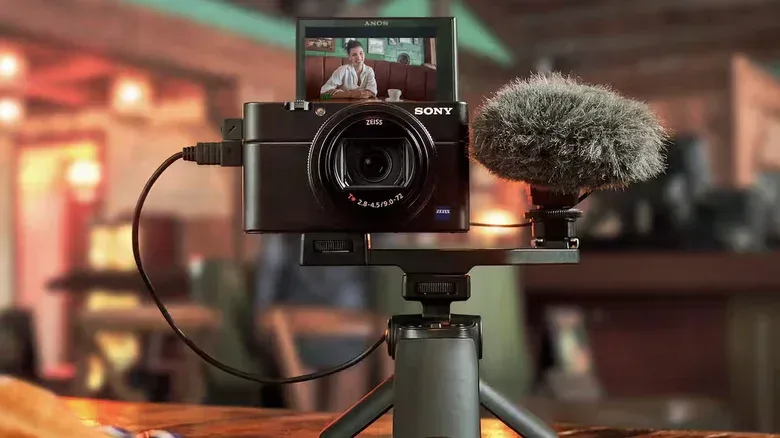
RX labels Sony’s fixed-lens compact cameras. “Compact” should not be mistaken for one uniform size or price class: the RX name covers pocket-oriented zooms, long-reach superzooms, a premium full-frame compact and a small camera for multi-camera and VR work.
The RX100 VII is the pocketable zoom model. It pairs a one-inch sensor with a Zeiss 24–200mm f/2.8–4.5 lens and is listed at $1,500. The focal-length range describes how wide or telephoto the lens can go; in broad terms, 24mm serves a wider view while 200mm reaches closer into distant subjects.
The RX10 V extends that reach considerably with a Zeiss 24–600mm f/2.4–4 superzoom lens, a one-inch sensor and up to 24 fps continuous shooting with continuous autofocus. That makes its stated wildlife and sports use cases easy to understand: it can frame faraway subjects without swapping lenses. The trade-off is bulk. Unlike the RX100, it is not pocketable, and its listed $2,298 price places it among more expensive superzooms.
The RX1R III changes the formula again. It combines a 61MP full-frame CMOS sensor with a fixed 35mm Zeiss f/2 lens. It is larger than the smaller RX cameras but can fit in a bag, positioning it as a serious street-photography option rather than a casual pocket zoom. Its $5,098 price underscores that fixed lens does not mean entry level.
Finally, the RX0 II is Sony’s small-format option for life-vlogging, VR and multi-camera setups. It has a one-inch 15.3MP sensor and a Zeiss 24mm f/4 wide-angle lens, with a listed $1,000 price. Its role resembles an action camera in broad intent, but the description positions it as higher image quality with more limited features.
The cheat sheet: read the name in order
- Find Alpha, ZV or RX. Alpha means mirrorless; RX means fixed-lens compact; ZV means a video-first creator design that can be either fixed-lens or mirrorless.
- For Alpha, identify full frame or APS-C. A1, A9 and A7 branches are full-frame; A6x00 is APS-C.
- Read A7 suffixes as roles. R is resolution, S is low-light/video focus, C is compact, and no suffix denotes the balanced standard line.
- Treat Roman numerals as generations within a branch. They do not compare different branches by themselves.
- For ZV, look for E. No E in ZV-1 models means fixed lens; E10 signals APS-C interchangeable lens; E1 signals full-frame interchangeable lens.
- Use the specifications to make the final call. Stabilization, video bit depth, viewfinder placement, sensor readout and lens reach reveal far more than numeric magnitude.
Sony’s system is still more complicated than it needs to be, especially where old names, suffixes and versions overlap. But its apparent chaos becomes manageable once each part of the name is treated as a clue rather than a score. The smartest camera choice is not the model with the largest-looking number. It is the one whose sensor format, lens arrangement, controls and specialist features actually match the mission.