Compact gimbal cameras are built for a very specific frustration: you want smoother footage than a handheld phone can usually deliver, without carrying a large camera, a separate stabilizer and a bag full of setup anxiety. The format puts a small camera on a motorized three-axis gimbal, then places the controls, screen and battery in a handle that can fit in a pocket or small pouch.
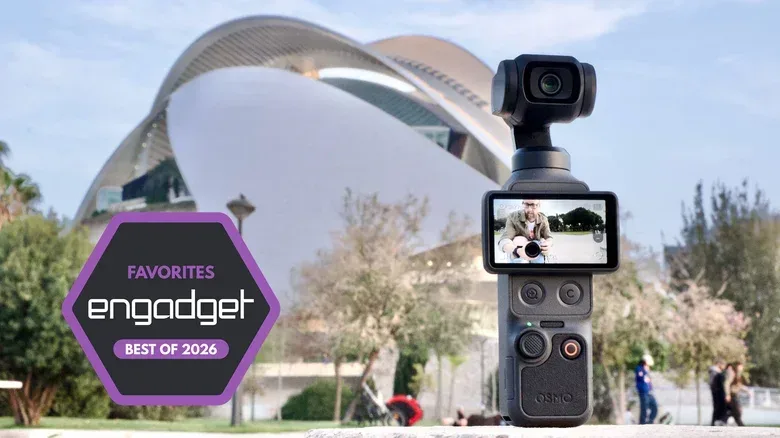
DJI’s Osmo Pocket line has been central to that idea, and the Pocket 4 is positioned as a particularly capable version, with sharp, color-accurate video, strong stabilization and 107GB of internal storage. There is a practical catch for American buyers: the Pocket 4 is not officially available in the United States because of restrictions affecting certain DJI products. The newer dual-camera Pocket 4P is likewise unavailable there.
That does not mean every alternative is equally compelling. The available options fall into clear tiers. Insta360’s Luna Pro is the closest technical match if the budget allows. DJI’s older Pocket 3 remains an unusually strong choice because it is officially available with support in the US. Ordro’s UHD-M5 is a less expensive, beginner-oriented compromise with a notably large display. And SJCam’s C400 demonstrates why a low sticker price and a familiar shape do not necessarily make something a true substitute.
The quick answer: the Luna Pro is the closest Pocket 4 replacement; the Pocket 3 is the more sensible value choice for many buyers; the Ordro UHD-M5 is a budget option with visible trade-offs; and the SJCam C400 is difficult to recommend when image quality is the priority.
What a gimbal camera actually changes
A three-axis gimbal uses motors to counter movement across three directions of rotation. In ordinary use, that means the camera can remain level and composed while a person walks, turns or moves their hand. It is not simply an effect added afterward; the camera itself is being actively held in position while recording.
That distinction matters when comparing these devices with models that use digital stabilization. Digital stabilization can crop and process an image to reduce visible shake, and it may be effective in good light. But it does not physically isolate the camera in the same way. In dimmer conditions, where exposures may be longer, movement can still create motion blur. A device shaped like a gimbal camera is not necessarily equipped with a gimbal.
The typical controls are straightforward: a touchscreen, a record button, power controls and some form of joystick or on-screen control for pointing the camera. A flip or rotation of the screen can switch the recording layout between horizontal and vertical. That is useful because landscape video is generally suited to conventional displays, while vertical framing is intended for phone-first viewing.
Several key capabilities have become expected in the category. Motorized subject tracking lets the camera follow a selected person automatically. For someone filming themselves, that can turn a stationary camera into a more flexible tool without adding a camera operator. Internal storage can also be valuable: it allows recording before a microSD card is inserted or when the card situation has gone slightly wrong, as card situations sometimes do at the exact moment a good shot appears.
Best closest alternative: Insta360 Luna Pro
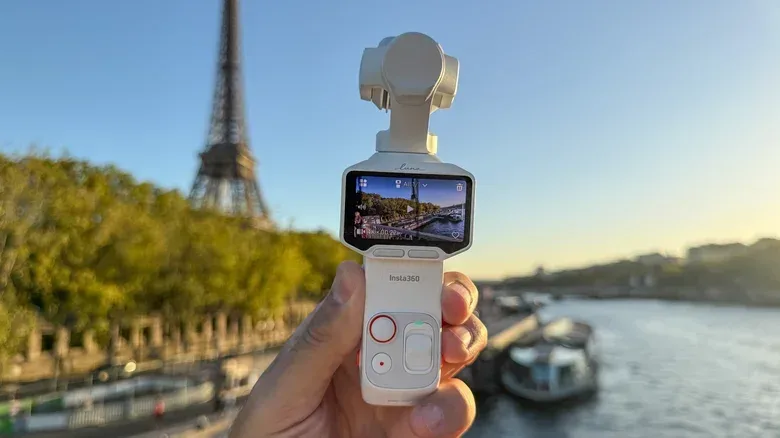
At $600, Insta360’s Luna Pro is not the inexpensive escape hatch its category might make people hope for. It costs the same as the Pocket 4. But for US shoppers weighing a supported, obtainable product against importing a camera that is not officially available, it is the nearest all-around alternative described here.
The specification match is substantial. The Luna Pro uses a 1-inch sensor and a 20mm f/1.8 Leica Summicron lens, while the Pocket 4 has a 1-inch sensor paired with 20mm Hasselblad f/2.0 optics. Sensor size is relevant because, in broad terms, a larger sensor gives a camera more light-gathering area than the smaller sensors found in lower-cost rivals. Lens and image processing remain important too, but the 1-inch format puts the Luna Pro in the same serious compact-camera conversation as DJI’s flagship pocket model.
The cameras differ in their headline video modes. DJI’s Pocket 4 can record 4K at up to 240 frames per second, while the Luna Pro does not offer that frame rate. Higher frame rates are useful for slowing footage down in editing while retaining smooth motion. In the other direction, the Luna Pro can shoot 8K at 30 fps, a mode the Pocket 4 lacks.
Resolution alone is not a verdict on image quality. It does, however, help explain one Luna Pro advantage: vertical video can reach 4K at 30 fps, compared with 3K vertical video on the Pocket 4. The Luna Pro’s 8K capture provides more source resolution to crop into a vertical frame.
Both models offer 10-bit log recording. Log capture is a less contrasty, flatter-looking recording style designed to preserve flexibility for color grading later. It is most meaningful for people who intend to edit footage rather than post it immediately. The Luna Pro calls its format I-Log; DJI uses D-Log on the Pocket 4. The Pocket 4 is specified with 14 stops of dynamic range, and reported comparisons indicate that the Luna Pro’s I-Log mode may not preserve dynamic range as effectively. In standard picture modes, however, the Luna Pro is described as delivering excellent image quality.
For creators who want the device to simplify filming rather than create another post-production project, the broader experience is just as important. The Luna Pro has automatic tracking, a three-axis gimbal and a screen that switches orientation for vertical or horizontal shooting. Its stated battery life reaches up to four hours. It also records internally, though its 47GB is well below the Pocket 4’s 107GB.
Its most distinctive feature is a detachable display. That lets the operator step away from the camera but continue lining up and monitoring the shot. For solo presentations, demonstrations or a fixed camera position, that separation could be more meaningful than a modest specification edge. The question is simple: do you want the closest supported stand-in for the Pocket 4, and can you justify $600? If yes, the Luna Pro is the strongest candidate in this group.
Best value for many buyers: DJI Pocket 3
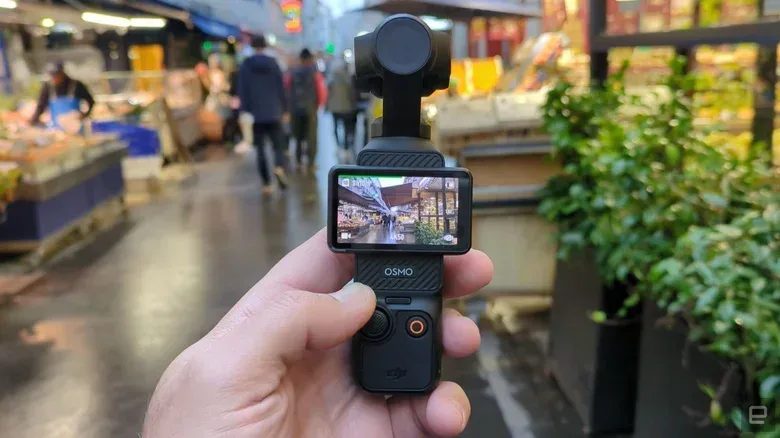
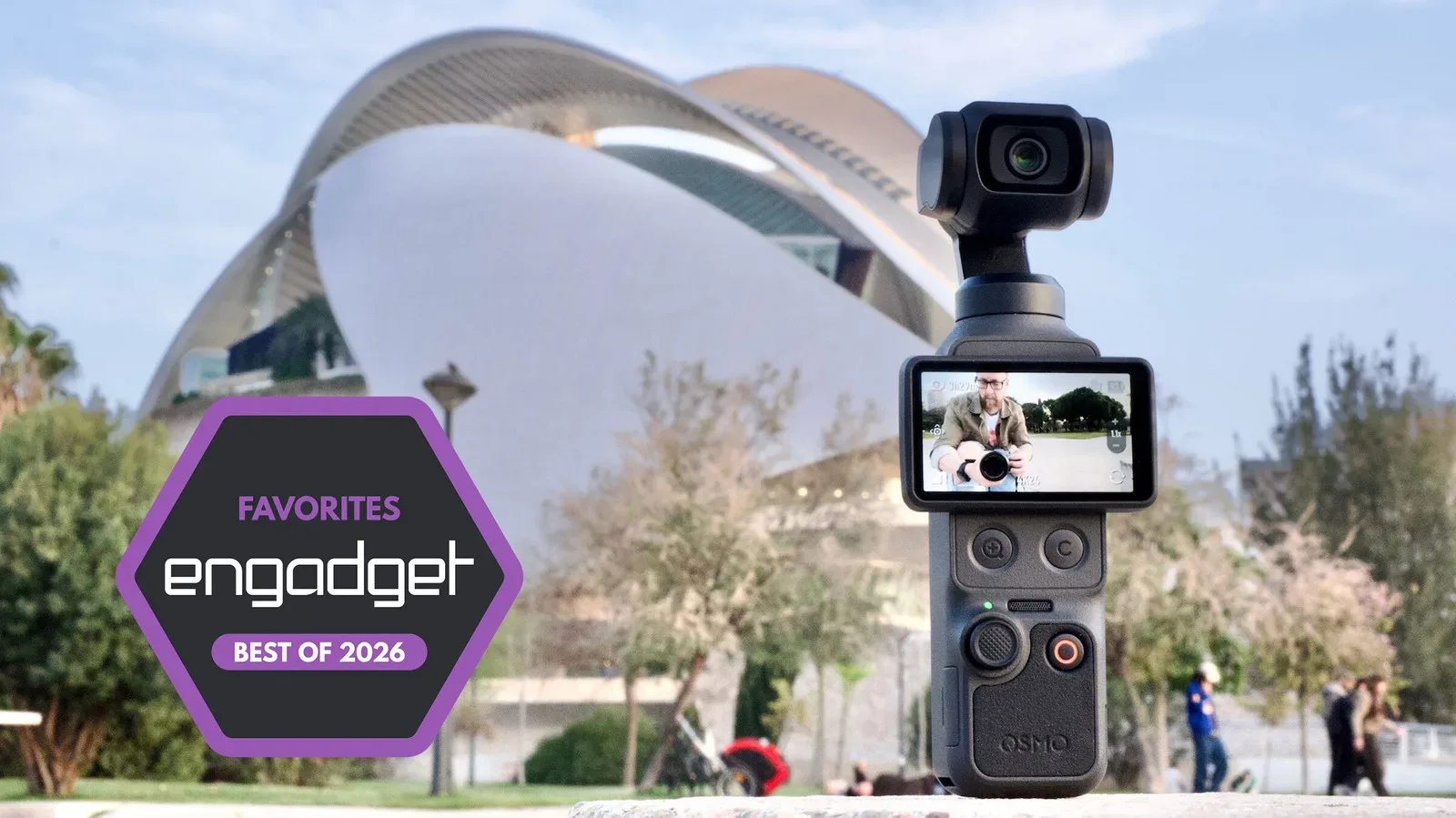
The DJI Pocket 3 is older—it arrived in 2023—but it may be the most practical recommendation for buyers who do not need the Pocket 4’s newest performance limits. It remains officially available in the US with support for around $439.
Crucially, it retains the ingredients that define the category’s appeal: a 1-inch sensor, 20mm f/2.0 lens, motorized subject tracking and a three-axis gimbal. It can record 4K video at up to 120 fps, which is below the Pocket 4’s 4K 240 fps ceiling but still provides a high-frame-rate option. Its display flips between orientations and is described as sharp, though it reaches 700 nits rather than the Pocket 4’s 1,000 nits. A nit is a measure of display brightness; more nits can make a screen easier to see in bright surroundings.
The Pocket 3 uses 10-bit D-LogM rather than the Pocket 4’s full D-Log, and it does not match the newer model’s dynamic-range potential. Its photo resolution is also 10 megapixels rather than 37 megapixels. Those differences matter most to buyers who expect to grade footage heavily, need the greatest latitude in difficult lighting or want larger still images.
For many ordinary shooting situations, the more tangible limitation is storage. The Pocket 3 has no built-in capacity, so it requires microSD media to record. That is not unusual for a camera, but it adds an item to the packing list and makes card management mandatory. Its battery life is said to be somewhat lower than the Pocket 4’s, while still being strong for a standalone camera.
At roughly $161 less than the Luna Pro, the Pocket 3 has a powerful argument: it keeps the large sensor, true mechanical stabilization and tracking that distinguish the premium pocket-gimbal experience, without paying for the latest model’s incremental gains. It is a better fit than a cheap copycat for someone who cares about the footage first and the bargain story second.
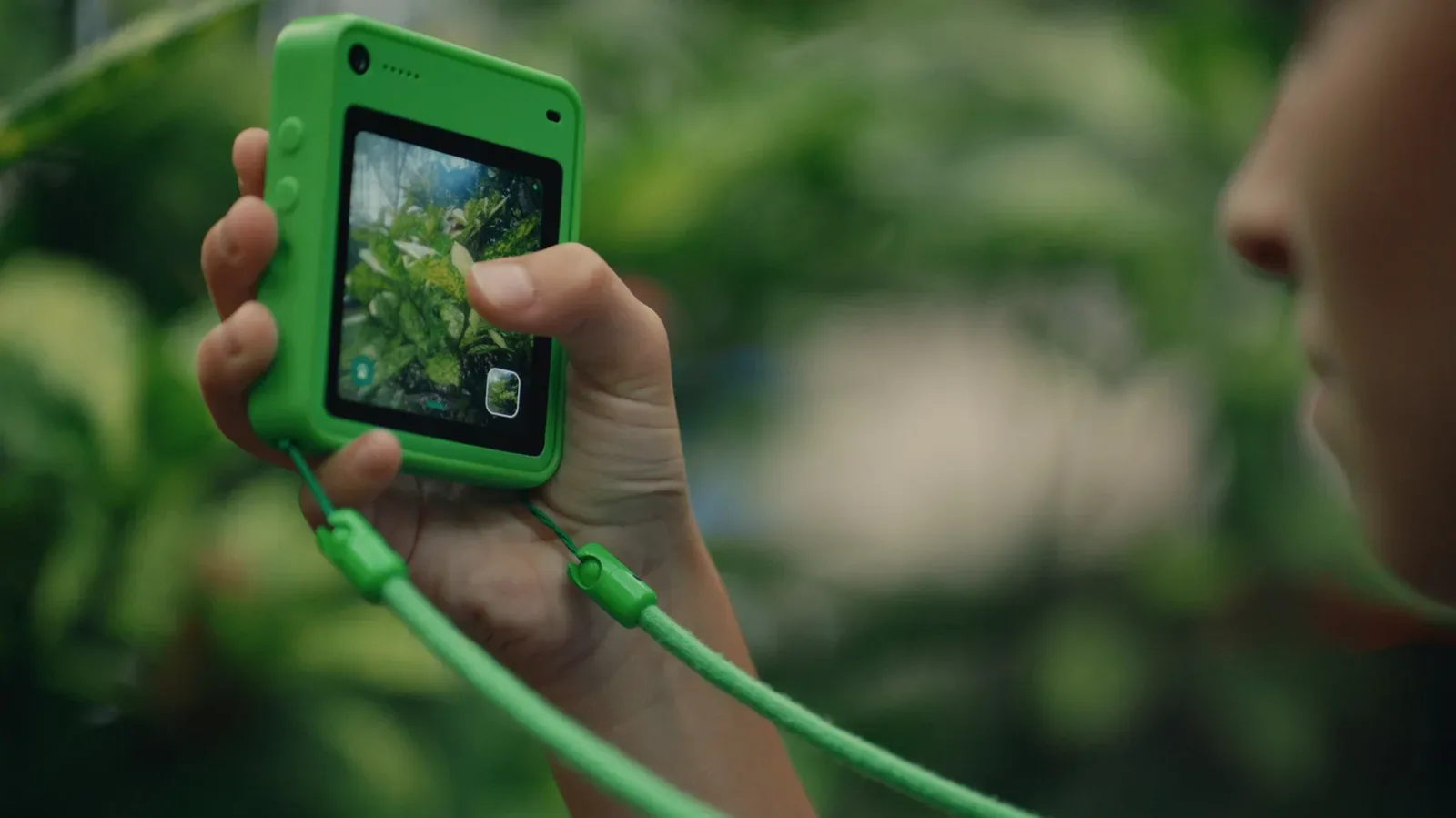
That same value calculation appears in other gaming-adjacent tech decisions: paying for the reliable, supported route can be less glamorous than chasing the rare alternative, but it is often kinder to your future self. The trade-offs around devices and screen time are also part of the broader conversation around products such as a kid-focused phone built around side-quest-style incentives.
Budget compromise: Ordro UHD-M5 and its lookalikes
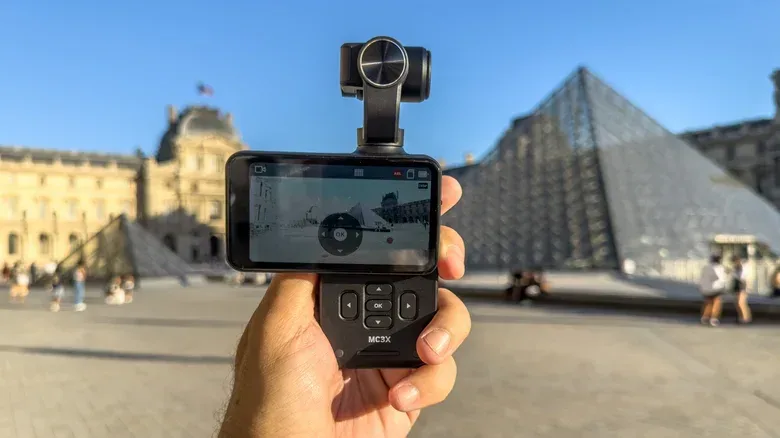
The Ordro UHD-M5 costs $270 and takes a noticeably different approach. Its defining feature is a 3.5-inch screen, substantially larger than the displays on the competing models discussed here. The screen flips to change between portrait and landscape capture, and gimbal control happens on-screen. That can make the camera less intimidating for a newcomer who values a big framing display and direct touch controls.
There are physical and visual costs to that design. The camera body is wide because it needs to accommodate the large display, which can make it awkward to hold. The screen is also described as washed out in bright sun and less sharp than the OLED displays used by DJI and Insta360. OLED is a display technology generally valued for its contrast; in this comparison, the practical point is that the more expensive cameras have stronger screens for judging a shot.
The UHD-M5 can record 5K at 30 fps or 4K at 60 fps. Yet it uses a 1/2.5-inch sensor, far smaller than the 1-inch sensors in the Luna Pro and Pocket 3. Its image quality is therefore a step down: solid for its price range, but not as sharp or color-rich as the premium options. The mechanical gimbal still does useful work stabilizing footage, which is an important advantage over a merely digital-stabilized device.
It also has infrared night-vision lights capable of making black-and-white video in near darkness. This is a specialist feature rather than a reason to assume strong low-light video; the resulting footage is described as fuzzy. Think of it as a way to record when there is almost no light, not a substitute for the cleaner low-light performance people may associate with a larger-sensor camera.
Buyers should also be alert to naming. The AgfaPhoto Realimove MC3X, sold in Europe, has an identical design, and the product appears to originate from a white-label manufacturer. A white-label product is hardware that may be sold under multiple brand names with little or no meaningful change. The Minolta Showtime MN5KG100 is also identified as the same underlying product. That does not automatically make the camera bad; it means shoppers should compare the actual hardware, support and availability rather than assuming a different badge means a different camera.
The model that exposes the limits of a bargain: SJCam C400
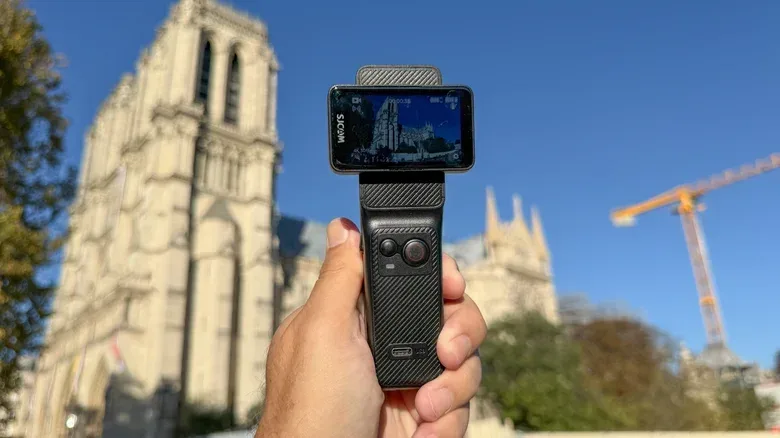
The $189 SJCam C400 has a genuinely interesting concept. Its small camera detaches from the handle and has its own screen, while the main display can monitor video remotely. The detached unit can be attached to a hat or a pet, and the package includes a waterproof case, lanyard and other accessories. Battery life is listed at more than 180 minutes.
But the C400 does not have a three-axis gimbal. It relies on digital stabilization, despite being held and operated in a gimbal-camera-like way. It can shoot up to 4K at 30 fps, but reported image quality is its major weakness: poor center and corner sharpness, an overprocessed appearance and blotchy artifacts during movement. In low light, the lack of mechanical stabilization makes motion blur more of an issue.
The detachable design could appeal to someone who specifically wants a tiny remote camera. Yet as an alternative to a Pocket 4, it misses the central promise: good-looking, smoothly stabilized pocket video. The lower price and accessory bundle do not erase that mismatch.
What not to treat as a straightforward substitute
- Imported or renamed DJI products: expensive imports and rebrands may face restrictions or lack manufacturer support. That is a poor foundation for a costly camera purchase.
- Feiyu Pocket 3: it was considered but is no longer available.
- Phone gimbals: these are a separate product category. They can be useful, but require a phone and often more setup before recording than an all-in-one gimbal camera.
The best purchase depends less on the largest resolution number and more on the compromise you can live with. The Insta360 Luna Pro is the full-featured answer for someone seeking the closest current Pocket 4-style experience in the US. The DJI Pocket 3 is the grounded choice, retaining the attributes that count most while undercutting the Luna Pro’s price. The Ordro UHD-M5 offers a large screen and real gimbal stabilization at a lower cost, but with clear image and ergonomics concessions. The SJCam C400 is novel, but its results make it the wrong bargain for buyers who want a dependable camera rather than a detachable-camera experiment.
Shop the products
Check current price, model and availability at the retailer.