Thanksgiving cooking is less a single meal than a scheduling game with a timer in every corner of the kitchen. The turkey needs attention, baked sides need oven space, sauces need stirring, and somebody has almost certainly arrived early asking whether they can help. The winning strategy is not necessarily buying every clever appliance in sight. It is identifying the bottleneck that makes the day harder: uncertain doneness, too little oven capacity, an endless pile of chopping, or measurements that drift as the baking starts.
That is where a handful of kitchen gadgets can earn their counter space. Some bring precision; others simply move a task out of the crowded oven or make prep less repetitive. Think of this as load-balancing for a feast, rather than a demand to turn dinner into a consumer-electronics showcase. The useful question is: which tool solves a job your existing kitchen setup struggles to handle?
For households fitting dinner around the day’s games, there is already plenty of Thanksgiving culture to keep track of, including the history behind NFL Thanksgiving performances that became memorable football cards. The kitchen setup should reduce interruptions, not create another hobby that needs managing.
1. A sharp knife: the baseline upgrade, with one very unusual premium option
A sharp knife is the least futuristic item here and arguably the most broadly useful. Thanksgiving puts it through the full workload: vegetables are chopped, herbs are cut, potatoes are prepared, and the turkey eventually has to be carved. A good cutting edge matters for clean, controlled slices through both delicate ingredients and denser foods.
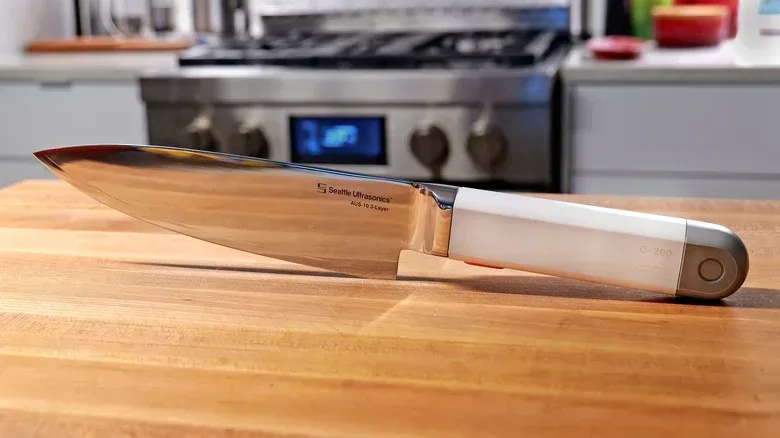
At the experimental end is Seattle Ultrasonics’ C-200. It uses a three-layer san mai blade made from Japanese AUS-10 steel, but the striking feature is inside the handle: a motor makes the blade vibrate 30,000 times each second. The movement is small enough not to be felt as shaking. The claimed result is an effective sharpness increase of up to 50 percent, with potential benefits for foods that cling to a blade, such as tomatoes, and for potatoes or meat.
The C-200 also has an IP65 dust- and water-resistance rating. In plain language, IP is an ingress-protection classification; the first number concerns solids such as dust, while the second concerns water. Its electronics are therefore designed with kitchen splashes in mind. A wireless charging tile is available, and the knife starts at $399. That is a premium proposition, even if it sits in the territory of other high-end chef’s knives.
There is a simpler path for the one task of carving: a traditional electric knife. Cuisinart, NutriChef and Hamilton Beach are among the brands offering this familiar plug-in format. An electric knife will not have the everyday appeal or visual elegance of a conventional chef’s knife, but it may be a practical, relatively affordable tool for getting turkey onto plates with less carving friction.
Practical implication: Choose a sharp conventional knife if it will see regular use beyond the holiday. Consider an electric carving knife when the turkey-serving moment is specifically the pain point. The ultrasonic option is for cooks who want its unusual technology and premium build, not an essential purchase for a successful meal.
2. A meat thermometer removes the biggest turkey guesswork
A thermometer is the most direct route from “I think it’s ready” to a temperature-based decision. Turkey may not be every guest’s favorite part of the meal, but it is often the most demanding piece of the operation because it needs to be timed around everything else. Relying only on oven time leaves room for uncertainty; relying strictly on the pop-up indicator sometimes supplied with a bird is not ideal, as those indicators are not known for accuracy or precision.
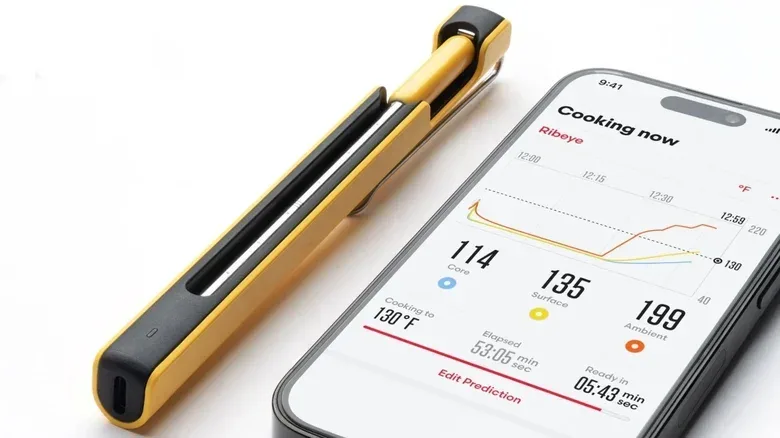
There are two broad classes. Instant-read digital thermometers such as the ThermoPop 2 are basic, affordable tools that require the cook to check the food manually. They cannot be left in the bird as it cooks, which means the person in charge must return to the oven and take readings. That is not a flaw so much as a trade-off: less complexity and lower cost in exchange for more active monitoring.
Probe thermometers take a more hands-off approach. Wireless-capable models can remain in the turkey while it is in the oven and relay information during the cook. The second-generation model from Combustion Inc. is an example of a more advanced probe system. Chef iQ’s Sense is another option positioned as a balance of price and performance.
One useful technical term here is carry-over cooking. This describes food continuing to rise in temperature after it has been removed from heat. Models that account for it are trying to help the cook plan around what happens after the oven door closes, rather than treating the moment of removal as the end of the process.
Practical implication: An instant-read model is enough for cooks comfortable making periodic checks. A wireless probe makes sense when oven monitoring competes with a crowded preparation schedule. Either approach is more purposeful than treating the calendar, the oven dial and hope as a complete turkey-management system.
3. An air fryer creates a second, smaller convection zone
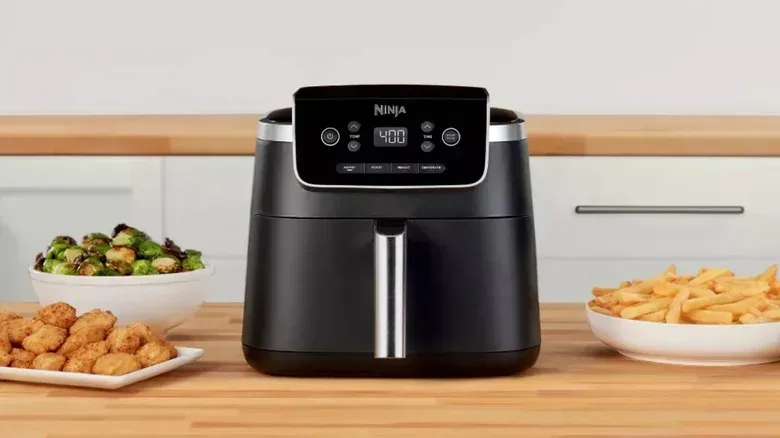
Oven capacity is often Thanksgiving’s real final boss. Roasted vegetables, baked sides and the main bird cannot all occupy the same rack at the same time without compromise. An air fryer helps not because it performs magic, but because it creates a separate compact cooking chamber.
Its basic approach closely resembles an oven’s convection setting: heated air moves around the food. Because the chamber is smaller, it heats faster and can offer strong air circulation. That can free the main oven for the large-format dishes that cannot fit anywhere else.
The Instant Pot Vortex and Ninja Air Fryer Pro are examples of name-brand models cited at prices as low as $80. Larger or more versatile units widen the scope. Philips’ 3000 offers more capacity, while the Our Place Wonder Oven Pro is described as having eight functions, including baking, roasting, dehydrating and proofing.
The key distinction is capacity versus function. A larger appliance can take on more food. A multifunction appliance can potentially handle more types of tasks. Neither advantage automatically matters if the intended dishes already fit in the primary oven or if counter space is scarce. One appealing logistical point is that an air fryer can be stored in a pantry, closet or garage once the holiday rush ends.
Practical implication: Buy for oven relief, not the label. If one side dish is always waiting for a rack, a compact air fryer may be enough. If the goal is a more flexible second oven for baking, roasting and other modes, a larger multifunction unit is the more relevant category.
4. A digital scale turns ingredient measuring into a repeatable process
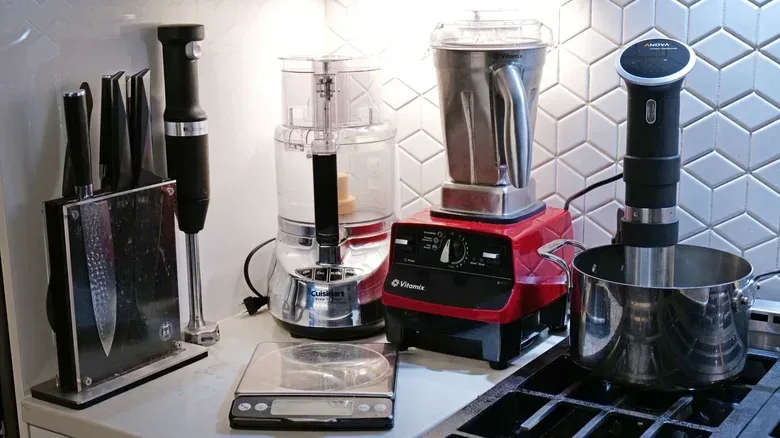
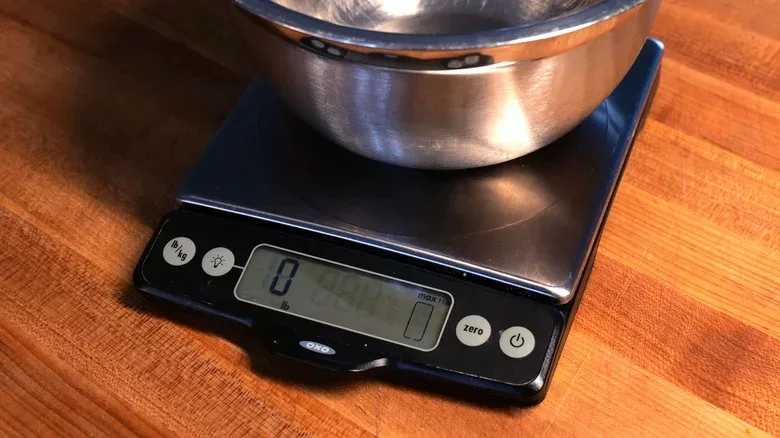
A digital scale is quiet, inexpensive by gadget standards and deeply useful for baking. Put a bowl on the platform, reset the displayed weight to zero, add an ingredient, then reset again for the next one. This is commonly called taring the scale: it subtracts the weight already on the platform so the next addition can be measured on its own.
The advantage is precision without generating a lineup of measuring cups. That is especially relevant for baked goods and confections, where ingredient quantities matter. It also makes the workflow easy to follow: bowl down, zero out, add, repeat.
OXO has a digital scale starting at about $65, while KitchenAid options can be found for only a little more than $20. The wide pricing range reinforces the central point: this is not a category where a holiday cook needs maximum gadget complexity to get the main benefit.
Practical implication: If pies, breads, desserts or other baking projects are part of the plan, a digital scale is among the clearest value upgrades. It solves a measurement problem directly and takes very little storage space when the meal is over.
5. A blender or immersion blender covers different kinds of smooth
Countertop blenders are useful for tasks such as a post-dinner milkshake or a fall soup, including butternut squash soup. The traditional concern is size: powerful blenders can be loud, bulky and awkward to store. Smaller choices from Magic Bullet and Ninja show that a blender does not have to dominate the kitchen to be useful.
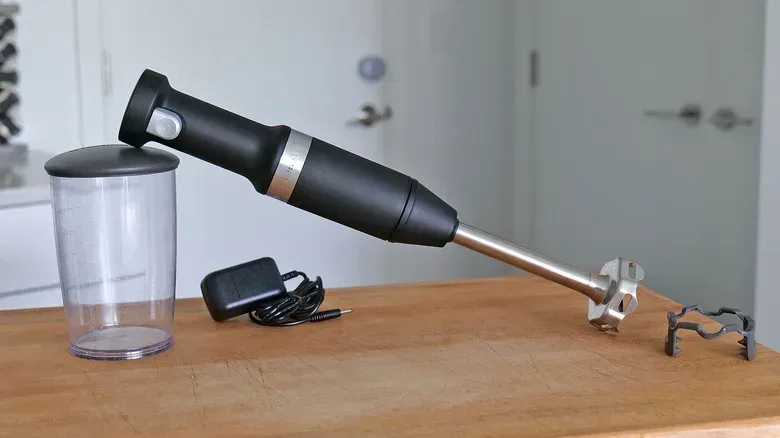
An immersion blender, also called a hand blender, changes the workflow more dramatically. Instead of moving hot food into a countertop machine, it blends directly in the pot already on the stove. That can make it especially handy for sauces and similar preparations. Hollandaise, mayonnaise and cranberry sauce are examples of tasks suited to this direct approach.
Cordless KitchenAid immersion models offer freedom from a power cable and enough battery life for multiple dishes. Cabled hand blenders remain a valid lower-cost option. The relevant choice is not cordless versus corded as a status decision; it is whether cable-free movement meaningfully improves the layout and pace of a particular kitchen.
Practical implication: A countertop blender is the better fit for dedicated blending jobs and drinks. An immersion blender is the space-conscious answer for working in existing pots, especially when several pans already occupy the counter and stovetop.
6. A food processor is the prep-time specialist
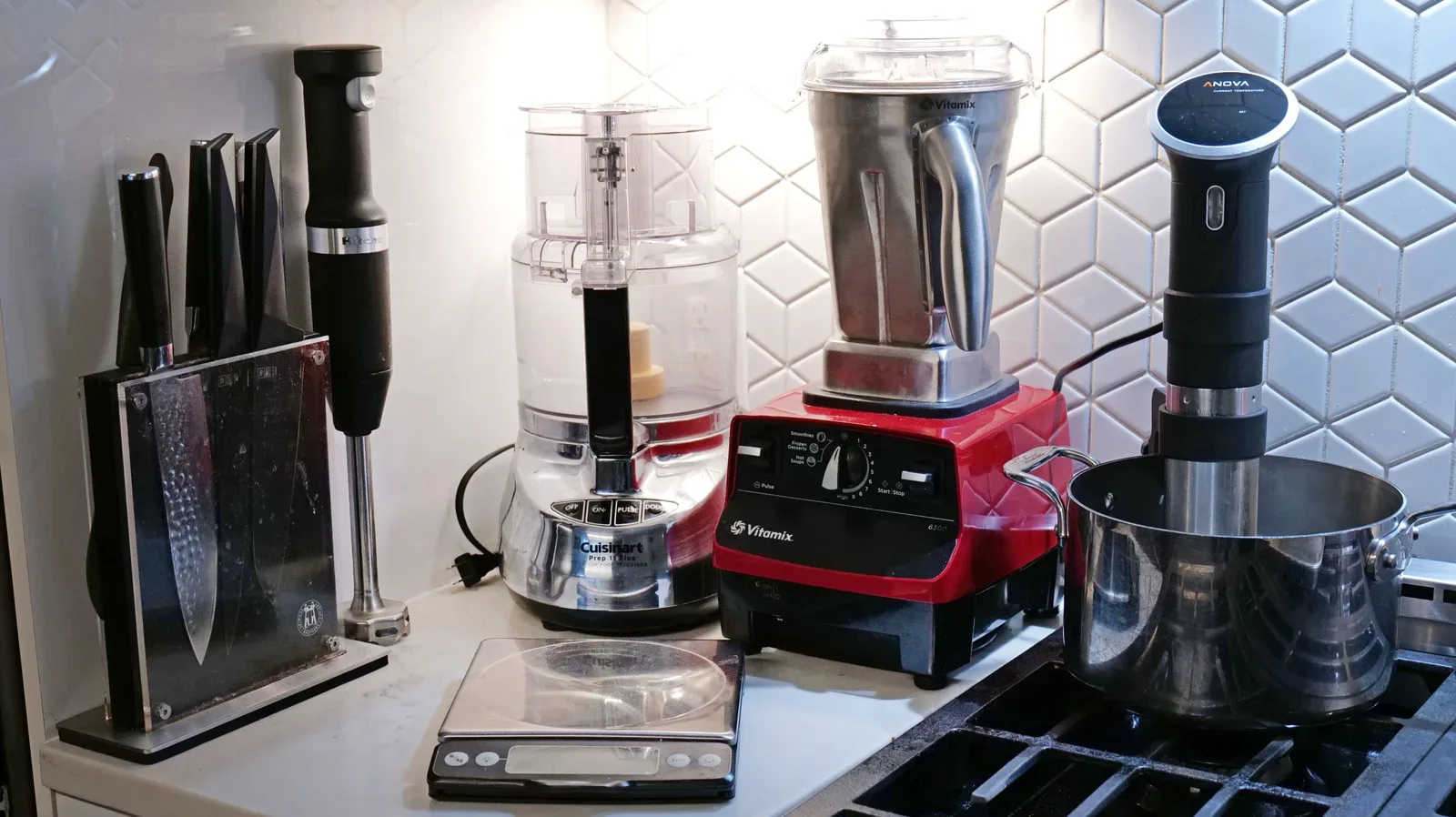
Knife work can be satisfying, but holiday-scale prep can turn it into the longest stage of the whole session. A food processor speeds up repeated work: mincing vegetables, grating cheese, shredding potatoes for a Thanksgiving hash and making dips such as salsa. Its value is not that it replaces every knife cut; it is that it handles the high-volume, repetitive steps before they consume the afternoon.
A Cuisinart Mini Food Processor is available for under $30, offering a compact entry into the category. At the larger, more capable end, Ninja’s Professional Plus Food Processor comes with attachments intended for a wider range of dishes.
Attachments are worth considering only in relation to actual menu needs. A cook making a few small batches of chopped vegetables may prefer a compact model. Someone planning to grate, shred and process multiple ingredients can benefit from a larger machine with more tools. The holiday advantage comes from matching capacity to prep volume rather than buying the most elaborate appliance by default.
7. A sous vide machine trades speed of attention for temperature control
Sous vide can sound intimidating because it involves cooking in a water bath, but its basic appeal is straightforward: set a precise temperature and keep the water there for an extended period. Anova and Breville make machines in this category. That consistent water temperature gives cooks a way to prepare foods with more predictable doneness, reducing the uncertainty around whether meat will land medium-rare or well-done.
The technique is not limited to a main protein. For Thanksgiving, it can be used for rosemary mashed potatoes and glazed carrots. This makes it a potential way to move selected dishes away from a crowded stovetop or oven schedule.
Some models add Wi-Fi, allowing settings and operation to be managed remotely by phone. That can be convenient, but the core feature is still temperature control, not connectivity. The machine needs an outlet rather than a burner, which makes it potentially useful in a small kitchen or one with limited stove space.
Practical implication: Sous vide is best for cooks who value an exact, stable cooking temperature and have a dish that benefits from it. It is not the simplest first purchase for every Thanksgiving kitchen, but it offers a distinct solution when burner availability and precision are the real constraints.
Build around the bottleneck, not the hype
There is no universal seven-gadget Thanksgiving loadout. A digital scale and thermometer bring measurement confidence; a food processor tackles high-volume prep; an air fryer creates room where oven space is scarce; and a hand blender or sous vide machine changes how specific dishes are executed. A sharp knife remains foundational, while a specialized electric or ultrasonic option depends on how much the carving and cutting experience matters to the cook.
The best approach is almost comically unglamorous: look at the menu, write down where the work piles up, and choose the device that takes pressure off that exact stage. Thanksgiving dinner will always involve coordination. These tools simply make it more likely that the kitchen feels like a managed co-op session instead of seven overlapping quests with no map.
Shop the products
Check current price, model and availability at the retailer.