Thanksgiving board-game time has a peculiar challenge: it has to work for people who arrived ready to play and people who have been drafted from the sofa after dessert. That makes familiar classics tempting, but familiarity can also mean the same arguments, the same drawn-out turns and the same inevitable attempt to purchase a property nobody actually wants.
A stronger plan is to choose a gateway game. This term means a game approachable enough for newcomers, while offering enough decisions that experienced players are not merely waiting for the next die roll. The goal is not to turn a family gathering into a competitive hobby-game summit. It is to find a shared activity whose rules are understandable, whose choices matter and whose tone matches the room.
Five particularly useful choices cover very different kinds of groups: Carcassonne, Herd Mentality, Codenames, Ticket to Ride and Catan. They do not demand the same thing from players. One is about adapting to a shared map, another rewards thinking like the crowd, and others make language, route planning or tactical settlement the center of play. That variety is the point. “Beginner-friendly” is not a single genre.
Carcassonne: a shared map with quietly meaningful choices
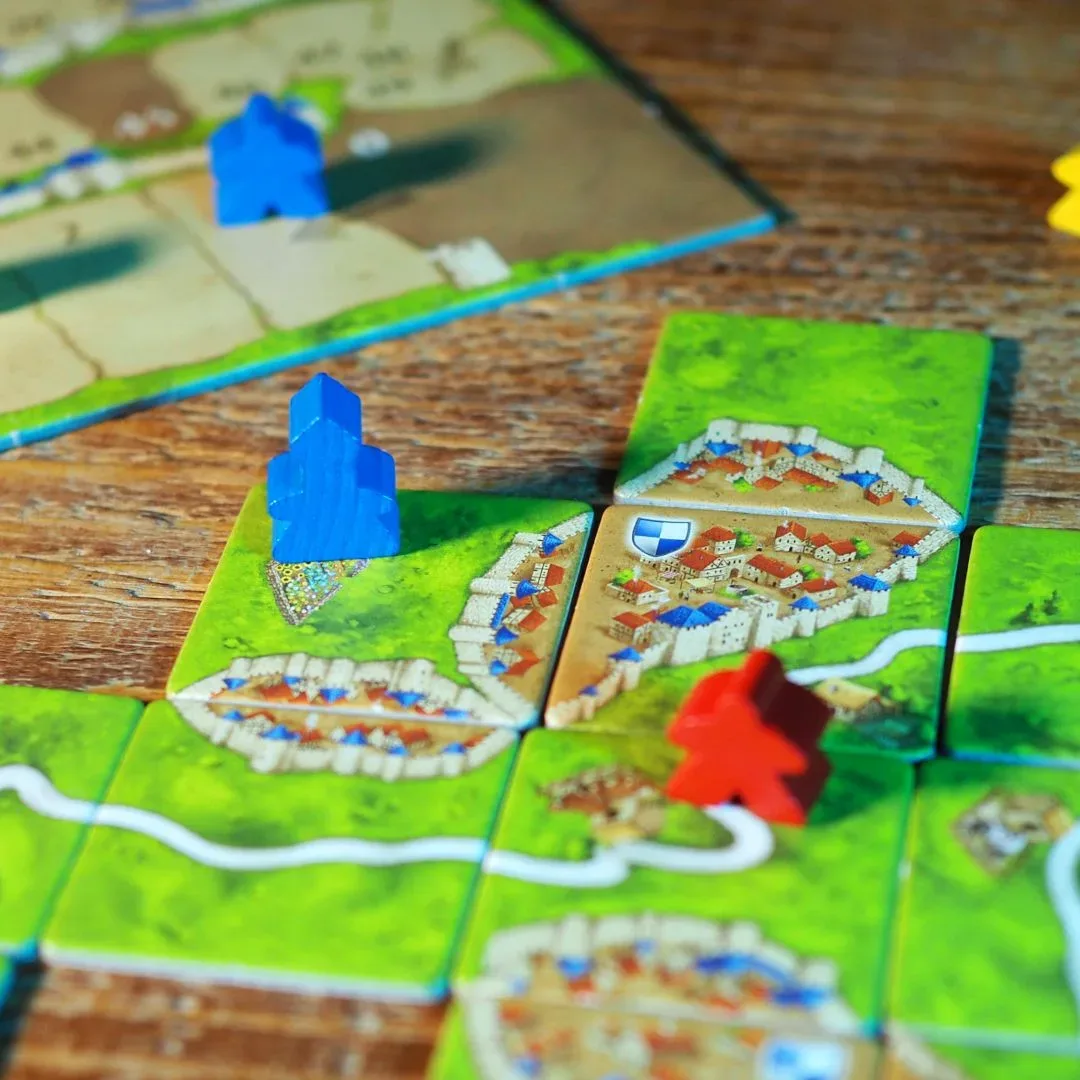
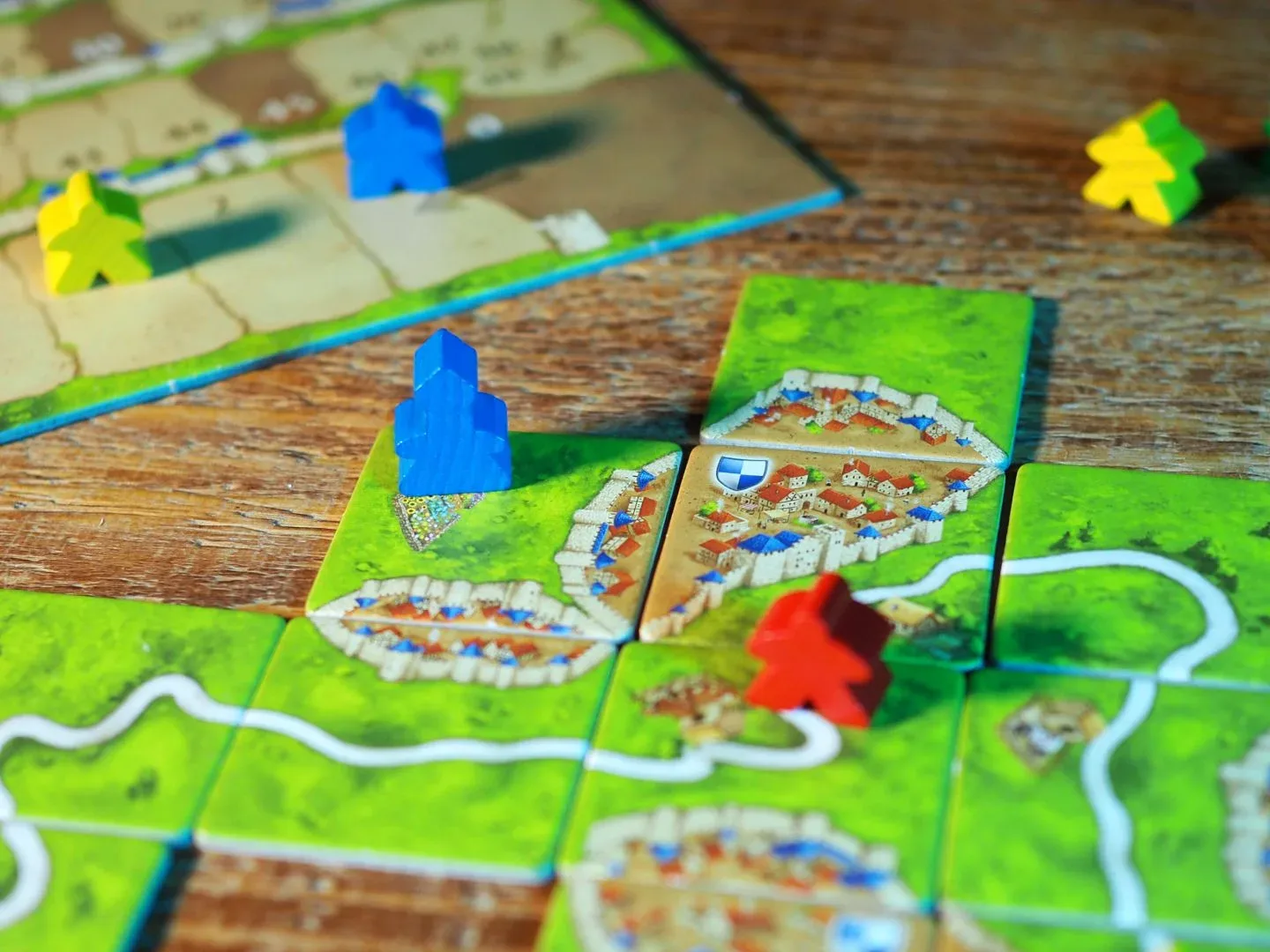
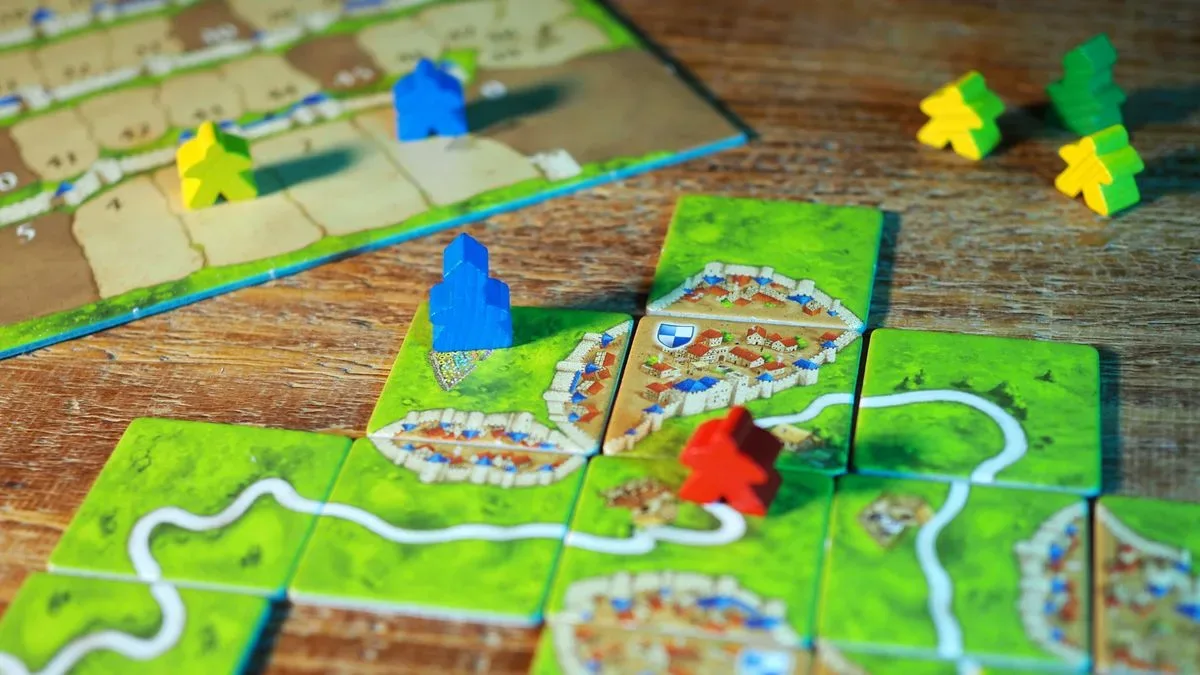
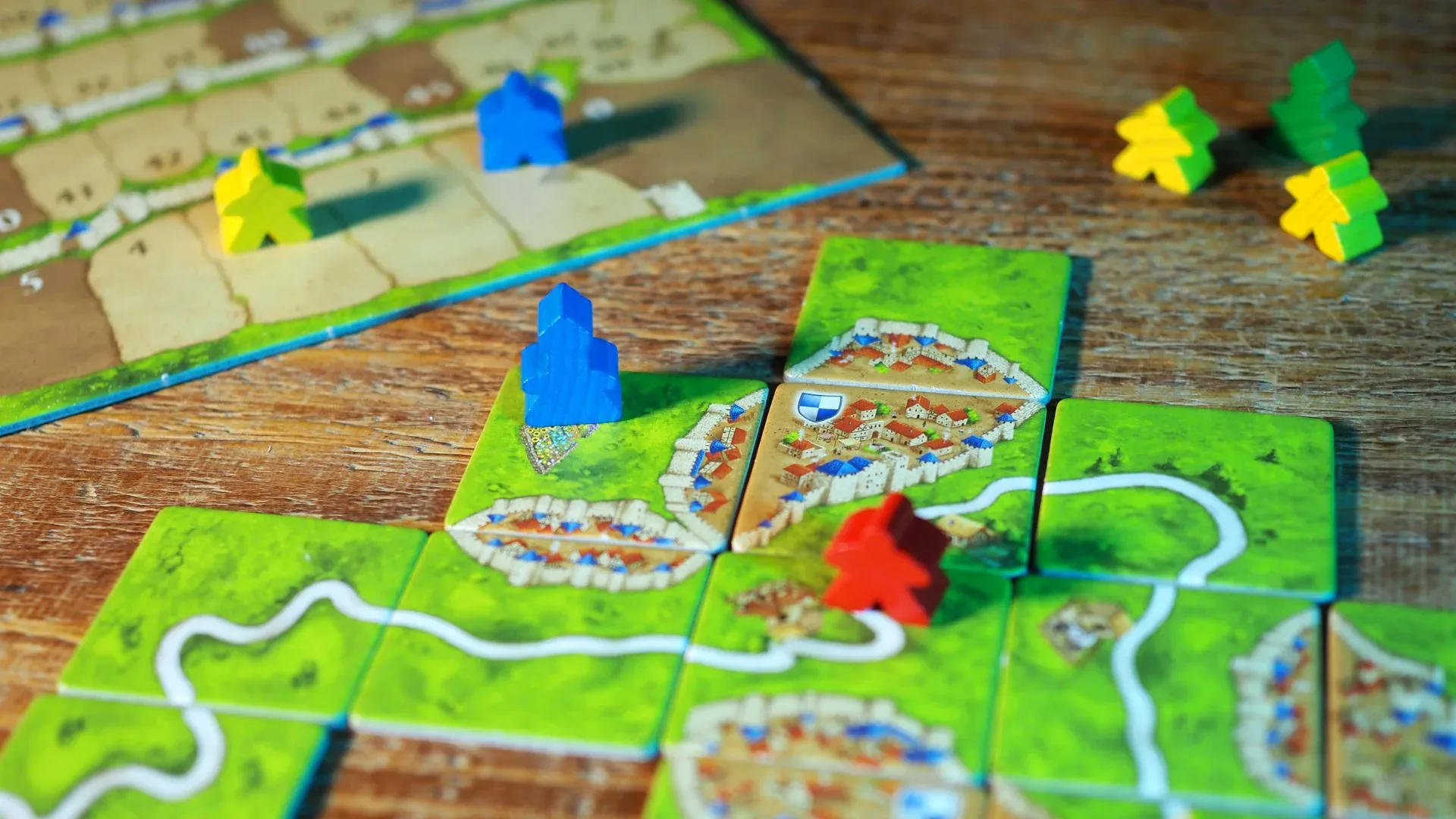
Carcassonne is the natural fit for a group that wants something straightforward but not empty. Players collectively create a patchwork kingdom by placing tiles, then seek points by claiming features such as cities and roads. The board emerges during play, so the table can see the landscape take shape rather than having to interpret a complicated setup.
The important lesson comes from the limited supply of tokens used to claim landmarks. A token committed to a city or road remains tied up until that feature is finished. In practical terms, every claim carries an opportunity cost: putting a token down now can deny its use somewhere else later. Opportunity cost is simply the value of the alternative a player gives up when making a choice. Carcassonne communicates that idea visually and gently. Players can immediately see why they may want to reserve a token, finish a feature, or walk away from a plan that no longer looks profitable.
That makes it especially good for mixed-experience tables. A newcomer can focus on placing an appealing tile and completing a road. A returning player can think further ahead about what landmarks might connect, when to commit a token and when to change course. Neither approach requires an enormous rules burden. Flexibility, rather than encyclopedic knowledge, is the central skill.
There is a social benefit, too. The map is shared, even when scoring is individual. Every placement changes possibilities for everyone. Conversation can stay anchored in a visible object on the table: a city that needs one more piece, a road heading toward a rival claim, or a tile that unexpectedly helps two people at once. It is competitive, but its competition grows out of building something together.
Herd Mentality: the low-pressure answer game
Not every holiday table wants a strategy puzzle. Herd Mentality is useful precisely because it asks for very little procedural overhead. Players receive a simple prompt—such as naming the best sauce—and write an answer based on what they think the group will choose. Being in the majority earns a point.
Related coverage includes 5 Beginner-Friendly Board Games to Bring to Thanksgiving.
The twist is that success is not about identifying an objectively best answer. It is about predicting the room. That makes Herd Mentality a game of social reading rather than specialist knowledge. The best response may be the most common, obvious or cheerfully unoriginal answer. In a game built around matching the crowd, standing out is usually the mistake.
For families, that structure solves a few common problems at once. It does not put anyone on stage for a long explanation. It does not require quick reflexes, deep cultural knowledge or a willingness to bluff. Yet the answers can still reveal harmless disagreements and running jokes. A question about food, films or everyday preferences can produce debate without asking players to prove they are cleverer than everyone else.
It is also the strongest option here for the sluggish period after a large meal. People can join in with minimal preparation, rounds are easy to understand, and the energy comes from the group’s reactions rather than from tracking a large board state. Treat it as a warm-up, a palate cleanser between longer games, or the primary event if the gathering values laughter over tactical planning.
Codenames: teamwork, wordplay and one carefully chosen clue
Codenames is the pick for a family that enjoys words and wants to divide the room into teams. Teams try to identify particular words in a grid, but the player steering each team is restricted to a single clue intended to connect multiple target words. That restriction is what turns a simple word association exercise into a satisfying communal puzzle.
The person providing the clue has to think about meaning, ambiguity and risk. A clue that reaches several intended words can accelerate a team’s progress, but it can also suggest unintended ones. The teammates, meanwhile, have to interpret that clue in the same way. The resulting discussion is where Codenames earns its reputation as a pick-up-and-play party game: every guess is a small act of collaboration.
This is a useful example of information constraints in game design. An information constraint is a rule limiting what players may communicate or know. Here, the restriction to one clue creates the challenge. Without it, teammates could simply name the needed words. With it, they must infer connections, debate interpretations and decide how bold to be.
That makes Codenames a better match for talkative groups than for tables seeking quiet concentration. It can generate delighted arguments about whether a clue really points to a particular word, and it gives each team a reason to celebrate insight together. It is also forgiving in the right way: a questionable guess can make for a memorable moment rather than ending the evening. For another variety of holiday entertainment built around a famously chaotic family setup, there is also a new Home Alone film in early development with Macaulay Culkin involved.
Ticket to Ride: approachable route-building with real tension
Ticket to Ride raises the strategic temperature without losing clarity. The objective is to complete train routes across North America for points, but the tracks are limited. That single fact gives the game its tension. A route that looks open one turn may become unavailable once another player builds across it.
At surface level, it is a route-building puzzle. Players are working out how to connect destinations efficiently. Beneath that, it becomes a matter of reading opponents. Which areas of the map appear important to them? Is it worth claiming a track preemptively? If a desired route is blocked, can the plan survive a longer detour?
This is what is meant by interactive strategy: a player’s plan cannot be evaluated in isolation because other players can reshape the board. The tracks do not merely decorate the map; they make space scarce. That scarcity forces priorities. Players must decide when to pursue their own efficient route and when to disrupt a route they suspect someone else needs.
Ticket to Ride therefore suits a group ready for a little more friction than Carcassonne, but not a dense rulebook. Its board presents the essential strategic situation clearly: destinations, routes and the finite tracks connecting them. Newcomers can see why a completed connection is useful. More competitive players can enjoy the layer of prediction and denial underneath. The game’s appeal lies in that double reading—an inviting map puzzle on top, a contest over timing and access below.
Catan: the most tactical choice of the five
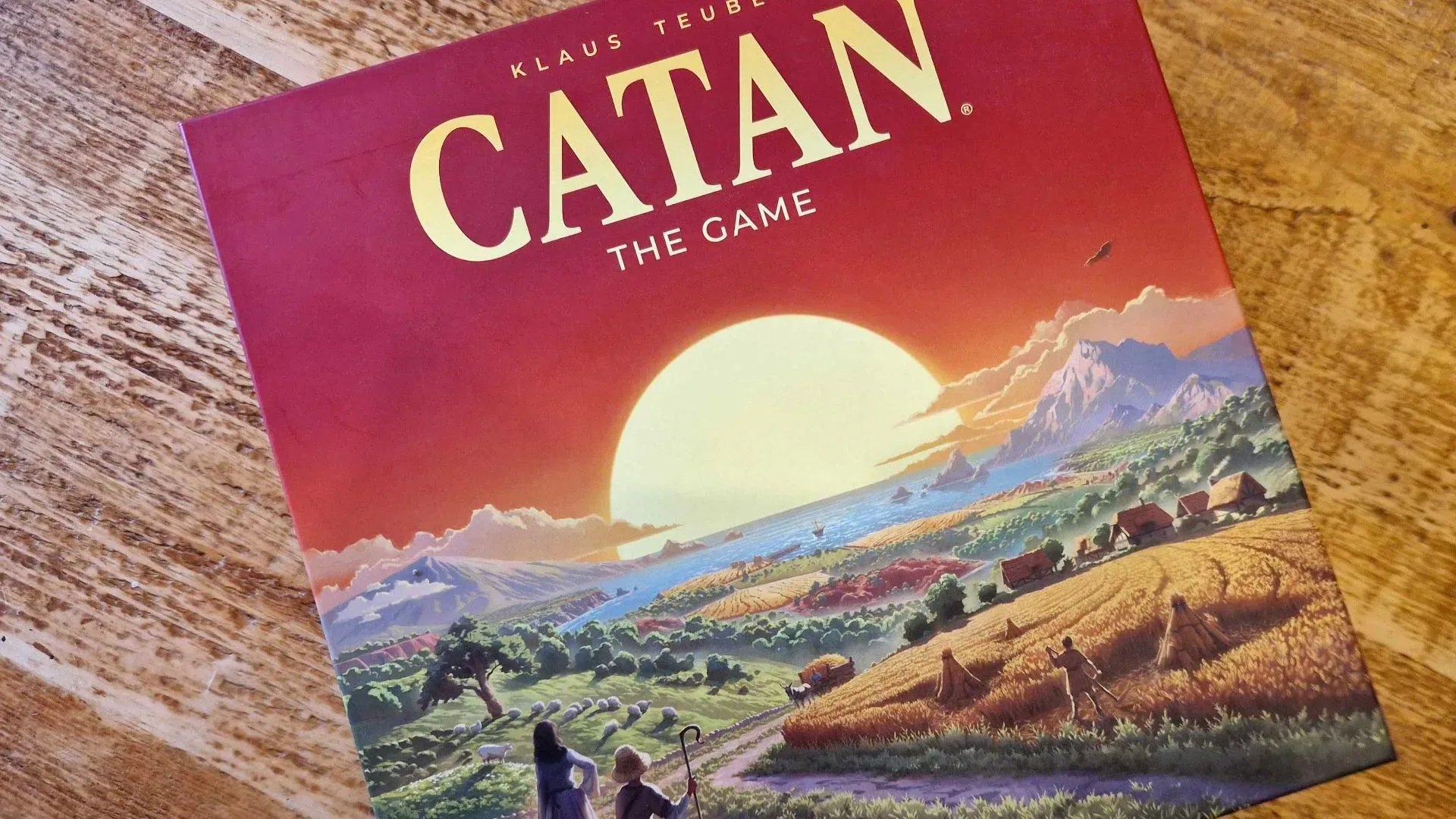
Catan is the step-up option for a family willing to take on a more tactical game. Players are settling an uninhabited island, and there are multiple ways to pursue a win. That range is a major reason it has had such influence within the board-game hobby: it offers repeat play without guaranteeing the same shape of contest or the same outcome.
Calling Catan tactical does not mean calling it inaccessible. It means that choices about where and how to develop matter more consistently, and players need to assess changing circumstances rather than follow a fixed script. Tactics are the shorter-term decisions made in response to the current position. In a board game, that might mean seeing an opening, changing priorities or choosing the path that best fits the state of the table. Catan asks for more of this kind of evaluation than the other games on this list.
Its multiple routes to success also matter at a family gathering. A game with only one obvious plan can leave less confident players feeling as though they fell behind before they understood the system. When a game supports more than one way forward, players have more room to reconsider their approach. That does not eliminate competition; it makes adaptation part of the experience.
It is the recommendation to save for a group that wants the evening’s centerpiece rather than a quick icebreaker. The payoff is a game with enough variety to justify returning to it, and enough player interaction to prevent everyone from simply solving a private puzzle. Its standing as one of the most influential strategy games of the last 30 years reflects that balance of accessibility, repeatability and meaningful tactical choice.
How to choose the right game for the table
The best choice is not necessarily the most acclaimed title. It is the one that fits the moment and the people in front of it.
- Choose Carcassonne if the group likes visible, shared construction and wants a calm route into strategy.
- Choose Herd Mentality if energy is low, the crowd is large or the priority is easy conversation and jokes.
- Choose Codenames if people enjoy teams, language and debating connections between words.
- Choose Ticket to Ride if the table wants a clean ruleset with competition over limited space.
- Choose Catan if everyone is ready for the most involved and tactical game in this group.
There is no need to treat a gateway game as a lesser game, either. The phrase describes the ease of entry, not a ceiling on enjoyment. Carcassonne’s token tension, Herd Mentality’s crowd prediction, Codenames’ constrained communication, Ticket to Ride’s contested tracks and Catan’s shifting tactical possibilities each give players a reason to return.
For Thanksgiving, that is the real advantage over defaulting to an old standby out of habit. A well-chosen game can give every person at the table a role—planner, clue-solver, consensus reader, route blocker or adaptable settler—without requiring the evening to become a rules seminar. Pick the mood first, pick the game second, and let the dice rest if they are not doing anyone any favors.
Shop the products
Check current price, model and availability at the retailer.
- View Z-Man Games Carcassonne on Amazon US on Amazon
- View Big Potato Herd Mentality on Amazon US on Amazon
- View Czech Games Edition Codenames Board Game (2nd Edition) on Amazon US on Amazon
- View Days of Wonder Ticket to Ride Board Game (2025 Refresh) on Amazon US on Amazon
- View Catan (6th Edition) on Amazon US on Amazon