There is nothing inherently wrong with Monopoly. It has properties, little tokens, money, and the uniquely powerful ability to turn a relaxed gathering into a tribunal over rent collection. But for families ready to move beyond its familiar loop, the tabletop shelf is much broader than the old standards suggest.
Four games stand out as approachable alternatives: Catan, Harmonies, Ticket to Ride, and 7 Wonders. They do not all deliver the same kind of evening, and that is precisely the point. One centers on trading resources, another on constructing a pleasing animal habitat, another on completing rail routes, and another on guiding an ancient civilization through competing priorities.
They are frequently described as gateway games. That term does not mean simplified or disposable. It means games that can welcome players accustomed to classics such as Monopoly or Clue while demonstrating that modern board games can offer meaningful decisions without demanding an exhausting rules lecture. A gateway game should get people playing, give them enough control to care about their choices, and leave them curious to play again.
For a household seeking a replacement for a particularly contentious property-trading ritual, these four offer different routes into that bigger hobby.
For more context, explore Microsoft Surface Laptop Ultra Targets AI Builders With RTX Spark, 128GB Memory and Upgradeable Storage.
What makes a board game friendly to beginners?
“Beginner” is less about a player’s age or intelligence than about friction. A game can be strategically rich while still being inviting if its central activity is easy to explain and its choices make intuitive sense. Building a route, gathering materials, arranging a landscape, or growing a civilization are immediately understandable objectives. The deeper questions emerge during play: which route is safest, what resource is worth trading, which tile helps later, or whether military, science, and wonders should take priority.
That layered structure matters at family gatherings. Players who want a light evening can follow the core idea, while people hungry for competition have room to plan. The table gets a shared activity rather than a contest between one person who has memorized a rulebook and everyone else who is politely waiting for it to end.
It also helps to distinguish a few terms that can make strategy games sound more intimidating than they are:
- Resource gathering means acquiring the materials needed for later actions or construction.
- Trading lets players exchange what they have for what they need, making conversation part of the game’s decision-making.
- Multiple paths to victory means success is not tied to only one approach. Players can pursue different strengths rather than simply repeating the same race.
- Strategy does not have to mean calculating every possibility. At this level, it often means setting a simple priority and adjusting when other players affect the board.
None of that automatically guarantees a serene family night—no cardboard can fully defeat sibling rivalry—but it does shift the focus away from Monopoly’s familiar property squeeze and toward planning, puzzle-solving, building, and interaction.
Catan: the foundational step beyond property trading
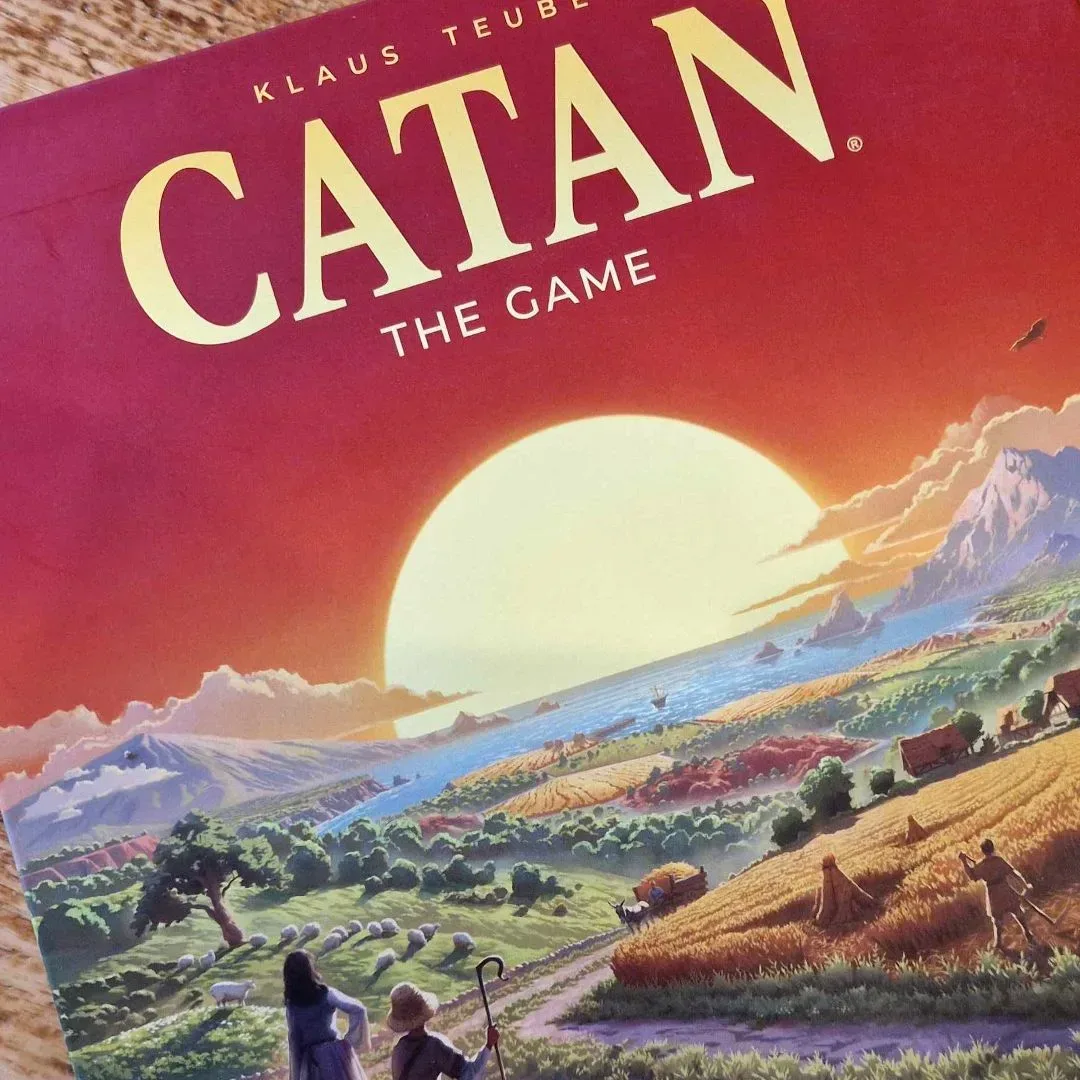
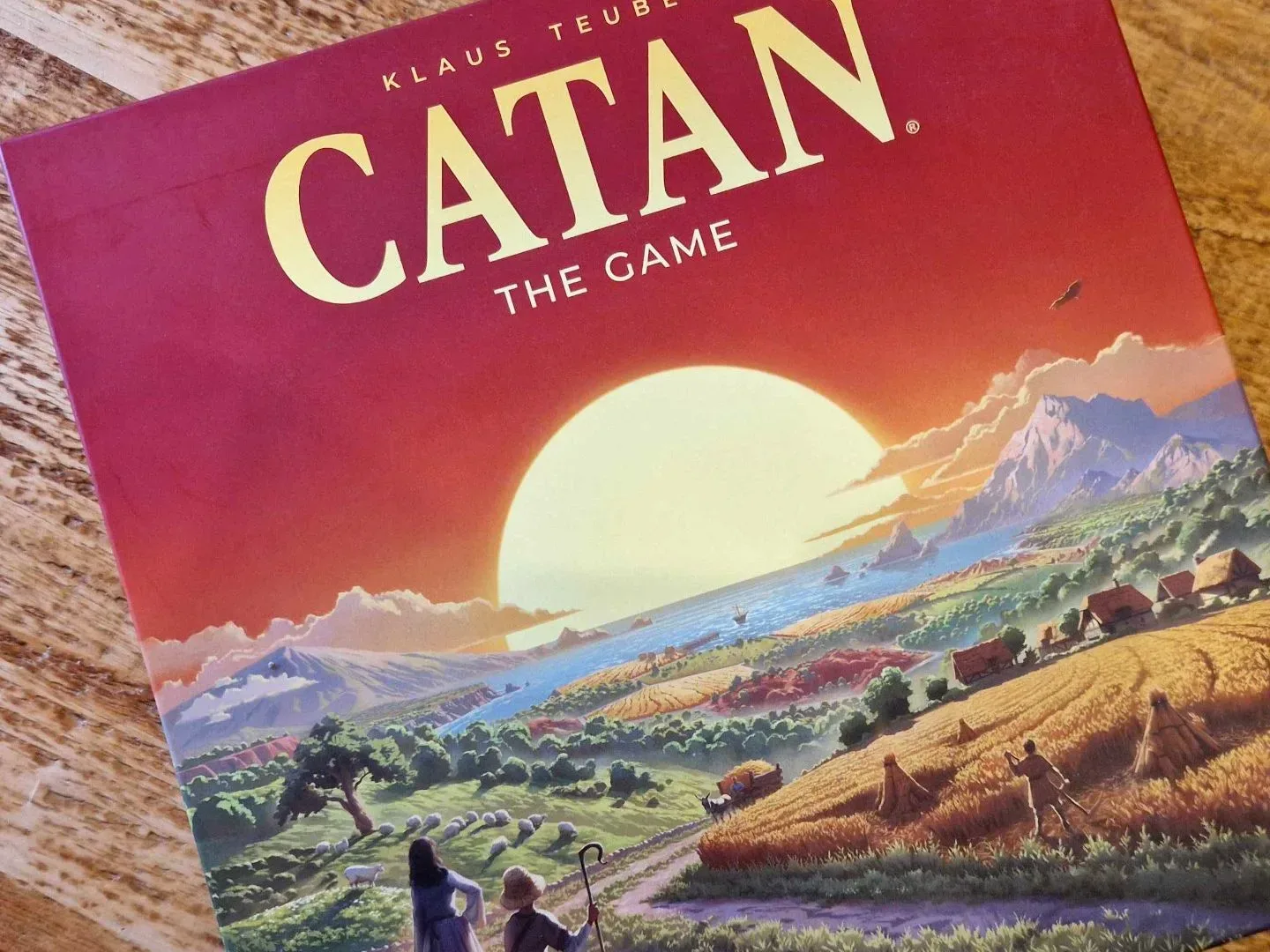
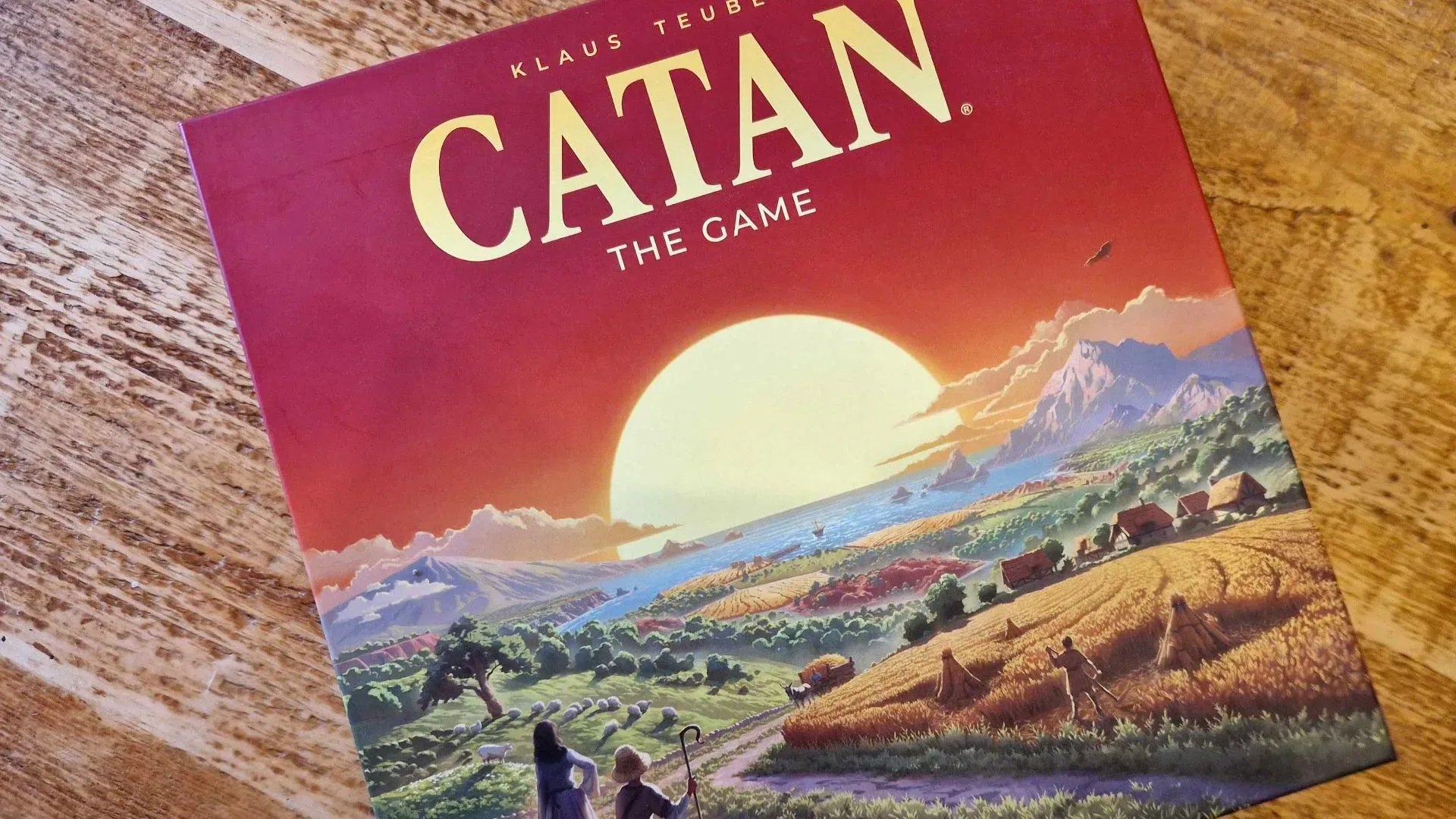
Catan, formerly known as Settlers of Catan, is the clearest first recommendation for a group that wants a recognized starting point in modern strategy board games. Its influence comes from putting several appealing ideas together: resources, forward planning, trading, and more than one way to pursue a win.
Players gather resources and must decide how to convert them into progress. That immediately creates a more active kind of table talk than simply reacting to a rent demand. Trading is a central part of the experience, so players are encouraged to negotiate, evaluate scarcity, and decide when cooperation is worthwhile. The game’s tension is not only about what a player owns, but also about what they need next and how other people may help—or complicate—that plan.
For Monopoly veterans, Catan’s appeal is easy to articulate: ownership and exchange remain important, but the game asks for more choices. Thinking ahead matters. A resource that looks unexciting now may become crucial after a later build, while an apparently generous trade can help an opponent establish the lead.
That does not mean every table will approach Catan identically. The game’s social element is a feature, not background noise. Players who enjoy making deals may find it especially engaging; players who dislike negotiation should know that discussion is part of its identity. Still, that interaction is exactly why Catan remains a durable gateway choice. It turns a family game into a collective conversation about priorities.
It is also a useful answer to the misconception that strategy games must be cold, silent affairs. Catan gives planning a social outlet. Its resource system provides the structure, but the people at the table provide the drama.
Harmonies: a gentle, visual change of pace
Harmonies heads in a different direction. Its premise revolves around creating dreamlike worlds for animals, giving it a gentler tone than a game built around property or conquest. That visual appeal is not trivial when choosing a game for mixed company: an inviting table presence can persuade hesitant players to sit down in the first place.
The core attraction is the act of creating and arranging a world. That makes Harmonies a strong fit for a group that wants a satisfying puzzle without the more overtly competitive mood that can dominate classic family games. Rather than framing every decision as an attack on someone else’s position, the game’s animal-world theme directs attention toward what each player is making.
It is still a game of decisions, not simply a decorative activity. Players must consider how to construct their worlds effectively, and that planning is where its replayable appeal can emerge. The difference is in presentation and emotional temperature. Some families want direct negotiation and rivalry; others would rather quietly compare the landscapes they have built by the end.
Its positive reception is notable as a signal of broad appeal: 94% of more than 800 Amazon user reviews referenced for the game were five-star ratings. User-review percentages are not a substitute for knowing a group’s own tastes, but they do support the idea that Harmonies has connected with a large number of buyers. For newcomers, its biggest practical advantage may be that it presents strategy through an immediately attractive creative idea.
Ticket to Ride: routes first, tactical pressure underneath
Ticket to Ride is perhaps the easiest recommendation for people who want an accessible family game that still develops a real competitive edge. Players create train routes across North America, a goal that reads like a clear puzzle: identify the connections you need and work toward completing them.
The game’s accessibility comes from that concrete objective. Even someone who does not think of themselves as a strategy player can understand the satisfaction of linking places together. There is a visible sense of progress as a route takes shape, which makes the game easier to follow at the table than titles whose plans are more abstract.
But the simplicity of the premise is not the whole story. A strategic undercurrent develops because route-building is not conducted in a vacuum. Choices made early can shape what remains practical later, and players must weigh immediate progress against longer-term goals. The result is a game that can be easy-going in tone while still giving players something meaningful to consider on each turn.
That balance is valuable for a family gathering. The game supplies a common task everyone understands, then gives more invested players room to refine their decisions. It avoids requiring newcomers to absorb a broad menu of systems before they can participate.
Ticket to Ride is therefore a sensible middle ground: more thoughtful than a purely luck-led diversion, but not so dense that it turns an evening with relatives into an advanced strategy seminar. If the goal is a game people can learn together and happily revisit, its route-building puzzle makes a persuasive case.
7 Wonders: a wider menu of ways to succeed
7 Wonders is the pick for a group ready to lean further into strategy while retaining an approachable thematic hook. Players lead an ancient civilization and can chase success through several directions, including constructing wonders, building military strength, or pursuing science.
Those alternatives are crucial. Instead of locking every player into an identical plan, 7 Wonders invites people to identify an approach that suits their circumstances and preferences. A player drawn to spectacular construction can emphasize wonders; another may favor military might; another may see promise in science. That is the practical meaning of multiple paths to victory: the game creates room for different strategic identities at the same table.
For beginners, this can be more welcoming than it first sounds. A menu of options becomes daunting only when none of them are legible. Here, the broad categories are understandable. The real learning comes from judging which direction is most productive and recognizing that a promising plan may need to change.
7 Wonders is consequently best suited to families who want to graduate from a single central puzzle into a game with broader strategic scope. It is not being offered as a replacement for every casual occasion; Harmonies or Ticket to Ride may better serve a group looking for a softer entry. But for players who have discovered they enjoy making plans rather than merely rolling with events, 7 Wonders offers a clear next step.
Choosing the right one for the table
The best purchase is not necessarily the game with the grandest reputation. It is the one whose type of interaction matches the people likely to play it.
- Choose Catan for a group that enjoys bargaining, resource management, and making deals.
- Choose Harmonies for players attracted to a calm, visually expressive world-building puzzle.
- Choose Ticket to Ride for a family that wants a straightforward shared objective with satisfying strategic pressure.
- Choose 7 Wonders for a group eager to explore varied strategic routes and a more expansive civilization-building theme.
It is worth resisting the urge to buy solely because a deal looks compelling. The supplied pricing references indicate that Catan is normally closer to $40 and 7 Wonders is often seen around $51, while UK offers cited included Catan at £32.99, Harmonies at £27.29, Ticket to Ride at £32.79, and 7 Wonders at £33.99. Those figures are snapshots rather than promises, and regional pricing differs. A discount can make a good game easier to justify, but it cannot make a negotiation game suit a table that hates negotiating.
Families searching for a seasonal activity can compare these gateway-game alternatives for the next gathering, then choose based on the mood they actually want. The shared lesson of all four is that moving on from Monopoly does not mean abandoning accessible play. It means choosing what kind of fun the group wants: trading, building, connecting, or competing across several possible goals.
That is a far more promising starting point than arguing over Bond Street again.
Shop the products
Check current price, model and availability at the retailer.