King of Tokyo: Godzilla arrives as a very direct answer to a question tabletop fans have been asking for years: what if the monster dice game that has always nodded toward giant-creature cinema could use Godzilla’s actual stable of kaiju? Iello’s new edition does not rebuild Richard Garfield’s 2011 design. It instead puts a lavishly produced Godzilla skin over the familiar, welcoming, occasionally merciless game of dice, city control, upgrades, and everybody attacking whoever looks most vulnerable.
That makes it a particularly easy game to understand. It is designed for two to six players, recommended for ages 8 and up, and listed at roughly 30 minutes. Its low complexity is an asset rather than an apology. King of Tokyo has endured because it can put experienced hobby players, newcomers, and younger players around one table without making anybody read a rulebook the size of a municipal zoning code.
For people who have never owned a King of Tokyo box, the Godzilla edition looks like an appealing front door: recognizable monsters, sharp presentation, and the core game’s proven format. For established players, the calculation is less simple. This is predominantly King of Tokyo as they know it, although Event cards and the production value give it a distinct identity. The real question is not whether the design works; 15 years of giant-monster mayhem has already settled that. The question is whether the Godzilla license and premium touches are the version of that formula a group wants on its shelf.
A kaiju game with a stubbornly elegant core
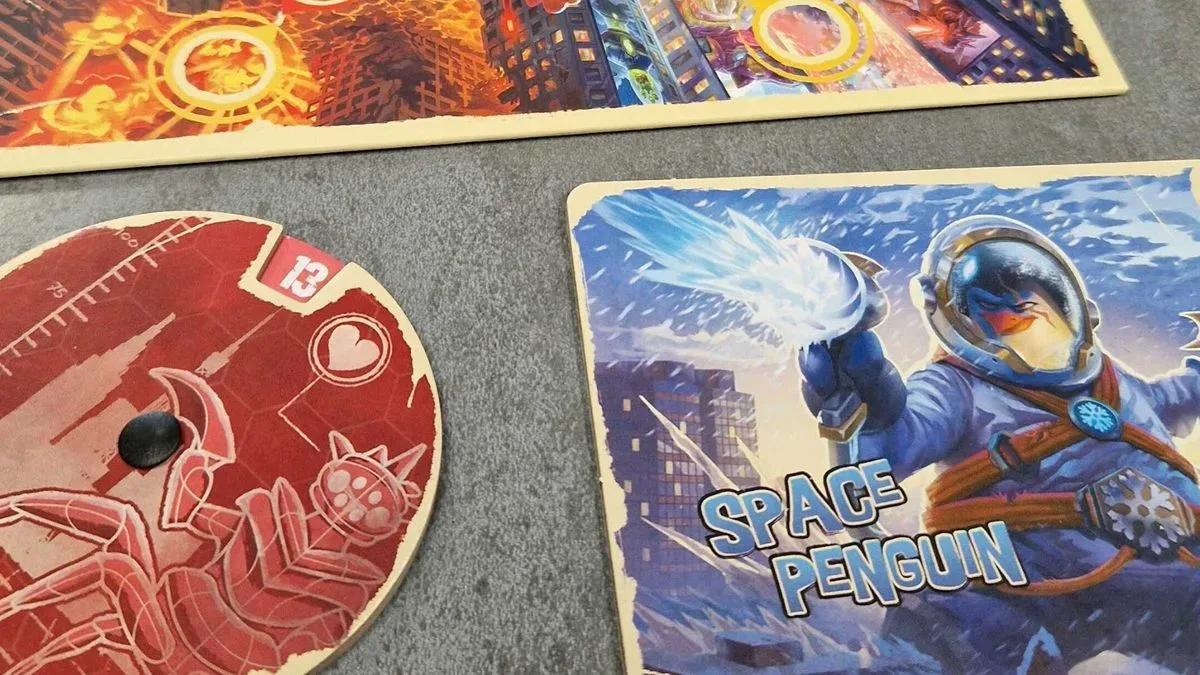
Each participant controls one monster and tracks two crucial numbers: health and victory points. The basic goal has two paths. A player can reach 20 victory points, or survive as the final monster standing. In practice, the knockout route may dominate many sessions, because the incentives of Tokyo turn the middle of the table into an increasingly loud invitation to start swinging.
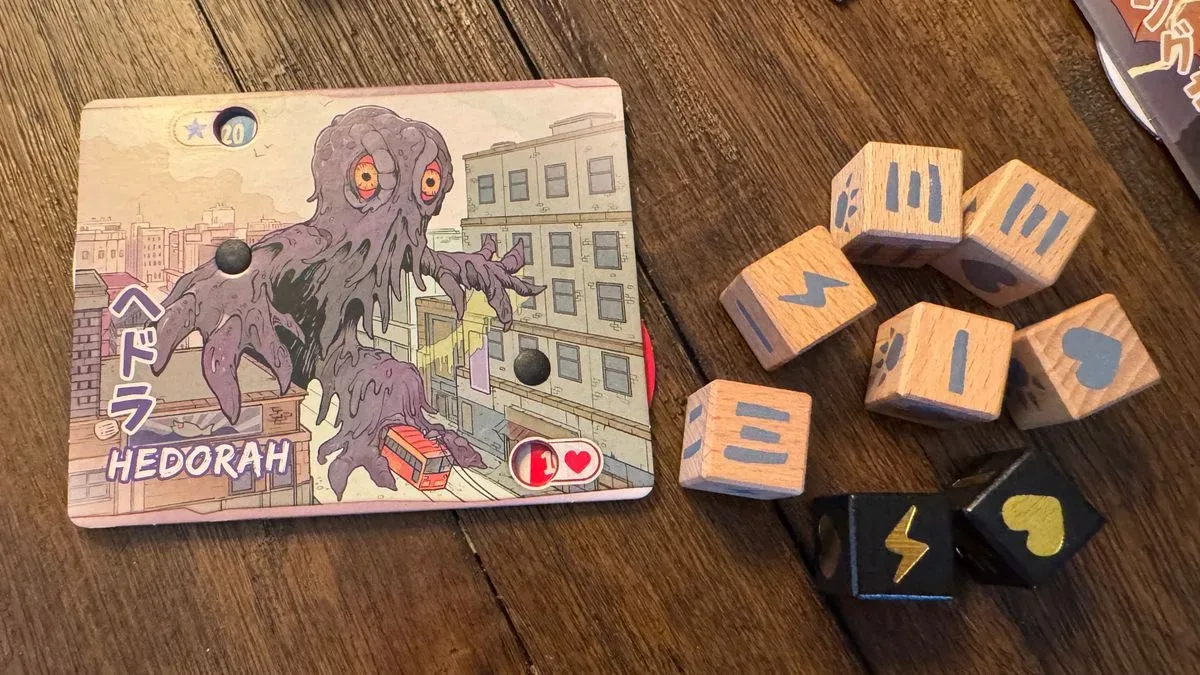
On a turn, players roll six dice and choose which results to hold. They may reroll the unheld dice up to twice. It is an instantly readable push-your-luck structure with a Yahtzee-like cadence, but the symbols turn every roll into a compact tactical choice:
- Monster footprints deal damage.
- Hearts restore health in the appropriate circumstances.
- Energy provides the currency used to buy cards.
- Number results can score points when a player collects three matching values.
There is a welcome decision tucked inside the healing symbols. A player rolling three hearts can choose an Evolution instead of taking the healing. Each monster has a dedicated Evolution deck, meaning its upgrades can be a one-shot surprise or an ability that continues to influence the game. Alongside those personal developments is a shared Power deck. Energy can purchase its broadly available cards, which include temporary tricks and permanent power-ups.
None of that is complicated in isolation. The fun comes from determining whether a hand should be used to repair a battered kaiju, collect energy for an enticing Power card, build points, or deal enough damage to make an opponent’s exit from the game feel inevitable. Dice refuse to cooperate often enough that a grand plan can become rubble in a single reroll. That is not a defect hidden in the machinery; it is the machinery.
Tokyo is both prize and pressure cooker
The city itself turns the dice game into a multiplayer brawl. Entering Tokyo scores victory points, and holding it at the beginning of a turn earns more. The occupant has an extraordinary offensive advantage: its attacks hit every monster outside the city. But that same creature becomes everybody else’s preferred target and cannot heal during its turn.
That trade-off creates the key drama. Staying in Tokyo means points and broad attacks, but it also means risking a spectacularly quick collapse under combined fire. Leaving is allowed when damage is taken, yet abandoning the city does not simply make it disappear. The next player in turn order immediately claims Tokyo. Players therefore have to think one beat beyond their own survival: fleeing can hand someone else a very lucrative position, while staying might leave a wounded monster facing attacks from the whole table.
It is this shared understanding of who is about to get flattened that gives King of Tokyo its ideal couch-multiplayer energy. There are deals, gleeful calls to focus fire, and cries of disbelief when the dice find precisely the symbol everyone feared. For an etiquette refresher before the claws come out, our guide to the unwritten rules of couch multiplayer is useful reading. The short version: celebrate the chaos, but do not turn a friendly kaiju scuffle into an all-night grievance.
What the Godzilla edition brings to the table
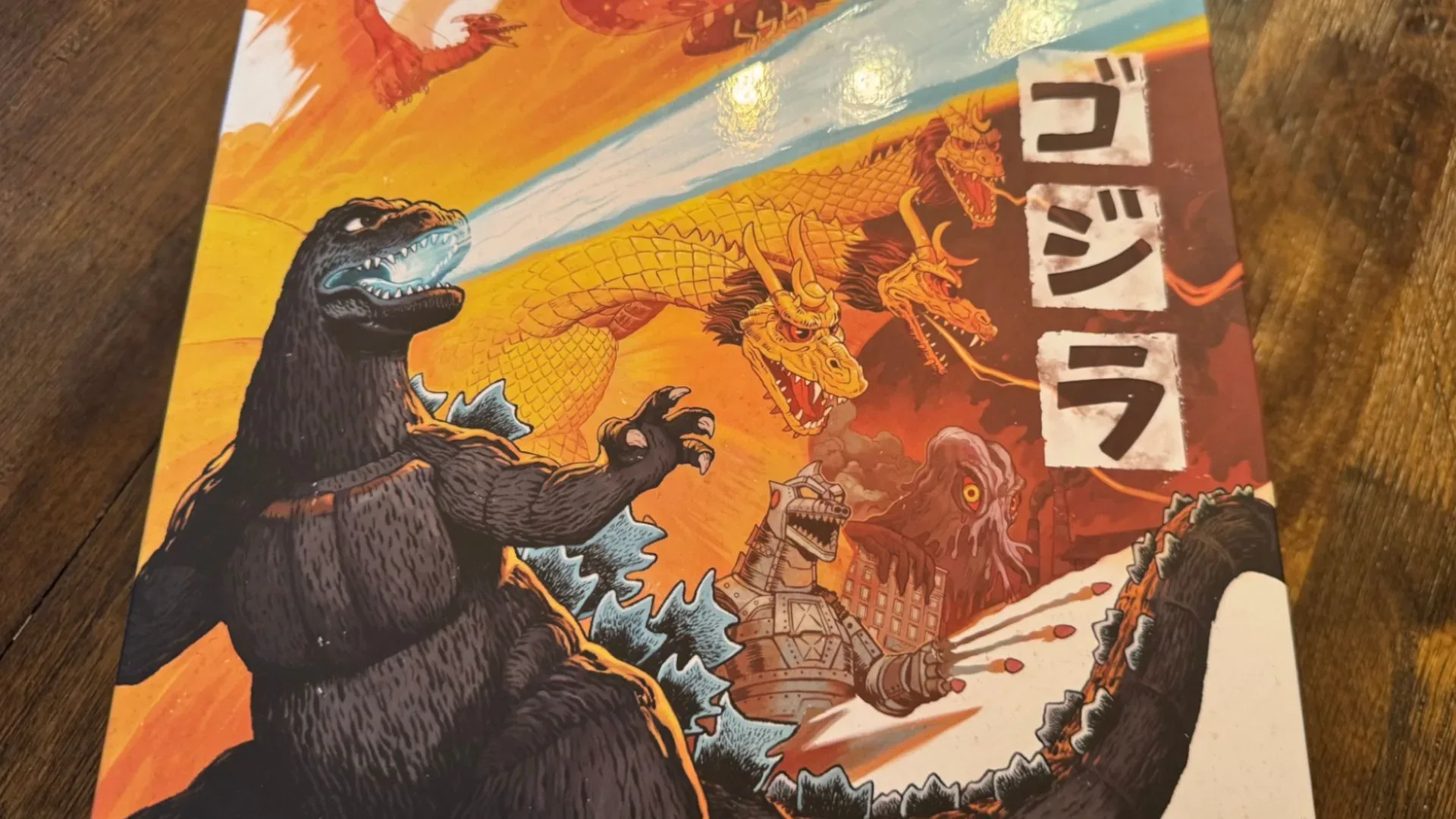
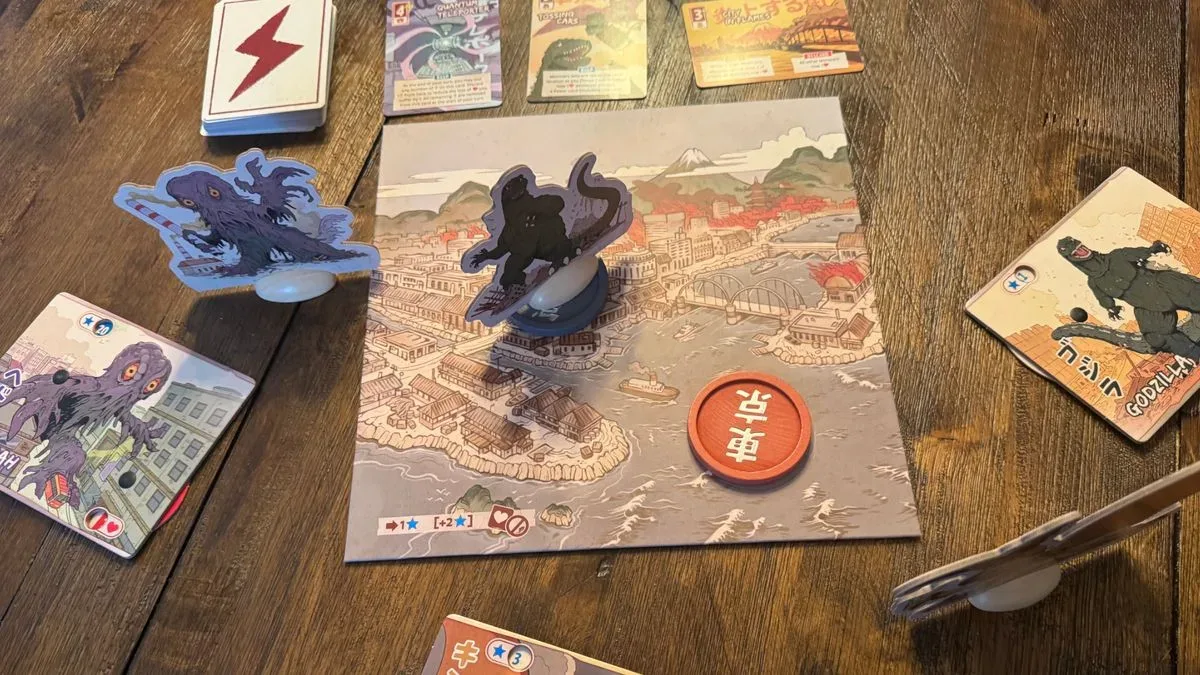
The headline addition is not a radical rules overhaul. It is the arrival of six monsters from the Godzilla series, presented with dozens of pieces of artwork by Markus Erdt. That art matters. King of Tokyo has always been a colorful, cartoon-forward celebration of oversized creatures, but licensed kaiju give this box a more immediate personality. It no longer needs to gesture toward the history of monster movies; it can put that history directly at the center of play.
Its principal mechanical addition is the Event card. These cards appear when they enter the Power-card marketplace. An Event changes the conditions for every monster while it stays in play, then offers a separate discard function. A player who spends energy to purchase and remove the Event receives the card’s specified benefit. That creates a public problem and an incentive to solve it, adding a modest but welcome wrinkle to the normal question of whether to buy the best Power card before an opponent does.
Veterans should keep expectations in proportion. Event cards are a meaningful variation, not a transformation. Players seeking an entirely fresh game may find the overall rhythm extremely familiar, particularly if they have explored expansions before. The Godzilla edition is best understood as a polished, focused package built on the original design rather than a sequel determined to replace it.
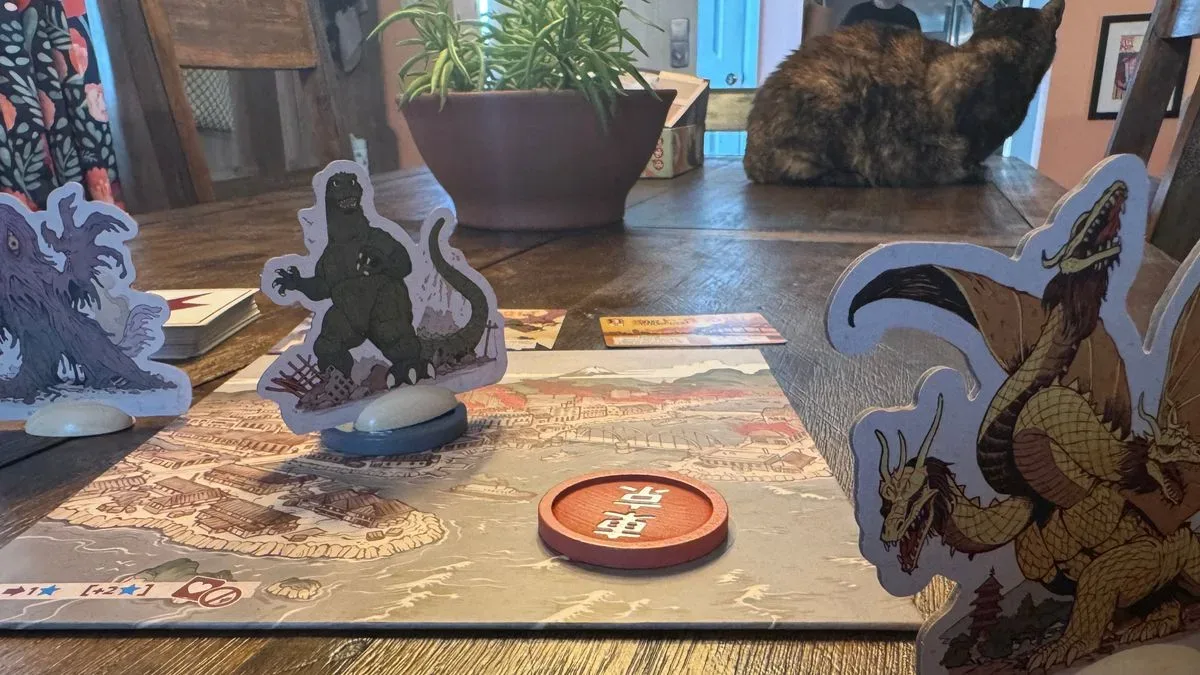
It does, however, make a strong case through material quality. The dice and energy markers are wooden, and the cardboard standees are sturdier than those associated with other entries in the series. It is not marketed as a premium edition, but the description fits the physical impression of the box. In a game that will be rolled, passed around, knocked into, and occasionally accused of personal betrayal, components that feel more substantial are not a trivial improvement.
Luck is not an accident here
King of Tokyo: Godzilla has tactical decisions, but it should not be mistaken for a game where careful optimization neutralizes chance. There are limited ways to prevent incoming damage, no complete cure for a dreadful sequence of rolls, and plenty of opportunities for the game state to swing because someone finds exactly what they need on a final reroll.
That makes it a poor fit for players who want precise control over every outcome. It is a strong fit for groups willing to treat luck as part of the show. The game is asking players to inhabit giant monsters smashing across Tokyo, not to produce a five-year urban renewal strategy. A Power card or Evolution can create opportunities, and timing a retreat from Tokyo demands judgment, but the dice are always capable of stepping on a beautifully constructed plan.
The highest player counts may bring out the game’s most chaotic personality. More monsters mean more targets, more damage, more table talk, and more chances for an Event to scramble everyone’s priorities. Smaller groups can still work, but the central idea becomes especially vivid when several people have competing reasons to take or avoid the city.
Who should choose this box?
King of Tokyo: Godzilla is an excellent match for newcomers who love the Godzilla universe. The accessible rules mean the license is not attached to an intimidating collector’s item. It is attached to a game whose rules can get moving quickly, while the combination of recognizable monsters and art gives the whole experience a clear thematic hook.
It is also compelling for players who want the nicest-feeling standard King of Tokyo-style package. Wooden dice and energy pieces, sturdier standees, and Erdt’s extensive illustration work make this more than a generic reskin. Collectors assessing whether the shelf appeal justifies another version may recognize a familiar process; it resembles the collector’s five stages of buying one small thing, except the small thing has apparently grown to skyscraper height and is breathing atomic fire.
It is less essential for longtime franchise completists looking for new systems. The Event-card wrinkle and fresh monster lineup may be enough for fans who value theme and components, but the underlying game remains close to the original. Existing owners should approach it as a premium Godzilla-flavored edition, not a fundamental redesign.
There are other ways to visit this broader tabletop universe, including the two-player King of Tokyo: Duel and the cooperative King of Monster Island. Yet neither changes the basic appeal of this release: it takes an accessible competitive dice brawler and gives it the official kaiju treatment many players will immediately understand.
For a group that wants lightweight strategy, flashy components, famous monsters, and permission to cheer when a friend’s plans get stomped flat, King of Tokyo: Godzilla has a persuasive pitch. Just make peace with the fact that the dice have their own agenda. In this city, they are the real final boss.
Keep reading
Shop the products
Check current price, model and availability at the retailer.