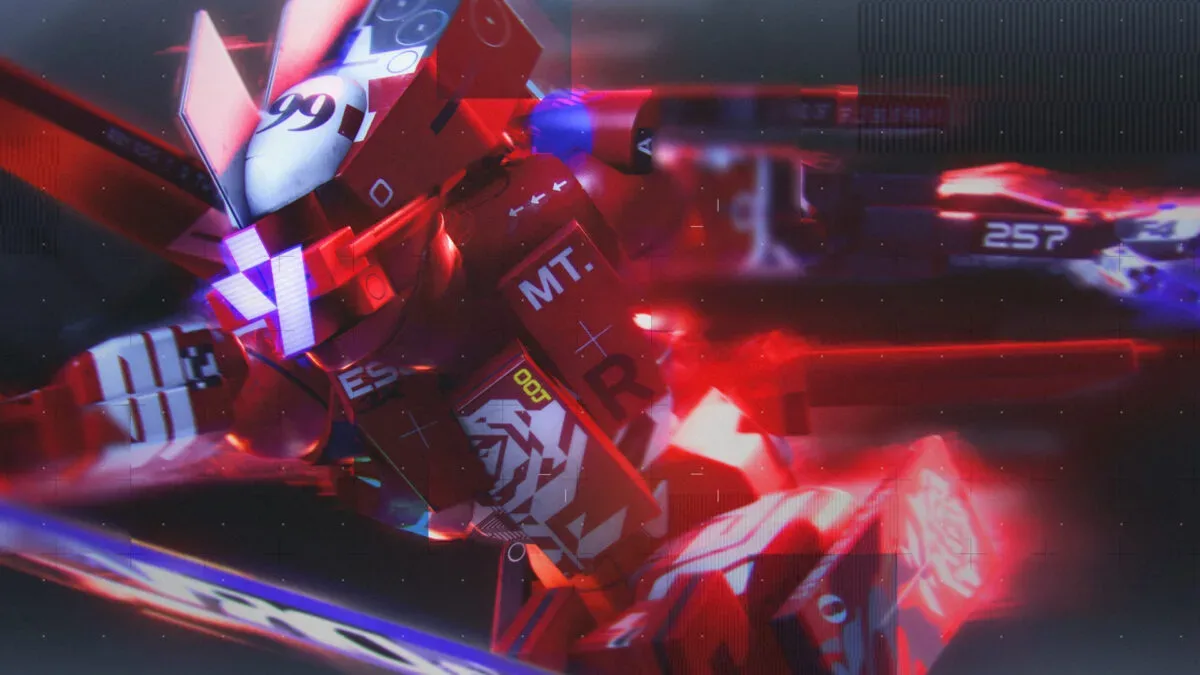
Marathon’s newest cinematic has a simple job: introduce Bishop, an offense-minded character class arriving with the Symbiosis update on December 8. It does that job with pump-action shotgun blasts, ankle-mounted jetpacks, and the brisk, highly stylized violence of a cyberpunk samurai who seems to have studied action cinema rather than basic workplace safety. More importantly, the 90-second film again shows why Marathon’s presentation has become one of its most persuasive assets.
This is a multiplayer extraction shooter built around PvP loot scavenging, but its non-gameplay trailers keep peering outward from the match itself. They suggest people, factions, environments, motives, and conflicts larger than the immediate business of grabbing valuables and making it out alive. Bishop’s debut does not suddenly turn Marathon into a narrative campaign. It does, however, underline how much dramatic texture exists around the game’s competitive core.
That tension is the interesting part. A cinematic can establish mood, sell a combat fantasy, and make a new class legible in a minute and a half. A live multiplayer game must also make that class readable under pressure, fair against opponents, and meaningful within the decisions players make from match to match. Bishop looks ferocious in a tightly edited film; the Symbiosis update will determine how that fantasy translates when other players are shooting back.
Bishop is built to communicate aggression immediately
The available description frames Bishop as a precision-focused, offense-minded subclass. The cinematic’s design language makes that point before any text needs to spell it out. A pump-action shotgun signals close-range threat and commitment. Jetpacks mounted at the ankles imply sudden movement rather than a slow, methodical advance. The cyberpunk samurai styling gives the character a recognizable silhouette and a controlled, predatory presence.
“Character class” is a useful term here. In a multiplayer game, a class generally means a playable archetype defined by a particular set of tools, strengths, and tradeoffs. It is not merely an outfit. A well-defined class lets players understand, at a glance, what a combatant may be trying to do. An offense-oriented class would ordinarily be expected to pressure opponents, seize space, or turn a brief opening into an advantage. The supplied details do not establish Bishop’s full loadout, abilities, or limits, so those specifics remain unknown. But the trailer clearly wants viewers to associate the class with mobility, lethality, and forward momentum.
That is a particularly efficient approach for a new addition to an extraction shooter. Extraction shooters combine hostile encounters with the pursuit and recovery of loot. The pressure does not come only from losing a gunfight; it comes from the possibility that resources gathered during a run may not make it out. In that context, an aggressive class fantasy carries a natural appeal. A player could imagine Bishop as the one that breaks a stalemate, closes the distance, interrupts an escape, or makes an enemy reconsider treating a corridor as safe territory.
None of that is a confirmation of how Bishop will function in actual matches. It is an explanation of what the cinematic communicates. The film is selling an emotional role first: the hunter in the room.
The trailer’s animalistic movement is more than a cool flourish
One viewer described Bishop as feeling like a predator, noting that the movement can appear less human at times. That observation gets at why the cinematic’s action lands. The character is not presented simply as a well-armed person in stylish armor. Bishop is staged as a body in motion with an unsettling degree of purpose.
Related coverage includes Marathon's Bishop Cinematic Makes a Strong Case for Its World Beyond the Match.
Action design often works by giving a character a movement signature. A slow, rigid figure can suggest armor or inevitability. A loose, evasive figure can suggest improvisation. Bishop’s mix of precise gun handling and abrupt jet-assisted motion points toward something that hunts rather than merely fights. The character appears directed at a target, not just moving through a set.
That distinction matters because trailers for multiplayer games regularly face a clarity problem. They need to introduce a cool-looking fighter without reducing that fighter to a list of weapon statistics. Bishop’s short film avoids the spreadsheet approach. It uses rhythm, posture, and velocity to create an immediate identity. Even viewers who know nothing about the class’s eventual mechanical details can understand its intended attitude.
The Y2K-inflected action styling helps, too. The reference point is not realism for realism’s sake; it is heightened, glossy, carefully composed threat. That means the shotgun and jet hardware do double duty. They are pieces of imagined equipment, but they are also visual punctuation. Every decision is aimed at making Bishop memorable within a crowded action-game vocabulary.
Why Marathon’s cinematics feel connected rather than disposable
Another reaction to the Bishop film suggested that it feels distinct from earlier Marathon cinematics. There is room for that response: the action is especially direct and Bishop’s physicality gives this entry a sharp individual hook. Yet the stronger reading is that it belongs to a continuing visual and narrative approach.
Across the non-gameplay material described here, Marathon’s trailers have used short vignettes around the edges of its central PvP scavenging loop. A vignette is a compact scene intended to illuminate a larger world without trying to explain everything. It can introduce a person, establish an emotional temperature, or show the consequences of a conflict in miniature. That form is well suited to a game universe that wants to preserve mystery while still offering recognizable people and places.
Bishop’s cinematic appears to continue that method. Rather than pausing for a broad plot briefing, it makes a case through atmosphere and behavior. The audience receives a character impression, a sense of danger, and a glimpse of a setting whose rules seem bigger than the immediate encounter. The unanswered questions are part of the appeal. They make the film feel like a fragment of a world, rather than a commercial that happens to have a world-shaped backdrop.
This is why the trailers can provoke a campaign-sized wish. A full story campaign is not established as part of Marathon by this material, and it would be a mistake to treat stylish cinematics as a promise of one. But the desire is understandable. When a game repeatedly supplies concentrated scenes with distinct tone and implied history, viewers naturally wonder what a longer form could do with those elements.
That is a compliment with a caveat. Good world-building can create expectations that a competitive multiplayer structure is not designed to fulfill. The cinematic’s success does not require a campaign to validate it. Still, it demonstrates that Marathon has a setting and presentation capable of sustaining attention outside pure match strategy.
The practical question is whether the fantasy reads in play
There is a useful separation to make between cinematic language and game language. Cinematic language is about framing, editing, sound, and choreography. It can isolate Bishop, control the viewer’s focus, and make every motion look intentional. Game language is about what players can observe and react to in real time: animations, audio signals, weapon behavior, movement constraints, counterplay, and the information available in a chaotic match.
Counterplay means the options opponents have to recognize and answer a threat. It is central to multiplayer balance. A character can feel extraordinarily dangerous without being frustrating if opponents have consistent ways to identify the danger and make decisions around it. Conversely, a spectacular trailer moment does not explain whether a move will be predictable, limited, risky, or easy to counter in the game itself.
The description of Bishop as an offense-minded subclass gives players a sensible starting point, not a complete tactical manual. A shotgun implies a desired range. Ankle jetpacks imply positional flexibility. Precision suggests that effectiveness may depend on deliberate execution rather than simply spraying damage around. But these are thematic inferences, not announced mechanical rules. Players should be wary of reading exact gameplay expectations into a cinematic made to convey personality.
What the film can do, and does well, is set a standard for clarity. If Bishop’s in-match design delivers the same feeling of sudden movement and calculated violence while preserving understandable counterplay, the trailer will have accurately introduced the class’s identity. If actual play tells a more complicated story, the cinematic will remain an excellent piece of world-building rather than a complete guide to the subclass.
Symbiosis has an unusually stylish introduction to live up to
The Symbiosis update is due December 8, and Bishop is its newly introduced class. Those are the concrete facts. Everything else the cinematic accomplishes is about anticipation: making a class feel like an event, making a match-focused game feel like a place with stories orbiting it, and reminding players why visual direction can matter even when the core activity is competitive loot scavenging.
The community response captured in the available material is enthusiastic, from the blunt sentiment that Marathon remains difficult to dislike to the closer attention paid to Bishop’s unusual movement. That response is not only about a shotgun or a jet-assisted dodge. It is about the confidence of the presentation. Marathon’s trailers know the value of withholding a little, showing a lot, and making every fragment feel like it came from a larger and stranger system.
For a broader look at how games create conversation beyond the trailer cycle, see our guide to talking games at the holiday table. Marathon’s Bishop film is a handy example of why those conversations are rarely just about a release date or a weapon: players are also responding to visual identity, narrative possibility, and the promise that a multiplayer arena can feel like part of a living fictional world.
Bishop may be the immediate attraction, but the larger takeaway is familiar. Marathon’s cinematics remain exceptionally good at making the world beyond the match feel worth investigating. The Symbiosis update will reveal what that means in practice. For now, the new film has already done the difficult promotional work of making a class introduction feel like a small piece of science-fiction action cinema rather than a routine roster update.