For years, the ideal live-service game has been sold as an all-consuming habit: a place to log in every day, keep pace with every event, and treat any absence as a potentially costly mistake. Arc Raiders executive producer Aleksander Grøndal is arguing for almost the opposite model. If a player has exhausted what they want to do, they should take a break, play something else, and return when there is a meaningful reason to return.
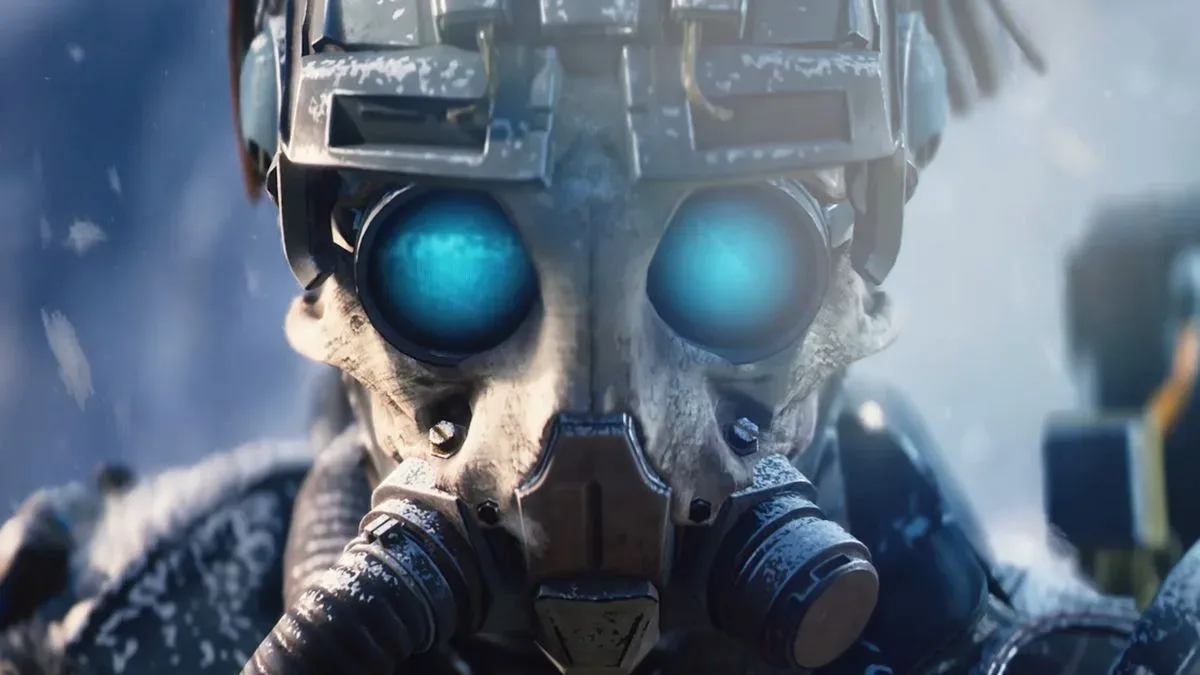
That is not a surrender from Embark Studios; it is a more candid description of the limits of an ongoing game. Arc Raiders’ next major update, Frozen Trail, arrives October 8, and it represents a shift toward larger drops of content rather than a perpetual scramble to meet demand. Grøndal says the team had become “super unhappy” in the race to keep the live-service machine moving. The studio has slowed down, regrouped around the methods used to build the extraction shooter initially, and is aiming to give players substantial new material instead of treating every quiet spell as a crisis.
The key point is unusually plain: players can complete or repeat content faster than a development team can create it. No amount of upbeat roadmap language changes that basic imbalance. A game can add systems that support long-term play, welcome newcomers, and preserve freshness for returning players. It cannot realistically promise infinite novelty to an audience that plays at the pace of its most dedicated members.
What “take a break” means in a live-service game
A live-service game is a game that continues to receive updates after release, usually through additions, adjustments, events, and ongoing systems intended to keep the experience active over time. Its player base rarely moves in a straight line. Interest rises around major updates and falls when regular players have reached their personal stopping point. Those rises and falls are not automatically evidence of failure; they can simply reflect how people use a game.
Grøndal’s position accepts those peaks and valleys rather than pretending they can be eliminated. Embark still wants systems that entertain its dedicated audience over time, and it also wants Arc Raiders to remain approachable and interesting for people arriving later. But it is drawing a distinction between maintaining a game and demanding that every player make it their only game.
“I think it’s perfectly fine that players take a break and play some other games,” Grøndal said.
That sounds obvious when said aloud, but it cuts against a common live-service anxiety: the sense that taking time away means falling behind, missing the important moment, or somehow betraying the game’s community. Grøndal instead describes an intended rhythm of stepping out, trying other games, waiting for a few updates, then coming back for Arc Raiders when there is more to explore.
Frozen Trail is meant to be one such return point. The available details identify it as a big update and part of a revised cadence focused on larger pieces of content. They do not establish its full feature list, so the sensible expectation is not to fill in blanks with imagined modes, rewards, or mechanical changes. What matters here is the approach behind it: provide a sizeable reason to revisit rather than continuously piling pressure on the team and the audience alike.
Related coverage includes Arc Raiders Producer Encourages Players to Step Away Between Major Updates.
Why bigger updates may be a healthier target
There is a practical production argument behind the change. Constant updates can create a treadmill effect. Teams must split attention between building new material, fixing issues, maintaining existing systems, and reacting to immediate feedback. The source material does not lay out Embark’s internal workflow in detail, so it would be wrong to prescribe a specific cause or solution. Still, Grøndal’s acknowledgement that the team was unhappy while trying to keep up makes the broader trade-off clear: relentless cadence has a human cost.
A larger-update approach does not magically erase those demands. It does, however, create room to concentrate work around more meaningful releases. For players, that can mean a clearer decision: this is the moment to return and see what has changed. For the studio, it offers a chance to focus on content that has enough weight to occupy players for longer than a brief novelty spike.
There is an important limit to that promise. “Longer” is not “forever.” Highly engaged players will still finish their goals quickly, especially in an extraction shooter where repeated runs can turn into a routine once personal objectives are complete. Arc Raiders cannot solve that by insisting that players keep grinding after interest has faded. Grøndal’s advice is a recognition that boredom is sometimes a signal to pause, not an obligation to keep queuing.
The extraction-shooter context
An extraction shooter is generally built around entering a session, pursuing objectives or resources, and successfully leaving with what was gained. That structure can make replayability central: the tension and decision-making of each run matter alongside any longer-term progression. It also means players may burn through available goals at very different rates. One person may be content with occasional trips in; another may devote hundreds of hours to mastering systems and clearing every target they set for themselves.
That variation makes one universal content schedule impossible. A player who has finished their own Arc Raiders goals is not necessarily saying the game contains nothing for anyone else. New players continue to arrive, while other returning players may still be working through what veterans completed long ago. The useful measure is personal: is there a current objective, challenge, social reason, or new update that makes another session appealing?
If the answer is no, the healthiest response may indeed be to stop for a while. That is not a gameplay guide to optimal progression; it is a more sustainable way to evaluate an entertainment hobby. Progress for its own sake can become a bad bargain when the enjoyment has already gone.
A better relationship with the backlog—and the industry
Grøndal also frames breaks as good for more than Arc Raiders. Modern evergreen games can take an enormous amount of attention, leaving little room for new releases or games outside an established routine. In his view, players spreading their time around is healthier for the industry overall, and studios should earn a player’s return through compelling new content rather than assume permanent exclusivity.
It is a reasonable perspective, particularly because it does not ask players to abandon Arc Raiders. It asks them to view leaving and returning as normal. The producer pointed to his own play habits with Valheim: he played heavily at launch, stepped away, then returned for version 1.0 after a long gap. The example matters because it describes a familiar pattern without treating a lapse in play as lost loyalty.
Other ongoing games have had to confront the same balance between continuity and player breathing room. Operational work remains important even when there is no huge content drop; for example, Old School RuneScape recently restored gear after a death bug forced worlds offline. The lesson is not that every live-service game should update in the same way. It is that maintenance, recovery, and major content development all compete for time, which makes honest expectations valuable.
What players can take from Frozen Trail’s rollout
For someone who already has hundreds of hours in Arc Raiders, Frozen Trail provides a straightforward checkpoint: look at the update, decide whether its new content sounds appealing, and play if it does. If it does not, waiting costs nothing. For someone newer to the game, the update may arrive while they are still discovering the existing experience. Neither group needs to justify its pace to the other.
That framing also helps separate legitimate disappointment from the pressure to be permanently occupied. Players can reasonably want engaging additions, reliable systems, and updates worth returning for. Developers can reasonably acknowledge that they cannot endlessly supply fresh material at the consumption rate of their most devoted audience. The productive middle ground is a game that gives people strong reasons to come back—and the freedom not to force it when those reasons run out.
Embark’s revised approach will ultimately be judged by the updates it delivers, beginning with Frozen Trail on October 8. But the underlying message deserves attention now. A live-service game should be a game people choose to revisit, not a calendar obligation. If Arc Raiders can build meaningful return moments while allowing its players and developers room to breathe, its quieter periods may become part of a healthier cycle rather than a problem to deny.