Marvel has spent decades throwing punches in digital form, from arcade cabinets built around enormous crossover rosters to modern games that ask players to turn superhuman powers into exacting combo routes. That history makes the lull after Marvel vs. Capcom Infinite feel particularly conspicuous. The genre did not stop moving—Arc System Works’ Dragon Ball FighterZ gave fans of explosive team combat another destination—but Marvel’s own place in that conversation was less certain.
Marvel Tōkon: Fighting Souls arrives with a smart answer to that problem. Developed by Arc System Works, it is a 4v4 fighter that respects the noise, speed, spectacle, and reversal potential people associate with Marvel tag games, yet does not simply demand that every player learn four full characters before they can enjoy a match. It is a system with a deceptively friendly front door and an awful lot of cosmic property damage behind it.
The result looks positioned as both a return to a familiar kind of superhero fighting game and a meaningful adjustment to how tag fighters can work. It borrows the sense that any exchange might suddenly become a screen-filling disaster, but it structures teams in a way that makes the central character matter more than the traditional rotating cast of a tag game.
A 4v4 format that does not require four encyclopedias
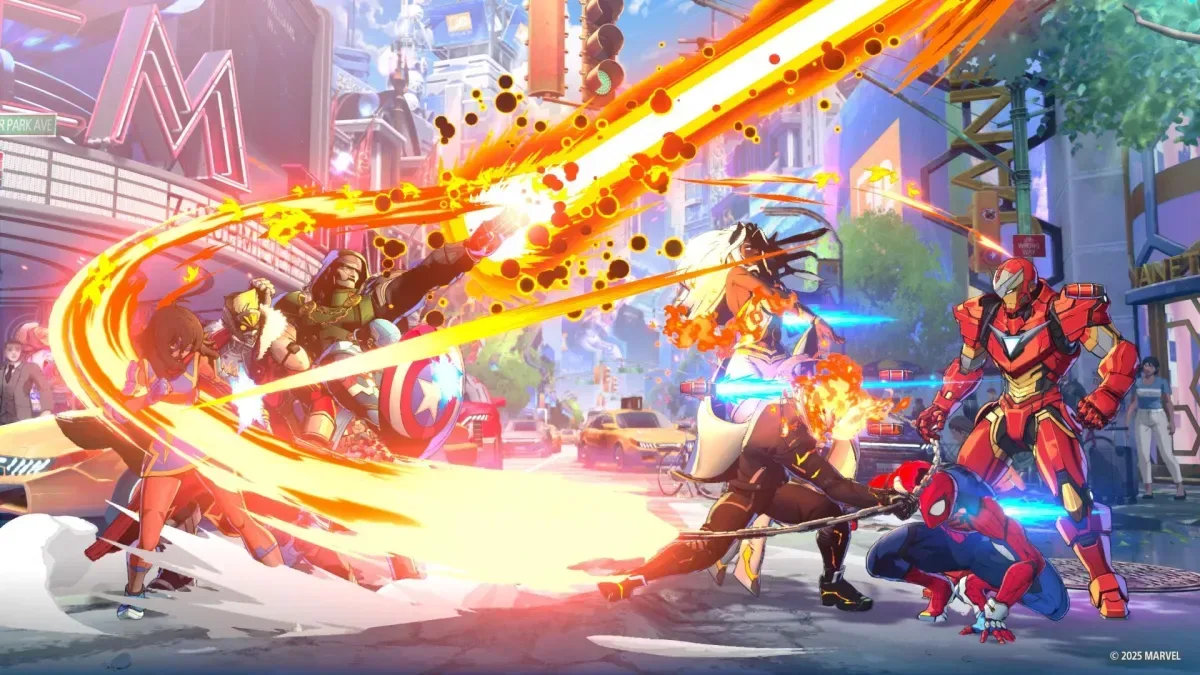
The basic pitch is immediately unusual: each side brings four fighters, but the team shares one health bar. Rather than constantly swapping among four separate life totals, a player can largely treat a chosen lead as their main combatant while teammates support from the sidelines through assists. That changes the mental burden considerably. A newcomer is not necessarily required to memorize four complete movesets, four sets of matchup rules, and four distinct combo plans merely to field a legal team.
This does not make the game a simple 1v1 in superhero clothing. The teammates are still part of the strategic equation, and their availability shapes what a player can do. But the design recognizes that the fantasy of assembling a Marvel squad and the practical reality of studying a large tag roster do not always belong in the same sentence.
Specials and supers also use accessible button-based commands alongside more conventional fighting-game inputs. That combination aims to let players produce suitably dramatic Marvel moments without treating a basic special attack as an application for a competitive-motions license. The deeper command language remains available, while the simpler options make changing characters less intimidating.
The most important wrinkle is how matches unfold. A round begins with the lead fighter and one assist at hand. Further teammates become available over time, meaning neither player starts with every tool unlocked. The early game is therefore not merely a period of cautious probing before both sides settle into their usual team sequences. It is a race to build access to more of the squad.
That progression gives offense a structural reward. Applying pressure is not just about chipping away at the shared life bar; it helps a team move toward its complete set of options. A player who gains momentum can expand their arsenal, while a player under pressure has to survive long enough to reach their own reinforcements. The possibility of a rapid shift remains built into the format, which is exactly the kind of volatility a Marvel fighter ought to have. Calm is welcome in many parts of life. It is not traditionally why Hulk was invited.
Uniform controls, distinct personalities
One reason the arrangement has promise is that character differentiation does not depend solely on making every member of the roster a different control puzzle. There is a degree of control uniformity across fighters, helping the game remain approachable even as its combo system offers room for more advanced play. Longer strings and optimized routes can still matter, but the initial barrier is less about remembering an entirely new language every time a player changes their pick.
Instead, identity comes through traits and character-specific specials. Doctor Doom can establish barriers, creating a more controlling presence amid the chaos. Green Goblin can call in his glider, giving his toolkit a distinctly Goblin-shaped complication. These details make the roster feel like a cast of superheroes and villains rather than a collection of interchangeable combo mannequins wearing expensive costumes.
It is a useful balance for a team game. Accessibility does not mean flattening the cast; it means allowing players to recognize a familiar foundation while learning what makes a particular fighter dangerous. The space between “I understand the buttons” and “I understand why this character belongs on my team” is where a fighting game develops long-term legs.
That broad appeal is worth considering alongside the social side of fighters. The best couch sessions have always involved a mix of veterans, improvisers, and one person who promises not to button-mash before immediately discovering their entire strategy is button-mashing. For a suitable refresher on the etiquette surrounding that happy chaos, see The Unwritten Rules of Couch Multiplayer, Now Written Down. Fighting Souls appears built to let less-experienced players participate in the spectacle without erasing the rewards for those willing to dig in.
Arc System Works brings the visual fireworks
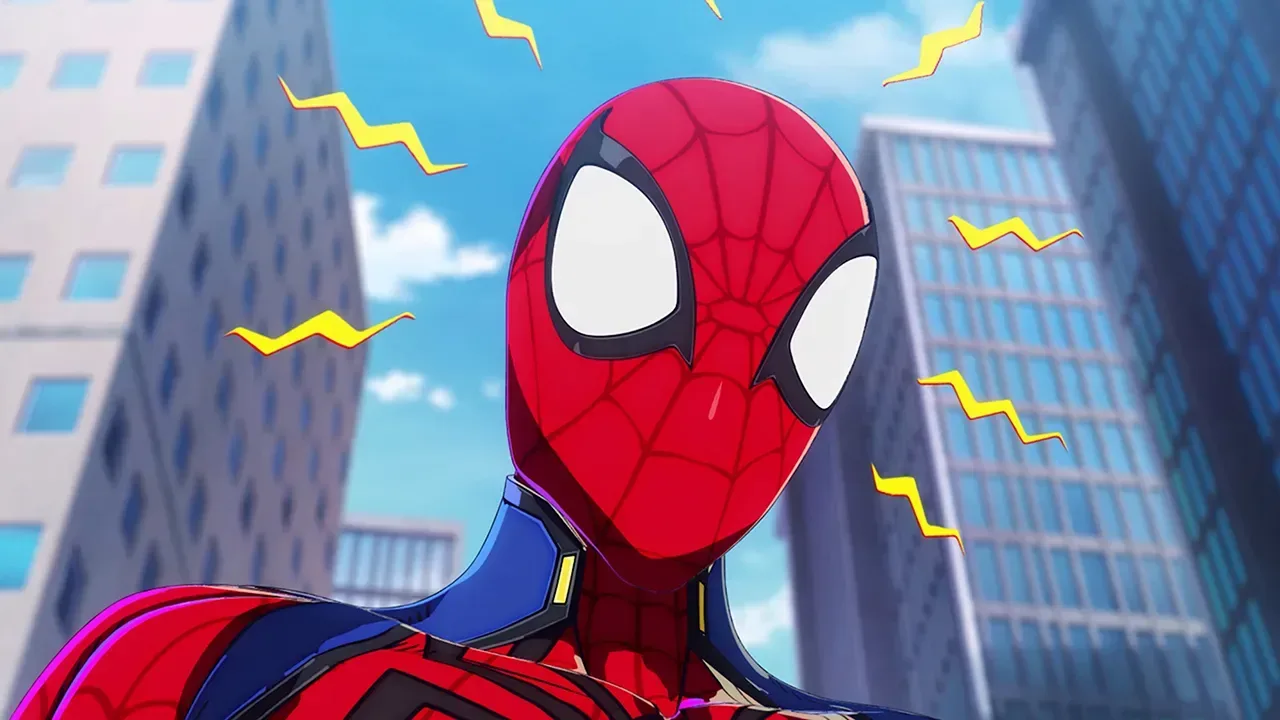
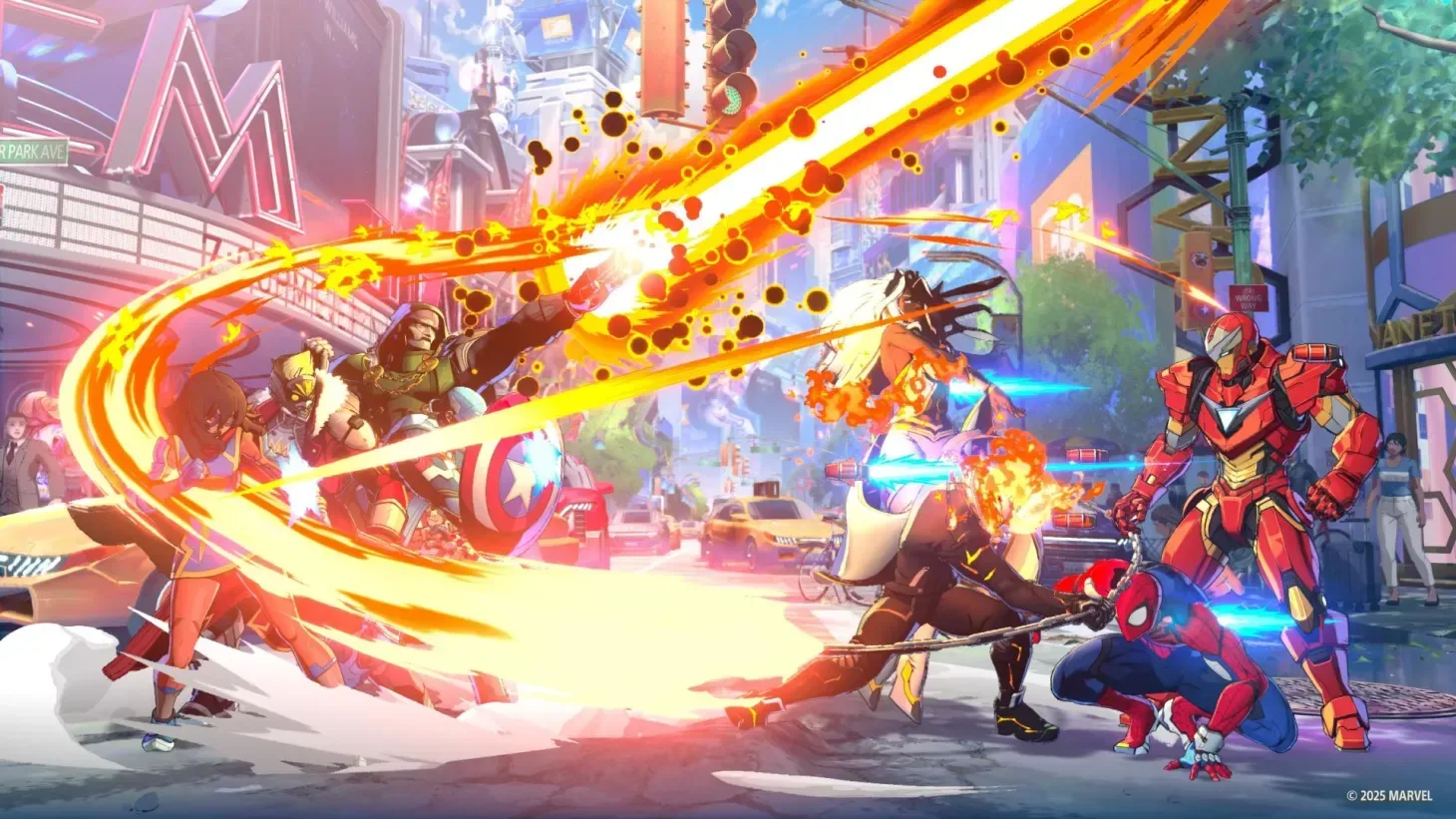
Arc System Works has made its name by producing fighting games whose 3D character models seem to be pretending, very successfully, that they are hand-drawn animation. Marvel Tōkon continues that lineage and is described as standing among the genre’s best-looking games, in the same broad visual conversation as Guilty Gear Strive. The studio’s work on Guilty Gear Xrd was already striking; Dragon Ball FighterZ pushed that stylized approach further. Here, the effect is presented as another step forward.
The Marvel characters benefit greatly from the anime-influenced approach. Iron Man’s armor leans toward mecha design, an especially natural fit for a hero whose superhero identity has always involved a person climbing into an increasingly outrageous machine. Hulk, meanwhile, is rendered with enlarged proportions and armor that emphasize his threat level. He should look like he could accidentally break the stage while trying to find the stage. By this account, he does.
The designs are notable not simply because they are flashy, but because they find a respectful stylistic lane for the material. Marvel heroes have lived through countless visual eras in comics, animation, movies, toys, and games. A fighting game needs a look bold enough to read instantly during a fast exchange, but specific enough to avoid feeling generic. The anime treatment appears to solve that problem without sanding away what makes the characters recognizable.
Marvel’s appeal, of course, is not limited to digital brawls. Its history across comics and collectibles gives every redesign an extra layer of scrutiny from fans who know the costumes, eras, and variations. Readers curious about that collecting side can explore Marvel Masterpieces Explained: Follow the Artist and the Exact Edition, a useful reminder that Marvel art can be an entire collecting rabbit hole before anybody throws a fireball.
Episodes offer lore, not a complete education
The single-player story component is organized as Episodes focused on preset teams. Their shared premise concerns a worldwide tournament and a cosmic force called The Champion, a traveler who destroys planets judged unworthy. The stories are delivered through visual-novel sequences broken up by fights, with each Episode taking roughly an hour to finish.
There is a pleasingly comic-book scale to a tournament whose stakes include planetary annihilation. But the narratives themselves are fairly straightforward and predictable, often following similar patterns from one Episode to another. The Knights of Doom storyline provides some variation, though it does not fundamentally transform the format. For players hoping for a sprawling, wildly divergent campaign, Episodes sound more like compact character showcases attached to a familiar world-saving setup.
They also should not be mistaken for a comprehensive teaching mode. Episodes provide only a basic introduction to their featured characters. The game includes training and tutorial options with more substance, yet the character-specific lessons are primarily combo trials. Those exercises can help a player learn execution, but they do not fully explain a character’s overarching game plan, preferred spacing, pressure patterns, or the decisions that turn a cool move into a winning one.
That is a meaningful gap for a title attempting to welcome players into a mechanically dense genre. Combo trials tell someone what can connect. Strong character guides teach why a player should try a particular sequence, when to choose a safer alternative, and how to recognize the opponent’s response. The available tools are useful, but players looking for a full tactical curriculum may need to learn through practice and the wider community over time.
Online foundations and the question of longevity
Online play includes lobbies as well as ranked and casual matchmaking, which covers the expected competitive bases. There is also Arcadia Rumble, a deliberately silly eight-player side mode. Its presence matters because fighting games benefit from spaces that are not solely about protecting a ranking number. A chaotic side attraction can give friends and lobby regulars another reason to stay after the serious set is over.
The online connection quality is reported to be strong, with very few noticeable problems even over Wi-Fi. Reliable netcode is no longer a bonus feature for modern fighters; it is the infrastructure that determines whether all those elaborate team plans can exist beyond a local room. A visually magnificent super is much less impressive when it appears three business days after the input.
Whether Marvel Tōkon: Fighting Souls becomes a fixture cannot be fully settled at launch. Balance updates will matter. So will the strategies players discover, the health of the online community, and whether the developing competitive scene finds enough depth in its team-building and momentum mechanics. Fighting games are unusually alive after release, because their audience keeps rewriting the practical meaning of a system through experimentation.
Still, the early package has the ingredients of a credible successor to both Marvel’s previous tag-fighter legacy and the spectacle Arc System Works brought to Dragon Ball FighterZ: striking visuals, a roster designed around expressive specialties, stable online play, and a 4v4 structure that turns accessibility into a mechanical idea rather than a stripped-down afterthought. Marvel is back in the ring, and this time it has brought three friends, a shared health bar, and no obvious interest in behaving politely.