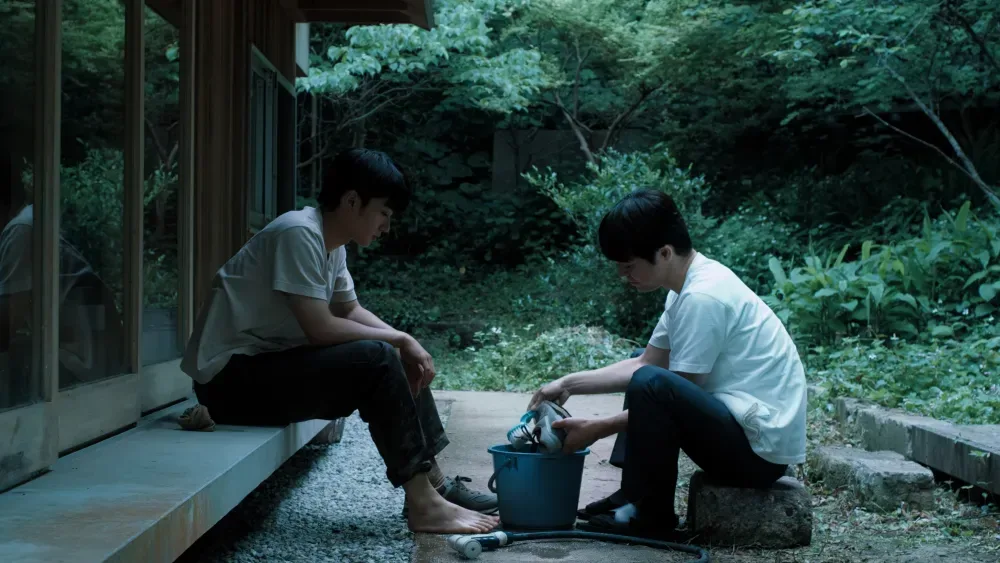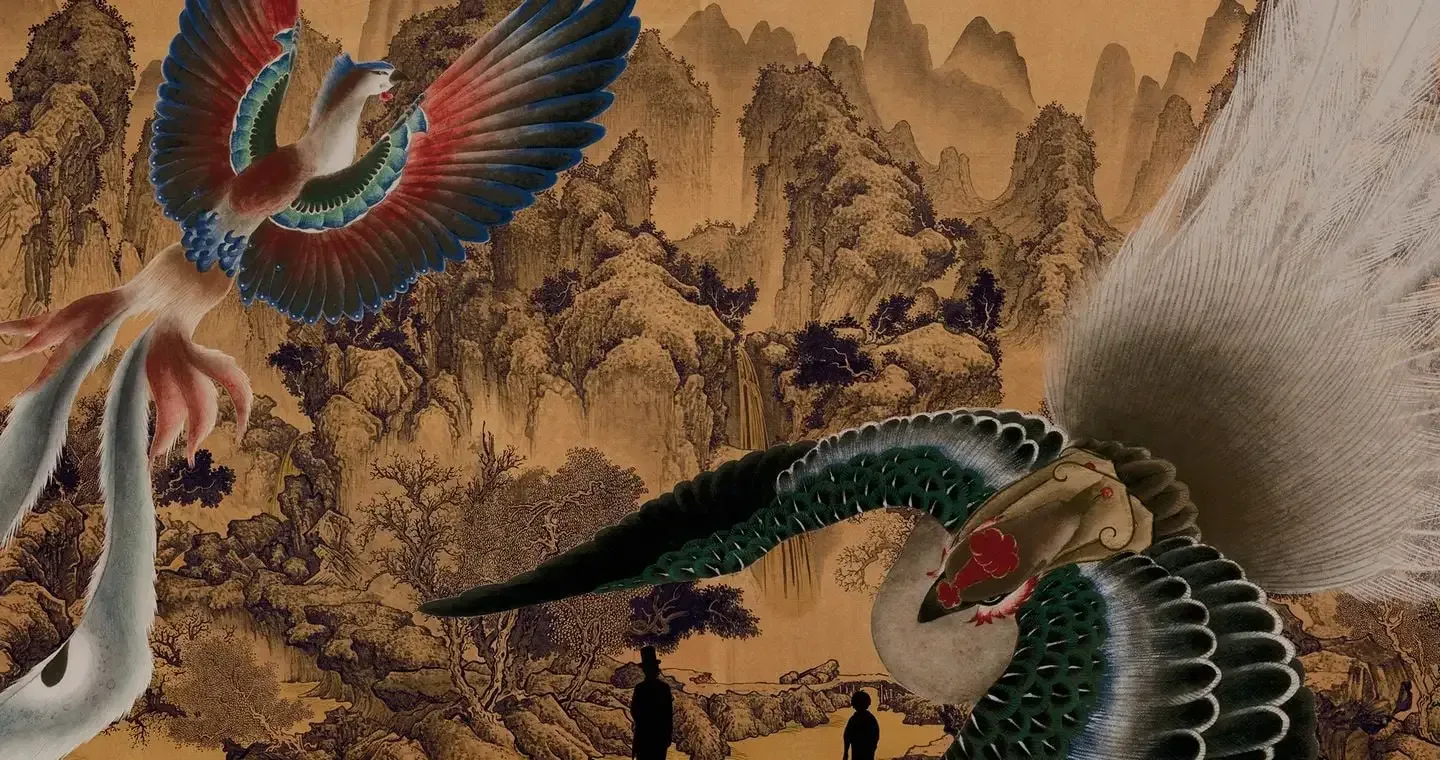
Hinotama: Ball of Fire is built around a painful contradiction: a home can look tidy, orderly and completely functional while the people in it are steadily coming apart. The Japanese feature marks the directorial debut of Yaza Takenoshin, who also wrote and edited the film. Set within the Tokyo Film Festival’s Nippon Cinema Now programme, it follows young Takeshi as the contained frustrations between his parents become impossible for their children to ignore.
At 112 minutes, this is a deliberately measured domestic drama rather than a story driven by sudden revelations. Its attention is on repetition: school routines, shopping, conversations that initially seem incidental, and the little signals of irritation that accumulate into something much harder to live with. That approach makes the family’s breakdown feel less like a plot twist than a process Takeshi has already been quietly watching for some time.
A household governed by rhythm
The early movement of Hinotama connects ordinary activities through rhythm, including numbers called for test papers and groceries being counted at a checkout. Such details establish more than a sense of place. They suggest a family operating on habit, following a pattern that has become automatic.
Automation is an important idea for understanding the film’s apparent calm. A routine is not automatically harmful; it can be reassuring and practical. Here, however, daily regularity gradually registers as emotional stasis. People complete the tasks expected of them, but the emotional work of listening, appreciating and responding to one another is breaking down. The drama finds tension in the gap between the clean surface of family life and the frustration beneath it.
For more context, explore Don’t Replace That Old Android Yet: Battery, Protection and Update Steps That Can Buy It More Time.
Takeshi, played by Riku Onishi, does not respond with constant explanation or overt confrontation. He becomes increasingly withdrawn, often looking off into space and returning to questions about the “ball of fire” described by his old friend Akari, played by Himena Irei. The title object becomes associated with a child’s desire for amazement and possibility at the very moment his domestic world is losing stability.
That makes the ball of fire less important as a practical mystery than as an emotional destination. Takeshi’s fixation can be read as an attempt to locate something beyond the small, tense economy of adult grievances around him. In a story where parents repeatedly make the atmosphere of the house feel narrow and predetermined, wonder represents a possible alternative.
Orderly images that start to resemble confinement
The film’s visual strategy is central to that feeling. Yoshio Kitagawa, who has previously worked with filmmaker Ryusuke Hamaguchi, serves as cinematographer. The compositions repeatedly stress symmetry, straight lines and centered figures or objects. Takeshi’s home is rendered with a visual precision that initially appears handsome and composed.
Symmetry in cinematography means arranging elements so an image has a balanced visual structure, often around a central axis. It can communicate calm, control or formality. In Hinotama, the same balance increasingly suggests a cage. The household’s geometry does not offer serenity so much as an image of rules, expectations and emotional pressure that no one has found a way to escape.
The camera’s steadiness matters too. A still camera and extended take can ask an audience to remain in a moment instead of being hurried past it by edits. That does not make the film emotionless. Rather, it makes the emotional strain easier to notice in gestures, pauses and the growing mismatch between what characters say and what they appear to feel. Yaza’s visual restraint aligns with the story’s larger interest in damage that is incremental rather than explosive.
Mari Kusu’s performance as Takeshi’s mother gives those images a direct human charge. Her frustration is present inside spaces that otherwise seem controlled. The result is an effective reversal: a perfectly organized frame can make a character’s inability to find room for herself feel more immediate, not less.
How small resentments become family conflict
The father, played by Tomomitsu Adachi, is not immediately introduced as a one-note villain. The film instead builds its sense of him through accumulated details: brief insinuations of dissatisfaction, demands for respect, and complaints that his children do not thank him. This gradual characterization is one of the debut’s strongest choices because it keeps the focus on behavior and its consequences rather than flattening a complicated situation into a single label.
His resentment eventually becomes more explicit, including attempts to recruit the children emotionally for the coming separation by invoking memories that matter to them. That is a particularly troubling form of pressure within a family drama. It changes shared memories—things that should belong safely to the children—into tools in an adult conflict.
The film’s subdued acting style supports that slow escalation. Onishi’s Takeshi carries much of the turmoil internally, and his frustration is often legible through absence: a failure to react, a distant gaze, or another return to the ball-of-fire questions. Then he abruptly destroys a pristine pair of sneakers by leaping into a muddy puddle. Because the camera has remained still and the storytelling has avoided showy emotional release, the act lands as a rupture.
It is a small act in material terms, but a major moment in the film’s emotional logic. The shoes embody neatness and preservation; the mud is an intentional rejection of both. Takeshi cannot repair his parents’ relationship, make them communicate better or prevent the house from changing. He can, for a moment, disrupt something immaculate. The gesture makes visible a turmoil that had previously had no acceptable outlet.
The children bear the cost of adult decisions
Hinotama does not limit the consequences of the family split to Takeshi. His younger brother Kento, played by Koe Odani, is also forced to adapt quickly. After a three-month leap forward, Kento takes initiative in an effort to ease the suffering around him. That detail underscores a core sadness in the premise: children in fractured homes can find themselves trying to manage emotions and problems created by adults.
The time jump has a destabilising effect, and the film sometimes presses its muted visual language so strongly that it risks feeling artificial. One example is an image of children standing in an orderly line as they watch Kento walk toward a new house. The discomfort of that staging may be purposeful, but it also illustrates the tension in Yaza’s method. Formal precision can clarify a theme of constraint; pushed too hard, it can pull viewers out of an otherwise observant drama.
That same tension arrives in the later shift toward allegory. Allegory is storytelling in which characters, images or events take on a wider symbolic meaning beyond their literal role in the plot. A turn in that direction is understandable given Takeshi’s quest for a remarkable sight and the title’s elemental imagery. Still, the film’s most persuasive material appears to be its concrete observation of a traditional family structure beginning to crack: the repeated routines, clipped remarks, wounded pride and the labor of children trying to understand what adults have done.
A technically assured first feature
Yaza’s admiration for Ryusuke Hamaguchi is visible in the film’s patient observation of relationships, although Hinotama has its own focus on childhood perception and the oppressive neatness of domestic space. Kitagawa’s participation is also notable: he offered to photograph the film after Yaza, then a student, contacted him for advice. The collaboration gives the debut a confident visual identity without turning its photography into empty decoration.
Yaza’s credits extend beyond directing: he wrote and edited the film as well. Gabriel Brady composed the music, while Tomohisa Ishii produced the A Lamp. KK production. That concentration of roles helps explain the film’s coherence. The rhythm of the cuts, the fixed compositions and the story’s concern with repetition all serve the same central view of a family living inside an increasingly unbearable pattern.
For viewers drawn to quiet stories where form carries as much weight as dialogue, Hinotama: Ball of Fire presents an encouraging new voice. It is not interested in racing toward a dramatic confrontation, and its later symbolism may not sit as comfortably as its close study of domestic erosion. But its strongest passages show a firm grasp of how control can look like safety from the outside while feeling like confinement to those inside.
The film’s lasting image is therefore not simply a possible ball of fire. It is a child scanning the world for one: searching for a flash of awe while the adults around him reduce love, memory and daily life to arguments over obligation, gratitude and authority.