Election Day arrived with the votes still to be counted and the country’s loudest political voices already litigating what the outcome would mean. Every one of the 435 House seats was at stake, alongside 35 Senate seats and a slate of prominent state contests. But the day’s early media conversation was less about precinct-level returns than the competing stories each side wanted voters to carry into the final hours.
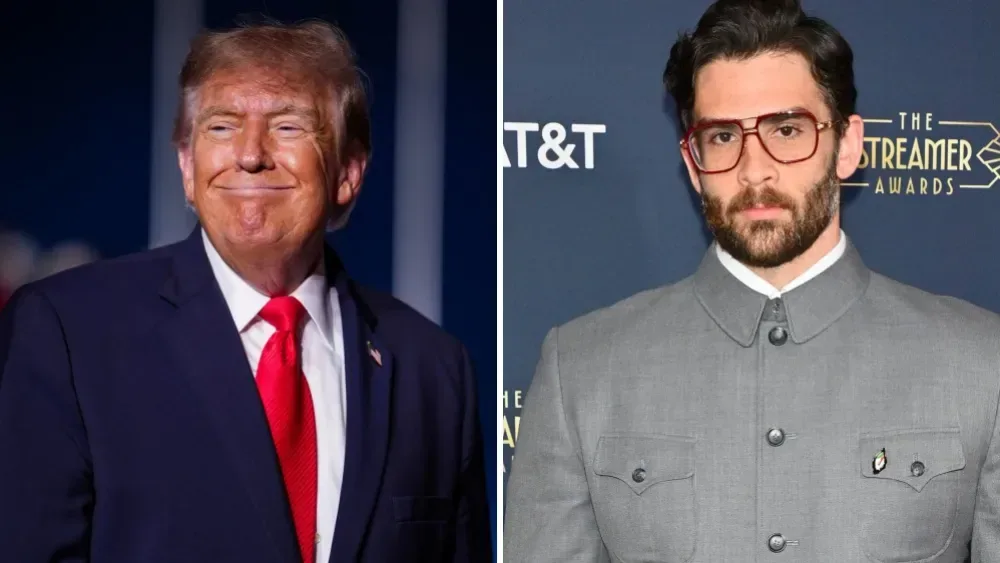
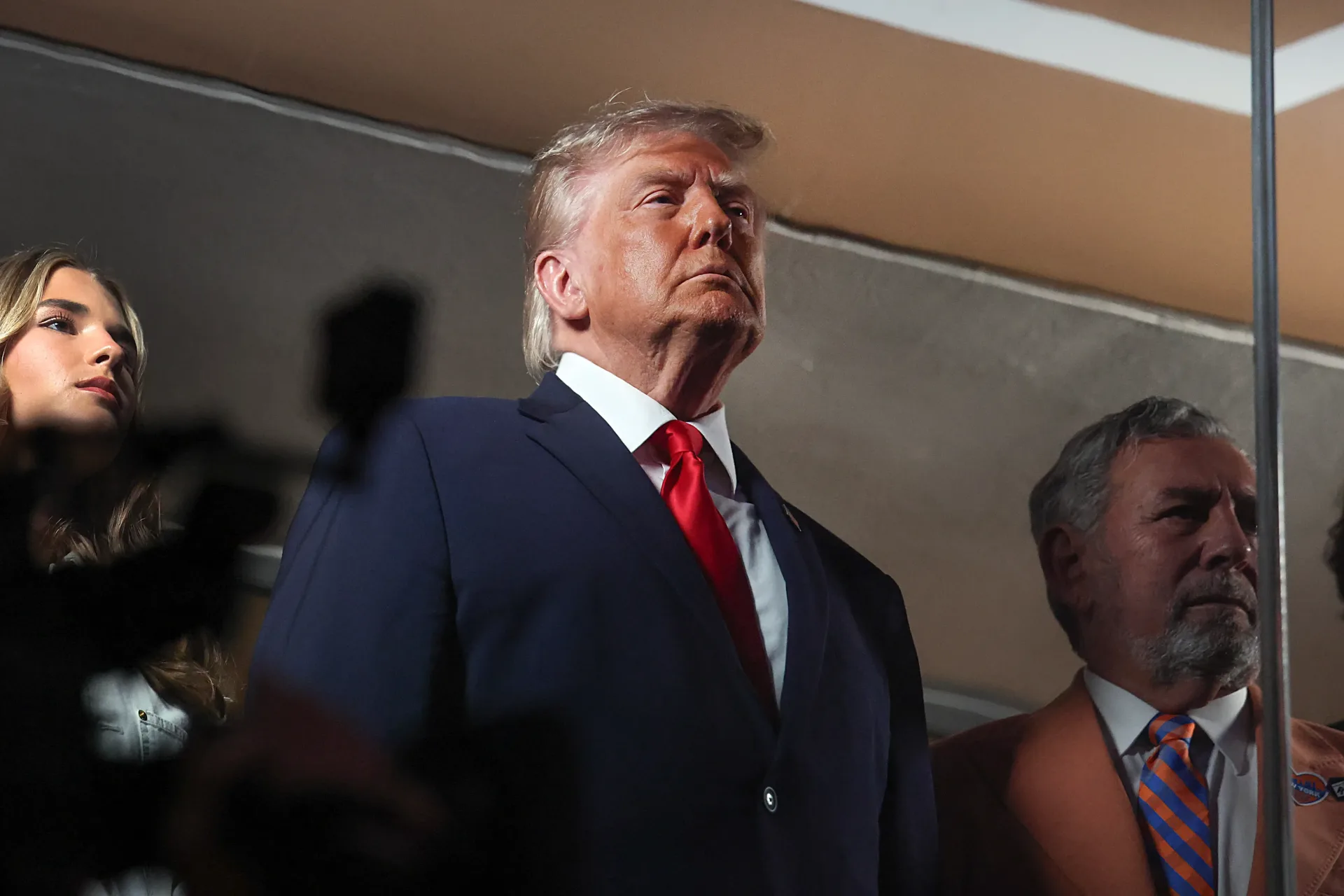
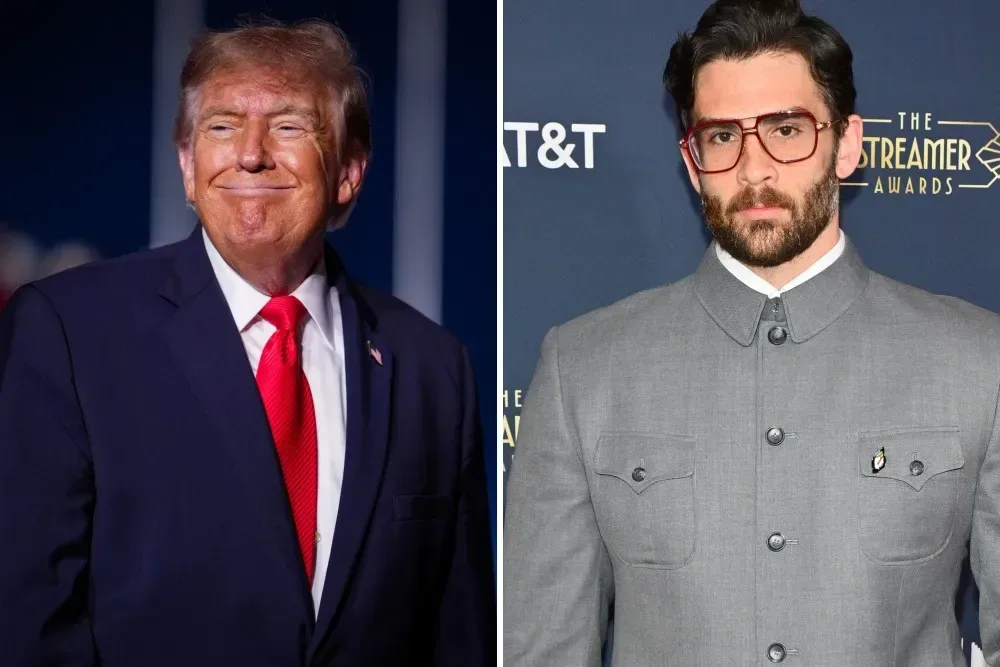
Donald Trump used Truth Social and a morning call to Fox & Friends to attack Democratic Senate candidate Abdul El-Sayed and to defend his administration’s approach to Iran. Twitch streamer Hasan Piker used X to question the durability of MAGA support. The hosts of Pod Save America treated a failure to win both chambers as a potential Democratic disappointment, while Joe Scarborough argued that Republican messaging had missed voters’ economic concerns.
The common thread was not agreement. It was the scramble to define the terms by which a win—or loss—should be understood before the results had even established one.
Trump pairs a Senate attack with sweeping Iran claims
Trump began the day with a post attacking El-Sayed, who is running in Michigan’s U.S. Senate race. The post included inflammatory accusations about El-Sayed and urged voters not to support him. Those accusations appeared as Trump’s statements; the Election Day discussion provided no supporting evidence for them.
Later, during the television call, Trump shifted to Iran and repeatedly minimized the scale of the conflict while making broad assertions about Iranian military losses, air defenses, nuclear capacity and surveillance capabilities. He described a recent strike as a “minor attack” rather than a war, even as he claimed that Iran’s navy had been destroyed and its aircraft disabled.
That combination is politically useful even when it is rhetorically hard to reconcile: presenting forceful military action as decisive, while denying that it should be considered a major conflict. Trump also said that Iranian nuclear capability had been eliminated and suggested that renewed activity at the site would prompt another attack. These are major claims, and the comments supplied no independent verification of them.
For voters, the meaningful distinction is between a candidate’s description of an operation and confirmed public information. Election-day rhetoric often compresses complicated policy and military matters into declarations of strength, weakness, victory or danger. That can be persuasive as messaging, but it is not the same thing as an evidence-backed accounting of events.
Hasan Piker casts the vote as a test of MAGA’s staying power
Piker’s early post focused on whether the electoral coalition around Trump remains intact. He asked how much “cult” still existed within MAGA, whether racial polarization and hostility could continue to motivate voters, and whether Trump could retain support after reversing campaign promises.
Related coverage includes Election Day Talk Turns to Trump, MAGA Loyalty and Control of Congress.
His wording was unmistakably combative, including a demeaning reference to Trump voters. Yet beneath it was a recognizable electoral question: is partisan loyalty resilient enough to survive disappointment on policy and household economics?
Piker also raised “negative real wage growth.” In plain terms, real wages refer to pay after adjusting for inflation. If wages rise in dollar terms but prices rise faster, workers may have less purchasing power; that is the basic idea behind negative real wage growth. Piker was posing the question as a political test, not presenting a documented economic finding in his post.
His framing reflects the way livestream personalities now participate in political media. A short post can compress ideology, economic anxiety, identity politics and turnout speculation into a few lines designed for rapid sharing. It does not produce an election forecast, but it can help organize what a creator’s audience sees as the central conflict of the day.
Pod Save America sets a high bar for Democrats
On an Election Day edition of Pod Save America, Jon Favreau asked whether Democrats should view anything short of winning both chambers of Congress as a loss. Jon Lovett’s response was clear: yes. He argued that the political environment, which he described in fiercely critical terms, should be favorable enough for Democrats to take both the House and Senate.
Lovett cited tariffs, the administration’s conduct and what he called an illegal war as reasons Democrats should prevail. Those were his political characterizations and allegations, not established findings within the discussion. The bigger point was strategic: expectations can turn a straightforward win into an insufficient one.
That is especially important in a midterm-style fight for congressional control. Winning one chamber, winning both, limiting losses or outperforming expectations can each be spun as success depending on the baseline set beforehand. By setting the benchmark at both chambers, Lovett framed the election as a referendum with an unambiguous required result.
The practical implication is that political commentary is not merely describing an election. It is also negotiating the scorecard. The same set of results can be framed as a mandate, a warning, a narrow escape or an organizational failure—often by people who established their preferred interpretation well before a race is called.
Morning Joe argues economic concerns were being crowded out
On MS Now, Scarborough called Republican closing arguments “astronomically stupid.” He singled out rhetoric from Vivek Ramaswamy concerning communism and Amy Acton, saying Republicans were emphasizing that attack instead of discussing gas, diesel and grocery costs.
Scarborough’s argument was about message discipline. Message discipline is the political practice of returning consistently to a narrow set of themes that a campaign believes will move voters. His contention was that cost-of-living issues offered a more direct connection to daily experience than ideological attacks.
His comments do not prove which message voters found more compelling. They do show a familiar divide in campaign strategy: one side may concentrate on identity, ideology and threat, while another argues that material pressures should be the center of the conversation. Neither approach exists in a vacuum. Candidates and commentators tend to choose the emphasis they believe best activates their own coalition, persuades undecided voters or puts opponents on the defensive.
The result is only one part of the Election Day story
Before ballots determine who controls Congress, the political media ecosystem has already built several competing narratives. Trump’s remarks leaned on confrontation and assertions of control. Piker treated the day as a measure of loyalty and backlash. The Pod Save America hosts described a two-chamber Democratic win as the appropriate measure of success. Scarborough argued that the Republican message had failed to focus on household costs.
These narratives are aimed at different audiences, and they operate at different speeds. A presidential phone interview, a podcast discussion, a cable-news panel and a streamer’s social post all invite different kinds of attention. Yet each can feed the same cycle: a claim becomes a clip, a clip becomes a response, and the response becomes another campaign argument.
That also makes the delivery system part of the political contest. Audiences increasingly encounter commentary through platform feeds, recommendations and creator-driven formats rather than only through scheduled broadcasts. Similar debates about how digital tools shape what people discover are playing out in entertainment, too, as seen in Netflix’s AI Discover tab push.
For anyone trying to follow the vote without being swept up in the pre-result victory lap, a few distinctions matter. Separate a politician’s claims from facts that have been independently established. Treat commentators’ predictions as arguments rather than returns. Watch for expectation-setting, because it will shape the morning-after verdict as much as the raw totals do. And remember that the loudest Election Day framing is often designed not just to explain what happened, but to influence what people believe happened.