Bill Maher has never exactly built Real Time around the expectation that every guest will endure a formal cross-examination. It is a late-night talk show built from monologues, panels, jokes, arguments and the occasional conversational detour that leaves viewers wondering whether a serious point was challenged, deflected or simply allowed to float away.
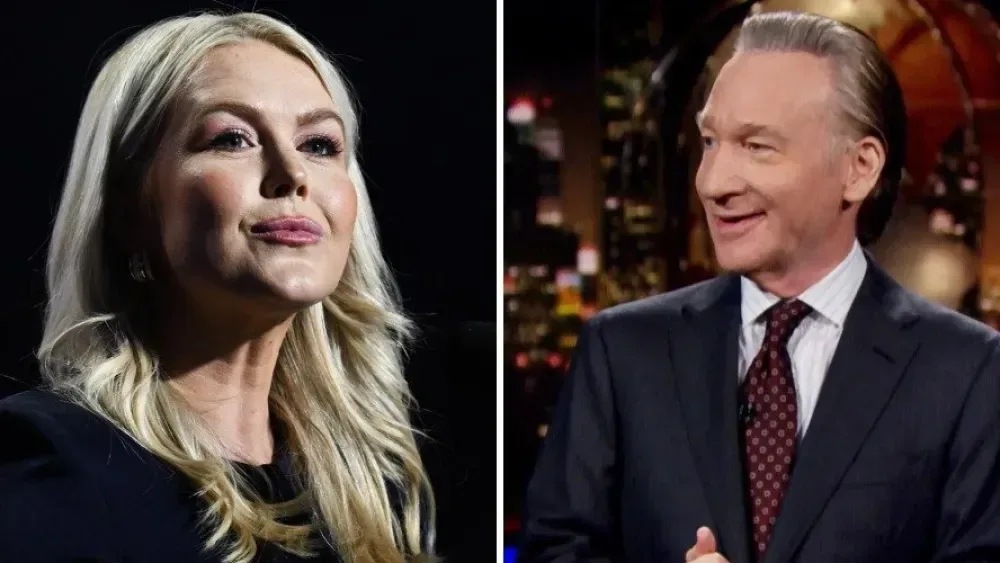
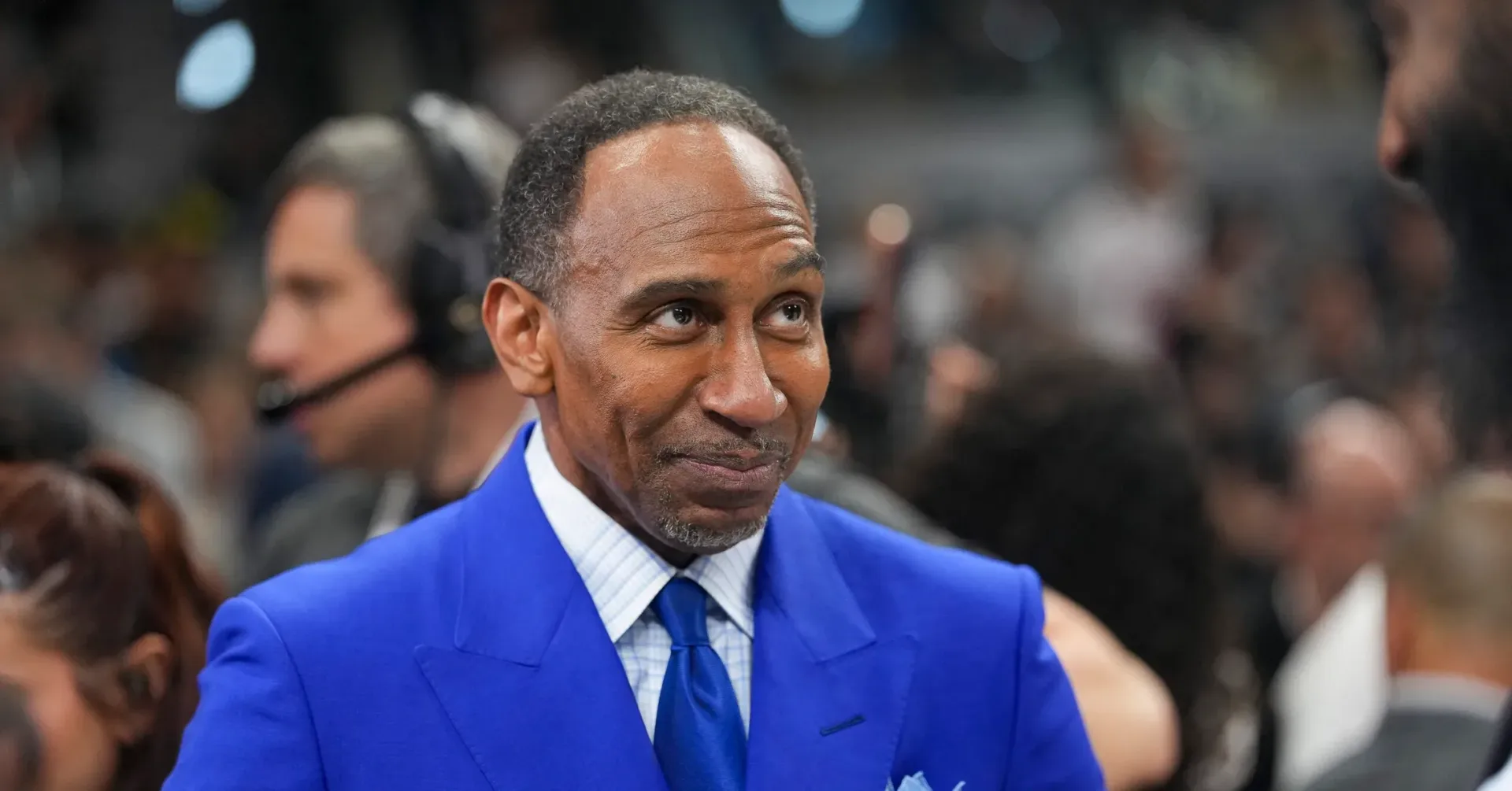
Still, Maher’s interview with former White House press secretary Karoline Leavitt stood out because of the unusually clear context surrounding it. Earlier in the month, Maher attended a White House dinner with President Donald Trump, Kid Rock and Stephen A. Smith. Maher later enthusiastically discussed the four-hour dinner in his opening monologue, while Trump had suggested that Maher’s on-air criticism was less personal than it appeared.
Then Leavitt arrived on Real Time, carrying a greeting from Trump: he had enjoyed that dinner, she said, and knew Maher had too. Maher did not dispute it. The result was a television exchange with a peculiar premise: a host known for political commentary was speaking to a recently departed administration spokesperson after publicly enjoying elite access to the administration she had represented.
That does not automatically make an interview invalid. People in entertainment and politics regularly speak with people they disagree with, and a friendly tone can sometimes lower defenses in ways that yield revealing answers. But friendliness is not the same as rigor. The complaint here is less that Maher booked Leavitt than that the segment, as described, repeatedly chose comfort over the follow-up questions that its circumstances seemed to demand.
A friendly booking after a much less friendly joke
The pairing had an obvious point of tension. Maher had previously mocked Leavitt after she defended Trump’s remark to Bloomberg News reporter Catherine Lucey aboard Air Force One. Trump had told Lucey, “Quiet, piggy!” when she asked about Jeffrey Epstein. Leavitt framed the president’s behavior as admirable frankness, prompting Maher to answer with an intentionally insulting joke of his own.
That history could have given the new interview a substantive opening. A host could ask whether Leavitt still considers that type of presidential language admirable, what standards she thinks should apply to a president addressing reporters, or why bluntness is being treated as a virtue when it is directed downward at a journalist doing her job. Those questions would not require an argument for argument’s sake; they would ask Leavitt to explain the principle behind a defense she had already offered publicly.
Instead, the later conversation reportedly moved in a noticeably softer direction. Maher raised Leavitt’s youth at the time she held the press-secretary job and asked what she planned to do next. Leavitt said she had left the role in August to care for her two young children, who are 2 years old and six months old, and said she would begin work as a Fox News pundit on November 1.
Those are reasonable human-interest questions. A career transition and family life are fair topics for a television interview. But the lack of a meaningful follow-up about a former White House press secretary moving to Fox News left a potentially significant media-and-politics discussion unopened.
Related coverage includes Bill Maher Welcomes Karoline Leavitt to Real Time After Trump Dinner.
Why the missing follow-up matters
A follow-up question is not merely a second question. It is the mechanism that tests whether a first answer can withstand scrutiny. If a guest makes a broad claim, the follow-up asks for evidence, a definition, a consequence, or a response to the strongest obvious objection. Without it, an interview can become a sequence of assertions rather than a conversation with any real pressure behind it.
That matters especially for an ex-spokesperson. The job of a press secretary is to present and defend an administration’s position. Once that person moves into commentary, the public may reasonably want to know how the new role differs from the old one: Will the pundit offer independent analysis, continue making the case for the administration, or blend the two? That is not an accusation. It is a basic question about audience expectations and transparency.
Maher instead made a joke about Trump wanting to turn the White House press pool into a literal swimming pool. The joke captures an important truth about late-night television: it often uses comedy to acknowledge an issue without necessarily interrogating it. A punchline can signal skepticism, but it cannot substitute for asking the person most connected to the subject to account for it.
The same pattern emerged around Trump’s proposed ballroom. Maher said he did not care about the controversy and liked the idea, arguing that the United States needed a ballroom. On its own, that is a personal opinion, and an entertainer is allowed to have one. The more revealing part is the explicit declaration of disinterest. It effectively tells the audience that the segment is not trying to examine the political implications of the project, even though the guest was freshly out of the White House.
The difference between access and accountability
Maher’s dinner with Trump hangs over the entire exchange because access creates a visible tension. Access, in this context, means proximity to powerful people: invitations, direct conversations, repeat appearances and the feeling that a host can get an influential figure to engage. That access can be useful. It can make television more immediate, and it can potentially open doors to conversations other programs cannot have.
But access can also alter the incentives of a host. If the priority becomes maintaining a personal channel to a political figure or that figure’s circle, an interviewer may be tempted to protect the relationship. The audience may then see a guest receiving room to make claims without being pressed, not because the claims are strong, but because confrontation would be inconvenient.
There is no need to claim that Maher made a conscious trade in this specific instance. The observable issue is simpler: he celebrated the Trump dinner, acknowledged that he liked it, and then conducted an interview with a former Trump spokesperson that was notably accommodating. For critics, that sequence makes the gentleness feel less like a surprise and more like the point.
Maher’s response to Trump’s reported affection for him also sharpened the awkwardness. A political comedian can be friendly with a president. A president can enjoy the comedian’s company. Neither fact erases criticism aired on television. Yet when the relationship itself becomes part of the on-air banter, viewers are entitled to ask whether the program is functioning primarily as satire, commentary, access television, or some unstable combination of all three.
Iran, praise and an answer that escaped testing
The sharper missed opportunity came when Leavitt promoted Trump’s war with Iran. Foreign policy claims are unusually important to test because their stakes are larger than a campaign talking point or a cable-news squabble. They involve the use of state power, the rationale presented to the public, and consequences that cannot be reduced to a clever studio exchange.
The interview did not reportedly include follow-up questions on Leavitt’s remarks. That omission is difficult to square with the kind of challenge that Real Time viewers might expect when a former administration official makes a case for a war. Even a short question asking what success looks like, how the policy should be judged, or what concerns critics raise would have established that the claim was not being granted a free pass.
Instead, much of the segment’s energy appears to have gone toward compliments. Maher said Trump “gets it” and, when Leavitt described Trump as far saner than the previous president, Maher offered that Trump was far more energetic. The latter is a dodge, and perhaps a joke, but it does not challenge the premise of Leavitt’s inflammatory comparison. It redirects rather than examines.
This is where the defense that Maher is not a journalist is both true and incomplete. He is not required to run a news briefing. He is a comedian and host, and his show has never pretended to operate like a straight interview program. But the moment a program books political power brokers, permits major claims about war and presidential fitness, and benefits from the prestige of access, it takes on some of the responsibilities of political media whether it embraces the label or not.
What viewers should take from the segment
Leavitt was entitled to make her case, and Maher was entitled to choose the tone of his program. The concern is not that a conservative guest appeared on a show often associated with liberal criticism. Cross-ideological bookings can be valuable when they produce clarity rather than merely novelty.
What the episode illustrates is that a guest can be treated as a personality first and a political actor second. Leavitt was asked about sarcasm, her future, and her personal life. Those subjects may help audiences understand her. But they do not answer the larger questions attached to her recent role: how she defended the president’s treatment of reporters, how she views the relationship between the White House and partisan media, or what claims she can substantiate about consequential policy.
That is the central mismatch in Maher’s approach. He still presents himself as someone willing to say what he thinks, and he plainly did say what he thought about enjoying the Trump dinner and supporting the ballroom. Yet being blunt about one’s own preferences is not the same thing as being tough on a powerful guest.
For a broader look at how entertainment coverage can turn on politics, celebrity and big-franchise casting all at once, see our report on Sandra Hüller’s reported role in Avengers: Doomsday.
Maher may prefer the looser role of contrarian dinner guest to that of interrogator. That is his prerogative. But the Leavitt appearance made the cost of that preference hard to miss: a figure with firsthand ties to the administration got a high-profile platform, and the questions with the greatest public importance remained largely on the table.