Major spoilers for Dragon Age: Origins, Dragon Age II, Dragon Age: Inquisition, the Trespasser expansion, and Dragon Age: The Veilguard follow.
Four Dragon Age games told four markedly different kinds of role-playing story. Origins built a dark fantasy campaign around tactical parties and an unusually granular player backstory. Dragon Age II narrowed its lens to Kirkwall and a decade of escalating civic disaster. Inquisition put its hero at the center of continent-scale religious and political upheaval. The Veilguard pushed toward a more immediate action-RPG structure while attempting to resolve mysteries seeded years earlier.
That uneven evolution is part of what makes the series memorable. The constant was never one combat model, one lead character, or even one exact style of fantasy. It was the premise that a player’s values could be tested through companions, institutions and impossible decisions—then reflected back in the state of Thedas. Its sharpest scenes did not merely ask players to choose a dialogue option. They made them live with what their character believed before, during and after the choice.
Origins made identity part of the adventure
Dragon Age: Origins remains exceptional for its six playable origin stories. Race and class do more than set stats or change a few lines: they provide a distinct opening chapter before the larger campaign begins. A human noble, a casteless dwarf in Orzammar and a Circle mage begin with radically different pressures, social standing and losses. The approach establishes that Ferelden will read the Hero of Ferelden differently depending on where they came from.
That is a key distinction in role-playing design. A player background is not just lore written on a character sheet; at its best, it changes the player’s emotional vocabulary for the world. Someone who begins in the Circle encounters magic, authority and confinement from a very different starting point than someone raised in nobility. Later games revisit the idea of character backgrounds, but Origins makes the past playable rather than simply selectable.
The opening also wastes little time demonstrating that the setting will not protect the player from betrayal. At Ostagar, Loghain Mac Tir orders a retreat instead of sending reinforcements after the signal is lit, leaving King Cailan and others to die against the Blight. The moment works because it converts what first appears to be distant royal tension into the player’s immediate catastrophe. Origins tells its audience early that political calculation can be as dangerous as darkspawn.
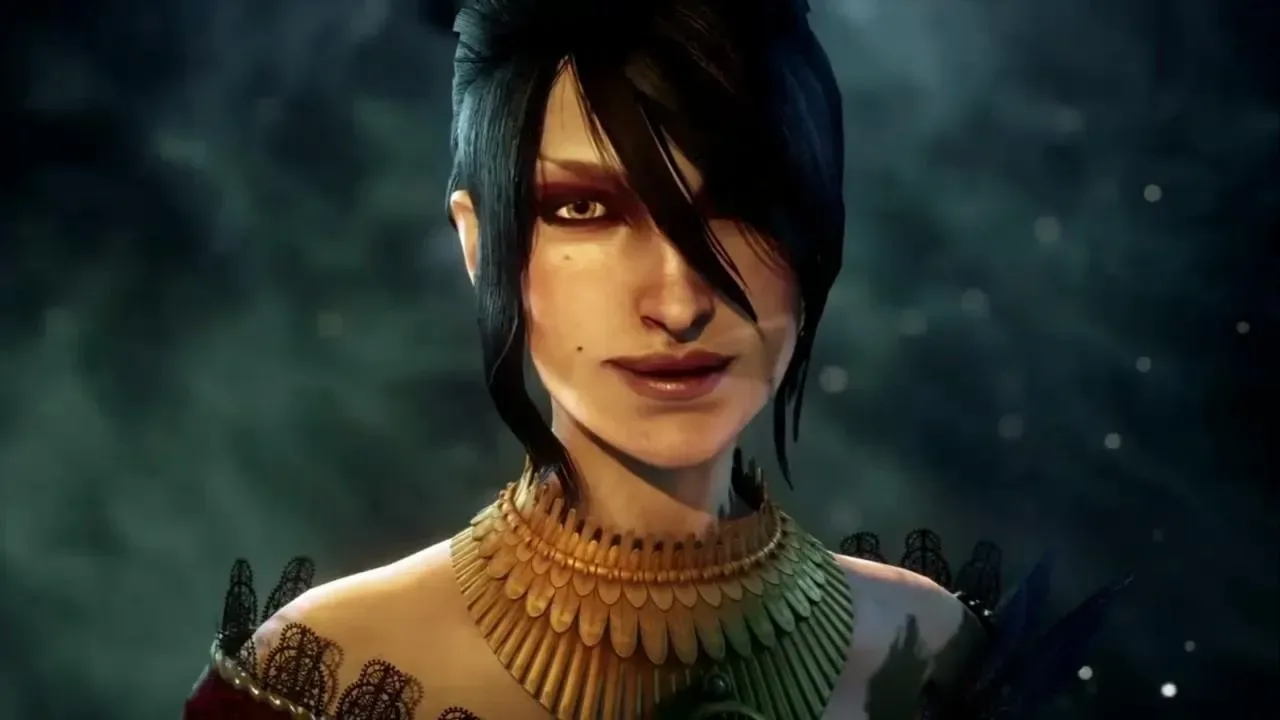
Then there is Morrigan, whose entrance offers a different type of threat: uncertainty. As the Witch of the Wilds, she feels unusually well informed and deeply detached from the assumptions held by the rest of the party. Claudia Black’s performance gives her a forceful presence before the player knows the scope of her connection to Thedas’ future. Morrigan remains compelling not because every mystery around her is solved immediately, but because the game lets suspicion, attraction, distrust and reliance coexist.
That uncertainty reaches a memorable peak with the Dark Ritual. The potential solution to the Archdemon problem appears to spare either the Warden or Alistair, but it asks the player to place extraordinary trust in Morrigan and blood magic. At that point, the player has enough reason to wonder what she wants, but not enough information to be comfortable. The decision is effective precisely because it is not presented as a clean heroic reward for surviving the campaign.
Related coverage includes Dragon Age's Defining Moments, From Origins to The Veilguard.
Consequences landed hardest when companions had a line
The Urn of Sacred Ashes can lead to one of the series’ clearest demonstrations that companions are not merely accessories to the protagonist. If the player chooses to taint the sacred relic while Leliana and Wynne are present, both can oppose the Warden. Progress in personal quests—or even a romance with Leliana—does not erase that boundary.
This is a powerful version of companion reactivity: a system in which party members respond to actions based on their own principles rather than acting as unconditional approval meters. It gives the decision weight because the player cannot simply assume relationship progress has bought permanent loyalty. Faith becomes more important than affection, and the cost can be immediate violence against people the player has relied upon.
The Landsmeet takes the same principle to the national stage. The political gathering brings alliances, accumulated knowledge and prior choices into a confrontation over Loghain and Ferelden’s future. Its outcomes can differ substantially, even where the overall campaign still needs to move toward its final conflict. That is a practical lesson in branching narrative design: outcomes do not need to create entirely separate games to feel meaningful. Different context, relationships and consequences can make a shared destination feel personally earned—or painfully compromised.
Even smaller moments helped make the party feel inhabited. The Mabari war dog’s interactions with companions give Origins a welcome release valve from bleakness. A vicious-looking battle companion can also be an affectionate, sensitive presence, and the crew’s reactions communicate character without turning every exchange into an epic speech.
Dragon Age II found drama in disagreement
Dragon Age II took a major structural gamble by focusing largely on Kirkwall across a decade. Its most interesting systemic innovation was the Friendship/Rivalry model. Instead of treating disagreement as a failure state, the system allowed Hawke to build strong relationships through either support or sustained challenge.
A rivalry in this context is not the same thing as a shallow dislike meter. It is a relationship built around conflict with a companion’s worldview. Anders’ radical opposition to the Circle and Fenris’ hatred of magic create obvious pressure points, particularly because Hawke’s own class and choices can sit directly against those beliefs. A rivalry romance with Fenris, for example, turns ideological friction into part of the relationship’s texture rather than automatically closing its story.
That model matters because it recognizes an often-missed truth about character writing: intimacy and agreement are not identical. A companion who challenges Hawke, or whom Hawke challenges, can still become central. The system makes the player consider whether they are trying to understand a character, reshape them, or simply win approval.
Isabela’s possible return during Kirkwall’s Qunari crisis is another strong use of a relationship threshold. Her past choices are not excused, and she may fail to return if Hawke has not built enough Friendship or Rivalry. If she does come back, her arrival creates a choice between handing her over or defending her. It turns the party relationship into plot momentum rather than a detached side activity.
The Arishok duel that can follow offers a more direct kind of payoff. It is a one-on-one confrontation where a player’s class build matters. A build is the combined set of class choices and abilities a player develops; a setup suited to party support may feel far less comfortable in a solo fight. The encounter makes its title reward—the Champion of Kirkwall—feel earned through both story and combat pressure.
Dragon Age II’s final act remains contentious, especially in its treatment of the Mage/Templar conflict, but Anders destroying the Kirkwall Chantry is undeniably a line in the sand. The event forces the party to declare a position when neutrality is no longer viable. The game’s political framing can be complicated and frustrating, yet the scene succeeds as an eruption of conflict that had been building across years.
Inquisition turned politics and belief into gameplay
Inquisition’s opening immediately signals the wreckage left by that conflict. Its menu image of mages and templars marching toward what may appear to be peace talks is recontextualized by the start of the game. That small piece of presentation is an effective tonal trick: a hope of reconciliation is replaced with evidence that the crisis has already exploded beyond control.
“The Dawn Will Come” is one of the series’ most revealing scenes because its meaning changes with the player’s Inquisitor. The Inquisition sings a Chantry hymn to a protagonist many regard as the Herald of Andraste. For a believer, it can be a scene of shared hope. For a skeptical Inquisitor, it can be unsettling—a reminder that public belief can impose an identity on someone who rejects it. The scene does not demand one emotional response. It lets the player’s role-play determine whether the music feels affirming, alienating or both.
Wicked Eyes and Wicked Hearts offers the clearest example of Inquisition making social power playable. At the Winter Palace, the player must manage attention and status while navigating Orlesian politics. Instead of reducing success to combat efficiency, the quest asks players to read a room, collect leverage, weigh alliances and decide whose future they are willing to shape.
The mission’s court approval mechanic translates social standing into a visible game resource. That can sound artificial, but it serves a useful purpose: it makes the pressure of aristocratic performance legible. Blackmail, private loyalties and public appearances become as consequential as weapons. For a useful parallel on how major game narratives can be reshaped under pressure, see this report on how Uncharted 4’s story changed within weeks.
Companion quests also delivered some of Inquisition’s strongest human-scale writing. Dorian Pavus’ confrontation with his father addresses a plan to use blood magic to force Dorian into an arranged marriage, a fantasy-world analogue to conversion therapy. The scene grounds Tevinter’s hierarchy and obsession with lineage in a personal wound. Blackwall’s arc performs a different reversal: the supposed Grey Warden is an impostor haunted by past crimes, leaving the Inquisitor to decide whether punishment, mercy or Warden judgment is appropriate.
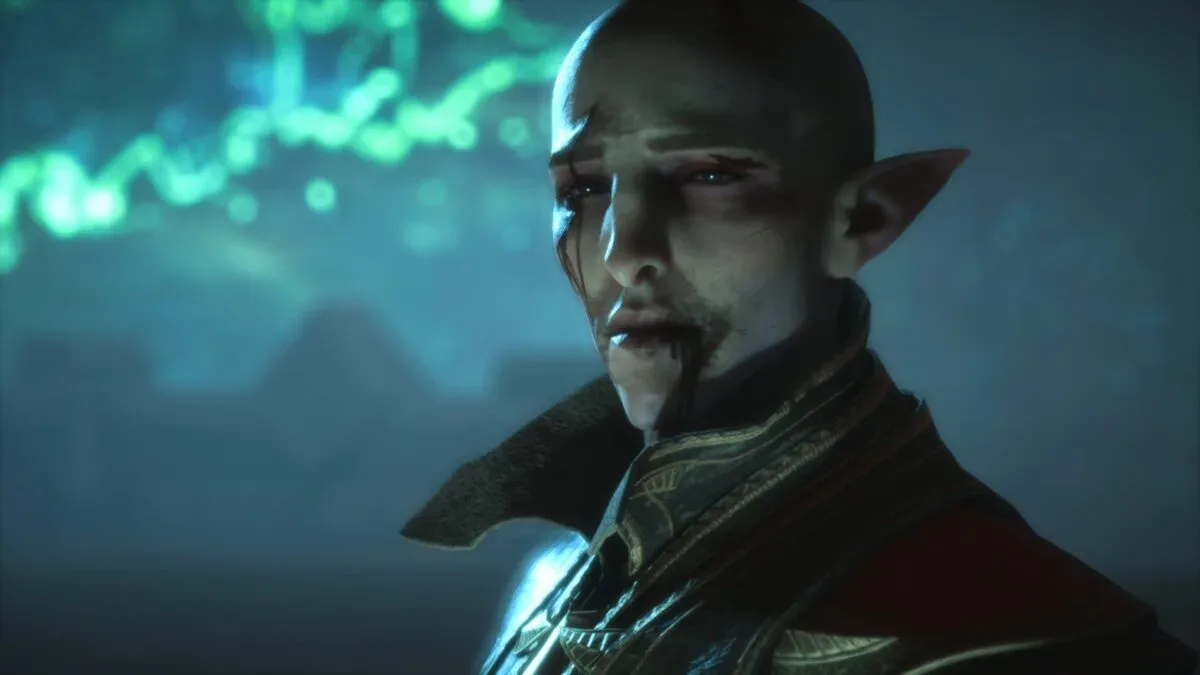
Trespasser then turned Solas from a departing companion into the Dread Wolf, with a plan to bring down the barrier separating the physical world from the Fade. The expansion’s ending made the conflict intensely personal: can the Inquisitor still see Solas as redeemable, and what should become of the organization built during the crisis? Even where later events limit the practical reach of those choices, the ending supplied an emotionally convincing final statement for that protagonist.
The Veilguard pursues closure through Rook and Solas
The Veilguard shifts attention to Rook, a protagonist forced quickly from contractor to leader. The decision between saving Minrathous or Treviso crystallizes that arc. It is a binary decision, but not an empty one: it can conflict with Rook’s place of origin, a romantic interest, or the alliances they are attempting to form. The point is not that there is a painless correct answer. It is that leadership means acting before certainty arrives.
Its optional Solas memory sequence is equally significant. By finding wolf statues, players reveal murals of Solas’ regrets and major pieces of the setting’s creation mythology. These are optional collectibles with unusually vital narrative information, an approach that creates a tension between exploration and clarity. Players who pursue them receive richer context for Solas, Mythal and the ancient elves; players who miss them may enter the ending with less of the foundation needed to assess the final moral choice.
Emmrich’s personal decision provides a more focused version of the same theme. The necromancer seeks Lichdom—immortality as an eternal guardian of the dead—but can revive his assistant Manfred only by giving up that future. The choice asks whether accepting death means accepting every specific loss, and whether love is weakness or the reason immortality would become unbearable. It is a companion story in which the worldbuilding and the emotional dilemma are inseparable.
At Weisshaupt, the long-referenced Grey Warden fortress finally becomes a setting rather than a piece of background lore. The mission combines revelations about the Wardens, the threat posed by the elven gods, party tension and a demanding boss encounter. It is a reminder that payoff is not simply answering an old question; it is delivering an experience substantial enough to justify years of anticipation.
The climactic reveal concerning Varric reframes Rook’s journey as a contest between hope and cynicism. Solas’ manipulation turns a trusted mentor into part of a trap, but the reveal also establishes that Rook has already been making consequential choices without being carried through them. That realization is what finally validates the new protagonist: belief in Rook was not an illusion, even if the form through which it was delivered was.
The final conversation with Solas brings the franchise’s longstanding themes together—regret, myth, sacrifice, manipulation, loyalty and the question of whether understanding someone requires excusing them. Solas must ultimately bind himself to the Veil to preserve Thedas and the Fade’s separation, but the route there changes the moral tenor. Rook may force him, outwit him, or use Mythal’s essence to free him from an ancient obligation. None makes the accumulated damage disappear. The compassionate path instead argues that release from regret is not the same as denial of responsibility.
That is why Dragon Age’s defining moments have endured across games with such different mechanics. The series repeatedly understood that the biggest choice is not a menu prompt. It is the history a player carries into that prompt: the companion they trusted, the institution they challenged, the truth they discovered, and the cost they are finally willing to accept.