It is one thing for players to spend years debating the weakest quest, most frustrating progression gate, or least convincing choice in a role-playing series. It is another when a former leader who worked across the entire franchise returns to the same pressure points with a red pen. Mark Darrah, a director or executive producer on each of the four main Dragon Age games, has laid out the revisions he would make if the series were built again from scratch.
The list is notably specific. It is not a vague claim that older games should be shorter, smoother, or more reactive. Darrah identified the extended Fade material in Dragon Age: Origins, the final mage-versus-templar choice in Dragon Age 2, the amount of open-world and progression friction in Dragon Age: Inquisition, and the lack of the Dragon Age Keep in Dragon Age: The Veilguard. Together, the observations amount to a useful design postmortem on a long-running RPG series: player agency, pacing, and continuity may be separate disciplines, but they tend to fail in ways players immediately notice.
Origins and the problem with a mandatory detour
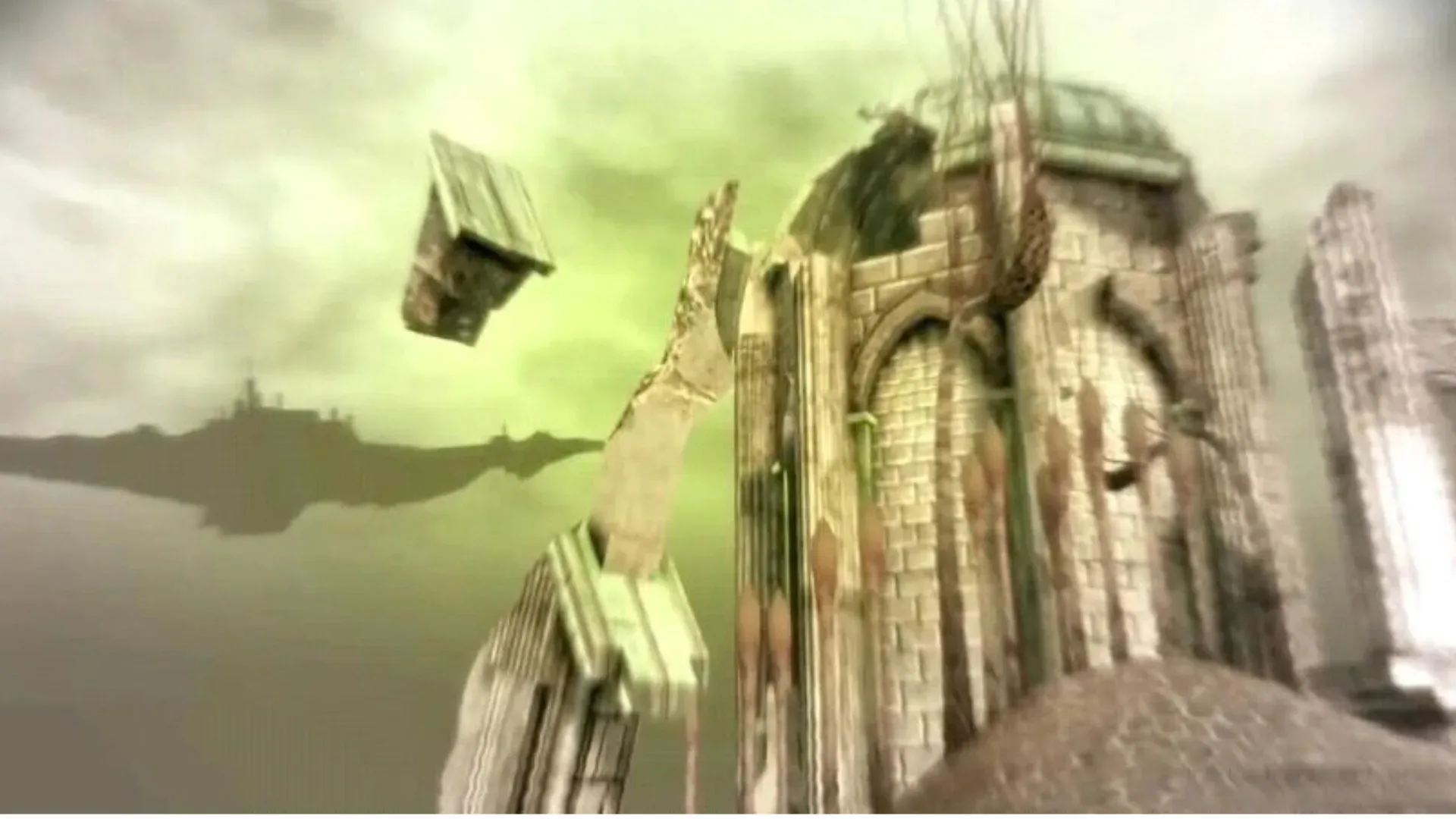
For Dragon Age: Origins, Darrah said he would be tempted to remove or sharply reduce the dream-sequence material in the Mage Tower. That segment takes players into the Fade, an otherworldly realm in the setting, and Darrah characterized it as filler that was put together quickly late in development. His assessment is blunt: he called it “not great content.”
That criticism matters because the sequence is not merely an optional side activity. It interrupts the broader Mage Tower storyline and becomes a substantial detour from the game’s immediate dramatic momentum. A fantasy RPG can absolutely use an unreal setting, a mechanical change of pace, or a self-contained challenge to expand its world. The issue is whether that excursion earns the time it demands. Darrah’s proposal is not necessarily an argument against the Fade as an idea; it is an argument that the particular implementation was too long for what it added.
In practical design terms, a mandatory sequence needs to justify itself on at least one of three fronts: story revelation, character development, or compelling play. If it does not substantially advance those elements, shortening it protects the parts around it. A reduced version could preserve the premise and the setting’s strange atmosphere while putting players back on the main path more quickly. That is especially important in a game built around a series of major regional storylines, where each lengthy diversion changes the perceived tempo of the whole campaign.
Darrah also named additions he would consider for a rebuilt Origins: another human origin and possibly the Avvar as a character option. An origin, in this context, is the player character’s starting background and opening scenario. It is more than a cosmetic biography; it frames early relationships and helps establish the player’s place in the world. The Avvar are another potential route to broaden that opening perspective. These comments pair an edit with an expansion: cut a weak compulsory stretch, but make the initial role-playing choices richer.
Dragon Age 2’s ending and the cost of a choice that feels pre-decided
Darrah’s proposed adjustment to Dragon Age 2 goes to the heart of one of the series’ central conflicts. The finale asks players to side with either the mages or the templars. Yet, as Darrah described it, the outcome weakens the meaning of the mage-aligned decision: players can still end up fighting Orsino, while Meredith, the templar leader, is effectively validated by events. His preferred change is simple in outline: siding with the mages should mean players do not fight Orsino.
That is not a demand for a consequence-free ending. A meaningful RPG decision does not require that both paths produce equally cheerful results, nor does it mean every faction must be morally spotless. It does require that the game respect the logic of the commitment it requested. If one route repeatedly steers back toward evidence that the opposing side was right, players may reasonably feel that they were offered a label rather than a true direction.
Related coverage includes Former Dragon Age Leader Revisits the Series' Biggest Missed Opportunities.
Darrah’s reading is that the existing ending makes Meredith right regardless of the player’s decision because the mages lose control. His alternate version would not settle every political or moral dispute in the story. It would instead keep one branch from undercutting its own premise. That distinction is crucial. Player agency is not simply the presence of a dialogue wheel or a binary selection screen. It is the sense that a chosen position changes the narrative’s treatment of the player’s reasons for choosing it.
There is a broader lesson here for any choice-driven game. Branches do not have to be perfectly symmetrical in content or outcomes, but they need internal credibility. When the story asks a player to take responsibility for a difficult decision, the game should not quietly announce that only one side was ever allowed to make sense. A tragic mage route could remain tragic without forcing the player into a confrontation that reinforces the templar argument.
Inquisition’s sprawling map meets the critical path
Darrah’s notes on Dragon Age: Inquisition are primarily about scale and flow. He said he would likely cut the Hissing Wastes or another large zone, describing the game as too big. He would also dramatically reduce the amount of Power required to advance through the “crit path,” shorthand for the critical path: the route through core story missions.
Power is a progression requirement tied to moving forward in the central campaign. Darrah suggested that its requirement could be reduced by 40% to 60% for better pacing. The number is a hypothetical revision, not a promised update, but it clearly communicates the scale of the issue as he sees it. This would not be a small balance adjustment. It would substantially reduce the amount of prerequisite activity between key story beats.
A progression gate is a design mechanism that prevents access to content until a player meets a condition, such as collecting enough resources or completing enough activities. Gates can structure an open game, give side content a purpose, and ensure that a player encounters systems before a tougher mission. But they can also turn voluntary exploration into an obligation. The difference often comes down to whether the player feels invited to explore or feels charged an admission fee before the next important chapter.
Darrah’s criticism suggests that Inquisition sometimes crossed that line. An expansive zone and a Power requirement can each be defensible separately. Combined, they can slow a player who wants to pursue the central narrative. This is why debates about game length are usually really debates about density. More landscape, objectives, and resource collection do not automatically create more meaningful momentum.
He also pointed to an onboarding improvement that was added after launch: guidance telling players to leave the first area and proceed further into the game. That is a small detail with large implications. Onboarding is the process by which a game teaches players its structure, goals, and expectations. If players require a later-added prompt to understand that they should move on from the opening zone, the original presentation did not sufficiently communicate how the adventure was meant to unfold.
The critical-path term may sound technical, but its practical meaning is straightforward. It is the sequence players remember as the main tale: the crucial missions, major confrontations, and turning points. In an open-world RPG, side content should enrich that path rather than blur it. Darrah’s preferred version of Inquisition would be less interested in keeping players in a region and more interested in helping them find the game’s narrative spine.
The Veilguard and the missing Dragon Age Keep
For Dragon Age: The Veilguard, Darrah’s desired addition is the Dragon Age Keep. The Keep was a cloud-based repository for choices made through the earlier franchise, preserving a player’s world state across games. In a series built around political decisions, survival outcomes, allegiances, romances, and major regional consequences, such a tool has an obvious emotional function: it helps the next game feel connected to the personal version of the world a player previously created.
Darrah said he had advocated for its inclusion, while also acknowledging that the work would not be trivial. That qualification is important. World-state transfer sounds like a simple checklist from the player’s perspective, but the implementation burden can multiply quickly. Each carried-over choice needs rules for whether it is acknowledged, how it is presented, and what happens when combinations of prior choices overlap. Continuity features can require writing, logic, testing, and careful handling of edge cases.
Still, the request speaks to what long-term fans value in an interconnected RPG franchise. A returning character or a reference to an earlier decision may not transform the main plot, but it can validate the hours players spent shaping prior games. The Keep represented a bridge between separate releases and separate eras of the series. Its absence is therefore not simply about a menu feature; it concerns the feeling that a particular player history carries forward.
Darrah did not identify material he would remove from The Veilguard. That restraint is as revealing as the rest of the discussion. His other answers target a discrete issue: a long dream segment, an undercut faction choice, excessive required Power, or an oversized region. With The Veilguard, he named a missing continuity mechanism rather than asserting that a particular component should be cut.
What these revisions say about the franchise
Across all four games, Darrah’s ideas share a common standard: make the player’s time and choices count more clearly. Trim mandatory material that does not meet the game’s quality bar. Do not present a faction choice only to make one option narratively self-defeating. Do not let scale and resource gates obscure the core story. And do not discard a system designed to carry the player’s accumulated decisions into a new chapter.
These are not patches or confirmed plans. They are retrospective preferences from someone with unusually broad experience of the series, expressed after leaving the studio in 2021 and later returning as a consultant during The Veilguard’s final development stretch in 2023. They should be read as an informed account of what he would do differently, rather than a roadmap for changes to existing games.
For now, there is little indication of an immediate new Dragon Age project. BioWare is operating as a single-project studio focused on the next Mass Effect, which remains years away. That makes Darrah’s exercise less a preview than a rare examination of how a major RPG series might have been shaped with hindsight. It is also a useful reminder for future studio projects: big worlds need direction, difficult decisions need integrity, and continuity is often most powerful when players can see their own past reflected back at them.
For more coverage of how game studios are navigating development pressures and priorities, see our report on King’s Swedish Candy Crush developers securing a collective agreement.