Few stretches of a role-playing game inspire quite as dependable an argument as Dragon Age: Origins’ journey through the Fade. For some players, it is an imaginative detour into the setting’s dreamlike metaphysics. For others, it is the moment an already enormous RPG suddenly asks them to navigate a lonely, locked-in maze while repeatedly changing shape. Mark Darrah, a former BioWare developer who worked as a producer or director across the first three Dragon Age games, falls firmly closer to the latter camp.
In a video considering additions and cuts he would make across the series, Darrah said the Fade section in Origins is “not good content” and called it “kinda filler.” His preferred revision would be to remove it entirely, or at least break it into shorter, more manageable parts.
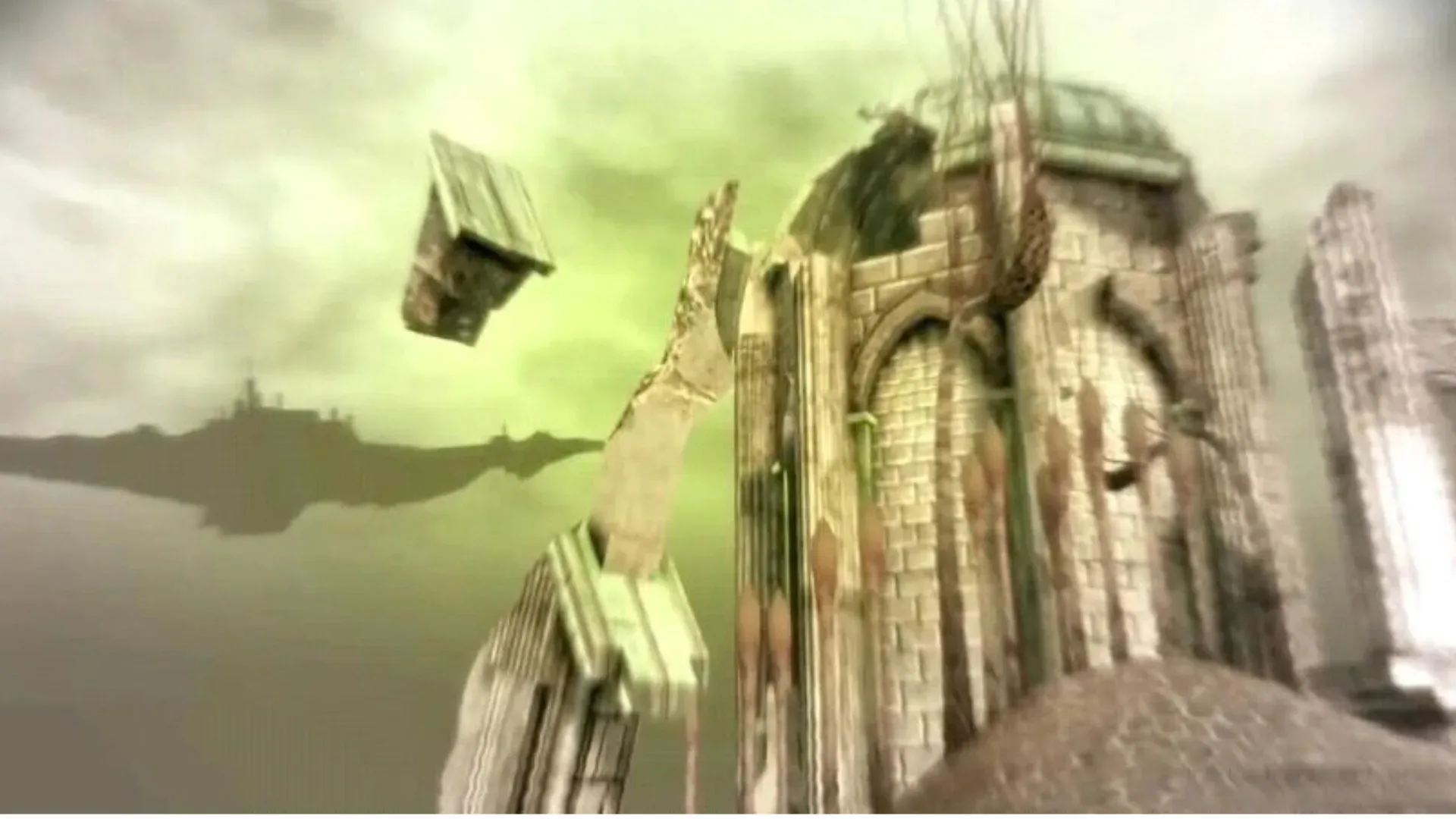
That is a particularly notable judgment because the Fade is not a side activity players can casually sample and leave behind. It is part of the Broken Circle quest, where the Warden and their companions travel to a mage tower amid a rebellion. A demon puts the party to sleep, dropping the protagonist into the Fade: a realm of dreams that is central to the series’ fantasy world. The Warden is separated from the party and must obtain shapeshifting abilities to get through doors and barriers that would otherwise be inaccessible.
The concept has plenty of thematic logic. A dream realm ought to feel strange, and asking the player to inhabit different forms is a direct way of making that strangeness playable rather than merely describing it in dialogue. But a coherent premise and a satisfying quest structure are not automatically the same thing. Darrah’s criticism goes to the latter.
Why the Fade remains such a stubborn fault line
The Fade sequence combines several design decisions that can magnify one another: it is lengthy, encounters can be tough, the usual party dynamic is absent for much of it, and players cannot simply withdraw once they are inside. In an RPG built substantially around party members, their banter, and complementary combat roles, a long stretch without that familiar rhythm can feel more isolating than revelatory.
The shapeshifting mechanic is also a kind of progression gate: a rule that withholds access to an area until the player gains a required tool or ability. Progression gates are not inherently a problem. They can make a newly acquired power feel useful and give spaces a clear internal logic. The risk is friction. If the activity required to earn the ability is repetitive, or if moving among forms and revisiting blocked paths feels laborious, the gate is remembered as an obstacle rather than a satisfying puzzle.
Darrah’s alternative—cutting the material or dividing it into “digestible” pieces—matters because it does not necessarily reject the Fade as an idea. It questions the scale and cadence of one particular visit. A shorter version could preserve the demon’s intervention, the dream-world premise, and the value of the transformations while reducing the feeling that a major party-driven fantasy campaign has been paused for a solitary endurance test.
That distinction helps explain why debate around the quest has lasted. Fans who enjoy it can reasonably value its atmosphere, lore significance, and unusual mechanics. Players who dislike it are not necessarily rejecting the setting’s magical ideas; they may object to its pacing, repetition, and lack of an exit. Both readings can exist because the section asks the player to accept a major change in tempo and play style at a point when the wider game has established other strengths.
Related coverage includes Mark Darrah Would Cut Dragon Age: Origins' Most Divisive Quest.
An Avvar origin Darrah would have liked to add
Darrah’s Origins revision list was not only about subtraction. He said he would have liked to add an Avvar origin, though doing another human origin would have been too expensive.
An origin in this context is the opening background that establishes a protagonist’s circumstances before the larger campaign takes over. The proposed addition therefore would not merely have been a cosmetic character option. It would have offered another lens on the world and another starting perspective for the player’s Warden.
The Avvar are portrayed as burly, big-game-hunting people, with a fondness for throwing goats. They appear elsewhere in the series and are especially prominent in Jaws of Hakkon, downloadable content for Dragon Age: Inquisition. Darrah’s point about cost is a useful reminder of what an origin entails in a narrative RPG: bespoke scenes, writing, characters, environments, and all the production work needed to make a distinct beginning feel consequential. A new origin may sound like one selectable backstory, but it can demand a great deal more than one additional character model and a few dialogue lines.
It also gives Darrah’s Fade critique a more useful frame. His hypothetical changes are not a claim that every unpopular segment could simply have been swapped for any desired feature. Development is an exercise in trade-offs. A shorter Fade and an extra origin are separate ideas, but both point toward a version of Origins with more concentrated pacing and another meaningful entry point into its world.
Dragon Age II and the problem with a choice that collapses
For Dragon Age II, Darrah focused on a late-game story decision with larger thematic consequences. The game’s final confrontation has Hawke choose between mages led by First Enchanter Orsino and templars led by Knight-Commander Meredith.
The dispute is not presented as a trivial faction pick. It is rooted in whether mages should retain their humanity and freedom, or whether the danger attached to their power justifies being confined for life. Meredith’s position rests on fear of mage power and blood magic. Yet, even when Hawke supports the mages, Orsino ultimately uses the kind of blood magic Meredith has condemned.
Darrah’s assessment was blunt: “No matter what you choose, Meredith is right.” His proposed fix is equally direct: if the player sides with the mages, they should not fight Orsino.
This is a criticism of choice payoff, not simply a request for an easier encounter or a different boss. Choice payoff is the degree to which a decision made by the player is respected in what follows—through plot outcomes, alliances, consequences, or the game’s own moral framing. A story can absolutely reveal that a chosen ally is flawed, compromised, or dangerous. But when a choice built around a fundamental moral conflict produces evidence that seems to validate the opposing side regardless of the player’s decision, the result may feel less like tragic complexity and more like the narrative overruling the choice.
Removing an Orsino battle on the mage route would not erase the game’s central tensions. It would instead allow the player’s alignment to alter the conclusion more decisively. Meredith could remain an antagonist without the mage leader’s turn seeming to reinforce her argument at the exact moment the player has rejected it.
The difference is important. “Both sides are complicated” can be dramatically rich when the complications emerge from the values, pressures, and actions of the factions. “Both sides are equally bad,” by contrast, can flatten a conflict if a game treats the player’s decision as largely cosmetic. Darrah’s suggested change indicates that he sees the current outcome as landing too close to the second version.
Inquisition’s size, power and story momentum
Darrah’s changes for Dragon Age: Inquisition were more structural than narrative. He said he would cut areas to make the game smaller and would revise its power requirements, arguing that dramatically reducing those thresholds would improve pacing.
In Inquisition, story missions require the player to have accumulated enough power before they can be started. Power is therefore a numerical access requirement: before advancing the main plot, the player needs to engage in enough other activity to reach the next threshold. Darrah described the existing arrangement as being there for “not-super-great reasons.”
Mechanics like this can give optional activities a practical purpose and encourage players to explore. The downside comes when the required amount turns optional content into perceived homework. A player who is eager to follow the central conflict but is repeatedly told to return later and build a bigger number may experience the game’s story as artificially delayed.
Reducing the requirements would not mean exploration has no value. It would mean separating two motivations that can otherwise become tangled: doing side content because it is interesting, and doing side content because the main story is blocked. Likewise, cutting parts of a very large game is not automatically a rejection of large environments. It is an argument that each area should justify the time it asks of the player and the interruption it creates in the campaign’s forward movement.
That wider question—whether a revision is an upgrade simply because it is more technically ambitious or more expansive—also sits behind debates around RPG remasters and revisions. Questions about whether visual upgrades actually improve a game’s experience echo the same basic principle: more is not automatically better if it weakens clarity, mood, or momentum.
Not a remake plan, but a revealing set of priorities
Darrah’s comments are hypothetical rather than a confirmed plan to alter any of these games. Still, taken together, they make a coherent case for prioritizing player momentum and meaningful decisions. The Fade would be shortened or removed because its structure can overstay its welcome. An Avvar origin would add a distinct perspective, though its cost explains why it did not happen. The Dragon Age II finale would better honor a major alignment choice. Inquisition would make fewer demands that players complete unrelated work before returning to the story.
Those changes do not suggest that the series needed less ambition. They suggest that ambition benefits from editing. A surreal dream chapter can be memorable without being exhausting; a morally thorny finale can avoid making a chosen stance feel futile; and a massive RPG can encourage exploration without turning progress into a checklist.
For longtime Dragon Age players, that may be why the Fade remark has immediate resonance. It is less an attack on an old favorite than an acknowledgement of a familiar design complaint from someone with firsthand knowledge of how these enormous games are assembled. And, perhaps most importantly for anyone still lost in a demon-haunted dream maze, it confirms that the feeling was not imagined: sometimes the Fade really did need to go.