Every party-based strategy game eventually produces a character who stops belonging solely to the game and becomes community property. The numbers may explain part of the fascination. A memorable introduction does another part. Then the jokes take over, and soon a useful squad member has been elevated into an internet folk hero.
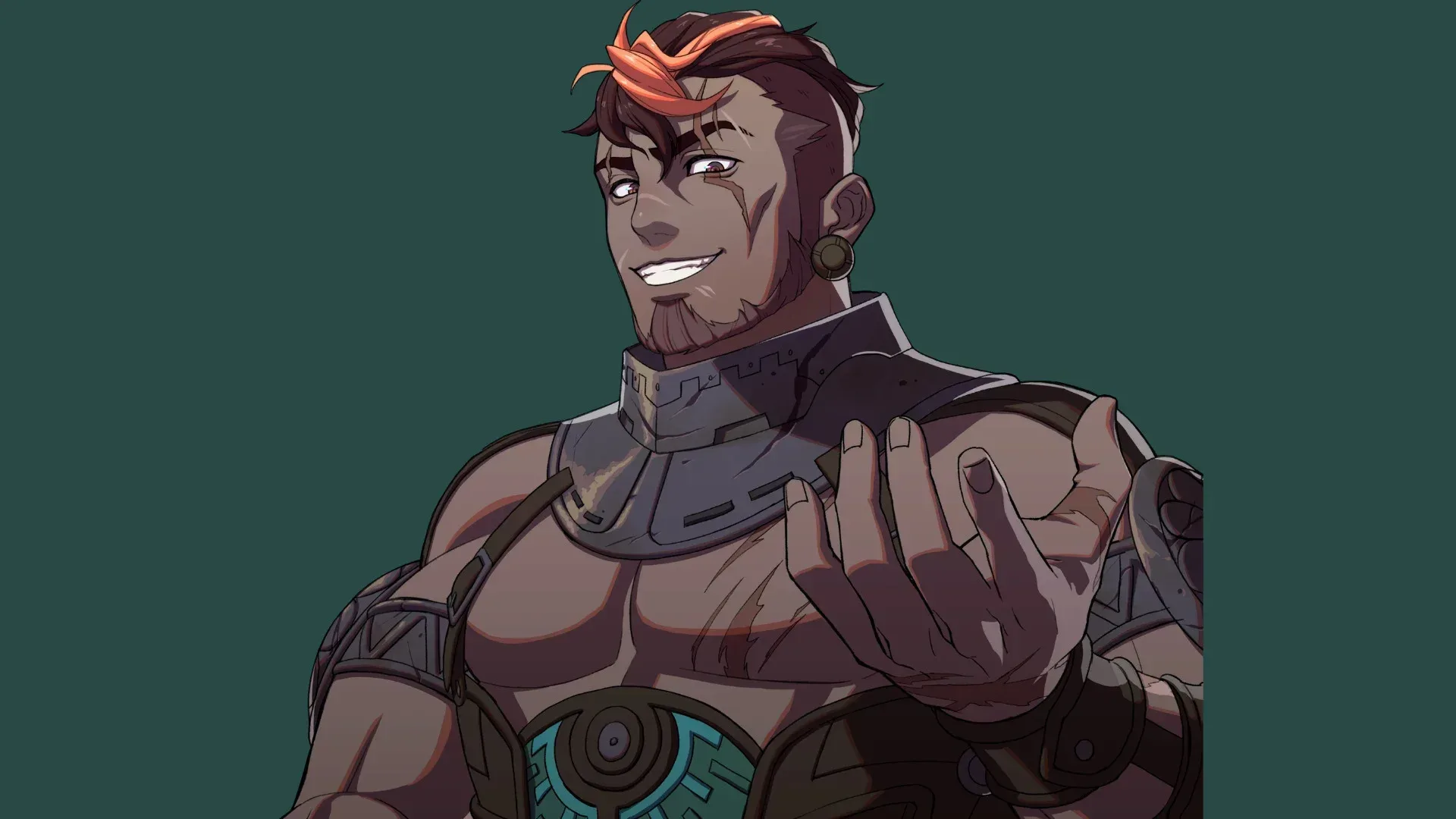
In Fortune’s Weave, that character appears to be Guzran. Players have embraced him with nicknames including “the Guzlord” and “the Guzzler,” while his reputation has expanded into deliberately outsized claims of toughness. The running gag casts him as the Dagosian answer to the old Chuck Norris-style meme: less a normal person than an indestructible fact of nature.
There is a practical reason the joke has stuck. Guzran’s distinct ability, Hot-Headed, gives him a +10 boost to the chance to hit, score a critical hit, or dodge. Those three outcomes cover the basic rhythm of combat: connecting reliably, landing a high-impact strike, and avoiding damage. A single bonus that can touch all three makes a character feel exciting even before the player has formed an attachment to him.
Just as importantly, his gameplay identity and his in-world identity point in the same direction. Guzran is known as the “Unkillable Guzran,” so an ability that supports offense and evasion does more than make him strong—it helps sell the legend. In a genre where players regularly turn battle results into stories, that alignment is powerful. The character who barely misses a hit, lands a dramatic critical, or slips away from danger does not merely fill a tactical role; he generates anecdotes.
For more context, explore 16-Inch M5 MacBook Pro Deals Cut Up to $900, With the M5 Pro Model at $2,429.
Why Guzran has become the companion to watch
Companions often earn affection through one of two routes. They can be mechanically indispensable, or they can be charming enough that players keep them around despite limitations. Guzran’s appeal is that he seems to combine both. He is presented as effective in battle while also being a notably relaxed, warm presence rather than a bundle of grim warrior clichés.
His early connection to Cai helps clarify the softer side of the character. Guzran joins Cai as one of his default companions after Cai needs assistance and brings beer. It is a small character beat, but it efficiently reframes the intimidating “Unkillable” image. Beneath the bravado is someone described as a big teddy bear of a man—an ideal foundation for fan affection, and apparently for alcohol-themed gift-giving as well.
That combination explains why discussion around him has moved beyond ordinary recommendations. Players are not only saying he is useful; they are treating his recruitment like a milestone. The growing conversation around the “Unkillable” fan favorite reflects a broader truth about character-driven strategy games: a unit can become popular because players can point to a concrete advantage, but fandom endures when that advantage feels like an extension of personality.
Hot-Headed, explained without the fog
The wording of Hot-Headed matters because it is unusually broad. A hit chance affects consistency: it raises the likelihood that an attack actually connects. Critical-hit chance affects upside: a critical can turn an ordinary attack into a major moment. Dodge chance affects survival: avoiding an incoming blow can preserve a unit, a formation, or a carefully planned turn.
Guzran’s +10 benefit applies to the chance to either hit, crit, or dodge. The supplied description does not establish how the game selects among those outcomes, how often the bonus triggers, or how it interacts with other stats and systems. That uncertainty is worth keeping in mind. Players should not turn a memorable ability description into a spreadsheet claim the available details do not support.
Even with that caveat, the fantasy is obvious. Hot-Headed is not a passive benefit that only reads well on a menu. It is the kind of effect that can announce itself in combat, whether through an attack that finds its mark, a critical that swings momentum, or a dodge that makes a dangerous enemy look foolish. That is exactly the kind of ability that produces clips, retellings and exaggeration.
It also helps distinguish Guzran from the kind of supporting roster character who can disappear into the background. A companion does not need to be a central Lord to become a community favorite, but they need a reason to be remembered. Guzran’s combat identity supplies one. His easygoing characterization supplies another. The meme machine takes care of the rest.
The recruitment catch: your Lord choice can change the climb
There is a wrinkle for players who have decided Guzran belongs in the squad immediately: recruitment is not identical for every route. The required renown and support depend on the Lord selected. Choosing Theodora, rather than Cai or Leda, means facing the highest stated requirements for recruiting him.
This is a useful reminder that a recruit can be both widely praised and temporarily unavailable. A player can hear constant praise for a companion, understand why the character is good, and still discover that their current campaign has placed him just beyond reach. That gap is not necessarily a sign that the character has been missed forever. It can simply be a progression problem involving the specific Lord route and the thresholds attached to it.
Renown and support are the two progress measures named for Guzran’s recruitment. The available information does not define every action that builds renown or support, nor does it provide the exact numerical requirements. What it does establish is that both matter, and that a player who is one renown level and one support level short is close—but not yet eligible.
That distinction is valuable in practice. If the game says a recruit requires two separate conditions, raising only one may leave the result unchanged. The sensible next step is to check which threshold remains unmet and focus on progress that addresses it, rather than assuming a character is inaccessible because the recruitment prompt has not changed.
Gift items may help with the support side
For a player sitting just below the needed support level, booze gifts offer an obvious avenue to pursue. The character’s introduction already establishes beer as part of his rapport with Cai, and alcohol-themed gifts are specifically identified as available in inventory for improving the situation. That makes them a thematically fitting resource to consider spending when Guzran is the goal.
Still, the details supplied do not say precisely how much support each gift awards, whether all booze gifts are valued equally, or whether gifting can resolve both requirements. Players should treat it as a targeted way to address support—not as a guaranteed shortcut around the renown requirement. If both gates remain in place, both need to be cleared.
A party is more than its most popular recruit
Guzran’s popularity should not obscure the rest of a campaign’s roster. Noctula is singled out as a valuable addition for players who need someone to punch enemies to death, while Sofia stands out for her queenly presence and love of food. Those snapshots underline what makes companion rosters fun in the first place: the strongest attachment is rarely built on a tier list alone.
A player may want Noctula because a direct brawler fits a tactical need. They may like Sofia because her personality lands. They may pursue Guzran because he offers a mix of capability, charm and communal mythmaking. Those are separate reasons to build a team, and a good roster accommodates all of them.
There is also a healthy lesson in the Guzran hype cycle. Community enthusiasm can be helpful: it draws attention to recruits players might otherwise overlook and gives newcomers a starting point for thinking about party composition. But hype is not a substitute for the constraints of an individual run. Lord choice affects recruiting him. Progression thresholds matter. The companions already on hand may be doing excellent work.
In other words, it is entirely possible for Guzran to deserve the fanfare and for a player to have a good party before he arrives. The current roster can carry the campaign while renown and support catch up. When the conditions are finally met, the beer-loving legend can take his rightful place—at least until another companion lands a spectacular turn and starts demanding their own impossible nickname.
What the Guzran phenomenon says about Fortune’s Weave
The most interesting part of Guzran’s rise is not simply that players like a powerful character. Strategy-game communities have always appreciated reliable units. It is that the enthusiasm has attached to a recognizable package: a mechanical hook, a title that invites exaggeration, a relaxed personality, and a recruitment path that makes him feel like something to work toward on some routes.
That package encourages a different kind of discussion than a bare calculation of damage or survival. Players can talk about the odds-changing potential of Hot-Headed, trade recruitment frustrations, celebrate a personality beat involving beer, and turn “Unkillable” into a shared joke. Each thread reinforces the others.
For anyone still working toward him, the facts currently available point to a straightforward priority list: verify the required renown and support for the chosen Lord, recognize that Theodora’s route carries the highest cited bar compared with Cai and Leda, and use the relevant gifts in inventory to improve support where needed. Beyond that, the game’s exact systems should be allowed to speak for themselves rather than being filled in with assumptions.
Guzran may be a meme, but he is not popular by accident. He has the kind of combat-facing identity that makes turns memorable, the kind of personality that makes players want him around, and just enough recruitment friction to turn finally getting him into an event. For Fortune’s Weave players, the Guzzler is not merely another companion. He is the squadmate many people are actively trying to earn.