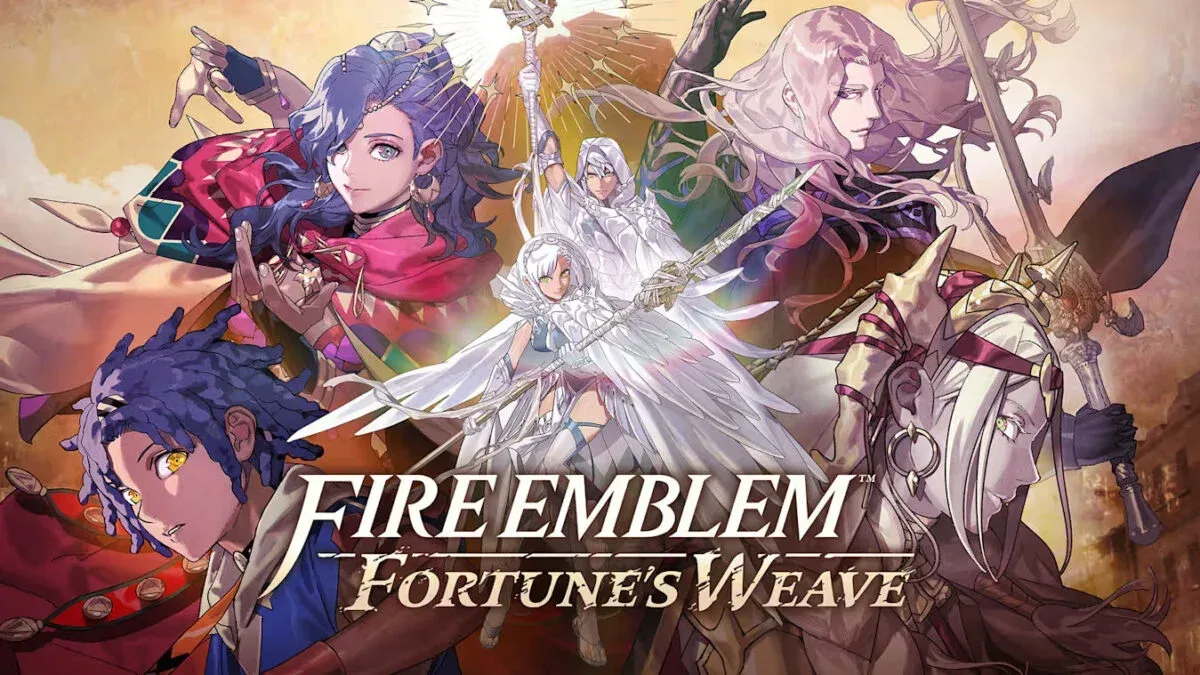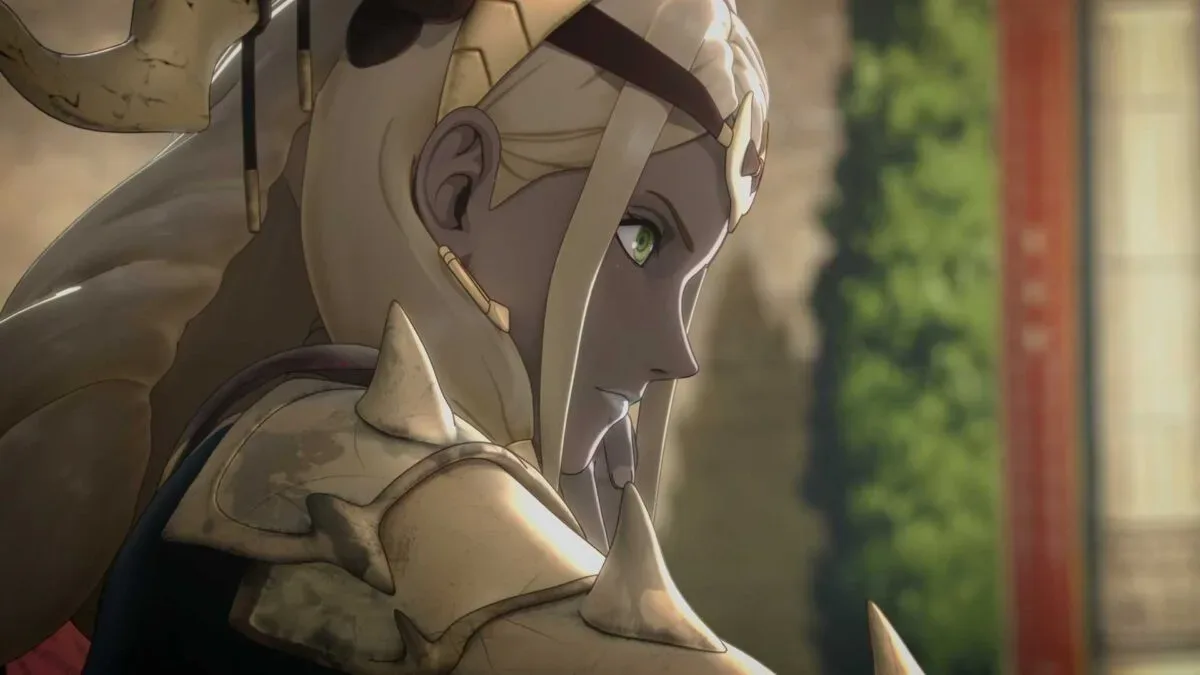
Fire Emblem: Fortune’s Weave begins with a decision that appears deliberately forgiving on paper: players can choose one of the Four Flames of Dagda—Cai, Theodora, Deitrich, or Leda—and are able to switch among them rather than being permanently assigned to a single route.
That should reduce the pressure. Instead, it may create a different kind of anxiety, especially for anyone who approaches a character-driven strategy game with limited time and a strong instinct to commit. A choice does not have to be mechanically irreversible to feel final. The first hero a player follows is likely to become the lens through which they understand the world, its stakes, and the other three protagonists.
The available setup places the player in the role of the herald of the pale raven, sent back through time to alter the destinies of the four heroes. The goal is to ensure they can help save the future from ravenous undead. It is a premise built on multiple lives and possible outcomes, so asking the player to select a first ally is more than a menu decision. It establishes whose threatened fate matters most at the outset.
A route choice without a lockout is still a route choice
The important distinction is between route exclusivity and route priority. Route exclusivity means choosing one path blocks the others, requiring a separate playthrough to see what was missed. Route priority means the game permits movement between paths, but players must still decide where to place their attention first.
For more context, explore World of Warcraft: Forever Beta Buckles Under Queue Demand as Developers Scale Services.
Fortune’s Weave is described as using the latter approach. Players can change between Cai, Theodora, Deitrich, and Leda at any time. That separates its opening from the kind of faction decision associated with Fire Emblem: Three Houses, where a foundational selection can place major portions of the game outside a given run.
Yet flexibility does not erase opportunity cost. Opportunity cost is the practical value of what a player gives up by spending time on one option instead of another. In a game with four protagonists, advancing one story can mean postponing another favorite character, delaying answers to a different plot thread, or simply accepting that some material may remain unseen for a long time.
That is why “you can switch later” may be reassurance without being a solution. Switching later is not the same as having experienced each opening with the same freshness, nor does it settle the everyday question of where to invest the next available evening.
Related coverage includes Fire Emblem: Fortune's Weave Opens With a Choice That Could Define a Very Long Journey.
The first attachment can decide the whole playthrough
Character preference is often enough to turn an ostensibly open structure into a personal lock-in. A player drawn immediately to Theodora may feel little desire to interrupt that momentum for Cai, Deitrich, or Leda. Another player might deliberately begin with the character they are least interested in, hoping to preserve a favorite for later. Both approaches are understandable, but they reflect very different relationships with a long game.
Starting with the favorite prioritizes enthusiasm. It lets the player meet the game at its most exciting and makes the early hours feel purposeful. The downside is that a satisfying first route can become a natural stopping point. Once a player has reached a meaningful resolution with the character they most wanted to follow, beginning again elsewhere may feel less like discovery and more like an obligation.
Beginning with the least appealing option is the “save the dessert for later” strategy. It can make a broader tour of the cast seem more achievable, because the hoped-for reward remains ahead. But it also carries a clear risk: asking someone to spend their opening hours with the thread that interests them least can weaken the very motivation needed to get through a sprawling narrative.
Neither choice is inherently more correct because the game’s total structure, including the length of a complete story, is not yet clear from the available information. It would be premature to treat one hero’s route as definitively shorter, more efficient, better for newcomers, or necessary for an ideal order. The confirmed detail is the ability to change protagonists, not a prescribed sequence or the consequences of pursuing one route far ahead of the others.
Why the undead future raises the stakes
The time-travel framework gives Fortune’s Weave a useful narrative reason to care about all four heroes even if a player only wants to focus on one. Cai, Theodora, Deitrich, and Leda are not presented as unrelated optional side stories. Their altered fates are tied to the attempt to defend the future from an undead threat.
That creates a productive tension. The player may form an early attachment to a single Flame of Dagda, while the premise itself argues that no one person can carry the larger crisis alone. In other words, the story’s stakes may keep pointing back toward the heroes left behind. A player who advances only one character could reasonably worry that they are missing context needed for later events, even though no firm gameplay penalty has been established.
This is the difference between narrative completeness and completionism. Completionism is the desire to clear every route, scene, collectible, or objective. Narrative completeness is a more focused concern: whether following only part of the cast leaves the central story emotionally or logically incomplete. Fortune’s Weave’s premise naturally invites the second concern, because its mission is explicitly to change the futures of four people.
Whether the game ultimately demands equal attention from all four remains unknown. It may allow one hero’s thread to stand strongly on its own. It may steadily braid the stories together. It may use switching primarily as a convenience feature, or make it the core rhythm of the campaign. Until more is established, players should avoid treating an estimated 120-plus-hour all-routes commitment as a confirmed measure of the game’s length. It is a relatable fear, not a verified runtime.
A practical way to approach the Four Flames
For players who want to preserve flexibility without turning the game into a scheduling project, the safest approach is to make the first selection based on genuine curiosity rather than imagined efficiency. The game’s stated ability to switch means the opening choice should not be mistaken for a permanent declaration of allegiance.
- Choose the character you want to know now. Early engagement matters more than attempting to optimize an unknown structure.
- Set a personal checkpoint. Rather than deciding immediately to finish one storyline or rotate constantly, reassess after a major story beat or when the game naturally surfaces another hero.
- Do not assume equal progress is required. Alternating perfectly among four protagonists can sound orderly, but it may fracture momentum if the game does not actively encourage that cadence.
- Let the fiction guide the curiosity. The player character’s task is to change four fates. If a current storyline raises questions about another Flame, that is a stronger reason to switch than fear of falling behind an invisible completion target.
- Separate known mechanics from personal worries. Switching is confirmed; forced route order, total campaign length, and later consequences of specialization are not.
That last point is especially valuable in games that invite players to manage a large cast. It is easy to turn a flexible system into an anxious checklist before the game has shown what it expects. A player does not need to pre-commit to four equally developed narratives simply because four are available.
Flexibility may be the game’s real opening promise
There is a reason the decision feels so large despite the freedom to change it. Fire Emblem stories frequently make people care intensely about individuals, and a four-hero time-travel premise gives each initial choice a built-in sense of responsibility. The player is not merely selecting a combatant or a color-coded team; they are deciding whose life becomes immediately urgent.
But the ability to move between Cai, Theodora, Deitrich, and Leda is meaningful precisely because it leaves room for changing one’s mind. A favorite can stay a favorite without becoming the only story worth seeing. A less compelling character can surprise the player later without having to win an arbitrary first-place contest.
For now, the most sensible reading of Fortune’s Weave is not that it requires a 120-hour plan, nor that the opening selection is trivial. It is that the game seems designed to hold both ideas at once: the first choice matters emotionally, while the wider journey remains open. That is an appealing promise for anyone who wants a Fire Emblem cast to feel consequential without having every early preference calcify into a permanent loss.