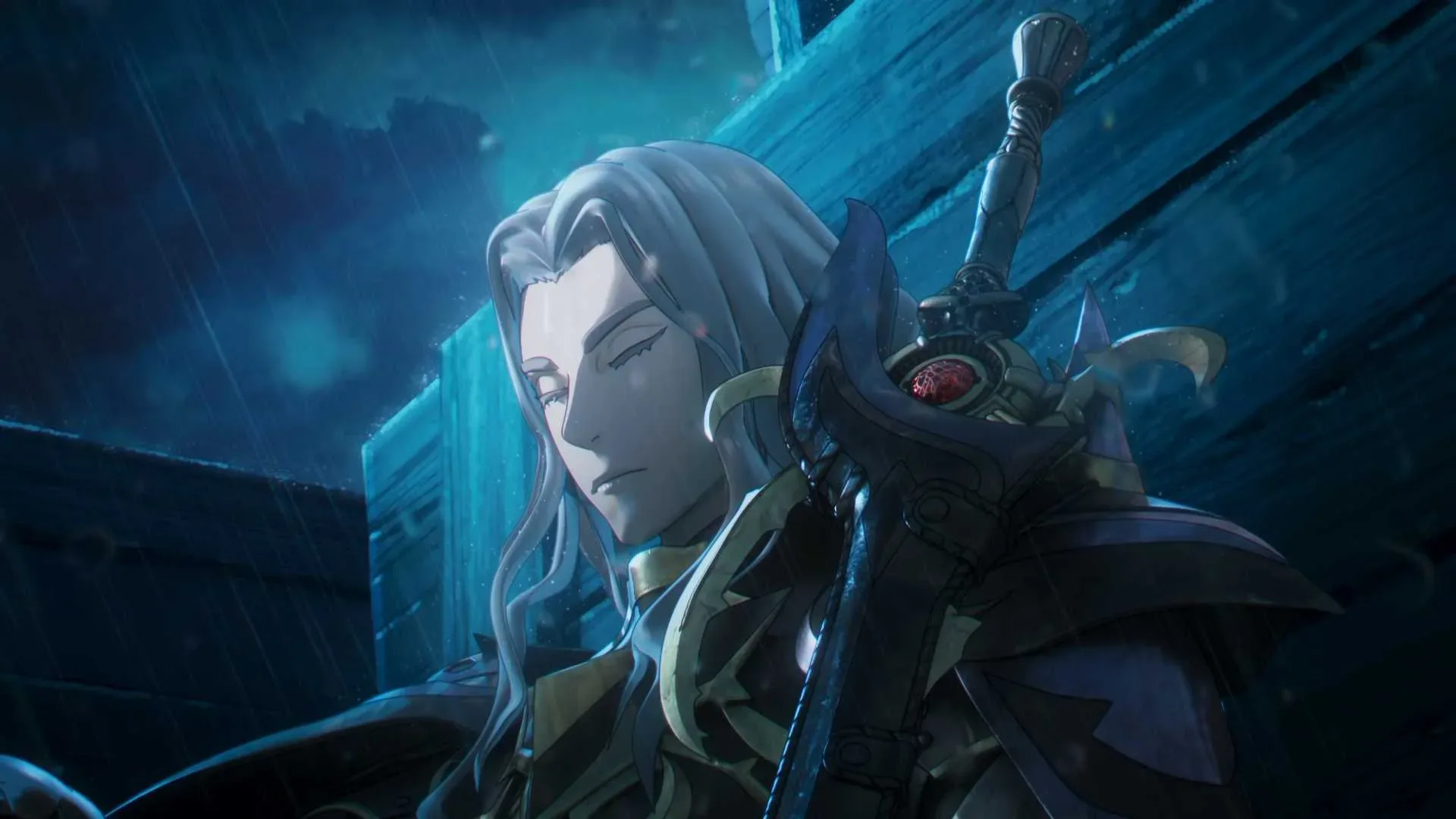
Fire Emblem: Fortune’s Weave appears to have a particularly cheeky answer to the question of who its protagonist is. Eshmel may be the customizable avatar at the center of its opening, and the game may position four Flame Lords as its major figures, but the early narrative weight seems to be concentrating elsewhere: Dietrich.
That is not necessarily the same as saying Dietrich is the sole lead, the most likeable Flame Lord, or the character with the most immediately noble goal. It is a more specific observation about how an ensemble story distributes information. A route can make one character feel central because it carries the questions that matter most to the setting, even while another character remains the player’s narrative viewpoint.
More than 10 hours into the game, Dietrich’s story is reportedly the path most closely entangled with Fortune’s Weave’s largest mysteries. It is also the first route to meaningfully bring in Anatolia, a gun-wielding nun who appears to have an unusual role of her own. That combination gives Dietrich something the other Flame Lords may not yet possess: a direct route into an explanation for why this Fire Emblem story begins with advanced technology before throwing its cast into a more familiar-looking past.
The avatar is not always the story’s answer key
Eshmel is described as Fortune’s Weave’s customizable avatar character, putting them in a role comparable in broad function to the player-linked leads in Fire Emblem: Three Houses and Fire Emblem Engage. An avatar character is generally designed to act as the player’s entry point: someone through whom the player meets factions, allies and conflicts.
That function does not automatically mean the avatar is the character with the deepest personal connection to every revelation. In a multi-route narrative, the avatar can instead be the common thread joining several protagonists. The route-specific hero may then be the one who has the most to lose, the tightest connection to a particular secret, or the clearest path to a buried truth.
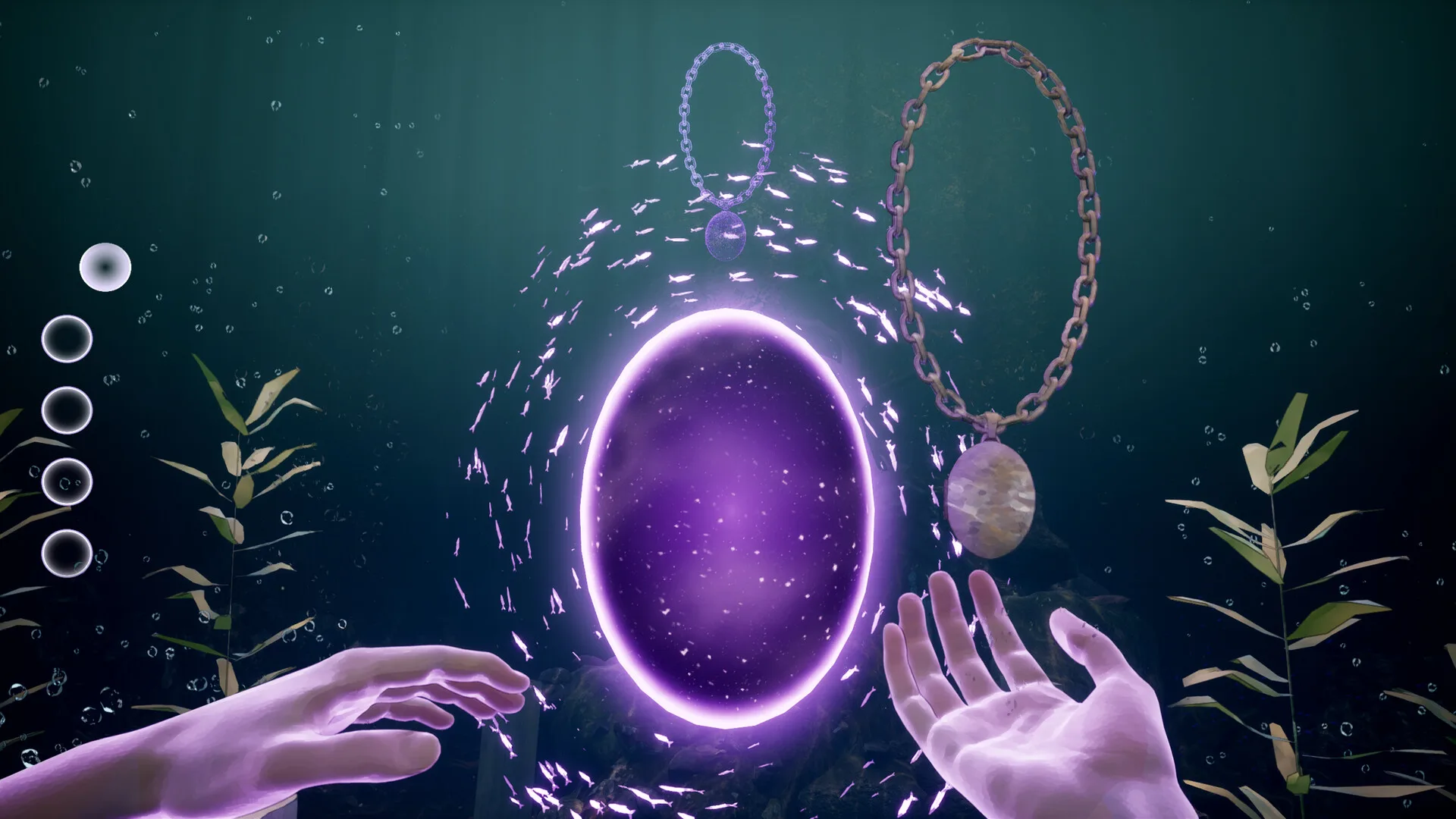
Fortune’s Weave seems positioned to use that distinction. Eshmel begins in a startlingly strange circumstance: a disembodied spirit in a tank-like environment surrounded by glowing displays and wires. The imagery evokes an overtly science-fiction setting rather than conventional medieval fantasy. Lasers, computers and giant starships are part of the game’s opening premise, at least briefly.
Then comes the key disruption. Eshmel is sent back in time, and those technological elements recede from the story until Dietrich’s route begins to engage with them. That delay turns the opening into a promise rather than a simple piece of scene-setting. The player has been shown evidence that the world is bigger and stranger than the immediate historical-fantasy conflict suggests, but is apparently asked to continue without a full explanation.
That is a powerful structural choice when it works. It creates what might be called a framing mystery: an unanswered question established around the story itself, not merely around one villain or one battlefield. Why does this world contain both starships and a past defined by the Flame Lords? What happened to Eshmel? What does the time displacement mean? A route that begins addressing those questions inevitably feels consequential.
Why Dietrich can feel important without being especially sympathetic
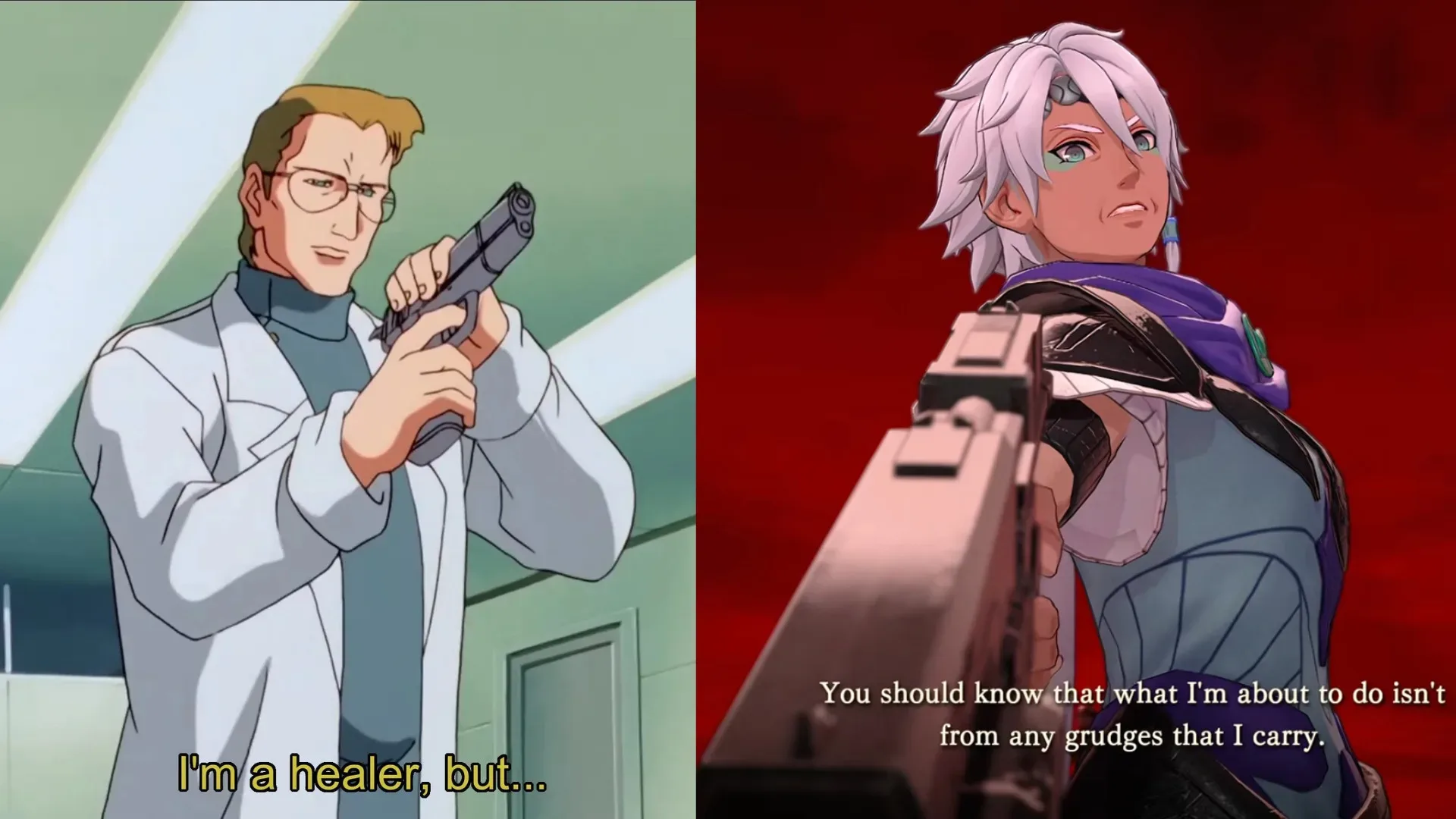
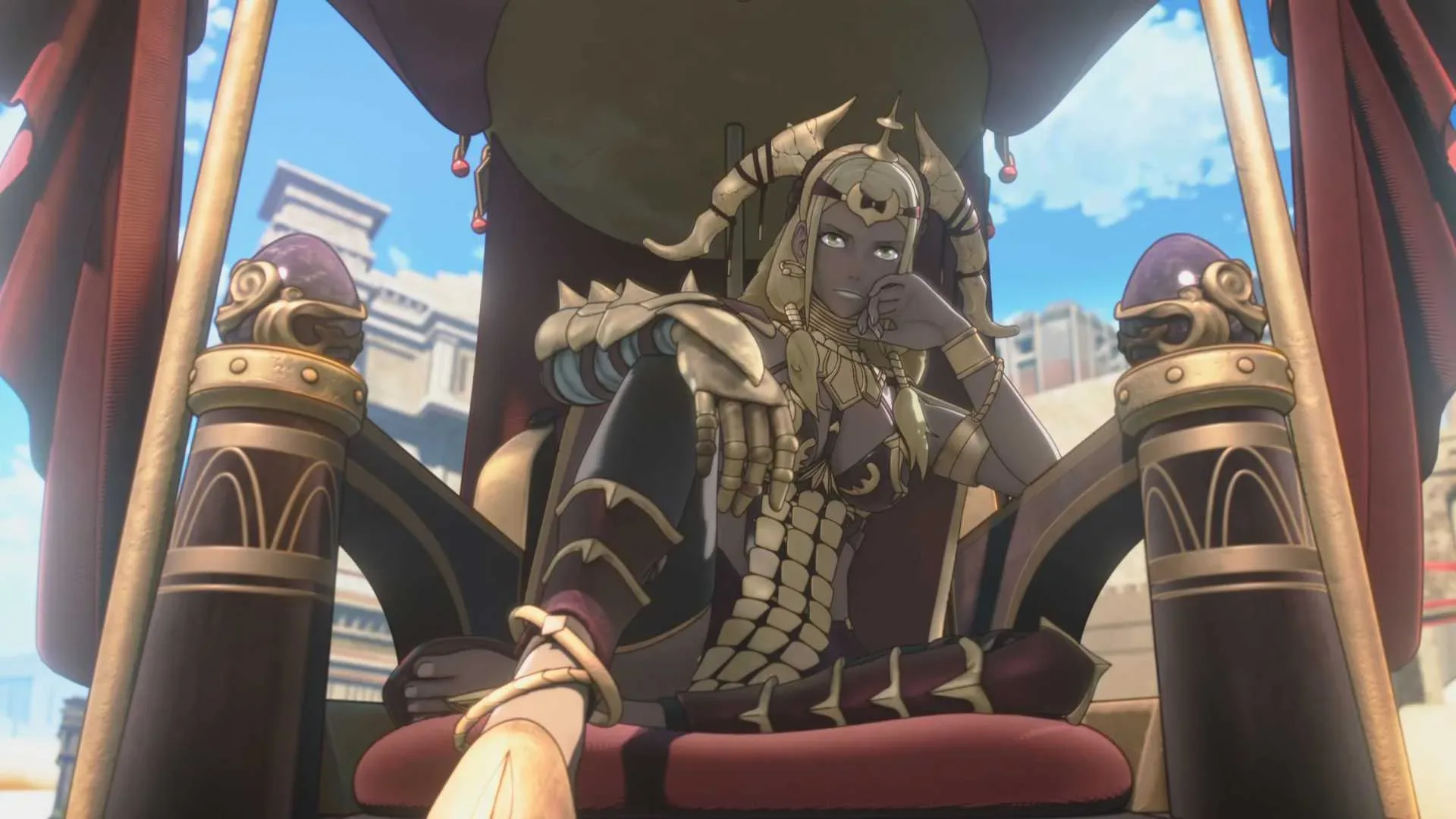
Dietrich’s apparent narrative advantage is not that his ambitions are necessarily more complex on their face. His early drive is summarized in deliberately blunt terms: fighting monsters and pursuing strength. Taken alone, the wish to become the strongest can be a narrow motivation, especially beside Flame Lords such as Theodora, Leda and Cai, whose stories are presented as having their own competing motives and character appeal.
But a simple personal objective can become much more interesting once it intersects with a mystery that the character does not seem equipped to explain. That tension is often useful in an ensemble. The character pushes forward for an understandable reason, while the player follows because each step opens the door to a larger, less understandable problem.
In that sense, Dietrich does not need to be the most charming person in Fortune’s Weave to become the route readers of the story feel compelled to pursue. There is a meaningful difference between character investment and plot investment. With Leda or Theodora, a player may be motivated mainly by affection for the individual and a wish to see how their goals resolve. With Dietrich, the pull may instead be investigative: his path seems to contain the clues that recontextualize the game’s opening.
That is not a flaw in itself. It can be an effective division of labor between routes. Some stories persuade players through emotional proximity; another can win them through escalating uncertainty. The strongest version of Fortune’s Weave’s structure would allow both approaches to feed each other, so that personal decisions still matter when the science-fiction premise comes back into focus.
Anatolia could be the crucial intersection
Dietrich’s early intersection with Anatolia makes the route’s importance feel even more pronounced. Anatolia is counted ambiguously alongside the four Flame Lords, while also seeming to occupy a special lane in the story. The uncertainty is notable. If a game establishes a formal group of four major figures but introduces another character who feels adjacent to that structure, it invites players to ask whether the stated categories are incomplete, misleading or part of the mystery themselves.
Her weapon reinforces the feeling that she does not entirely fit the expected frame. Anatolia has a gun, and guns are said to be fun to use in Fortune’s Weave. Mechanically, that suggests the game is not treating its advanced or anachronistic ideas solely as distant lore. They have a tangible presence in play. Narratively, her gun is a visual sign that the boundaries between the game’s past-facing world and its high-tech opening are not sealed off forever.
It would be premature to turn that observation into a declaration about Anatolia’s allegiance, origin or eventual role. None of that is established here. What is clear is that her connection to Dietrich arrives early enough to make his path feel like the place where Fortune’s Weave begins laying its larger cards on the table.
That makes Anatolia more than a striking character concept. She may be a junction point between the route-level story and the setting-level mystery. Dietrich, in turn, becomes the Flame Lord whose immediate campaign provides early access to that junction.
The setting’s delayed explanation is the real hook
The biggest story opportunity in Fortune’s Weave is the clash between its two apparent modes. The first is bold science fiction: machinery, displays, lasers and starships. The second is a time-displaced fantasy scenario where Flame Lords and monster battles can occupy center stage. The important question is not merely whether both genres appear. It is whether the game gives their collision a dramatic purpose.
A time jump can do several things in fiction. It can separate a character from the knowledge needed to understand their predicament. It can allow a setting to hide its true rules in plain sight. It can also make the past a contested object: something to preserve, alter, exploit or escape. Fortune’s Weave has not yet supplied enough information to confirm which of those possibilities applies. Still, holding back discussion of the futuristic opening until Dietrich’s route is underway makes that gap in knowledge feel intentional rather than incidental.
That restraint could also help the game’s route structure. If every Flame Lord immediately knew about the futuristic framework, the mystery would be evenly exposed and potentially less distinctive. By making one route appear to reach the material sooner, Fortune’s Weave gives players a reason to compare perspectives and consider what each character can see that the others cannot.
The approach recalls a useful lesson for branching stories: multiple protagonists do not need identical levels of access to the truth. In fact, they are often more interesting when they do not. A leader might understand the political stakes, another might carry the emotional stakes, and a third might stumble into the metaphysical or technological stakes. The overlap is where the full picture emerges.
Stories that use separated time periods also depend on the world feeling readable from more than one vantage point. That broader design challenge is explored in this feature on reading a flooded village across two times. Fortune’s Weave’s own setup appears more fantastical and more overtly technological, but it faces a related narrative task: making the earlier setting meaningful in light of what the opening has already revealed.
What players should and should not infer right now
There is enough early evidence to say that Dietrich currently has “main character energy” in the mystery-solving sense. His route reportedly touches more of the wider setting, restores attention to the opening’s unexplained technology, and meets Anatolia unusually early. Those are strong indicators that his campaign is important.
They are not proof that the other Flame Lords are secondary in the eventual story, that Eshmel lacks a decisive role, or that Dietrich will remain the central figure after every route develops. Multi-route narratives are built to shift the audience’s understanding as new information arrives. A character who looks like the key at the 10-hour mark may be the key only to one lock.
For now, though, Dietrich seems to own the most valuable narrative currency in Fortune’s Weave: access to the questions players were given at the start and have not been allowed to forget. Theodora, Leda and Cai may offer powerful motivations of their own, while Eshmel remains the player’s link through the game’s premise. But Dietrich is the person presently standing closest to the strange machinery behind it all.
And in a Fire Emblem story that opens with starships before returning to monsters, Flame Lords and a nun with a gun, that is about as close as anyone gets to being the protagonist of the mystery.